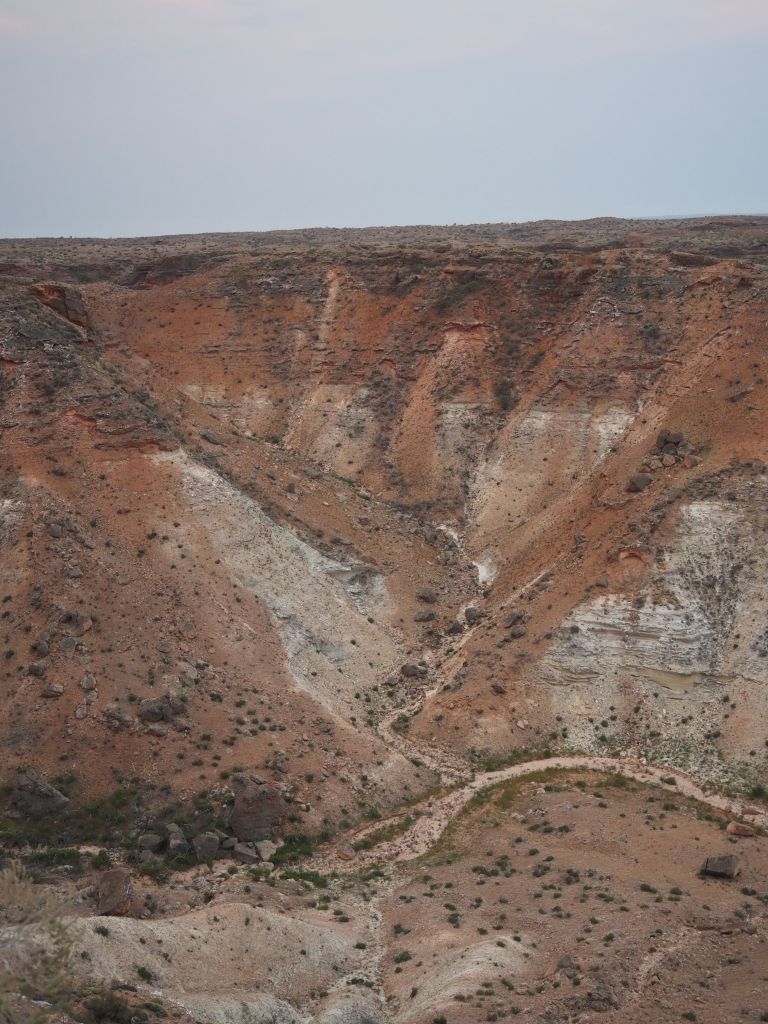
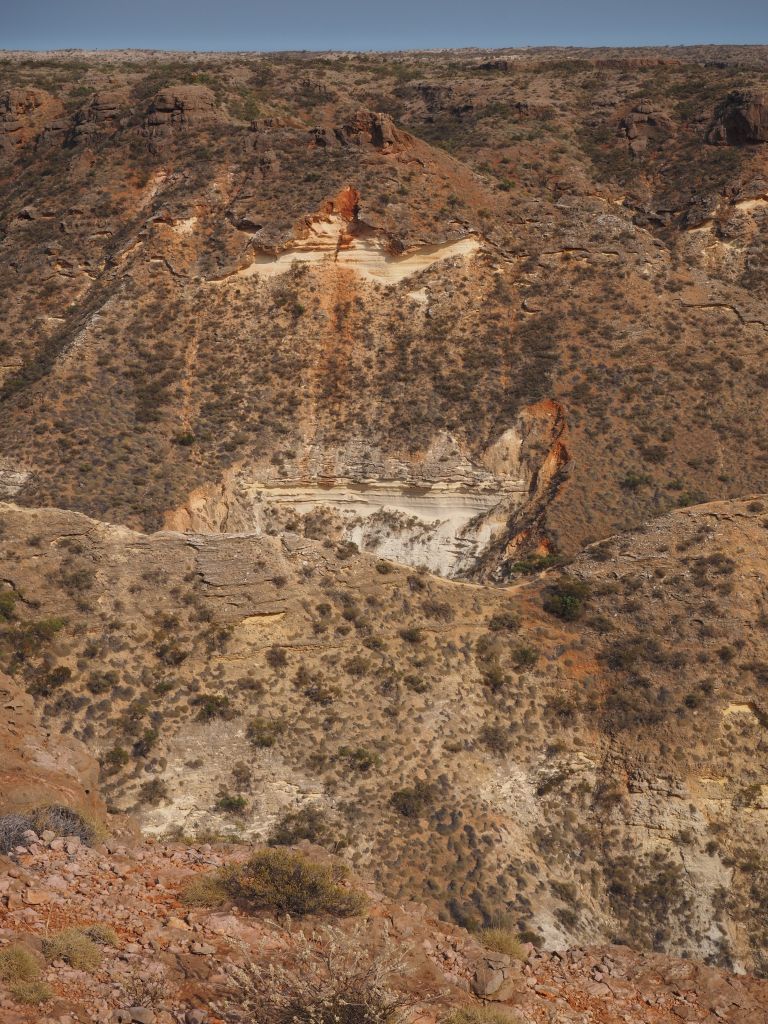
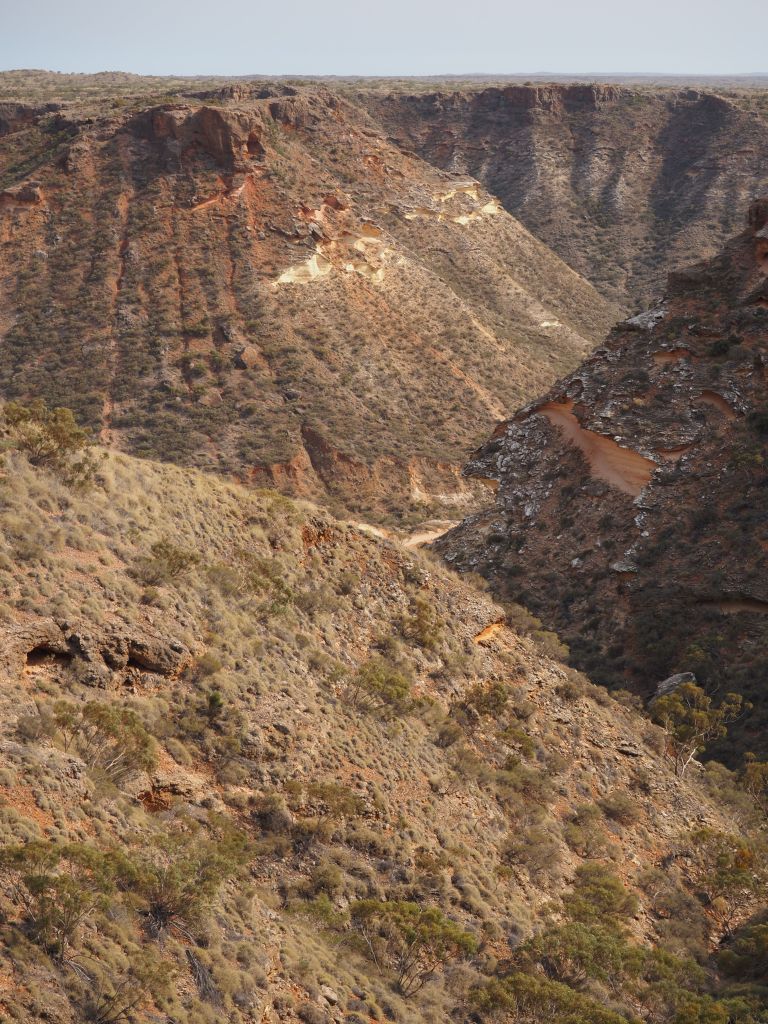
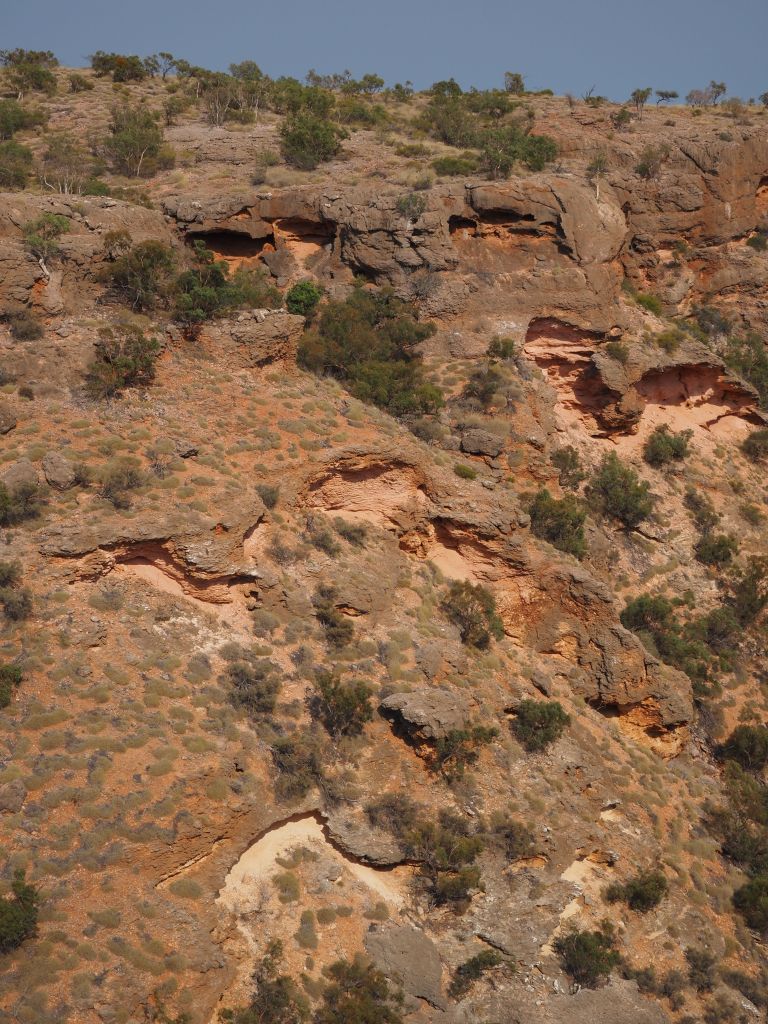
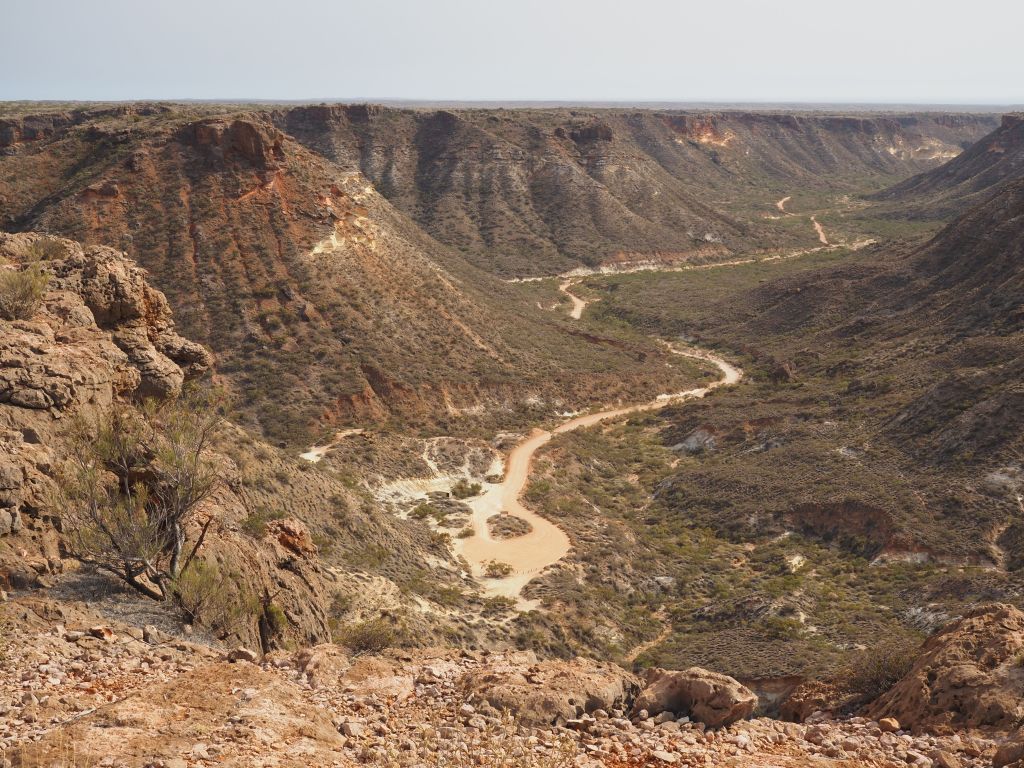
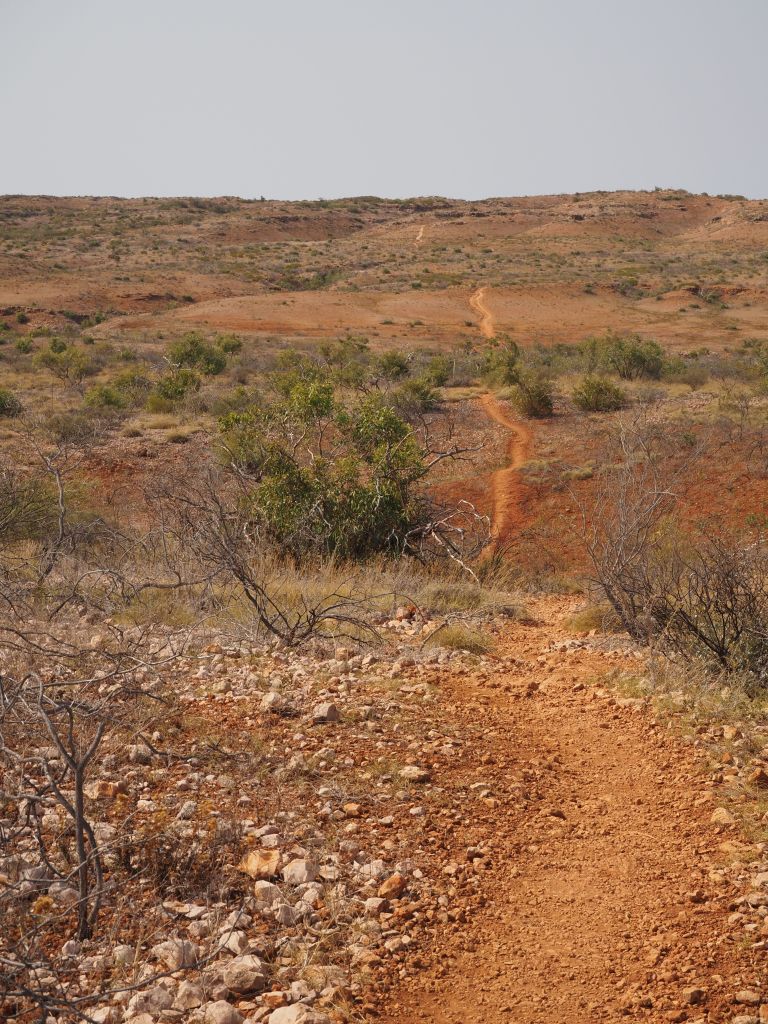
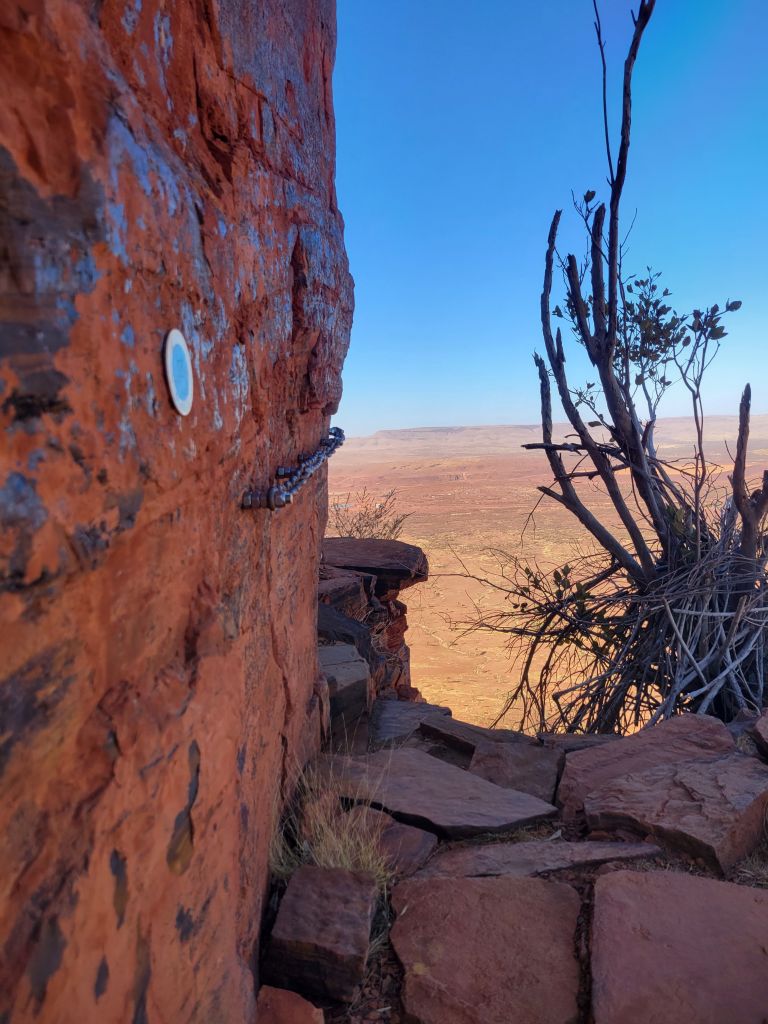
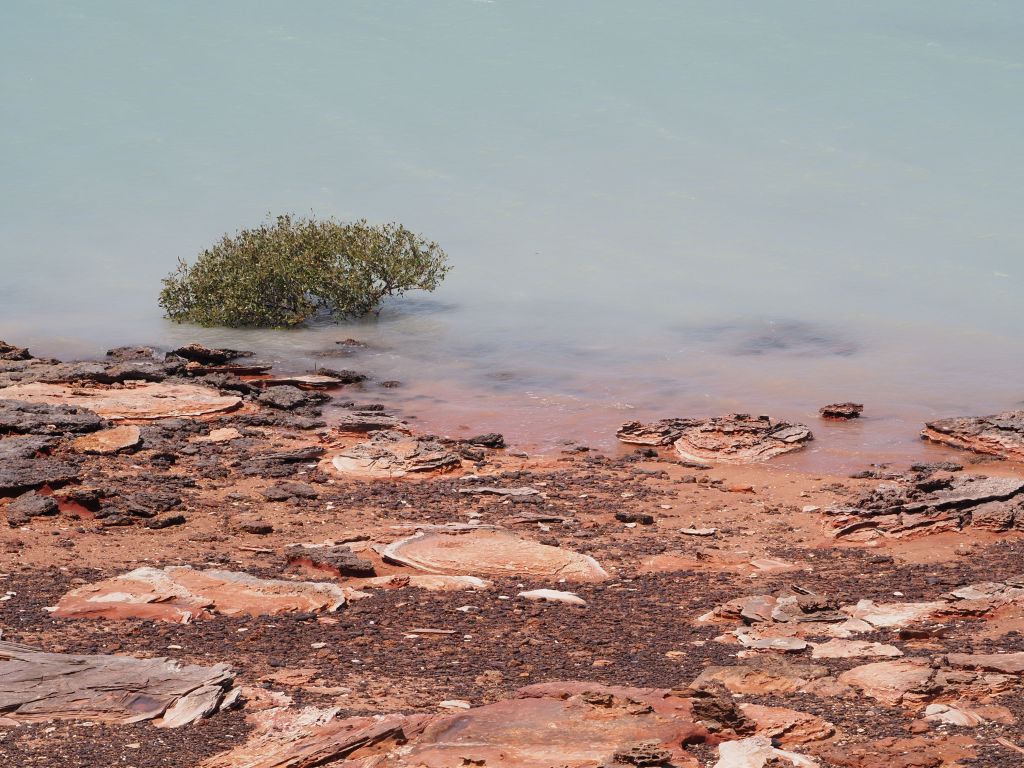
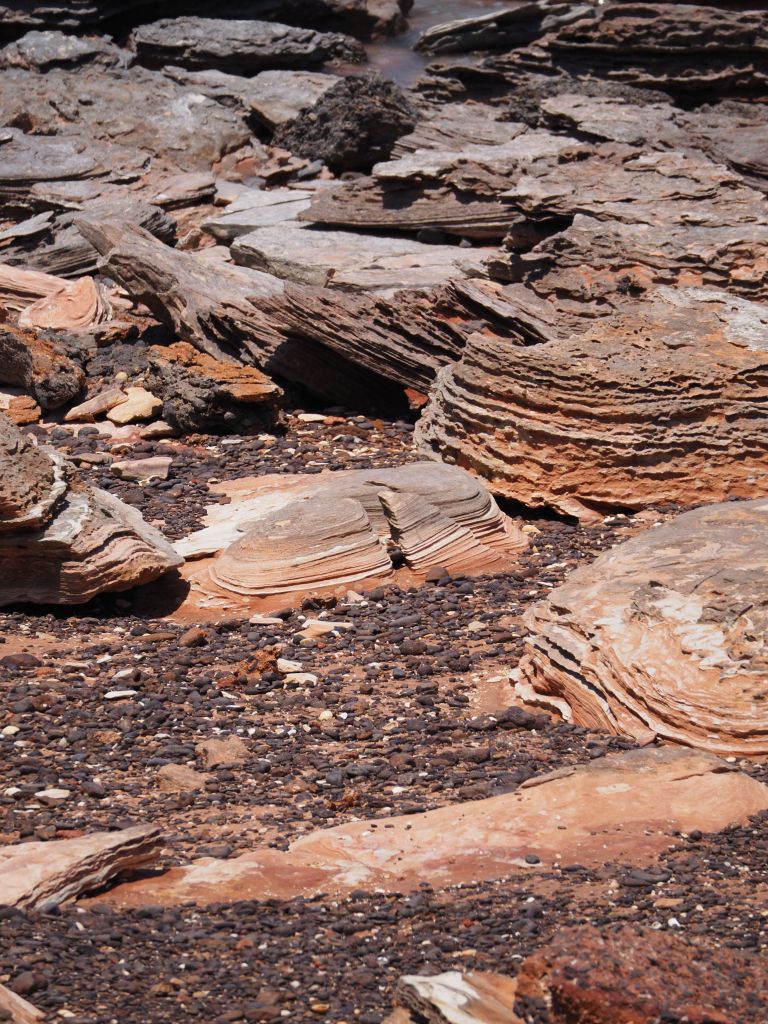
It’s been a quiet few days with a couple of notable highlights. First, Charles Knife road and the Badjirrajirra walk, in Cape Range National Park. Cape Range National Park is the park on the exmouth peninsula, which includes the Ningaloo reef. Or maybe it’s the land, and there’s a separate marine park for the reef. Regardless, the reef and whale sharks are the main attraction around these parts, but the cape range itself is pretty magnificent. As far as I understand it’s actually millions of year old coral reef which has been compacted and petrified and whatever else happens over millions of years, and then thrust up into mountains. You get a feel for this on the walks because a lot of the rock is razor sharp, just like the coral-formed rock right be the sea. The walk is a nice easy (besides the extreme heat) 10km stroll around a loop, with views into the gorgeous Shothole Canyon as the highlight.
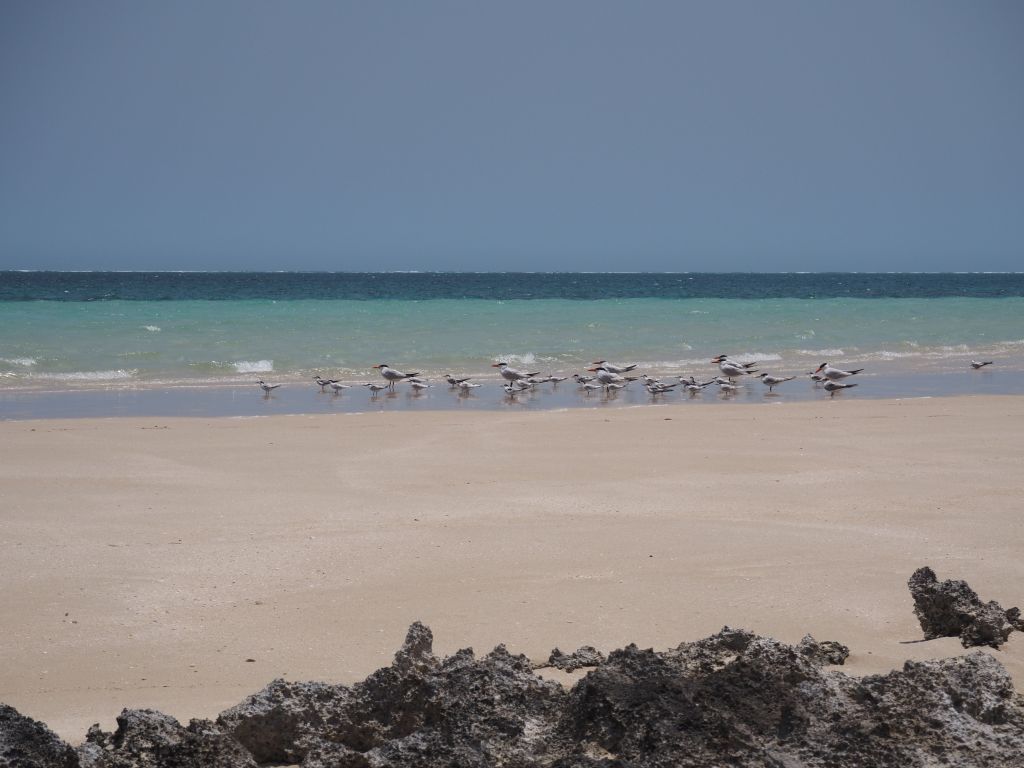
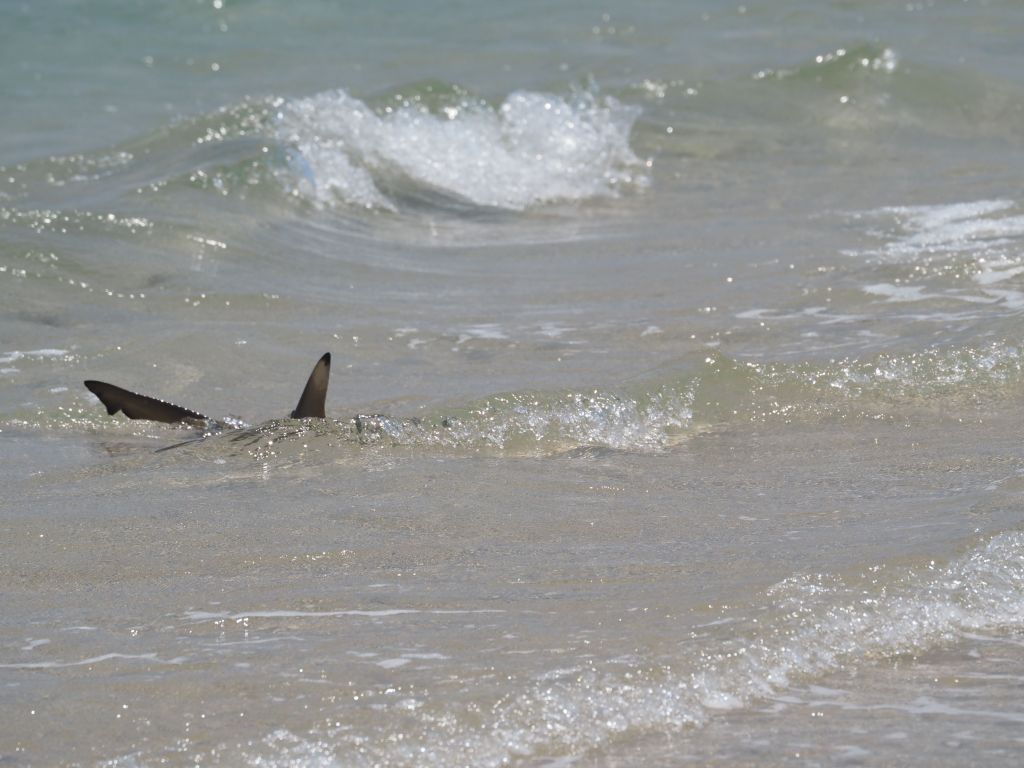
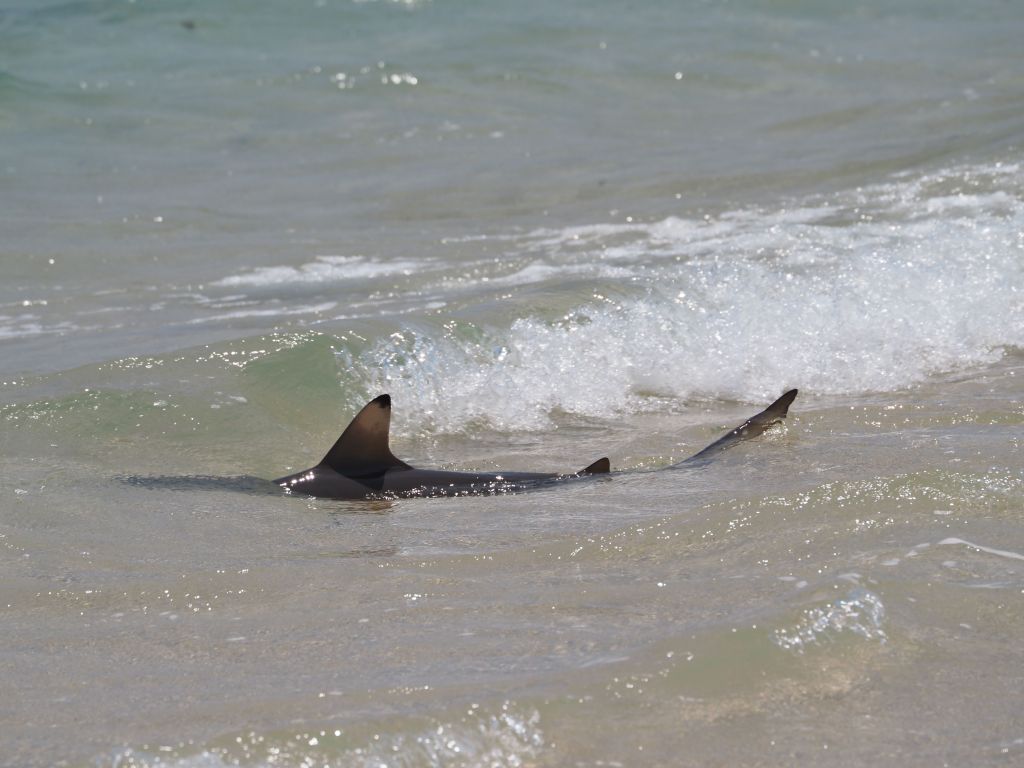
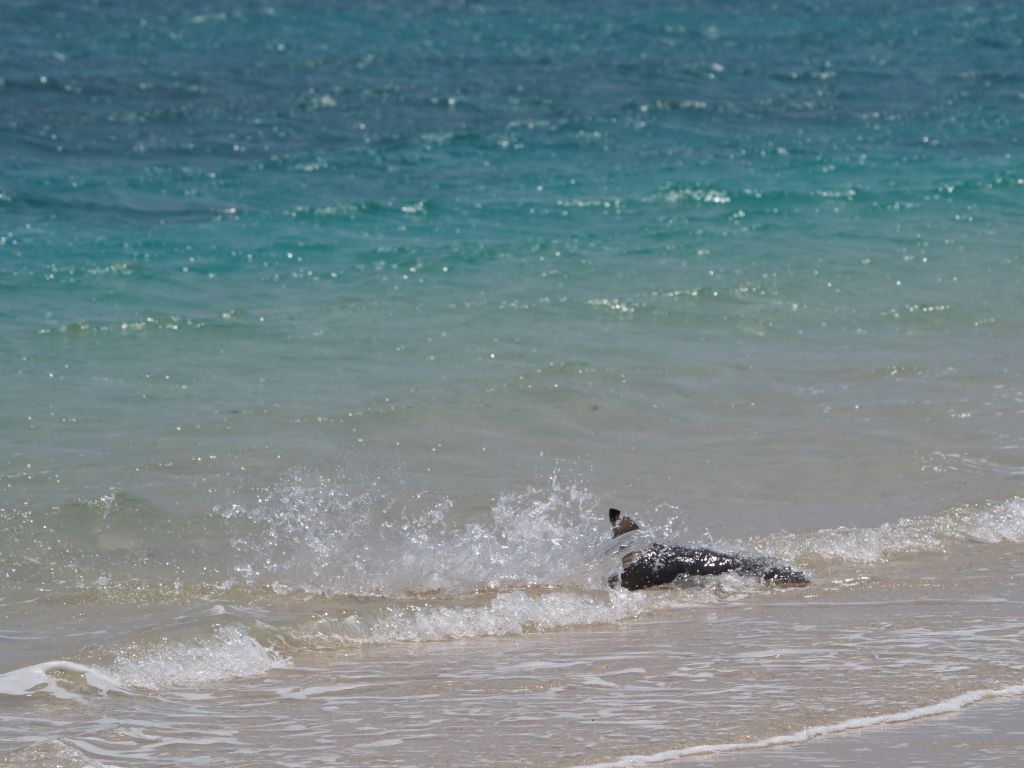
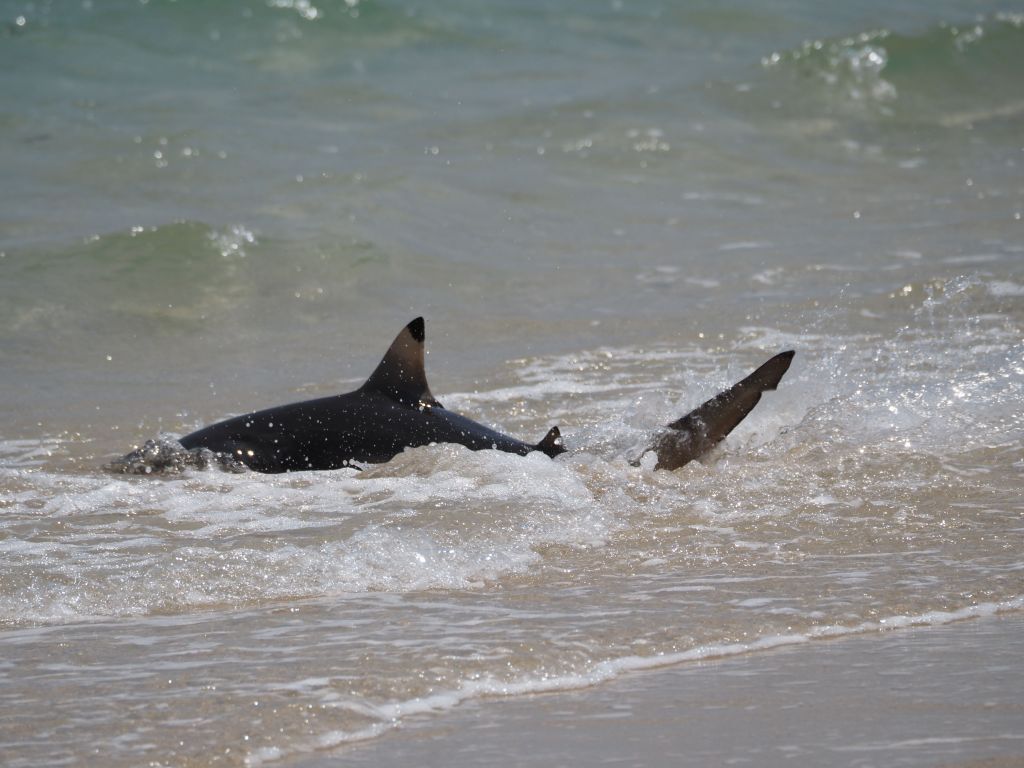
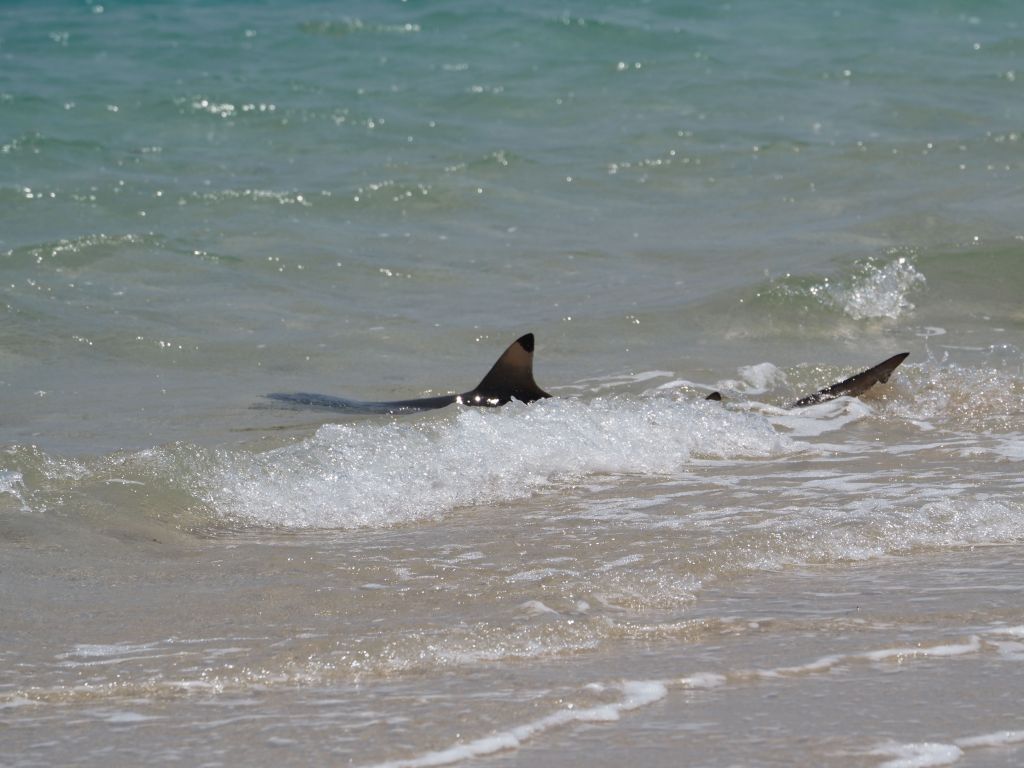
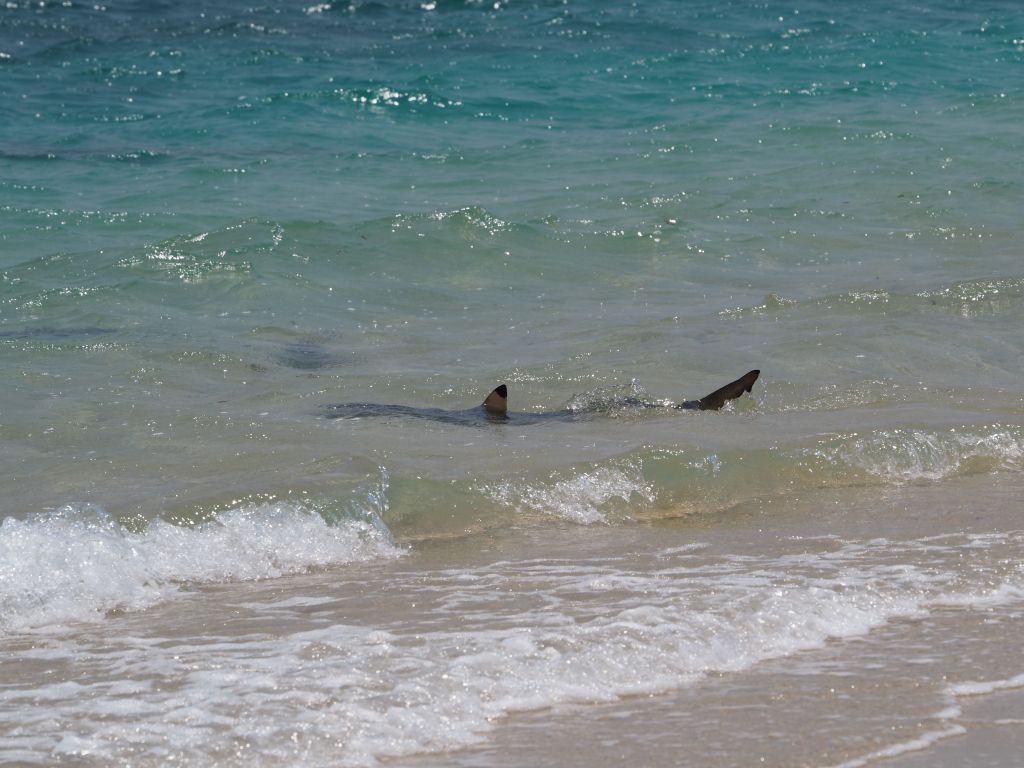
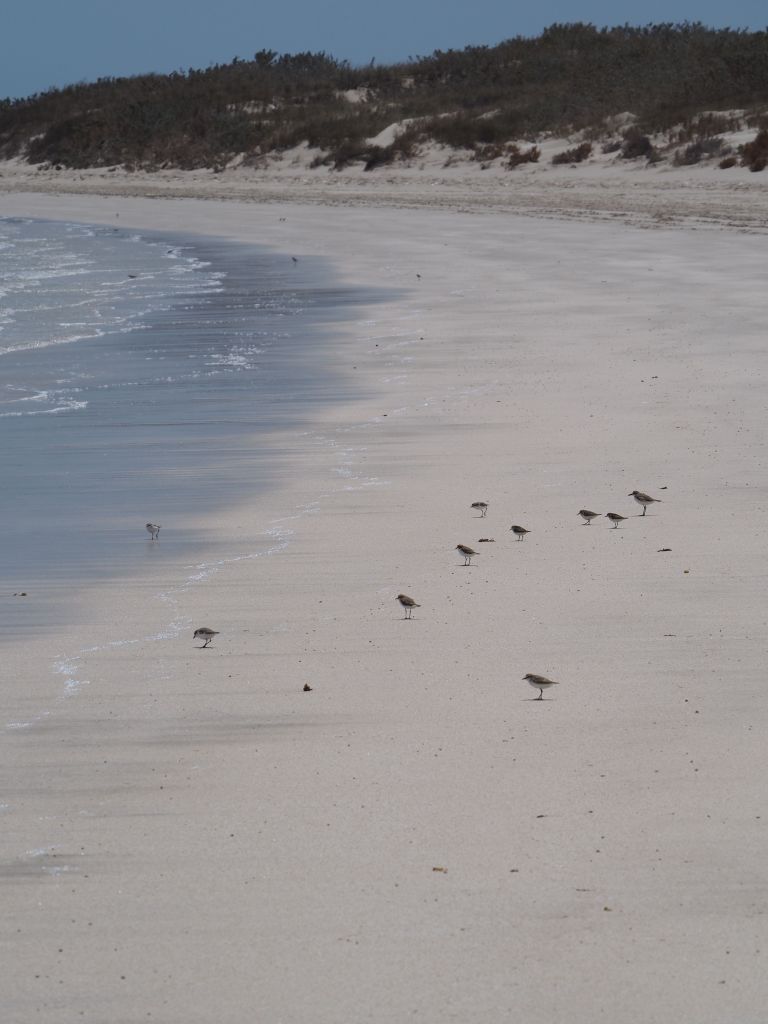
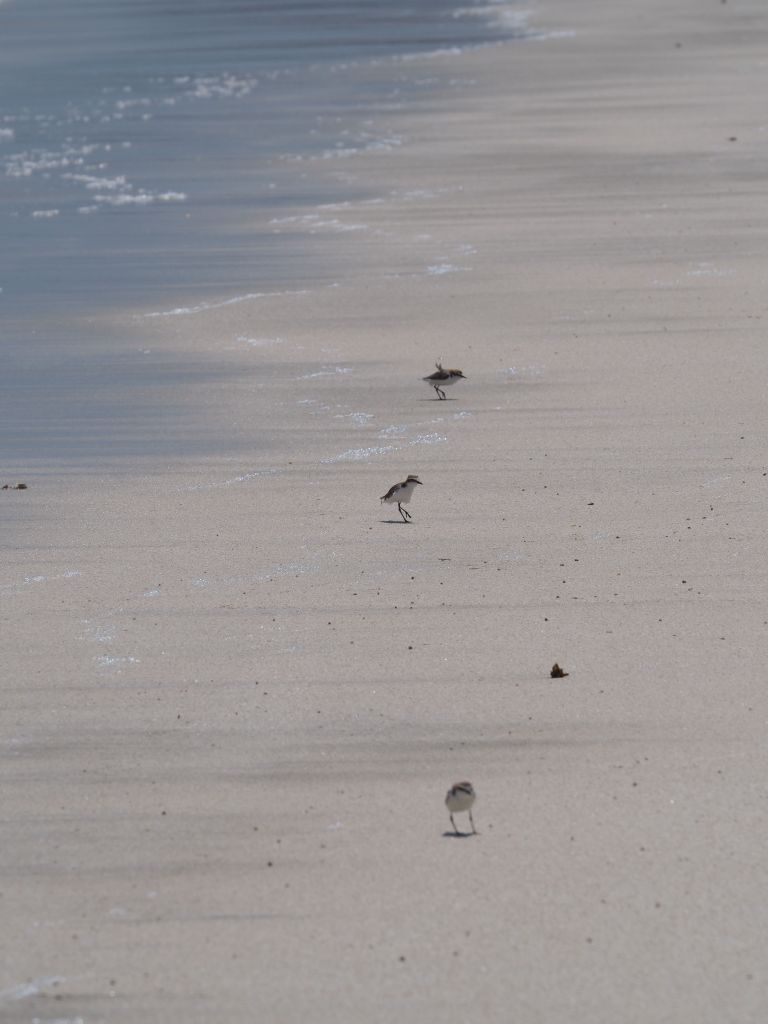
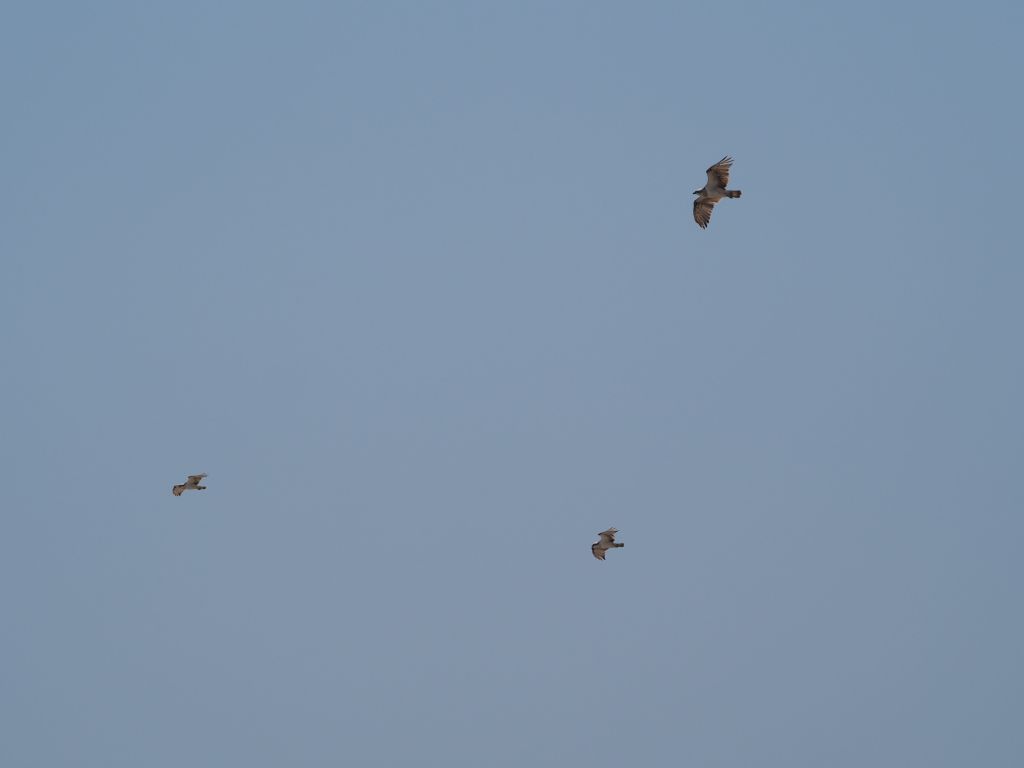
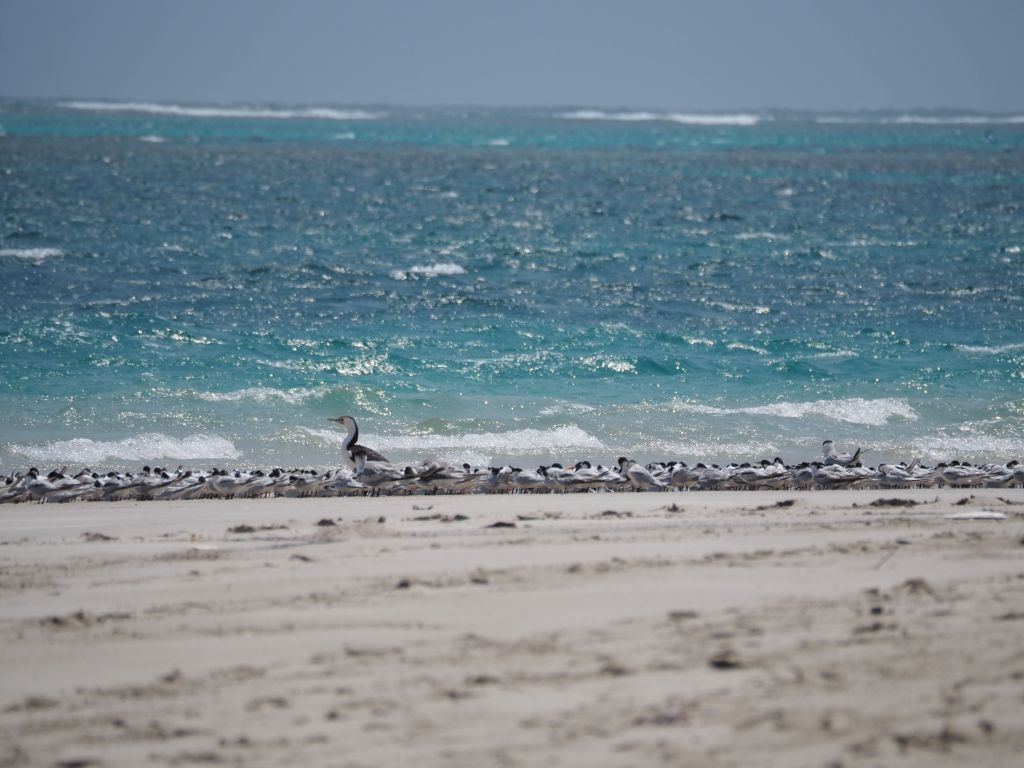
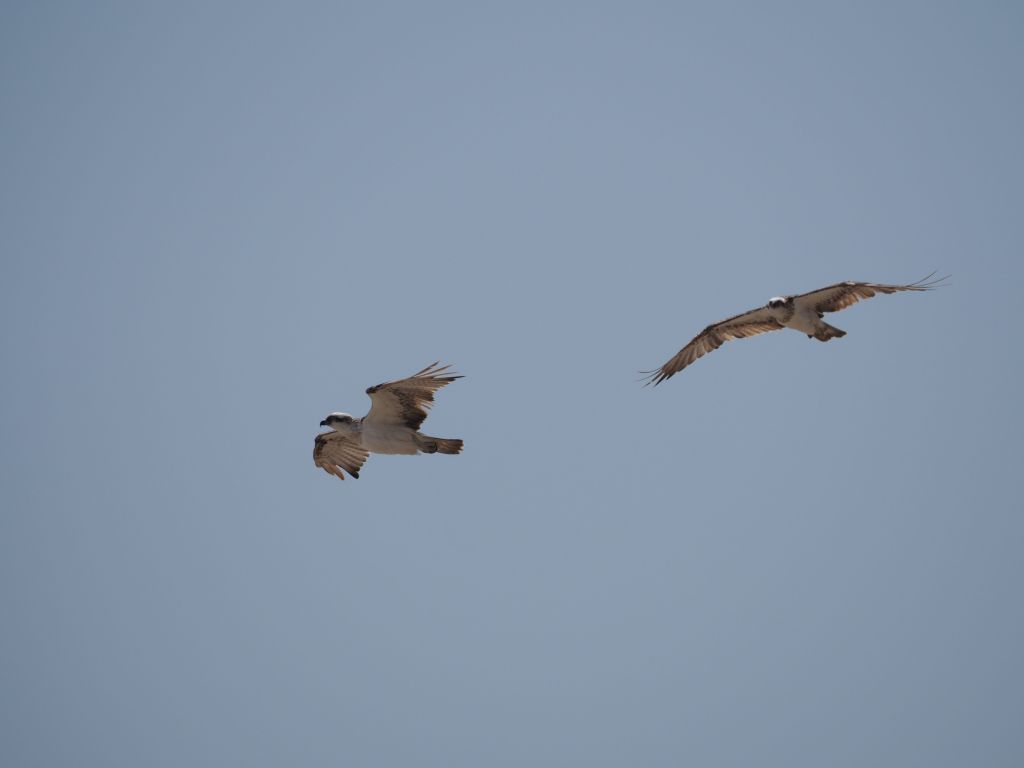
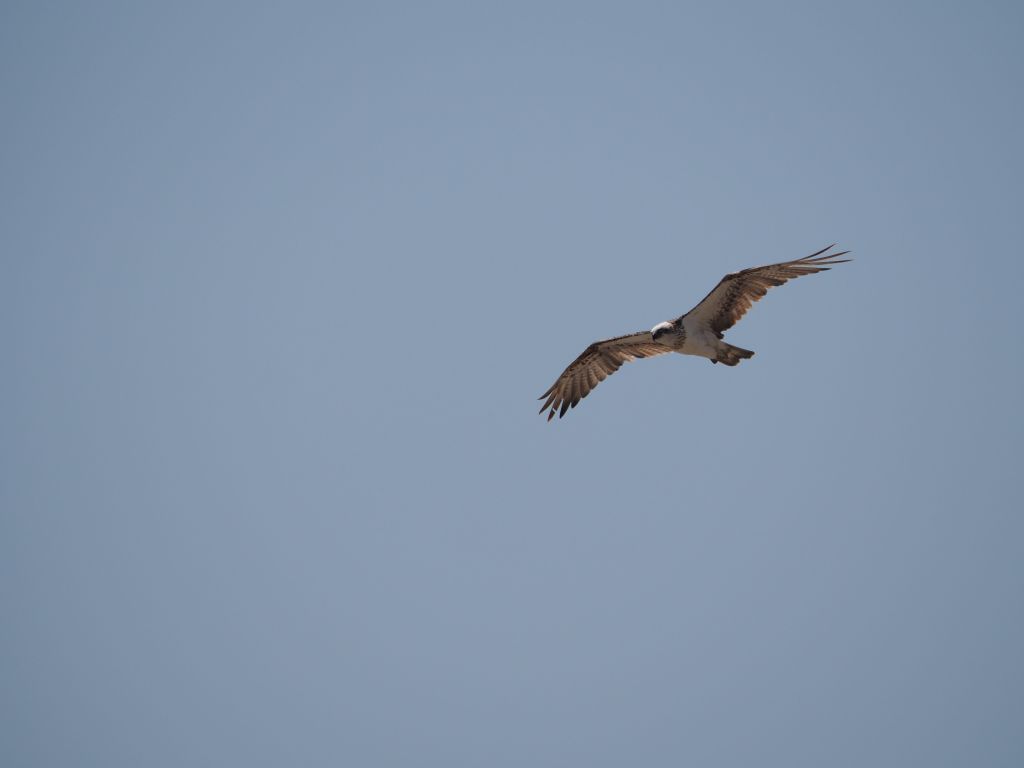
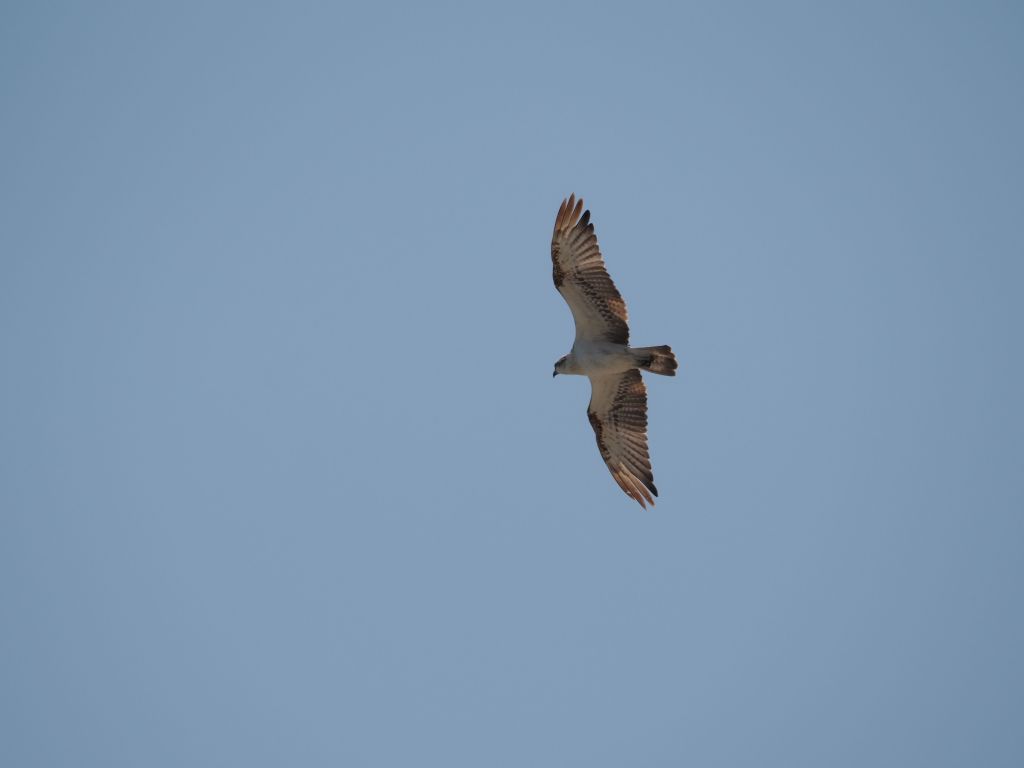
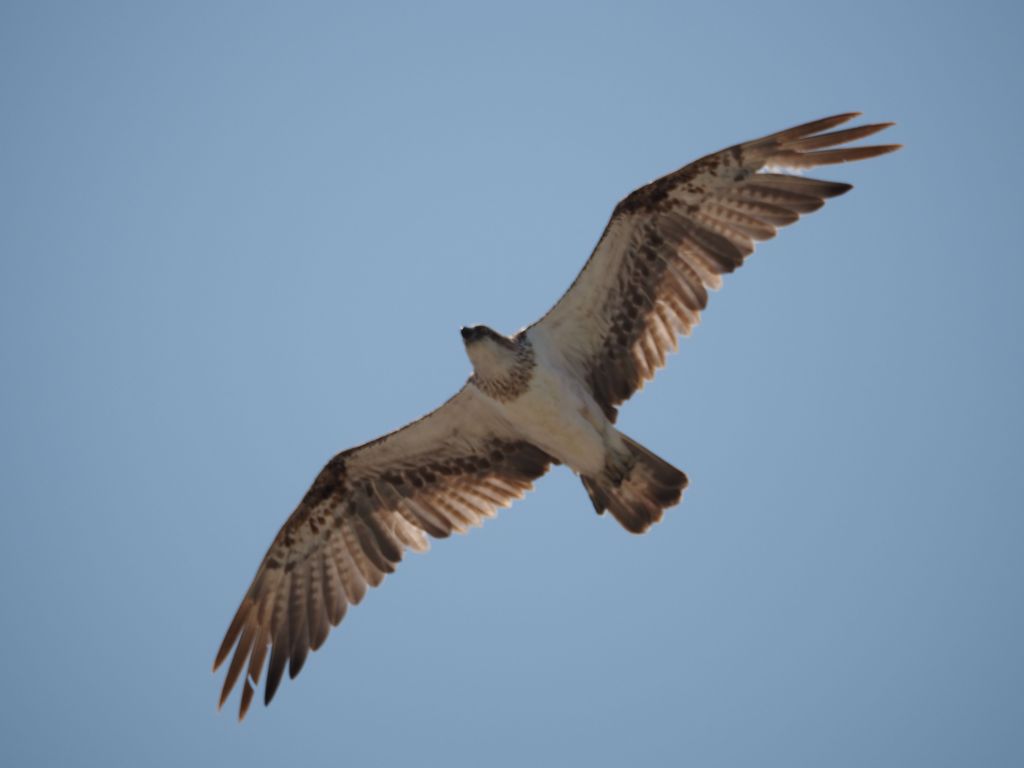
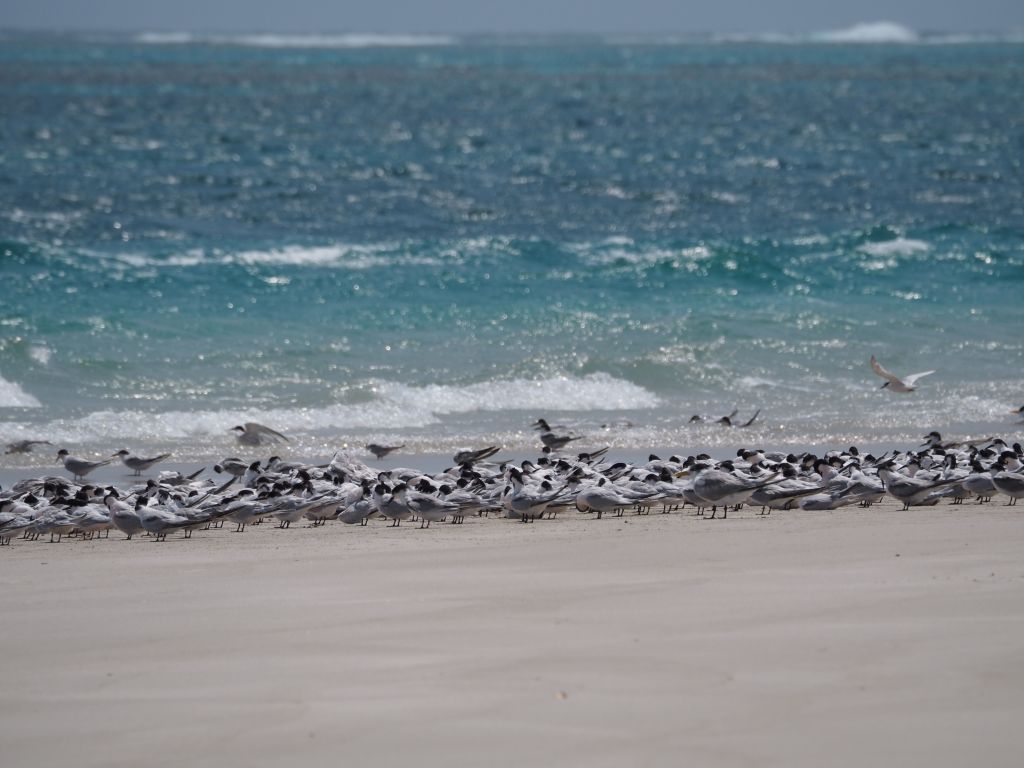
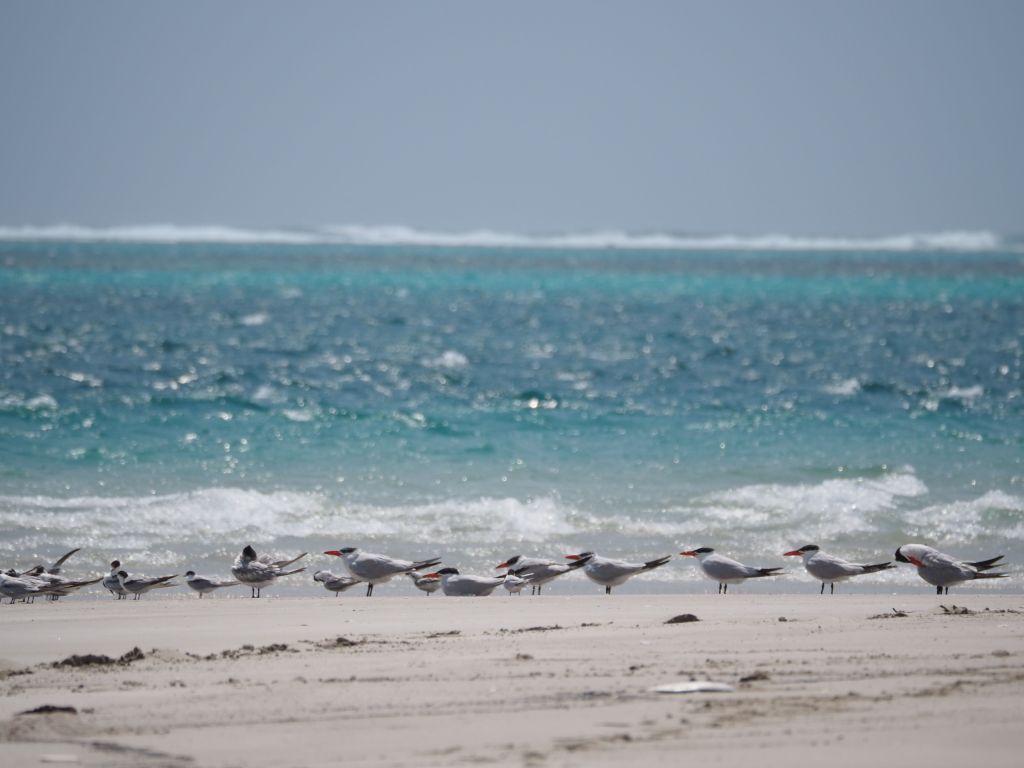
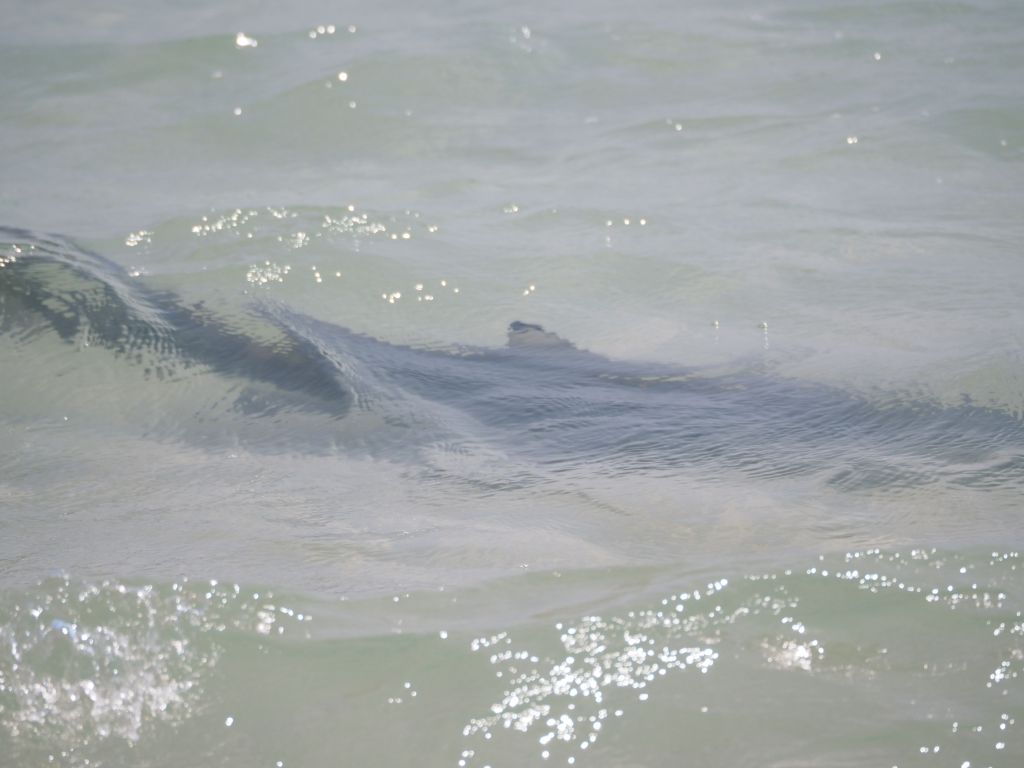
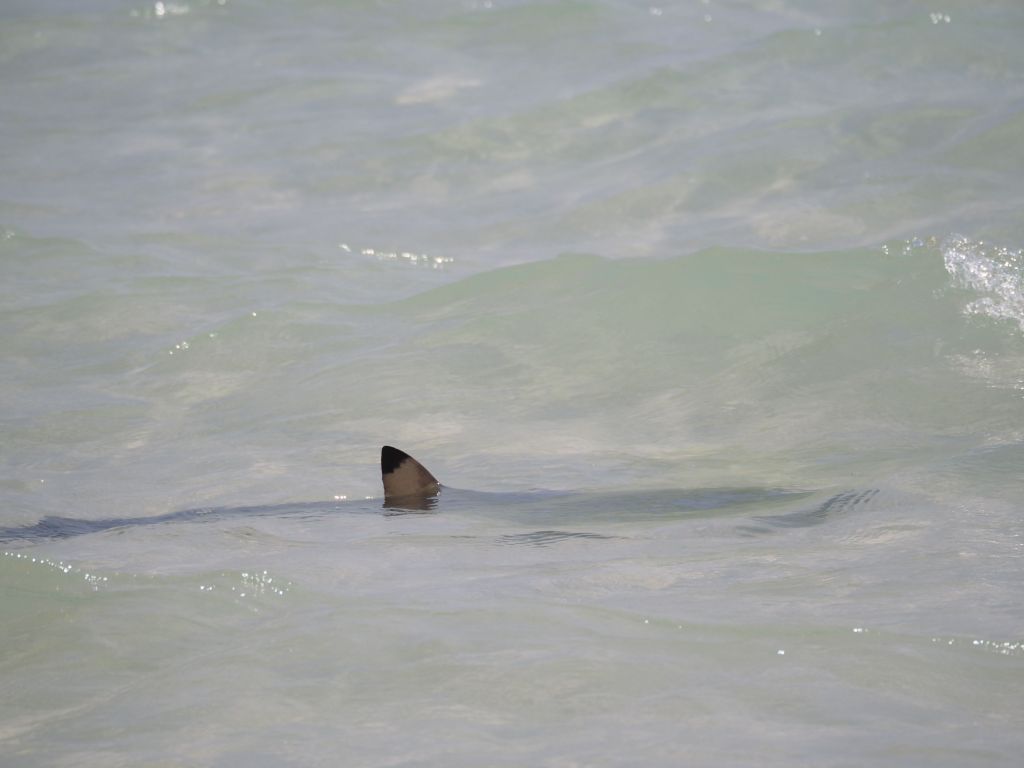
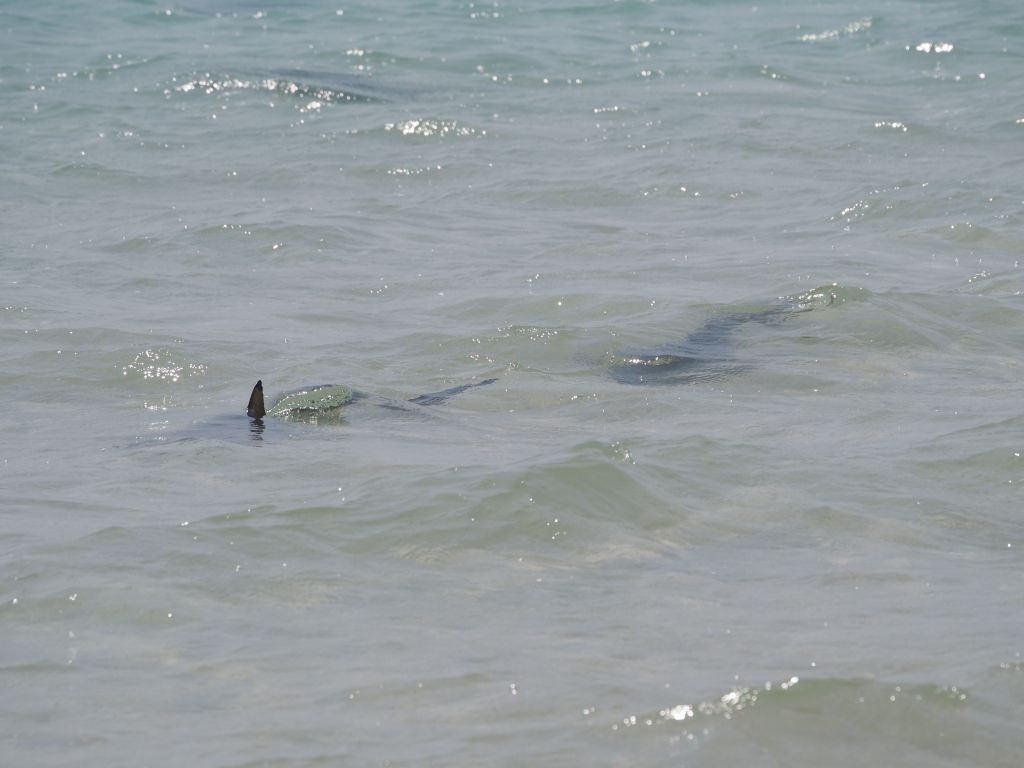
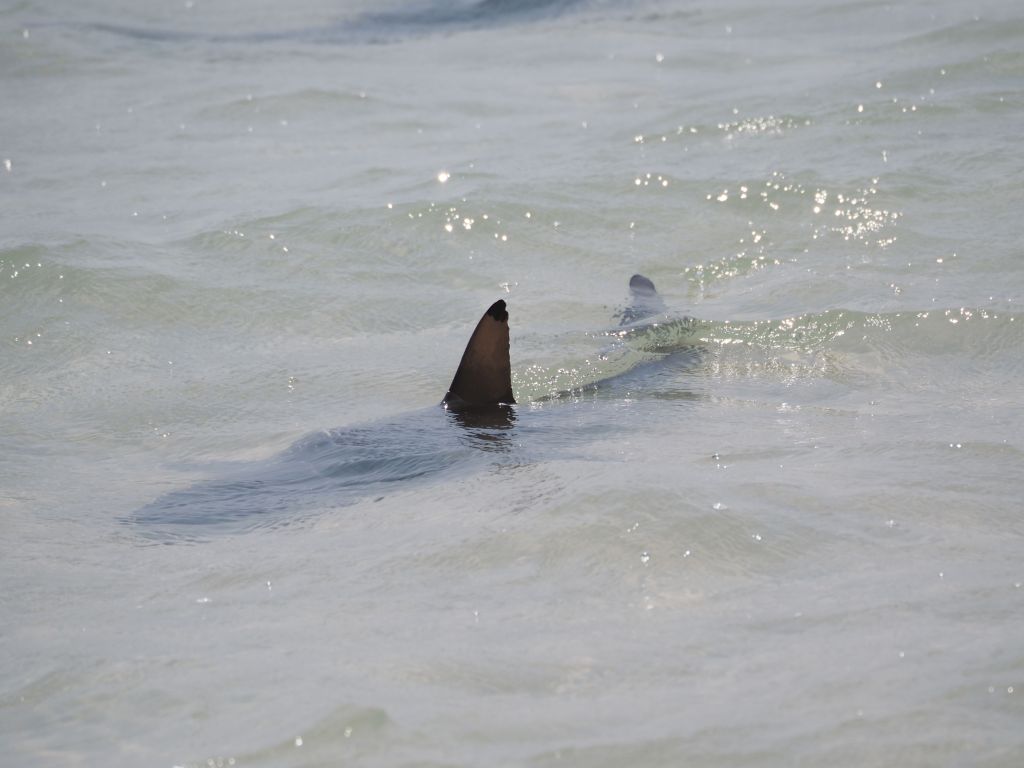
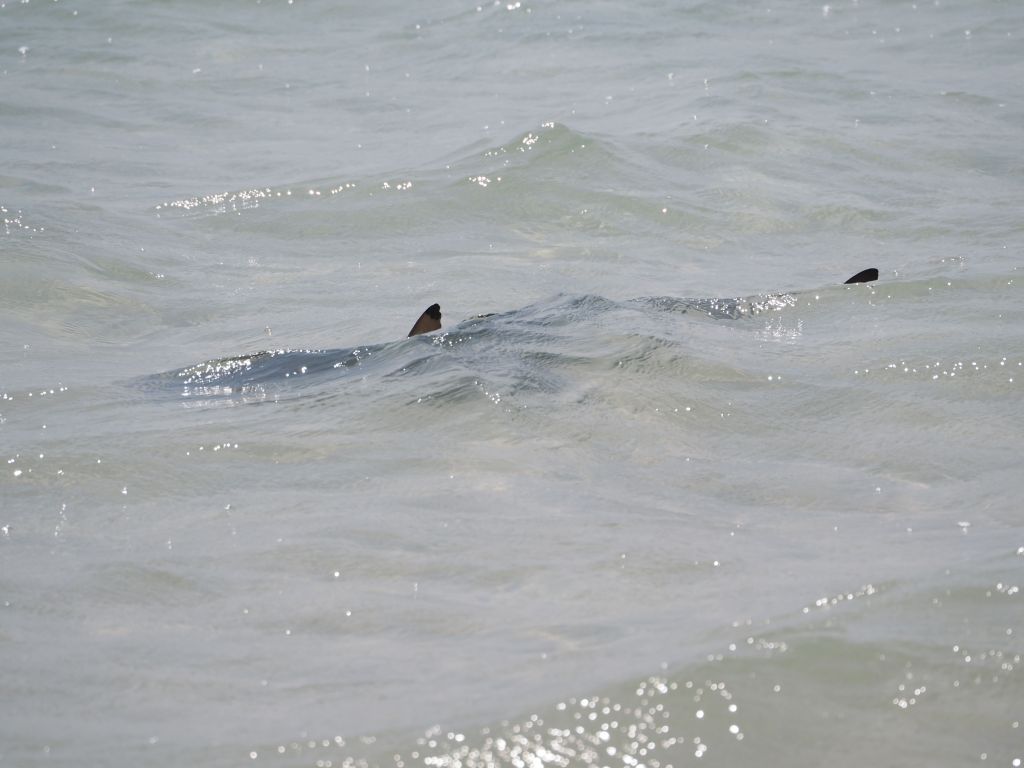
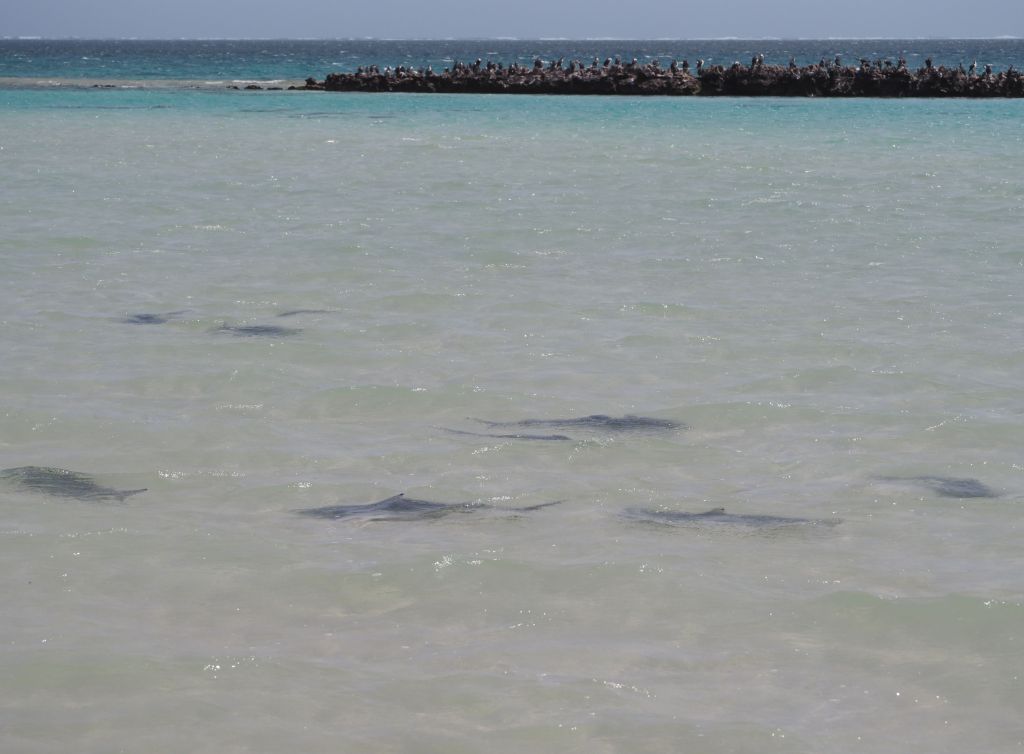
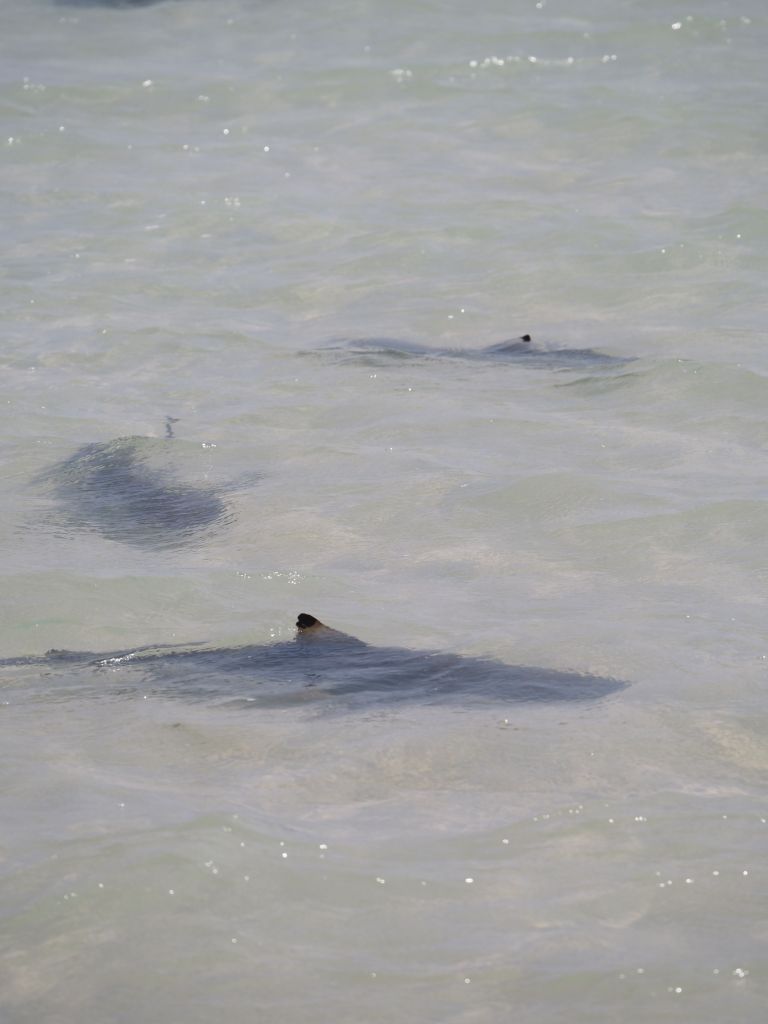
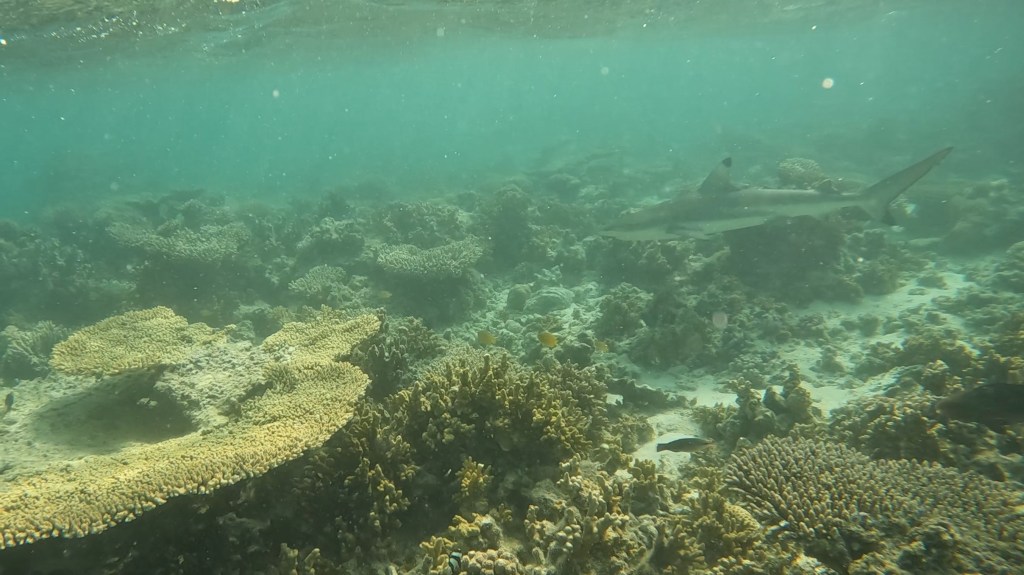
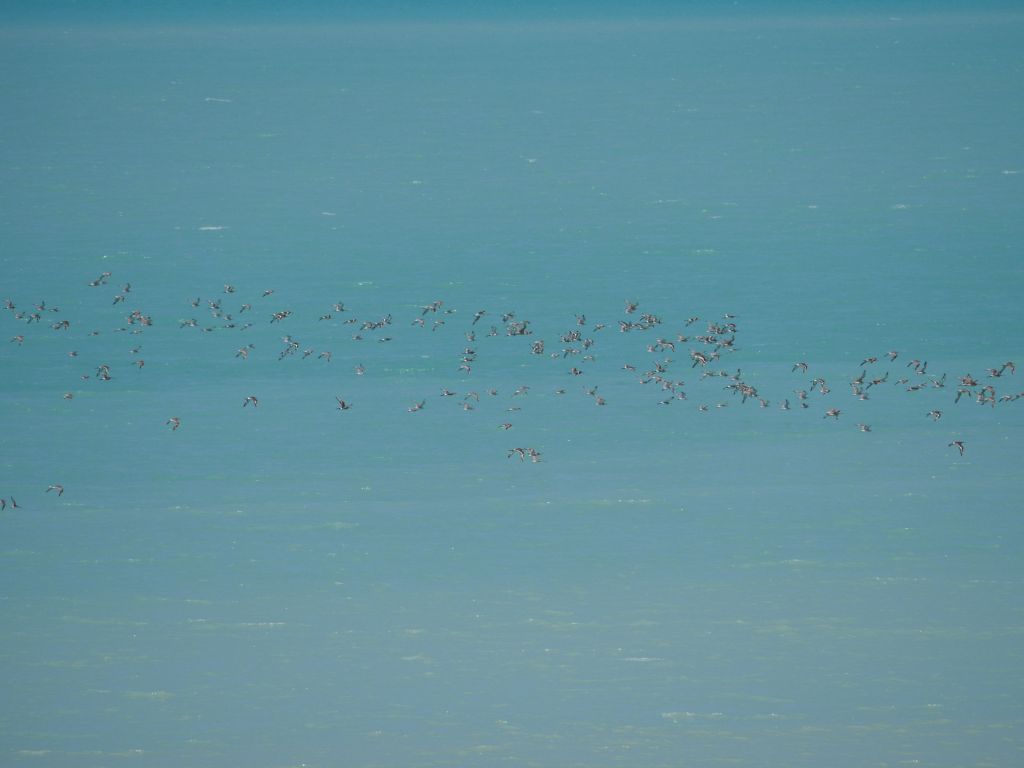
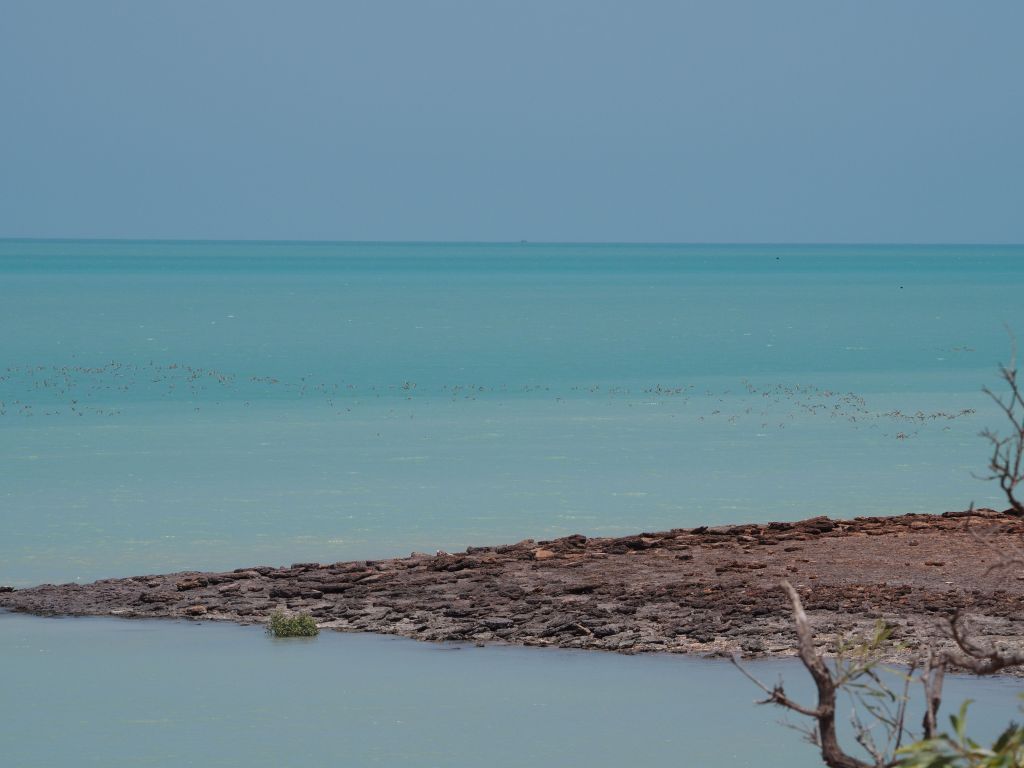
After the walk I meandered 1.5 hours south down to Coral Bay, quickly stuffed my face, and set out for the shark sanctuary. This is a spot where reef sharks congregate, particularly pregnant females and juveniles. The best time to go is around high tide and I was a little bit late, so I wasn’t quite sure what I’d see. Right at the beginning of the bay there were a handful of sharks milling around, which was neat enough. You’re not allowed to swim here, since it’s an important area for the sharks and if people were flopping around all over the place they would get scared off. So I watched a few refracted blobs circling around and went, “huh”. Almost everyone who comes to look at the sharks just hangs out at the closest part, but the bay itself is beautiful and I decided to just go for a nice long stroll. This turned out to be a great decision. It was a beautiful day for a walk, I got to see cute little shorebirds and hovering ospreys, and there were more groups of sharks farther along, with one particularly industrious one beaching itself hunting something onto the shore.
Launching onto the beachOf course I got the money shot out of focusLook at that fin knifing through the waterGuess why they’re called blacktip reef sharks
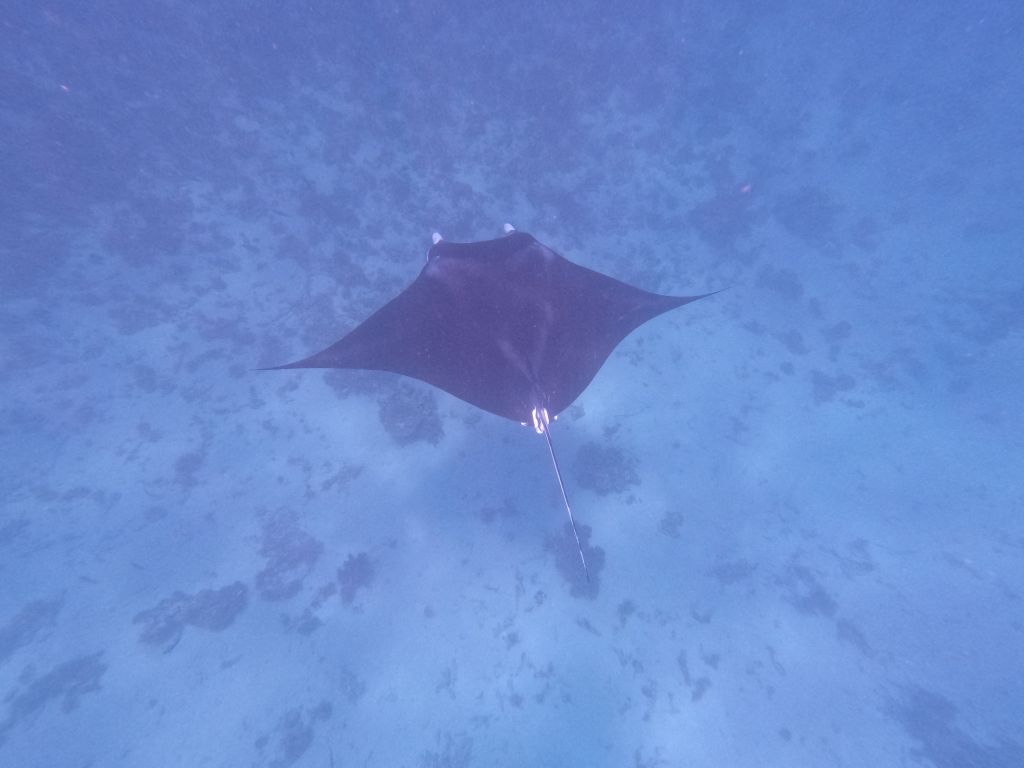
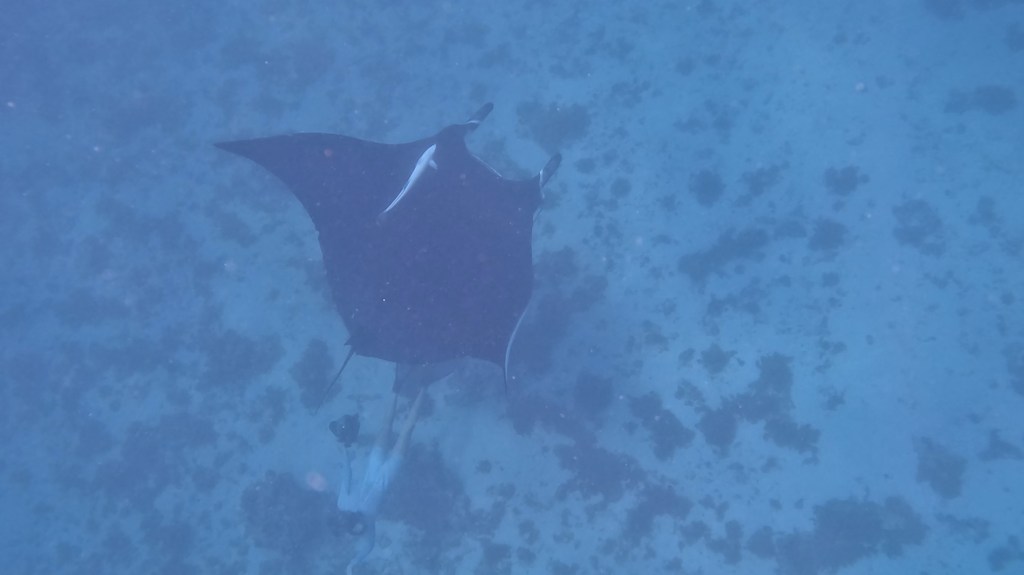
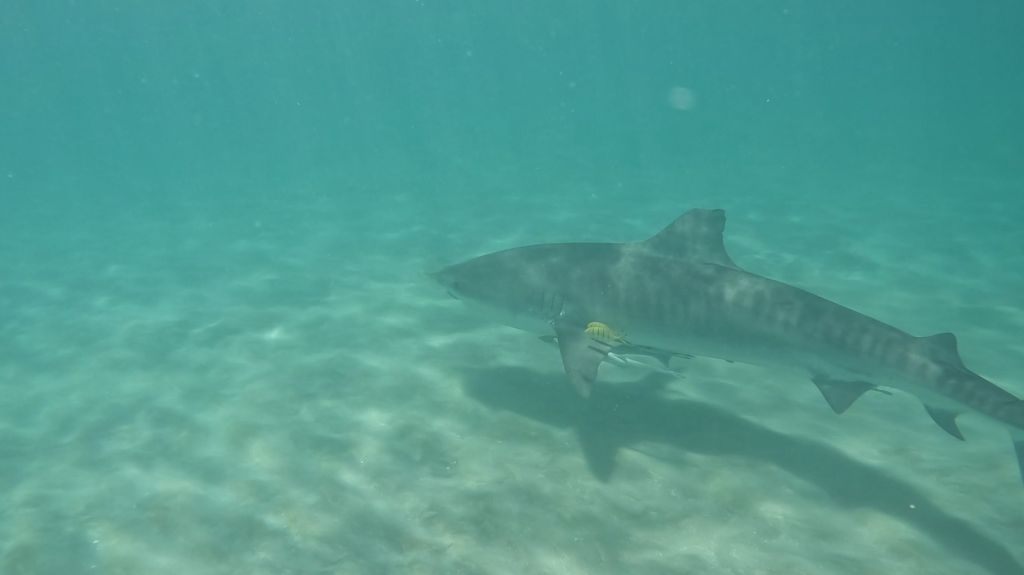
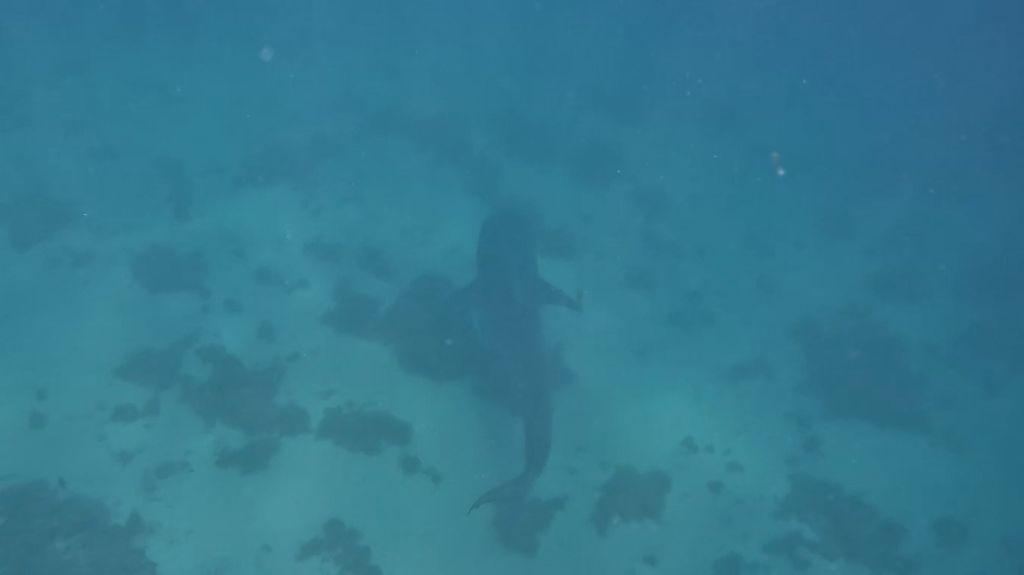
The last thing I was interested in in Coral Bay, which a friend had recommended, was the Ningaloo Marine Interactions tour. They check all the boxes with a small conservation-focused operation and an owner/skipper who’s finishing a PhD in marine biology, studying the local manta population. On top of that, they have a plane spotter, and besides the standard visit to a couple of fixed snorkel spots, they spend a couple of hours each tour just cruising around the bay, looking for anything cool to check out and potentially jump in with. Mantas are the focus, and with a resident population and a manta expert at the wheel you’re almost guaranteed to swim with them. Our other highlights were a couple of blotched fantail rays which were at least 5 feet across, and a friggin’ tiger shark! I’ve included a couple of screengrabs below but the videos are definitely better.
Human for scaleHuman for scale
So that’s the past few days. I have to say, I enjoyed the Ningaloo Marine Interactions tour tremendously, and I left thinking “Damn, that’s the kind of tour I would’ve loved to work on for a season.” The team seemed really nice and like they were genuinely having a good time, and going out looking for whatever cool animals you can find for 8 months is pretty literally exactly what I would love to do with my life. Something to keep in mind for the future I suppose. Now I’m in a town called Carnarvon getting some library time before I attend to all the necessaries like food, water, trash, etc… The next stop will be Kalbarri National Park, which looks pretty sweet, and then the southwest beckons. You can find the videos for this post here—I recommend checking them out!
I’ve finally made it to Exmouth and the Ningaloo reef, which I’ve been hearing so much about the whole time I’ve been in Australia. The Exmouth area reminds me a fair bit of a much smaller Baja California—it’s a thin peninsula, pretty much barren desert with a mountain range through the middle, and lots of very cool deep water marine life. Just like in Baja there’s a seasonal whale shark aggregation here and migrating humpback whales, as well as the possibility of seeing manta rays, orcas, sharks, turtles etc… Unlike Baja, however, Exmouth has the Ningaloo reef.
Exmouth itself is a bit of a weird place. It’s a tiny town of only 2-3,000 people that swells to somewhere like 10-12,000 during the height of tourist season. Everything is very expensive and there are generally only 1 or 2 options for whatever you need. During peak season absolutely everything is totally booked, so lucky for me I arrived right after school holidays, which is pretty much the close of the high season. If I had gotten here earlier I’m not really sure what I would’ve done—all the campgrounds book out well in advance, and the town is notoriously strict in stopping people from free camping. Happily that’s only a hypothetical, because while the town certainly hasn’t been empty during my stay, I haven’t had too much trouble getting campsites in the national park.
I made an especially soft landing in the area thanks to an extremely hospitable guy named Roger that I got in touch with through Couchsurfing. He turns out to be a park ranger in nearby Coral Bay and had lots of useful information about the area. He’s traveled all over the world, often meeting people through Couchsurfing, and nowadays hosts travelers when he’s at home. He was extremely generous, hanging out, feeding me dinner, letting me fill up my water tanks, and helping me plan out my stay.
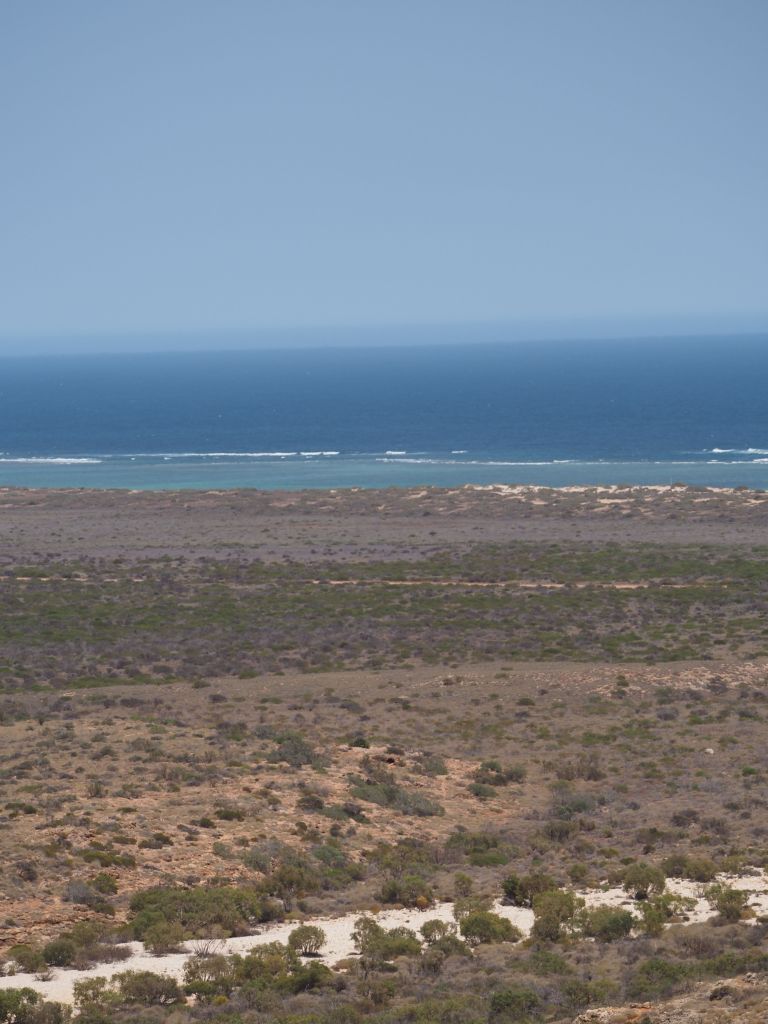
Exmouth town sits on the east side of the peninsula, and is really just a place to get supplies and go on tours. The reef, which is the main attraction here besides whale sharks, runs along the western side of the peninsula, which is all a national park. Some fun facts—it’s the biggest fringing reef in Australia, at 260 kilometers (160 miles) long, and at certain points it’s less than 500 meters (about a third of a mile) from shore. I guess the proximity to shore is what makes it a fringing reef rather than a barrier reef like the, um, Great Barrier Reef, which is way way way bigger but also much farther from the shore. What all this means is that you have your pick of absolutely incredible snorkeling just swimming out from the shore.
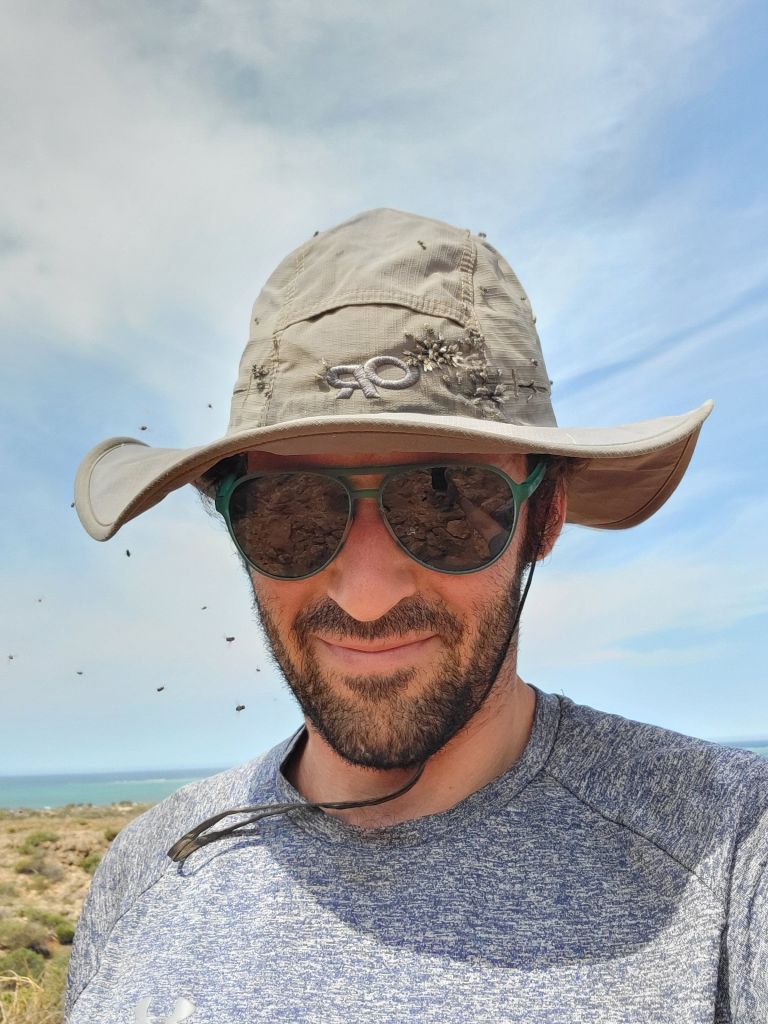
After a couple of nights staying with Roger I loaded up on supplies and headed over to the park for 4 nights camping and snorkeling my little heart out. As it happens, besides the departure of the whale sharks, tourist season wraps up this time of year because it gets very windy, extremely hot, and infested with flies. And I have to say, I think I have a reasonably high tolerance for these kinds of things, but this was a bit of an exercise in finding exactly where the limit is. The first few days I spent in the park, where there is essentially no shade or shelter, all saw temperatures getting up over 40C (104F), with several days around 43-44 (109-111F). Overnight and into the morning the wind would blow in from the east, over the desert, bringing hot air and really giving the sensation of a fully body hair dryer. Temperatures would be over 30C (86F) by 6am and heating up fast, so sleeping in was pretty much impossible. And the second you emerged you would be absolutely swarmed by flies looking for all the nooks and crannies (mostly eyes and nostrils) of your face. Videos don’t capture it that well, but they give you an idea.
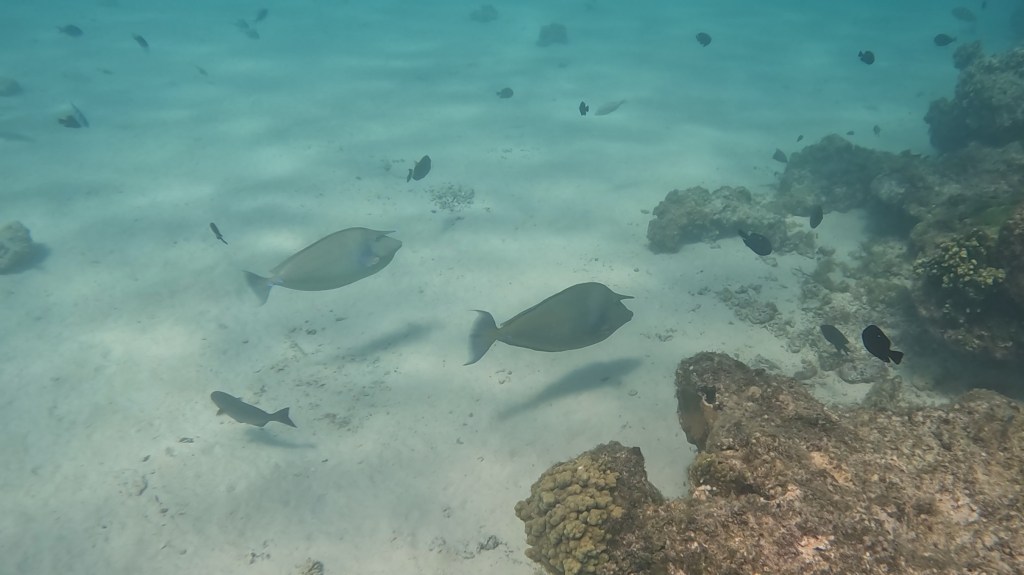
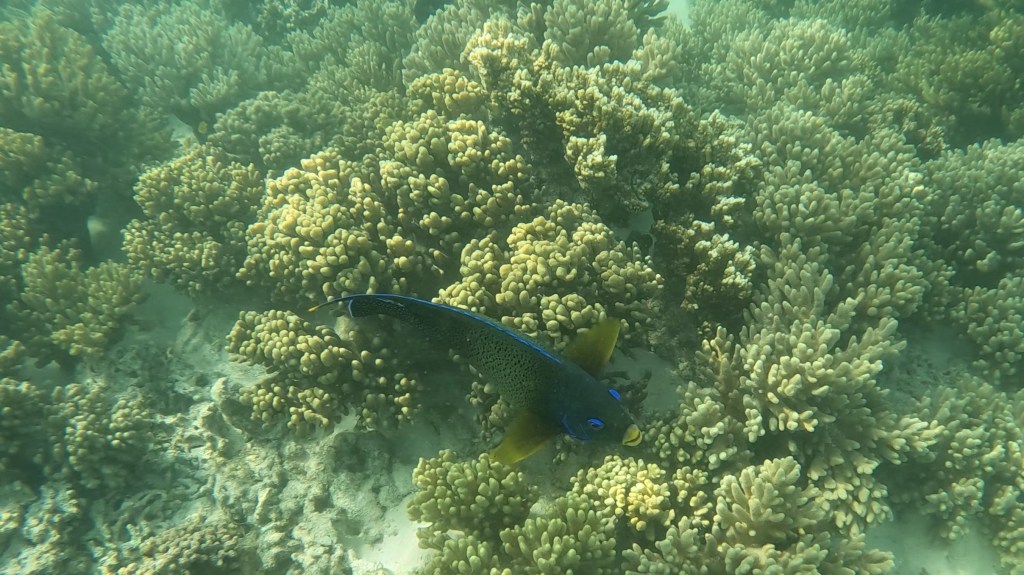
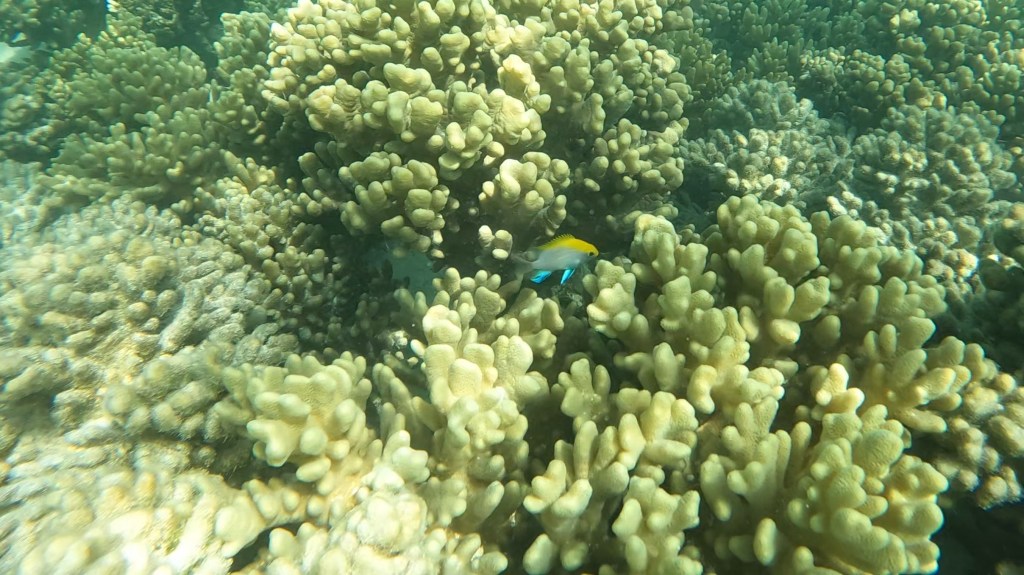
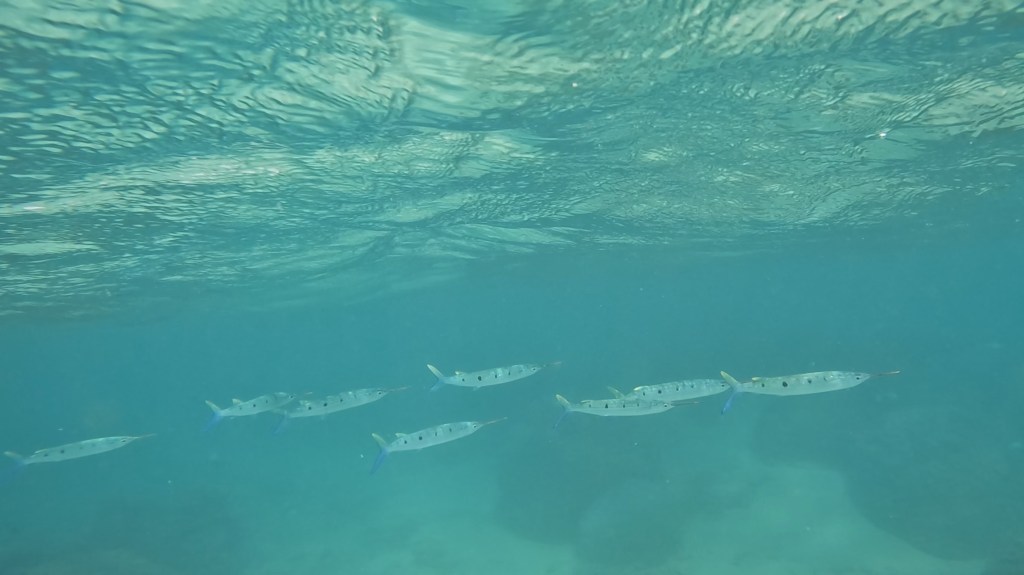
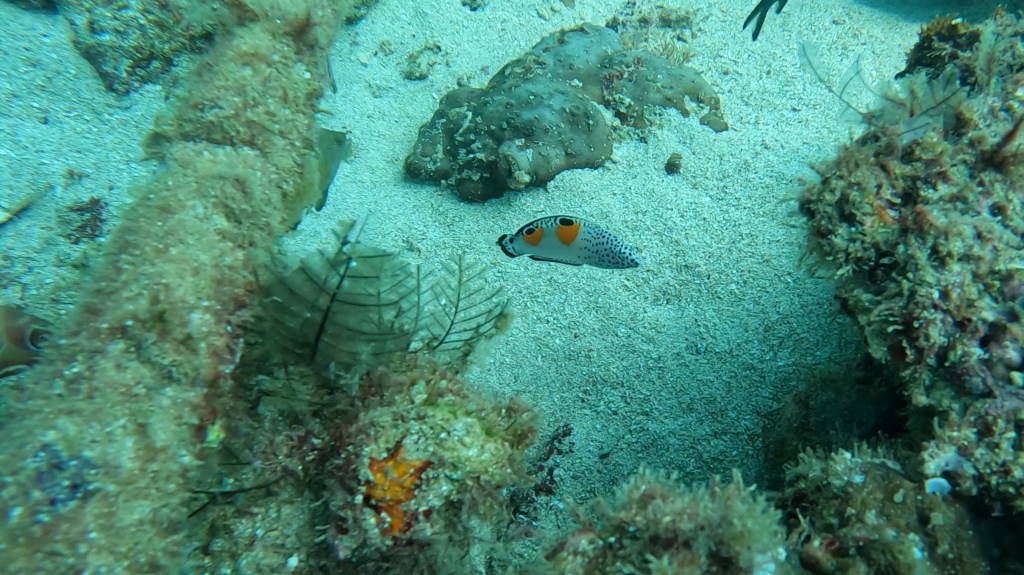
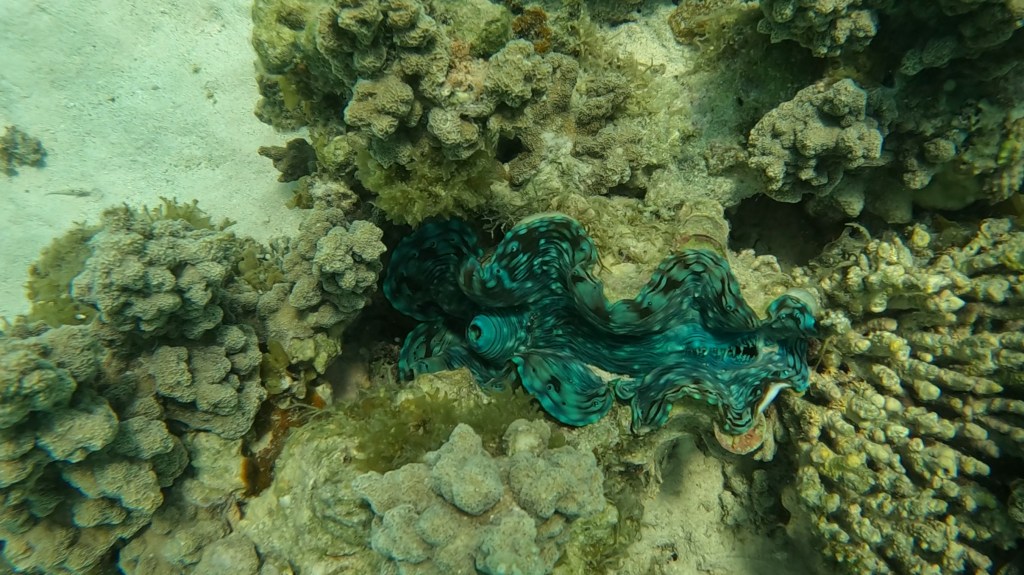
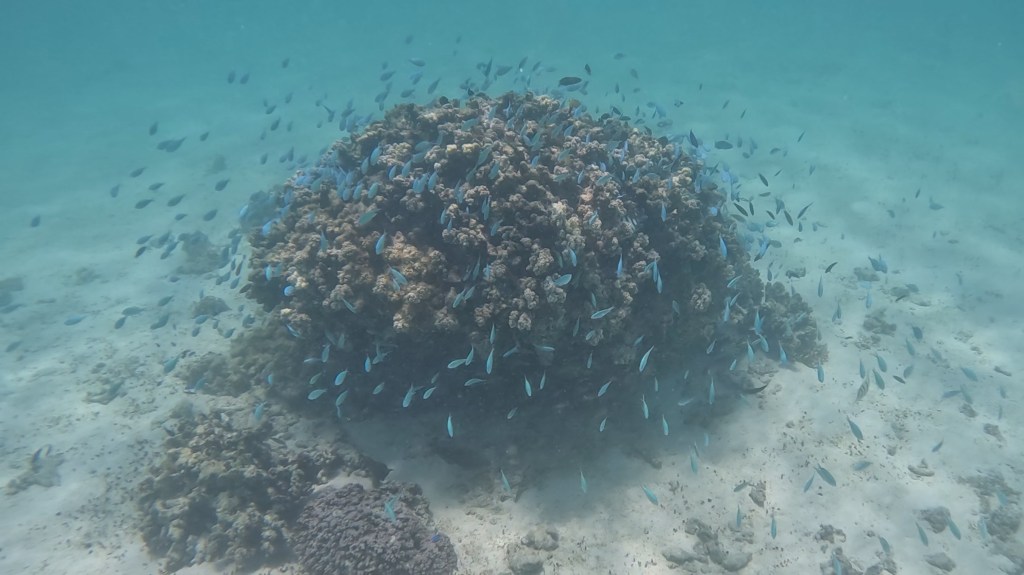
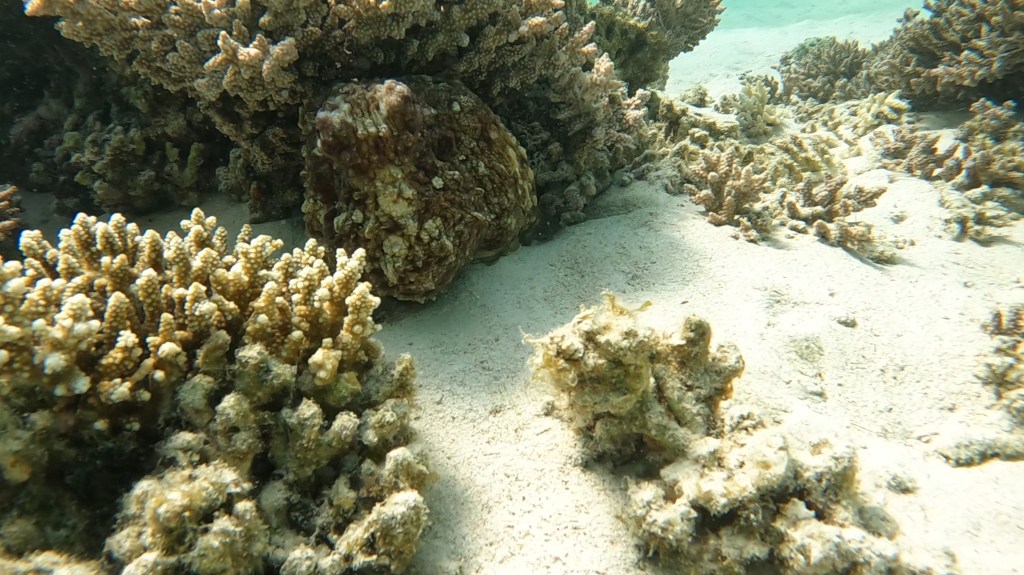
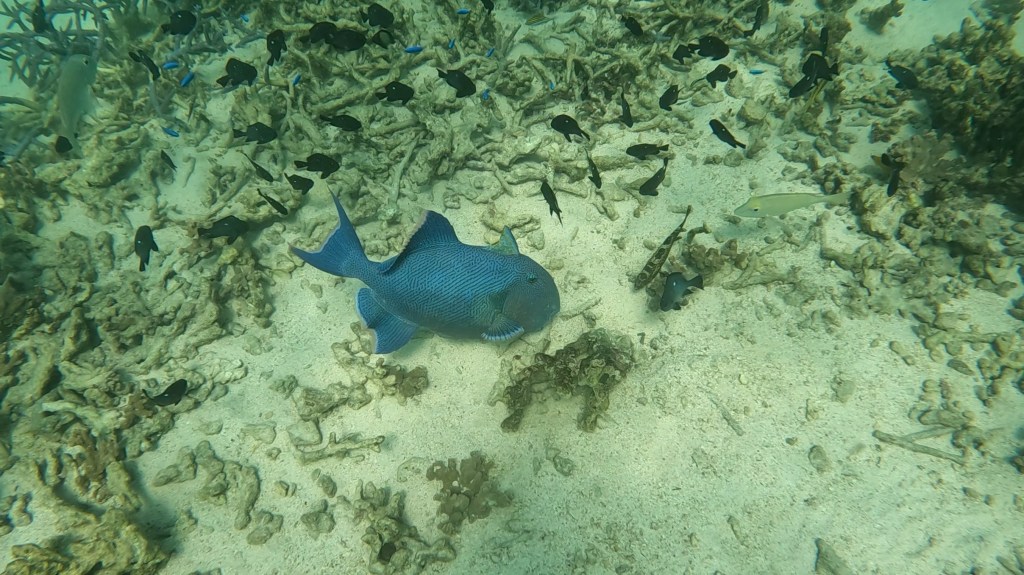
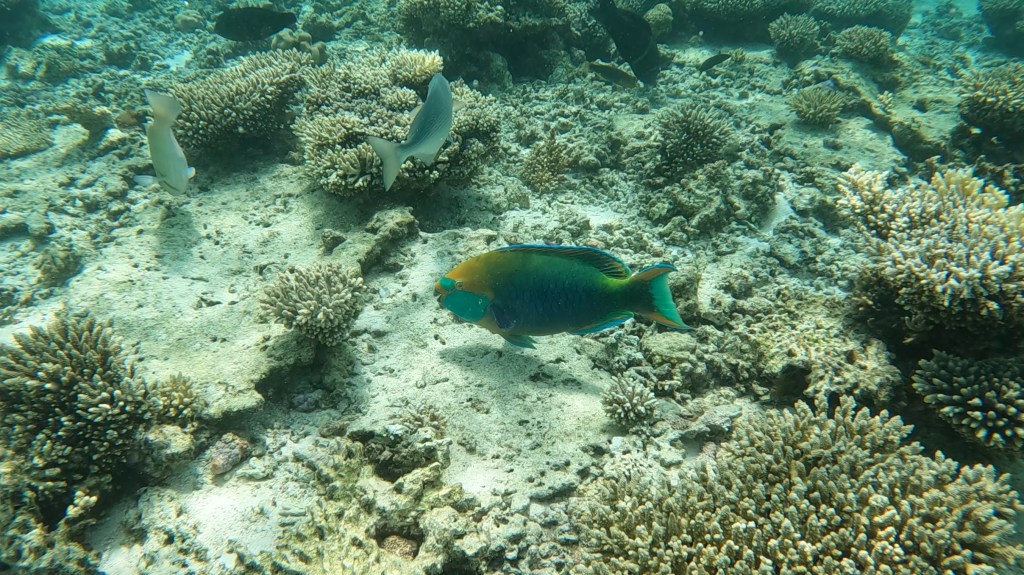
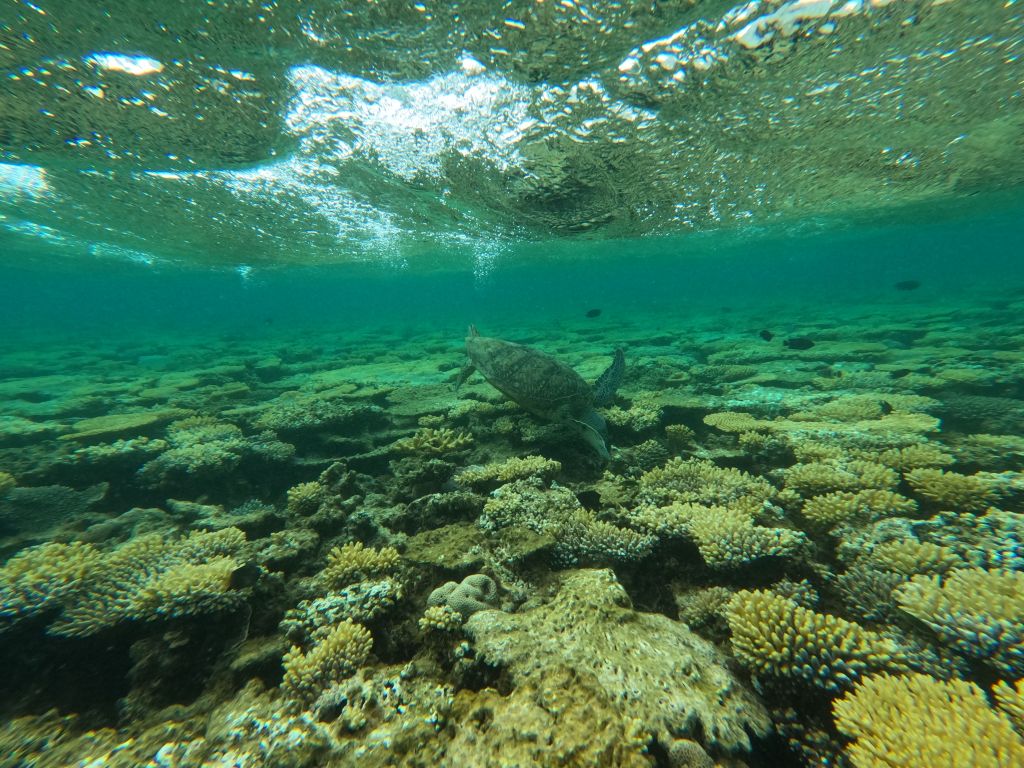
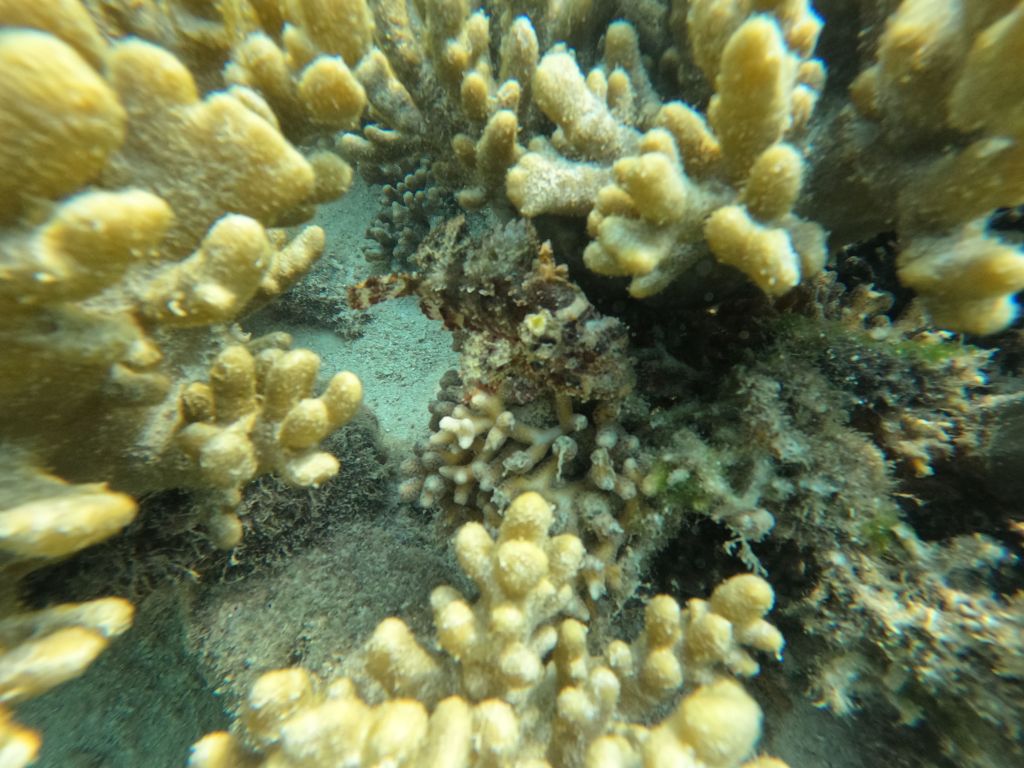
The saving grace of all this was that the main activity I was interested in, snorkeling, solved all these problems. So the thing to do was just spend 6 hours every day snorkeling, covered up as much as possible to blunt the sizzling sun. And the snorkeling here really is amazing. I saw buckets of turtles, lots of skittish reef sharks, tons and tons of fish, sea cucumbers, some octopus, huge groupers, fields of beautiful coral, one very well hidden stonefish, and probably much more I’m forgetting. You can take a look at a handful of videos here.
On my first night getting into the park I pulled up to my campsite, looked across the road at my neighbors hanging around outside their trailer, and went “holy crap, I know that guy”. It turned out that the lovely family I’d spent a day walking around Leliyn Falls with a month and a half ago were in the site right next to mine. What a world! It was great to see them again, they’re very nice and fun to spend time with, and it was good for my little heart to spend some time in a family dynamic again.
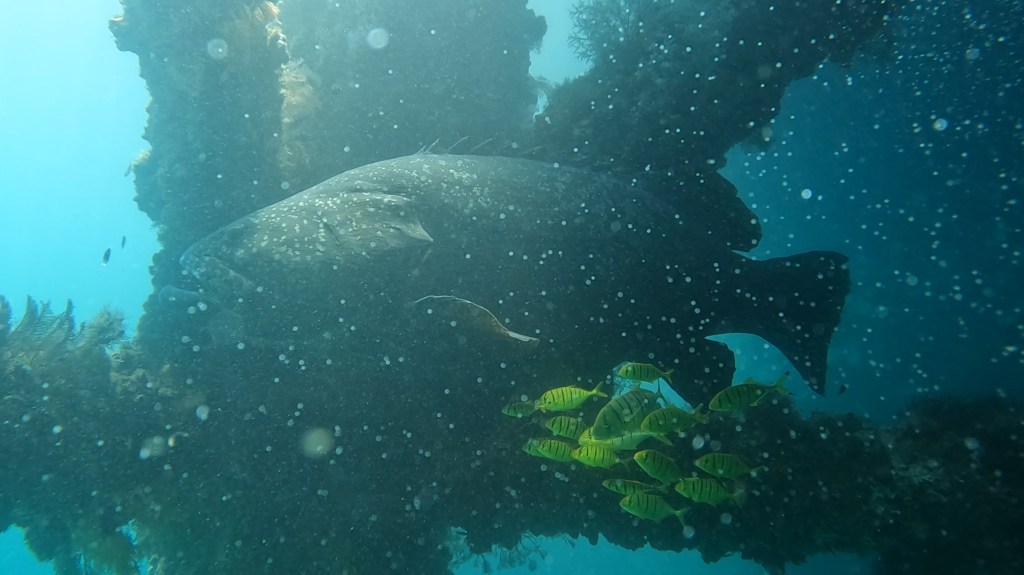
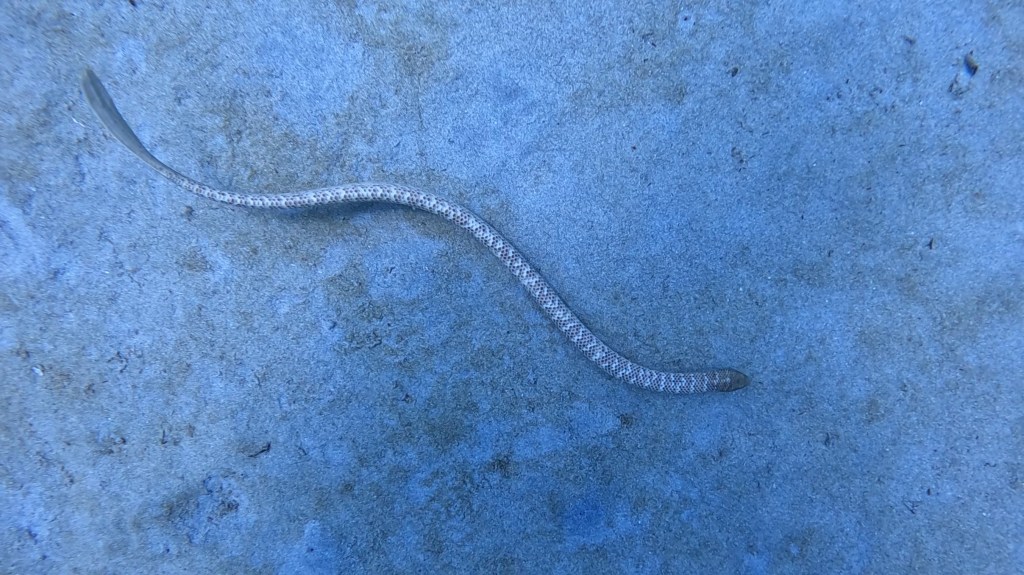
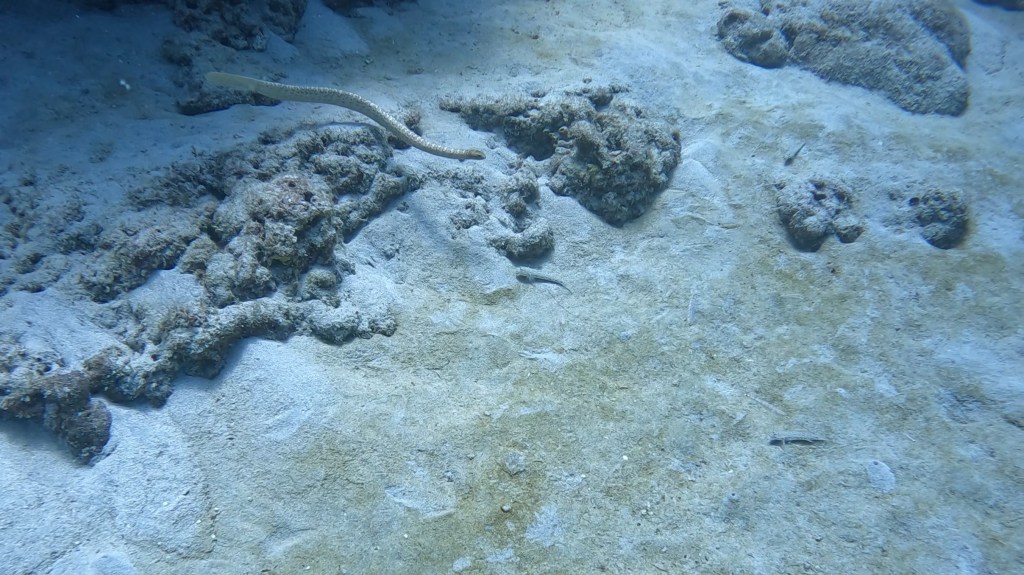
Another big attraction in Exmouth is the navy pier dive. This is a pier on an active navy base that they allow the public to SCUBA dive at. The pier supports are covered in all kinds of beautiful coral, and there are massive schools of fish, sharks, octopus, and truly titanic groupers that hang out there. It was fun to strap on the ole SCUBA gear again and the marine life was really amazing, all in this small area. I enjoyed the dive tremendously. The next day I did a dive out in a bay where the main attraction is a manta cleaning station, but unfortunately we didn’t see any mantas, and it wasn’t nearly as interesting as the navy pier dive. I did get to see a couple of sea snakes though, which was very cool.
There are also a couple of gorges in the national park that you can walk through, eventually climbing up onto the rim and getting a view out to sea. I was keen to check these out for a change of pace, and of course I went for it on the hottest day I was here. The gorges were nice, the sun was sizzling, and the flies were ravenous. I still had a pretty good time and got that good bone deep tired feeling by the end.
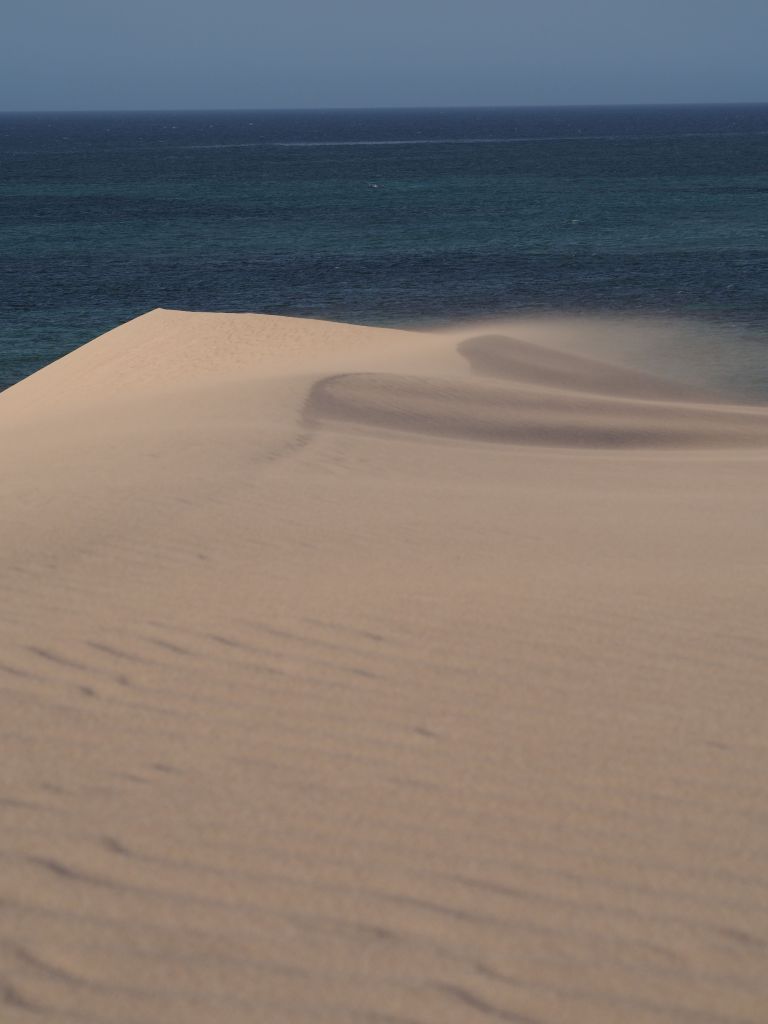
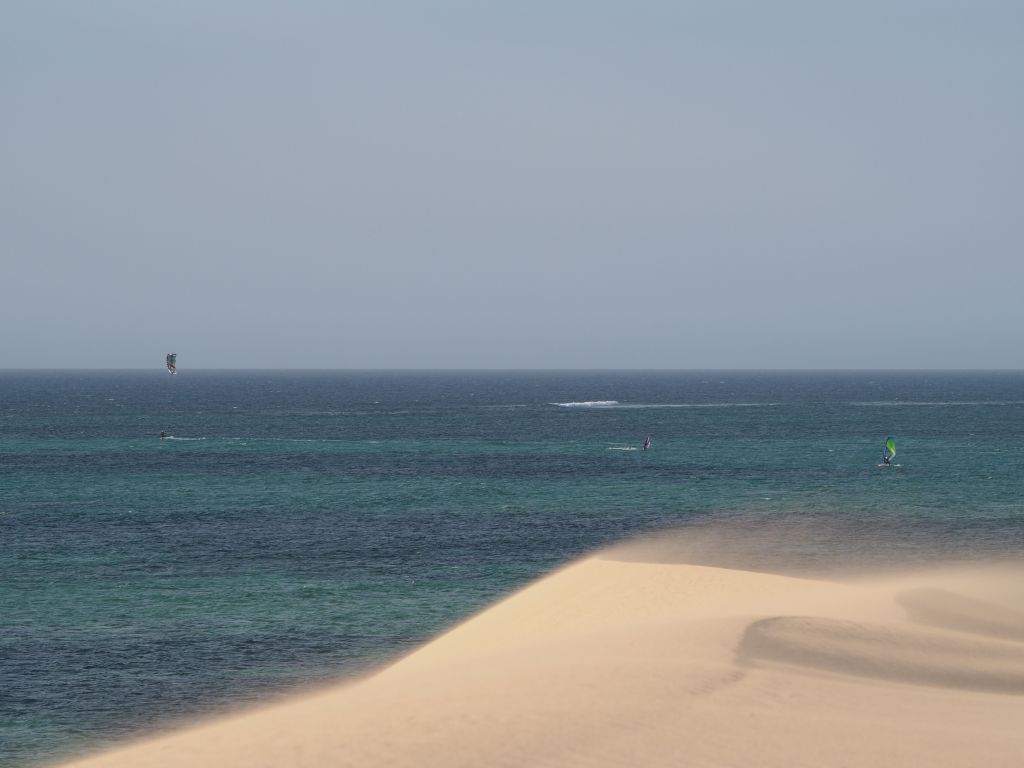
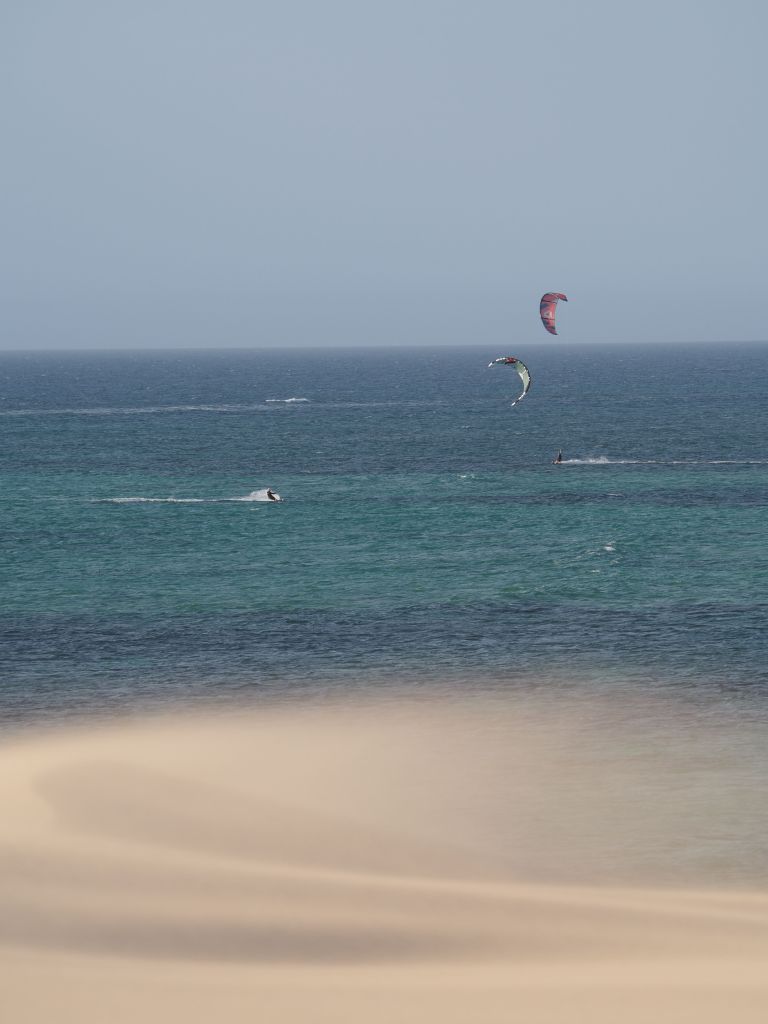
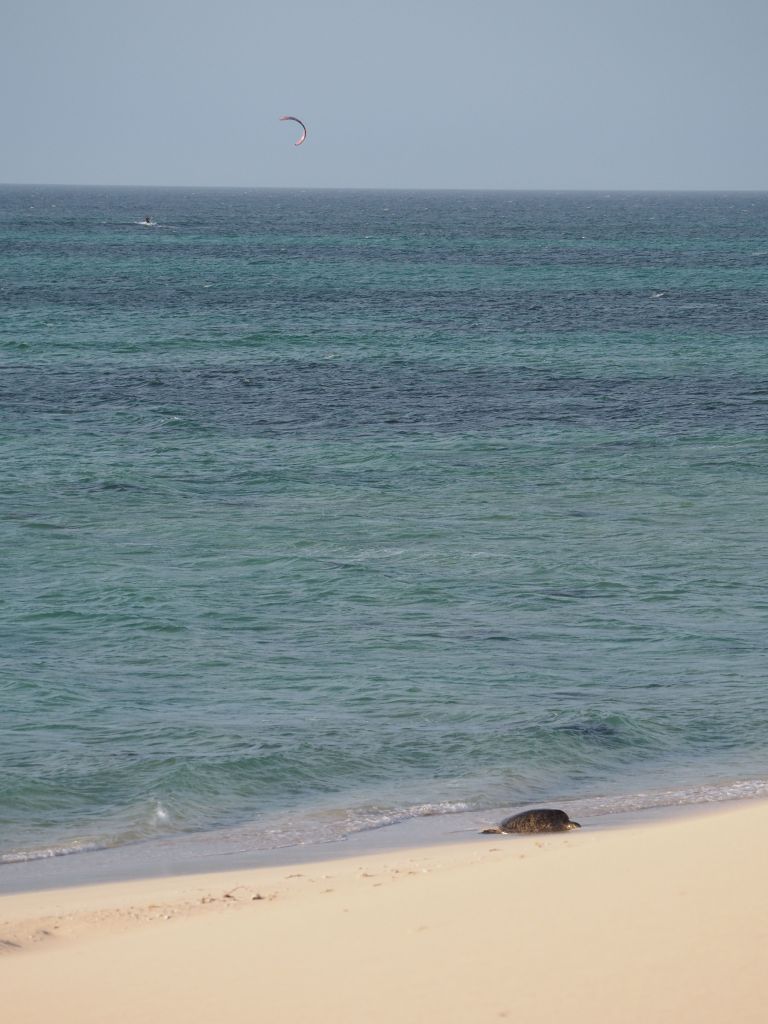
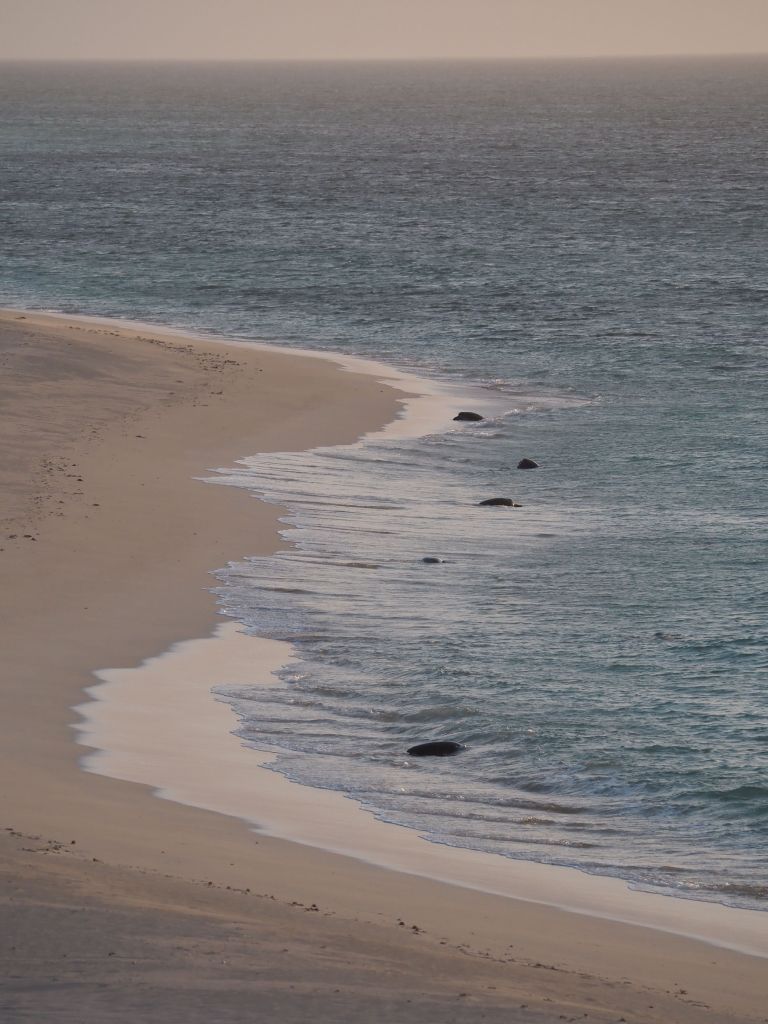
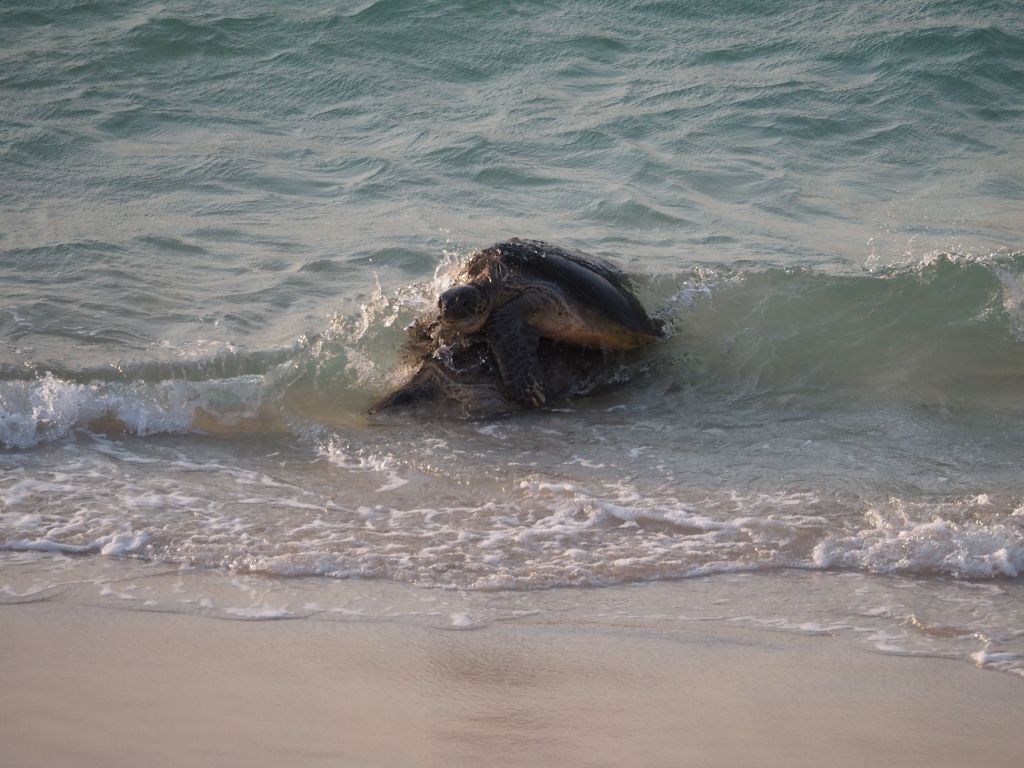
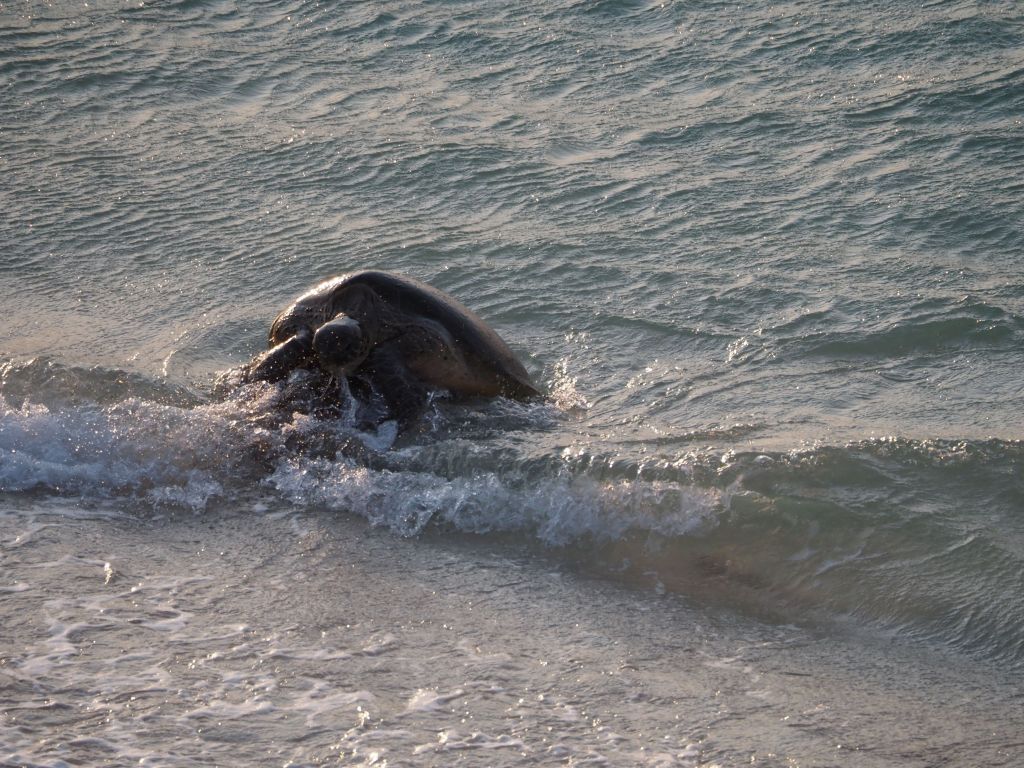
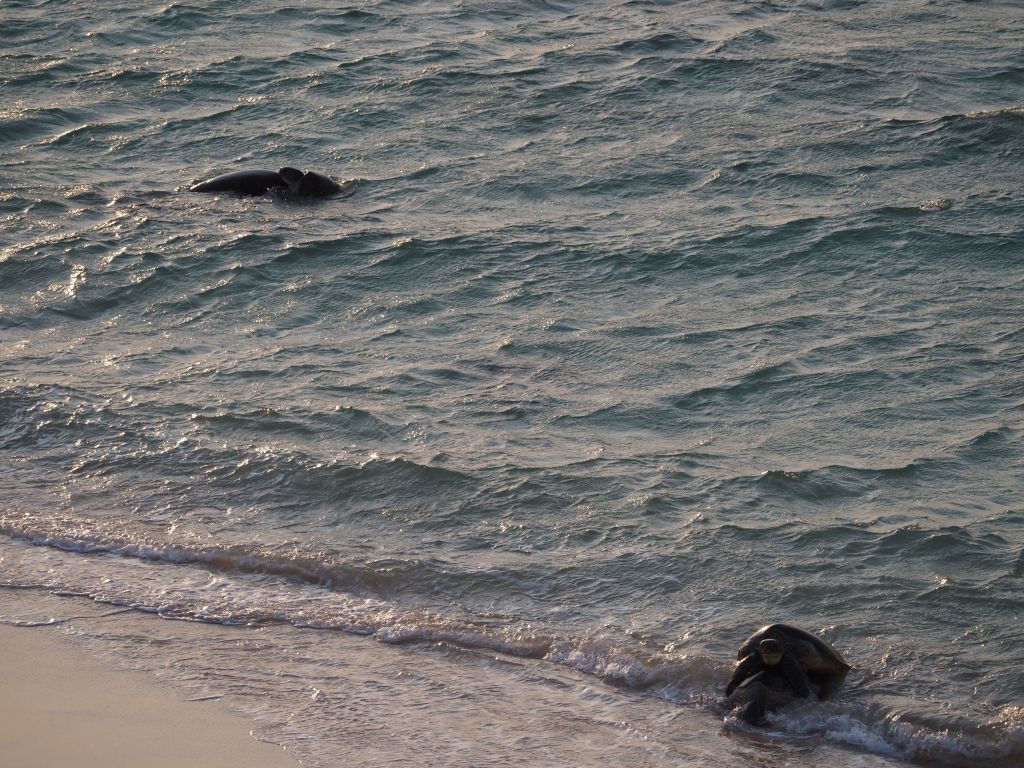
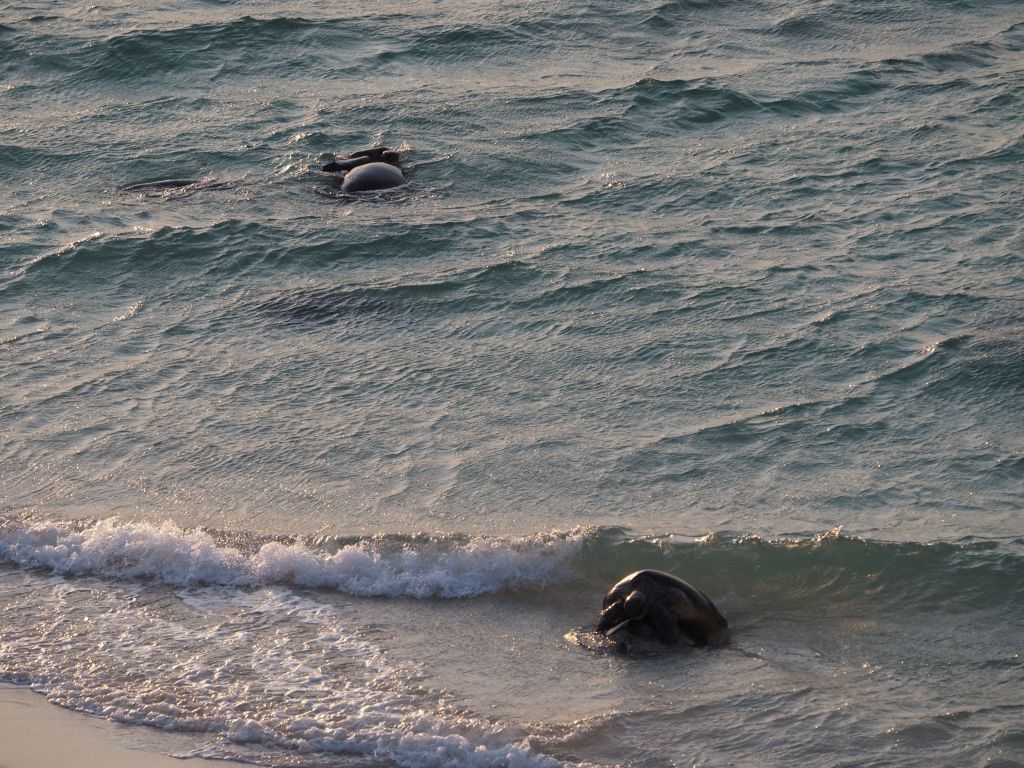
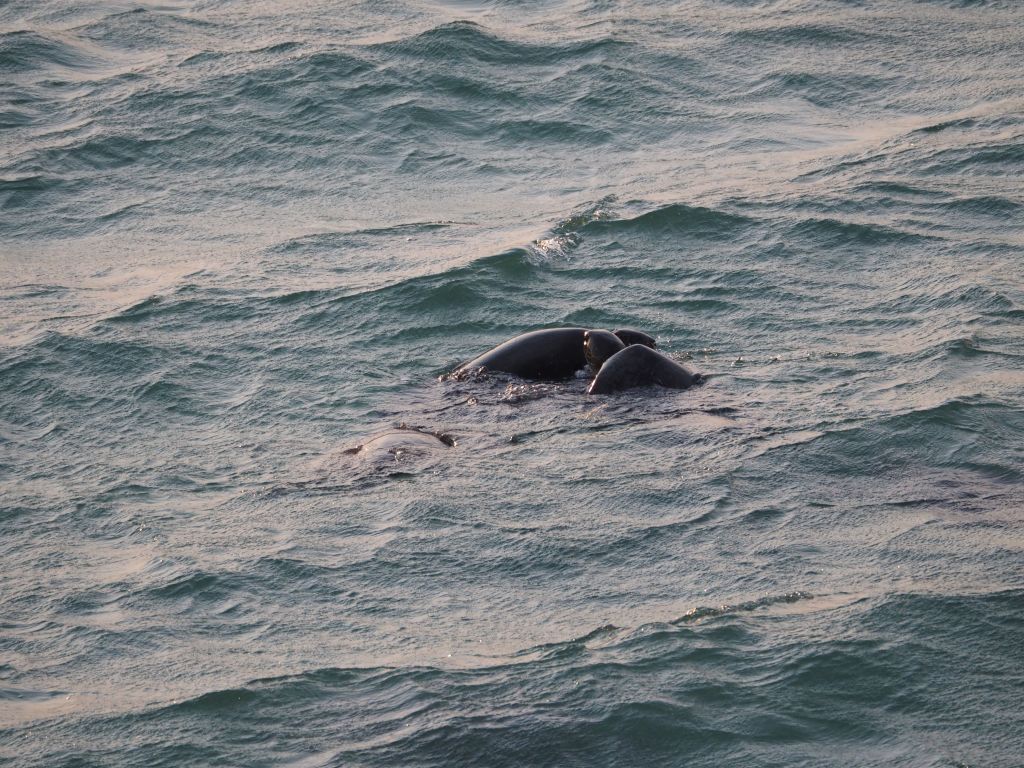
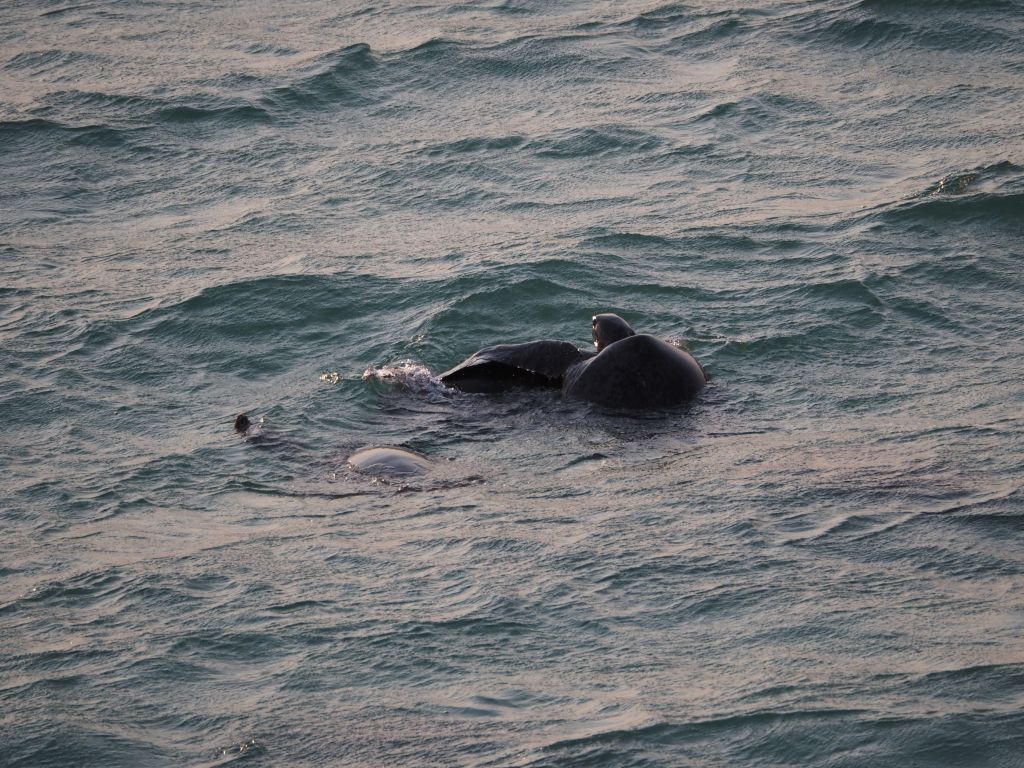
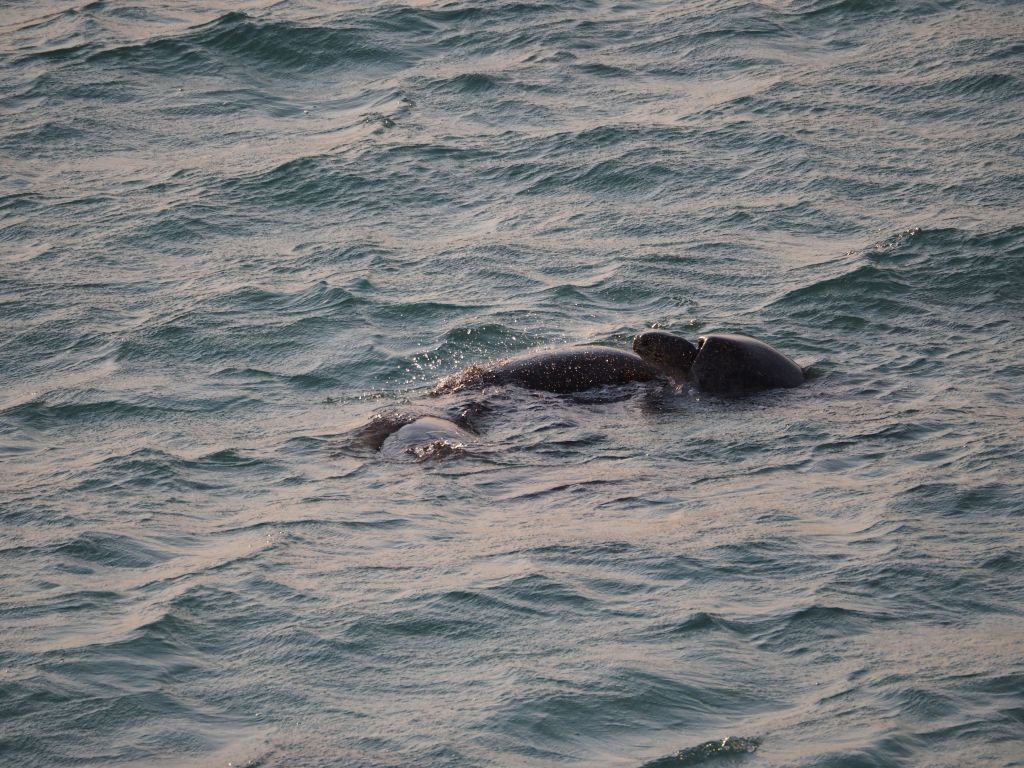
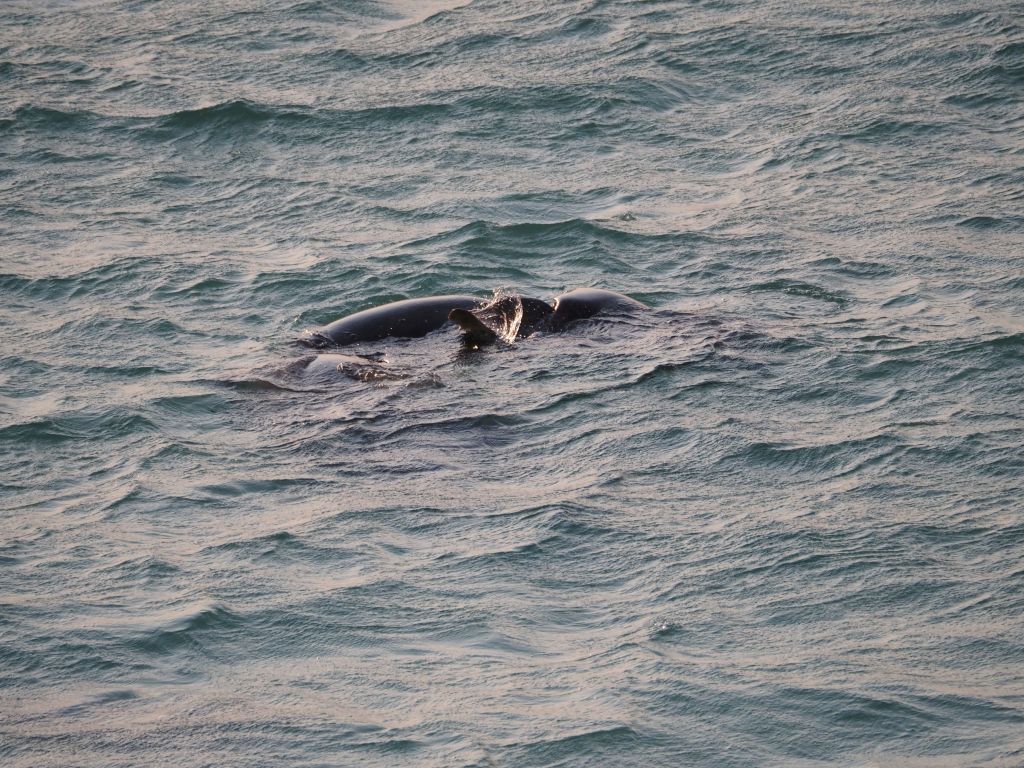
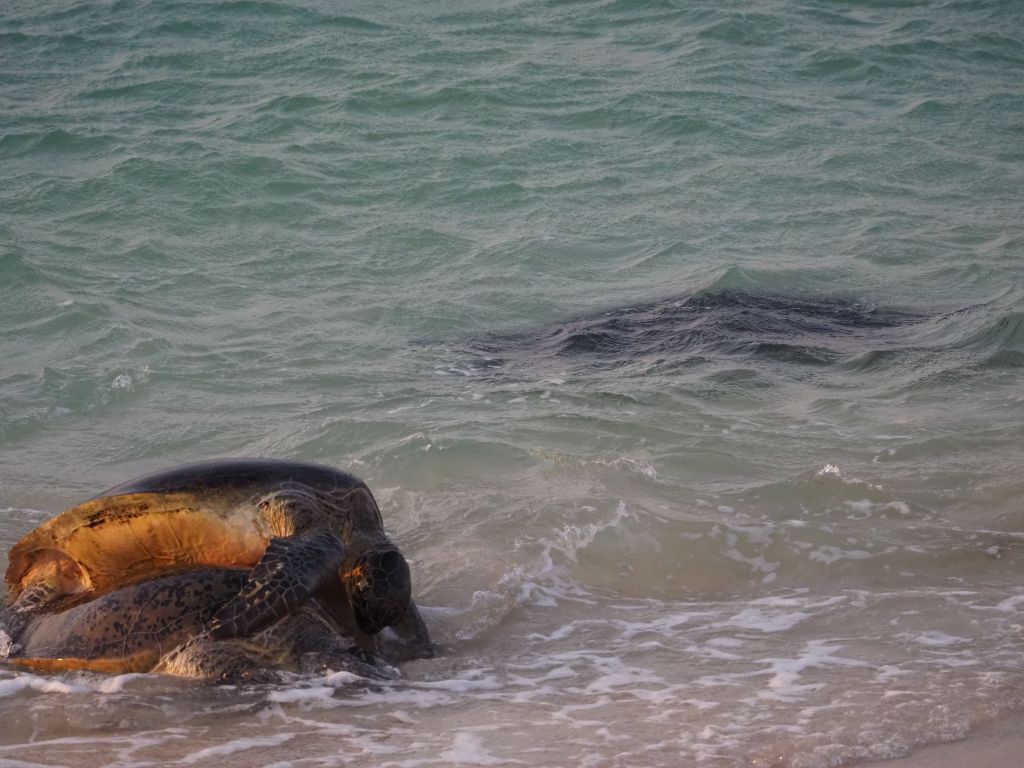
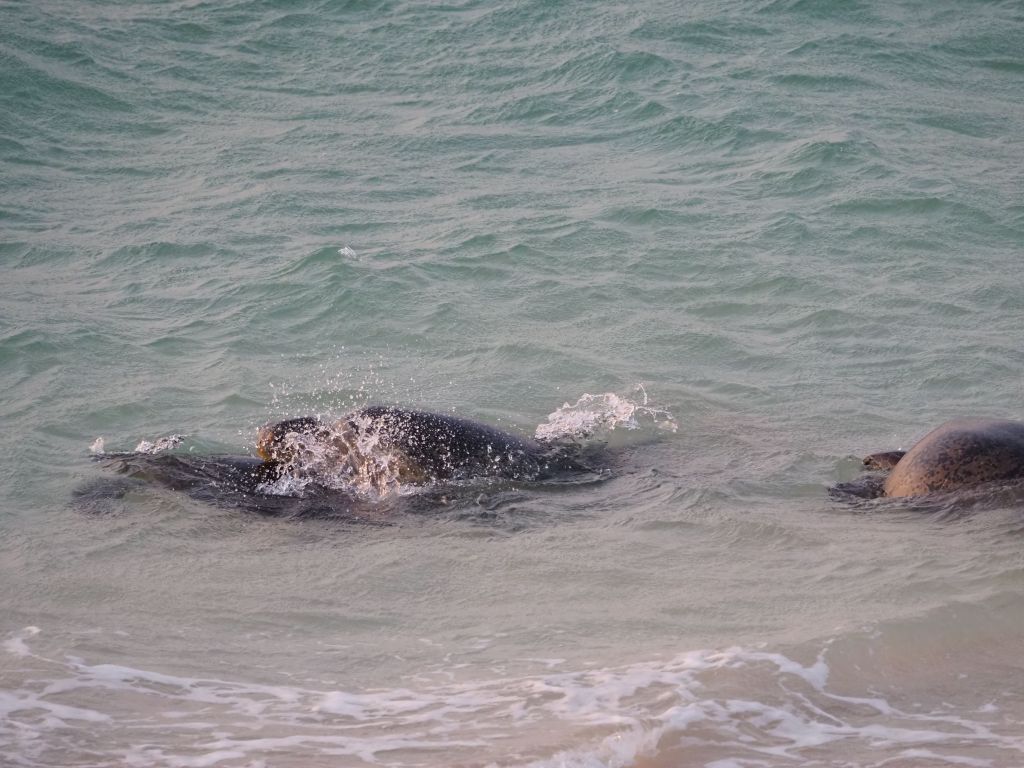
Lastly, Ningaloo is an important breeding ground for green, hawksbill, and loggerhead turtles. There’s a beach in particular where you can see huge numbers of massive loggerhead turtles, either doing the deed (frankly a pretty brutal sight, the males are relentless) or resting on the beach. The giant sand dune right there gives a great view down onto the water, where there are dozens of huge splotches showing turtles hanging out in the bay. In a little while the females will be nesting, and in another month or three the hatchlings make the dash for the ocean, but right now mating is the show.
Guy in the background just lurking, waiting his turn.And pounces the second the first guy rolls off. Poor females.Exhausted after his performance.
That brings us to the present day, and the end of my time in Exmouth. Today I’ll be kicking around town writing this blog post and stocking up. Tomorrow morning I’ll get up early and head to Charles Knife canyon and the Badjirrajirra trail, and then continue south to Coral Bay, hopefully in time to catch some sharks at the shark nursery there. After that I’ll just be making my way down the coast, picking stops here and there, and eventually getting to Perth and the southwest, which I’ve consistently heard is beautiful. I can’t wait! You can see videos for this post here, that’s where most of the good stuff is.
It has been a tremendous few days exploring Karijini National Park and driving through the Pilbara region, though it didn’t get off to a very auspicious start. After my night spent outside of Port Hedland, at a free camp right next to a mine, I got up and headed towards Karijini. When I got to the last roadhouse before the park I discovered that the road was closed. Apparently there was a terrible accident, “car vs road train” as one Aussie described it to me, and the cleanup and/or forensics work was ongoing. To make things even trickier, no one had any idea how long the road would be closed, but several days was a distinct possibility.
It was only about 9am and I couldn’t decide what to do. I could just hang out at the roadhouse, in truly the absolute middle of nowhere desert, with nothing to do and 100 degree temperatures for $30 a night. I could go back to Port Hedland, get an alignment, and just kick around. Or I could try the alternate entrance into the park, going across the north and looping around to the west side, which would entail around 90km of dirt road. There was no real risk of getting stuck, and the road sees a fair amount of traffic from the several mines in the area, so it was more a question of whether my van (or my teeth) could handle what might be several hours of bouncing along a corrugated road.
I hemmed and hawed for a long time, chatted with some other travelers, and after hearing from a guy who worked in the area that the road was well maintained and in decent shape, decided to go for it. Good news, he was right! The road was fine and the drive went by pretty quickly. I got to my first stop, Hamersley Gorge, right around lunchtime.
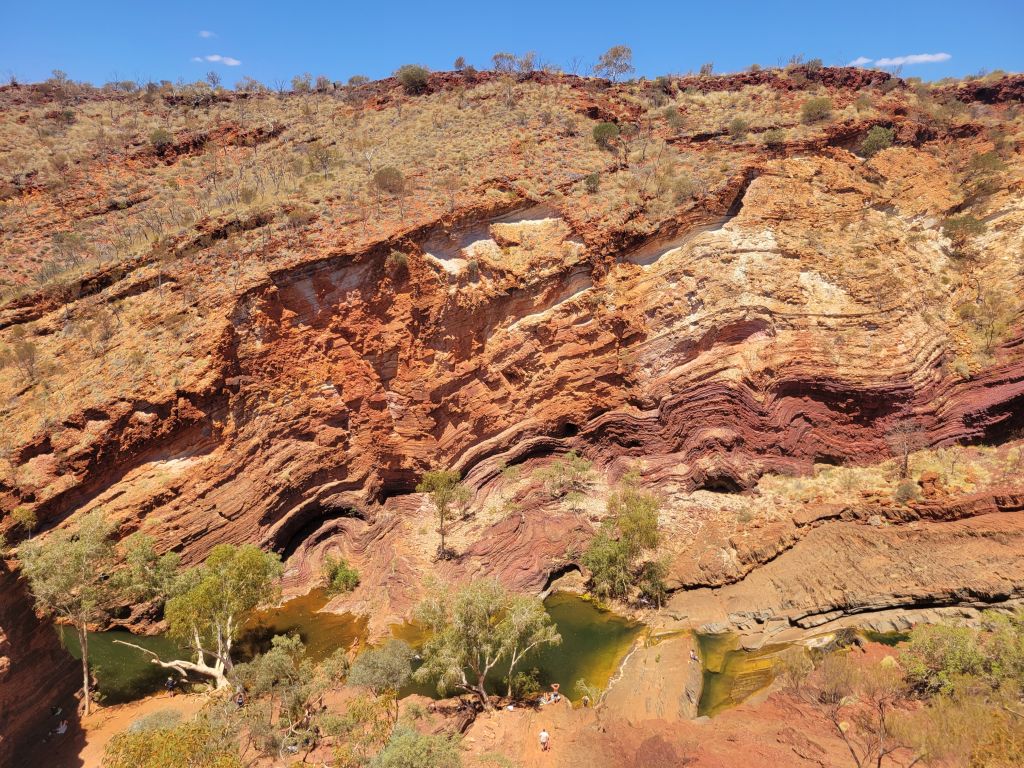
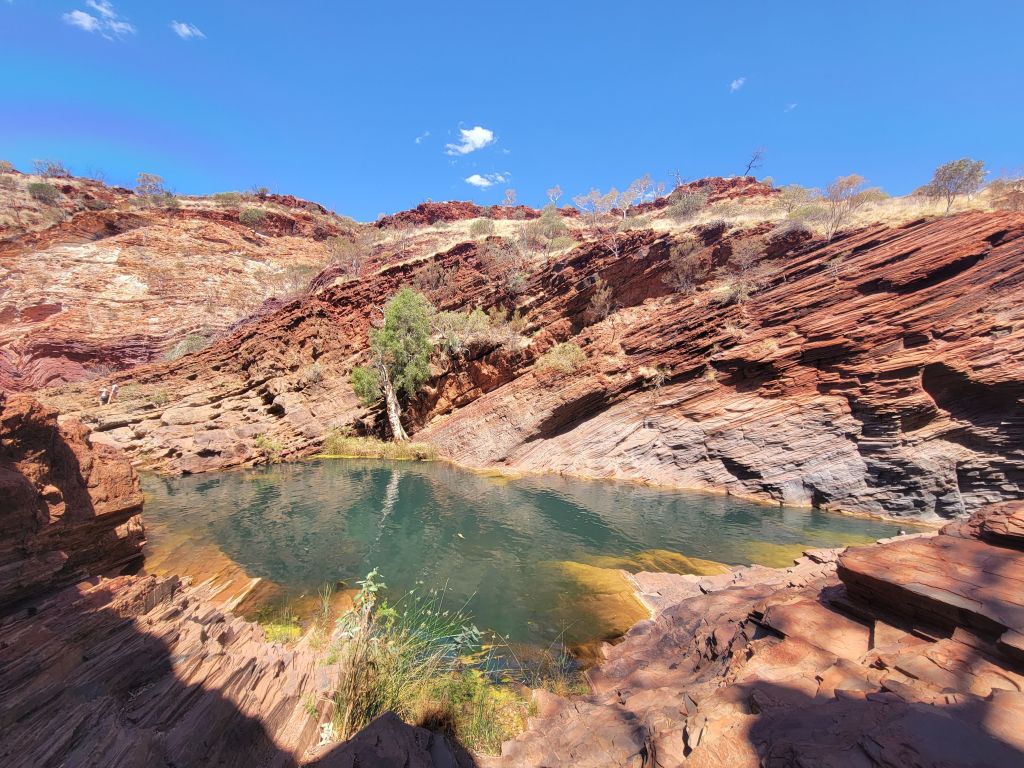
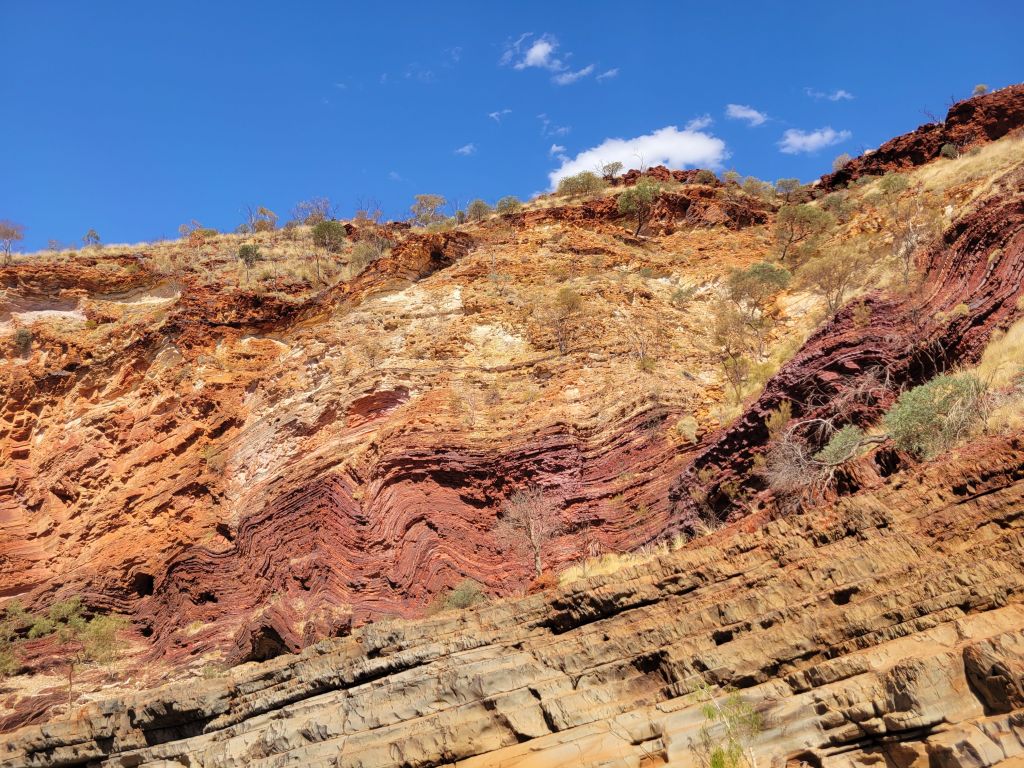
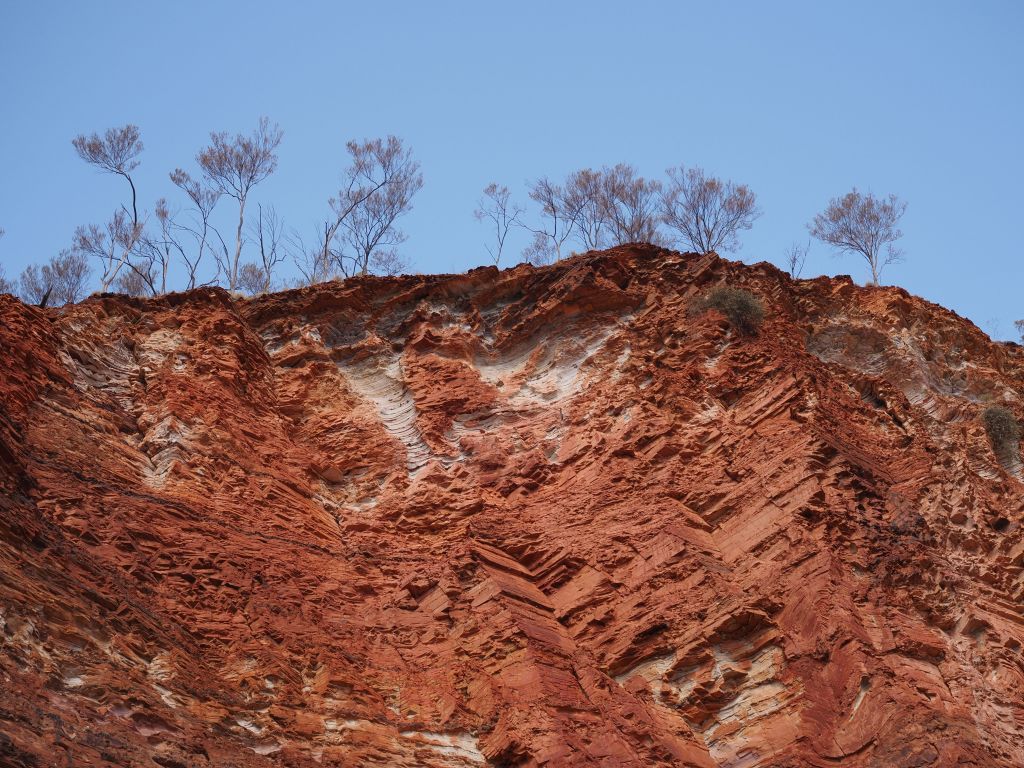
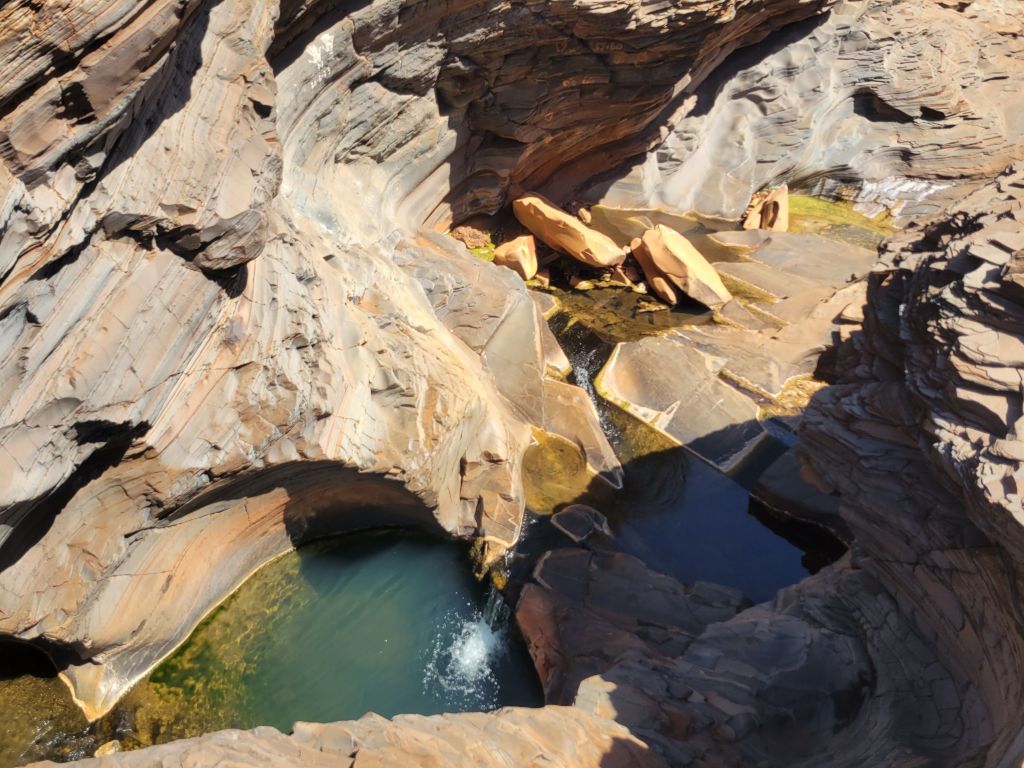
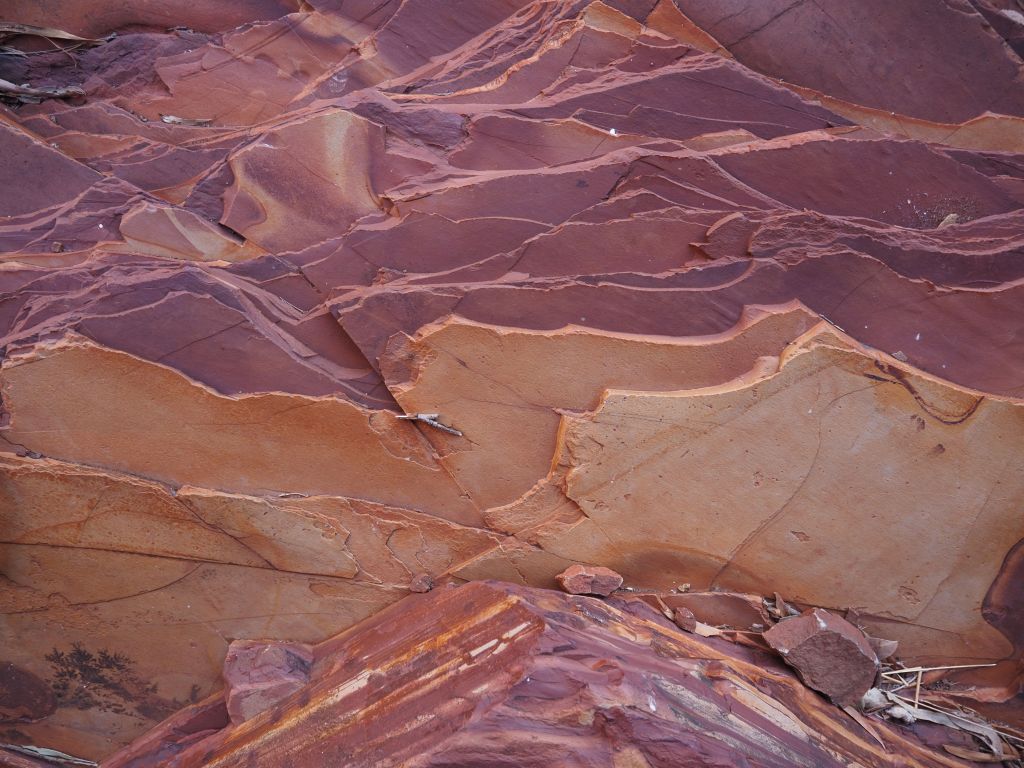
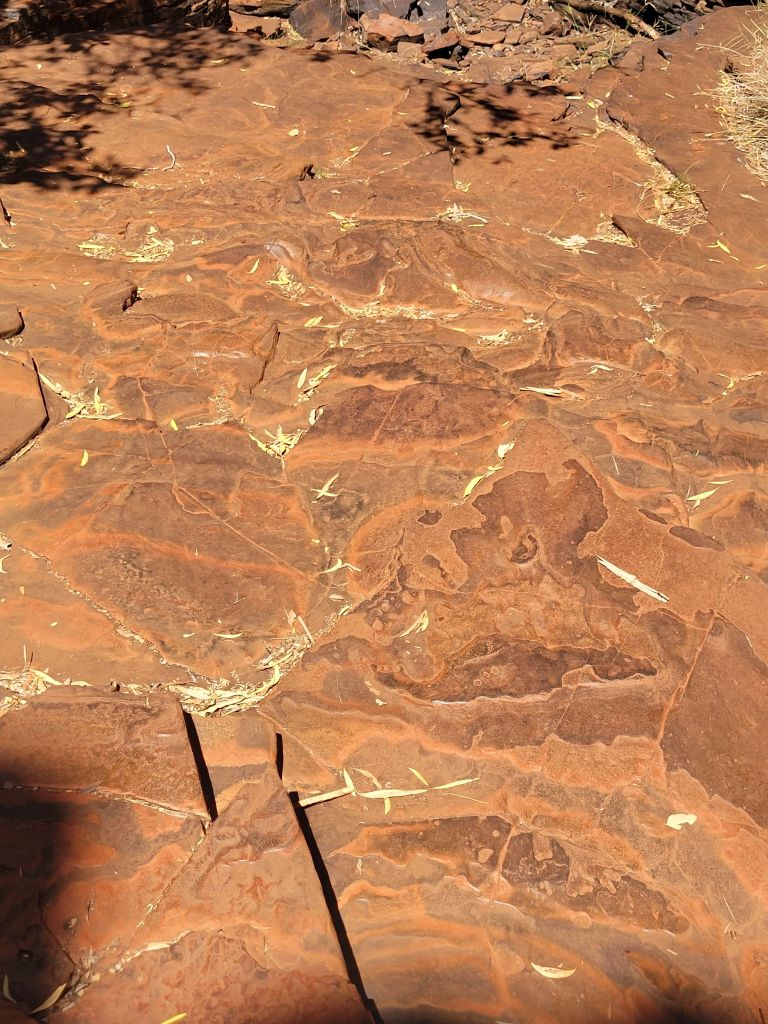
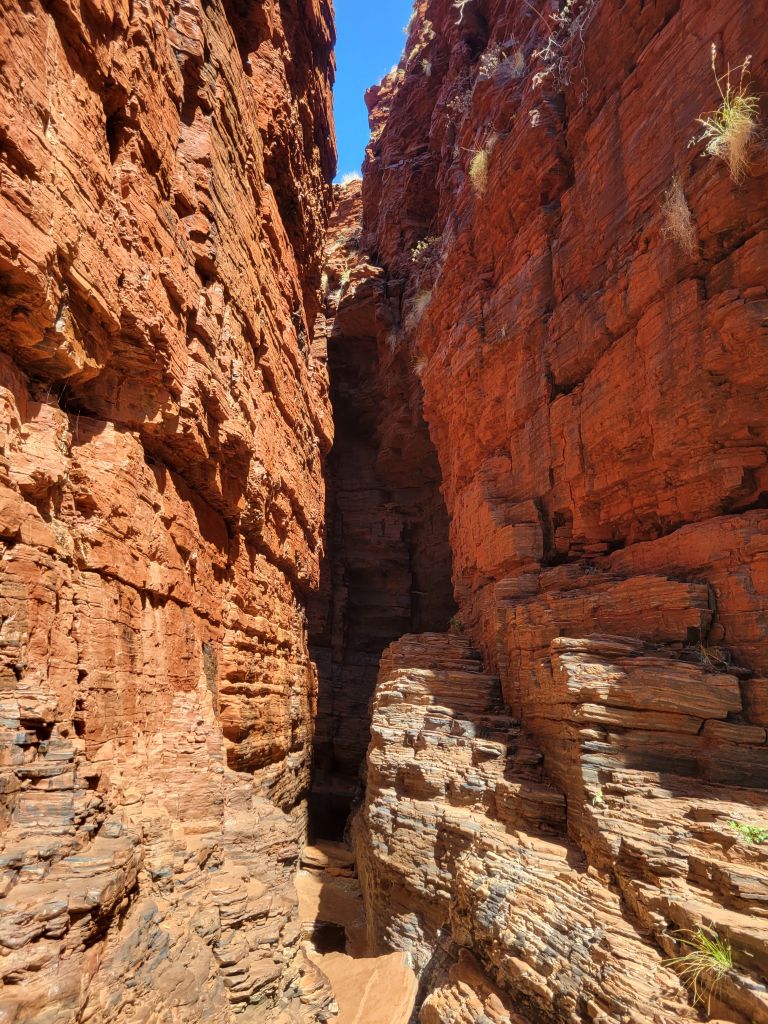
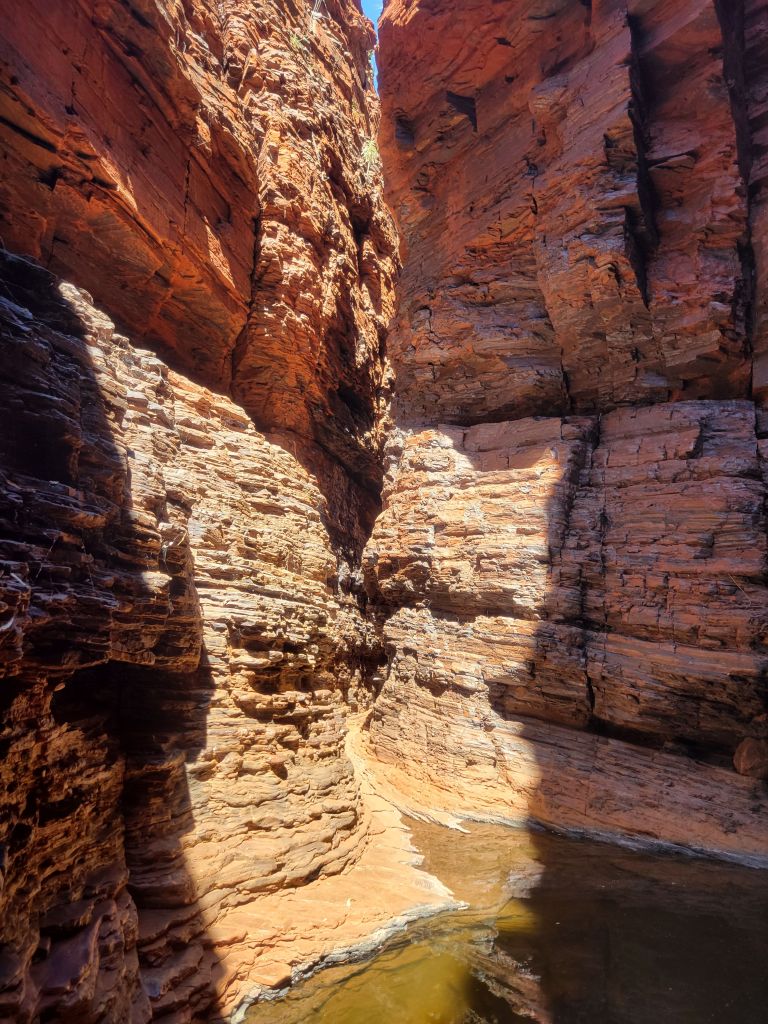
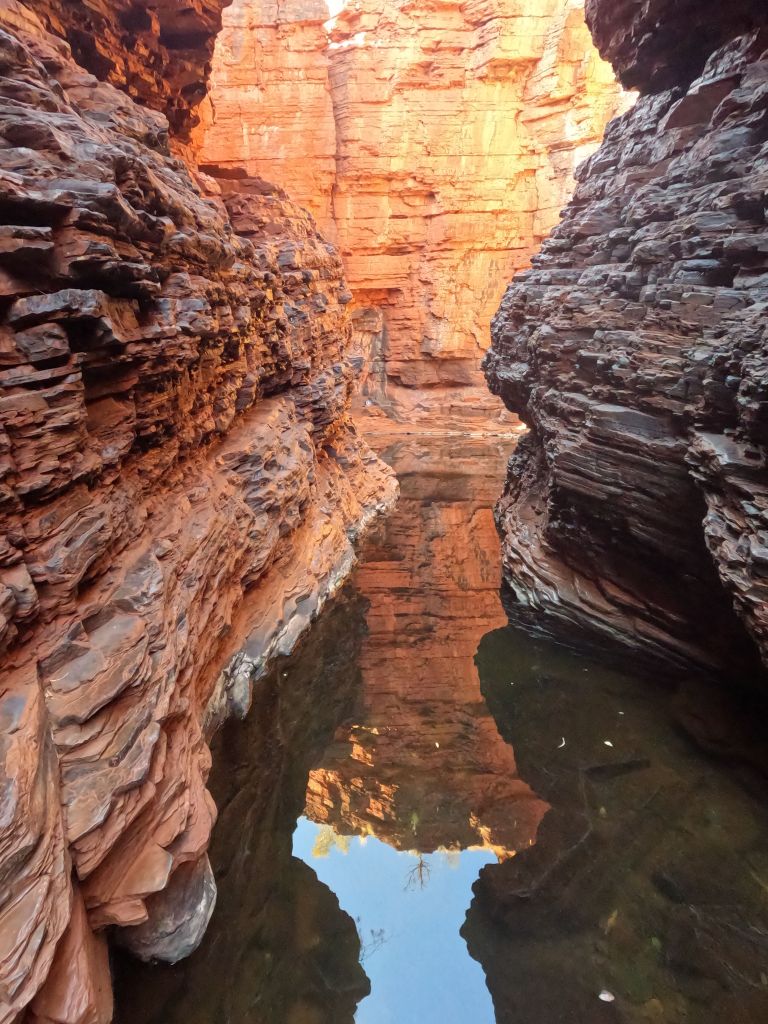
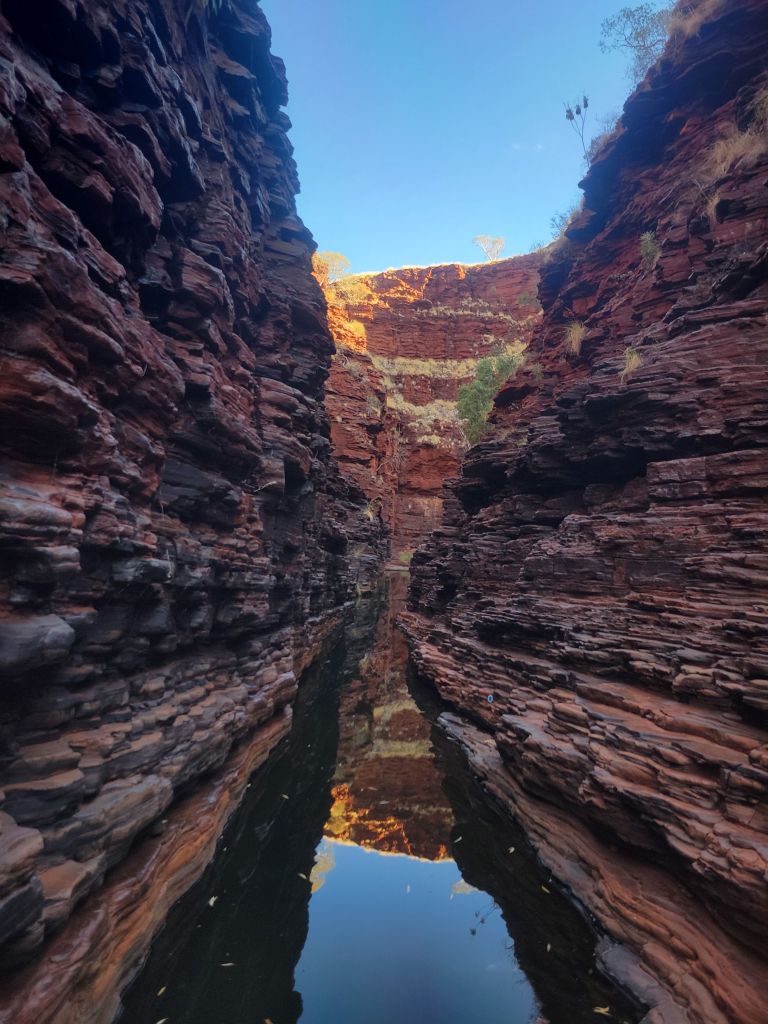
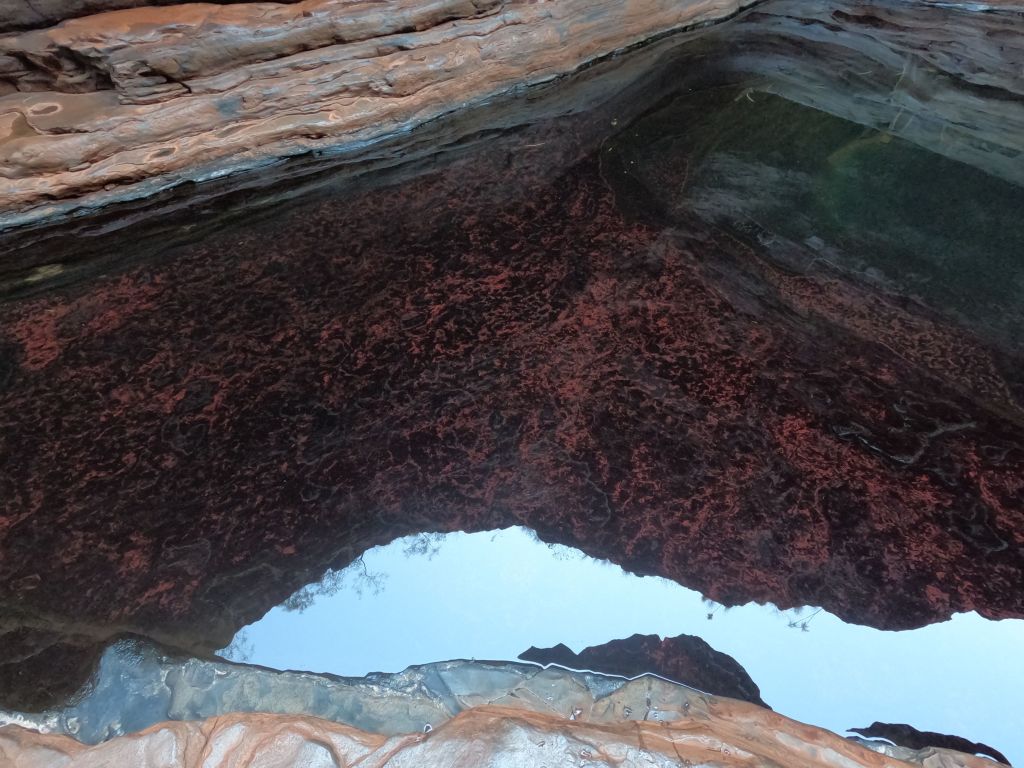
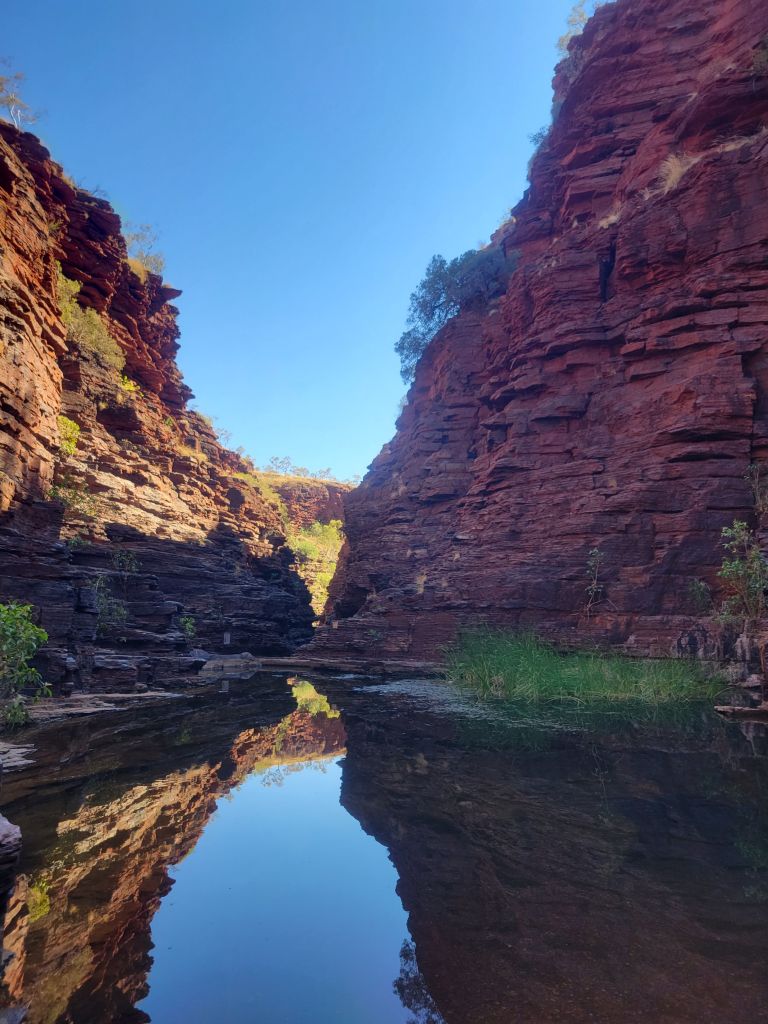
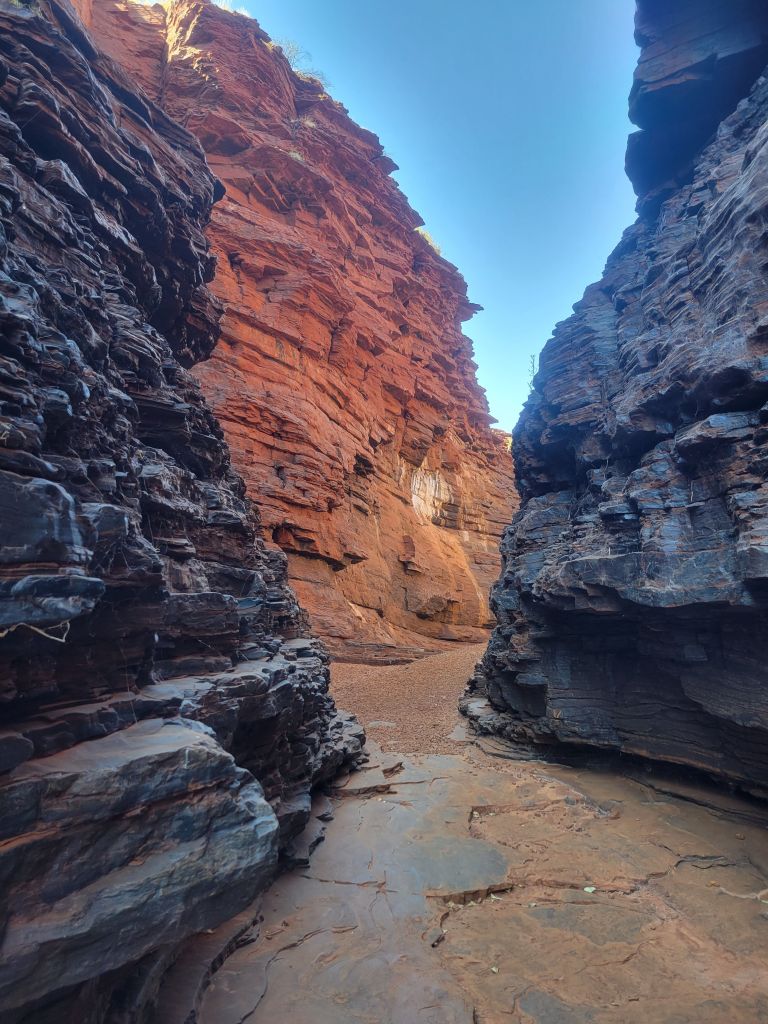
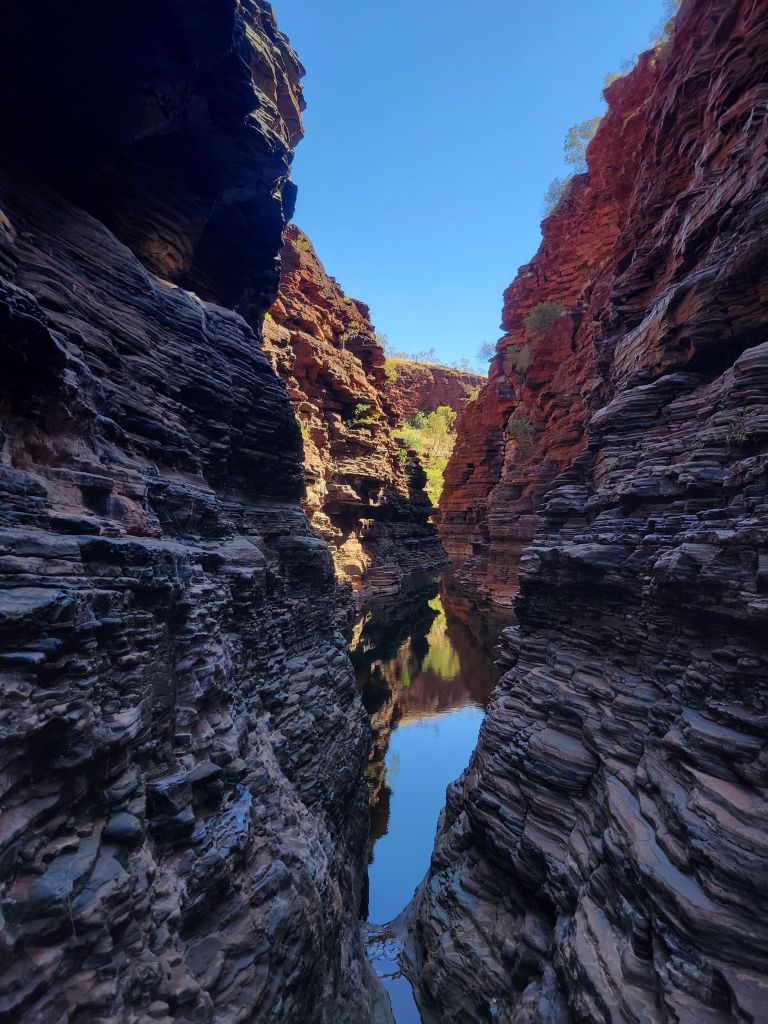
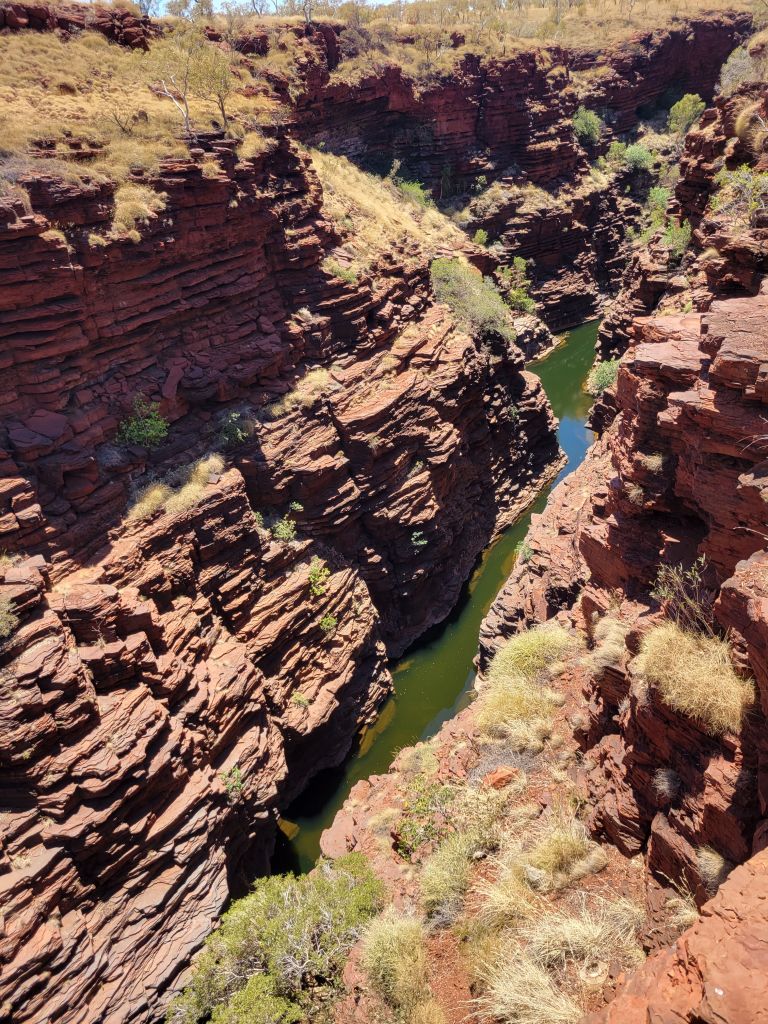
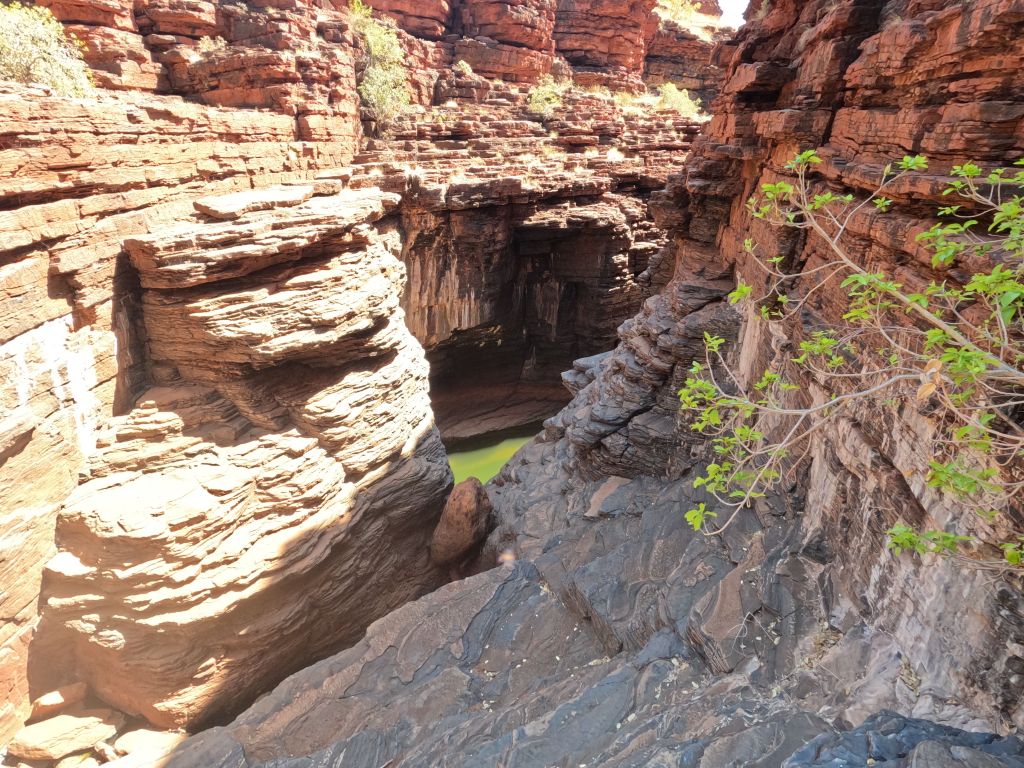
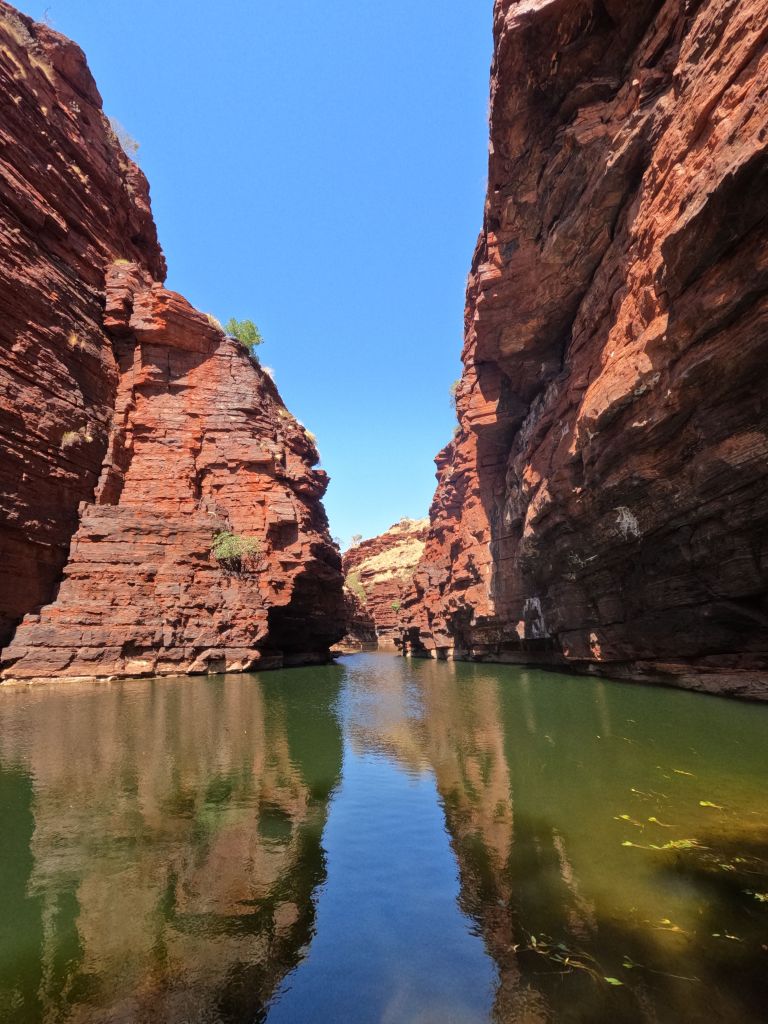
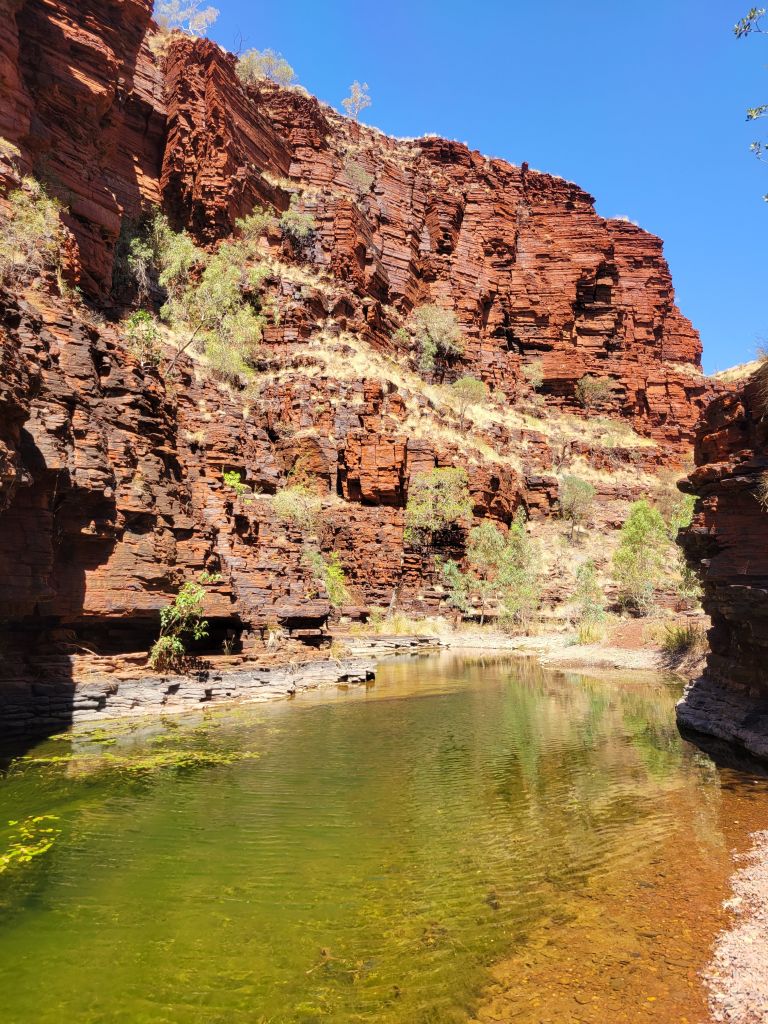
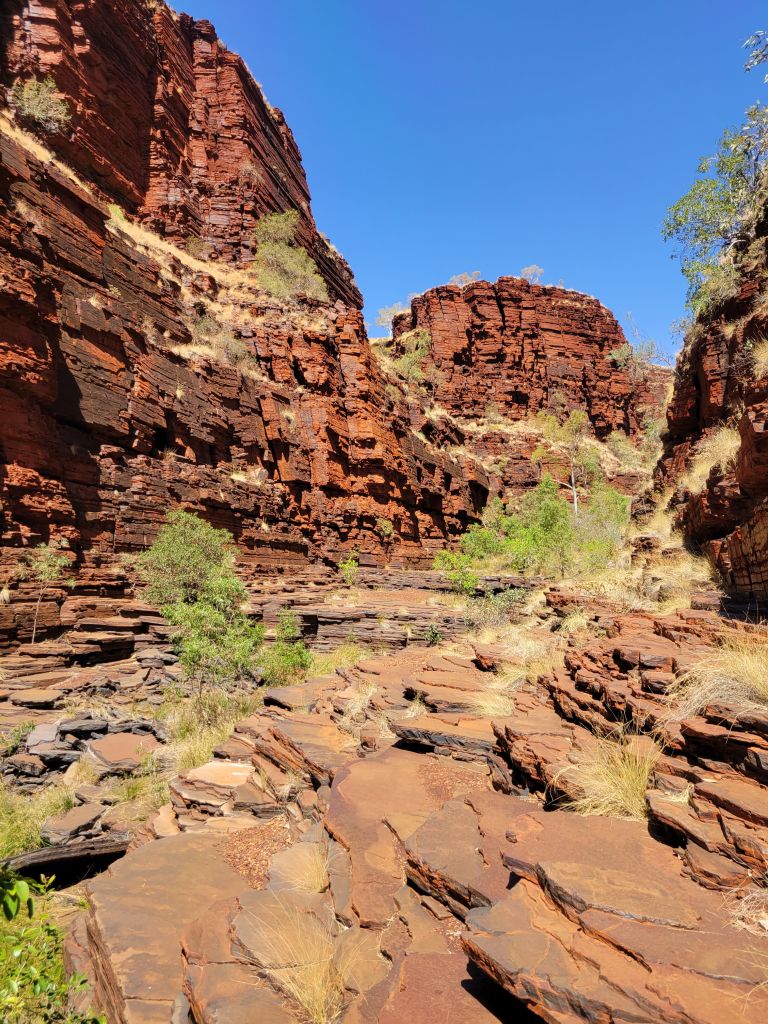
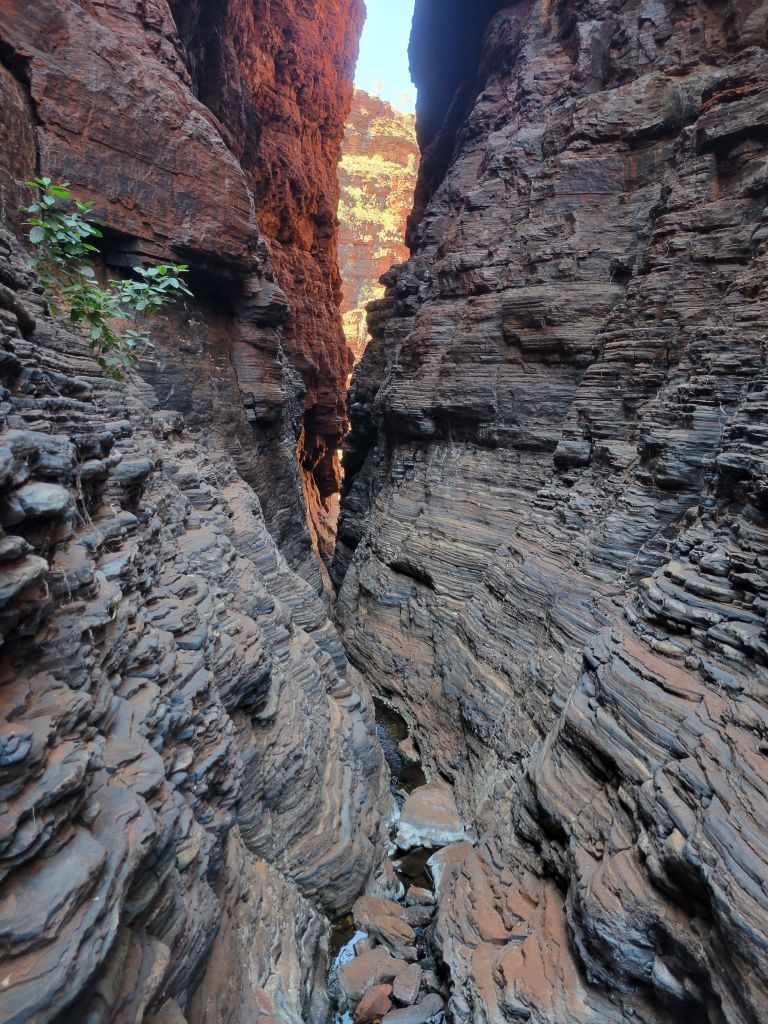
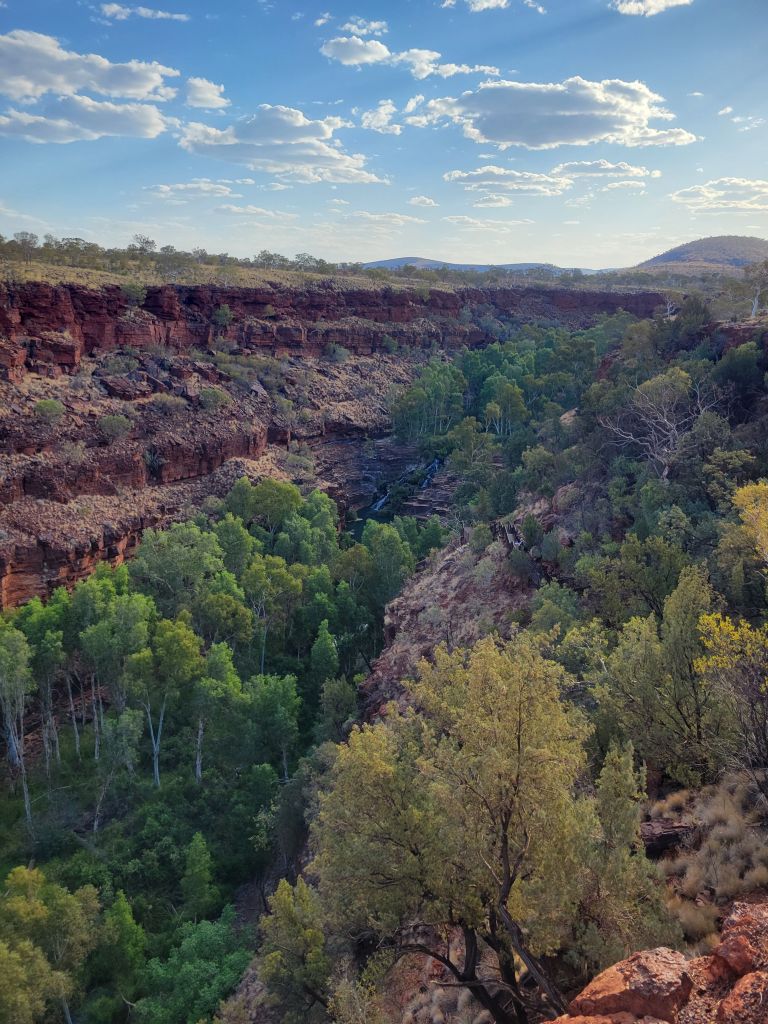
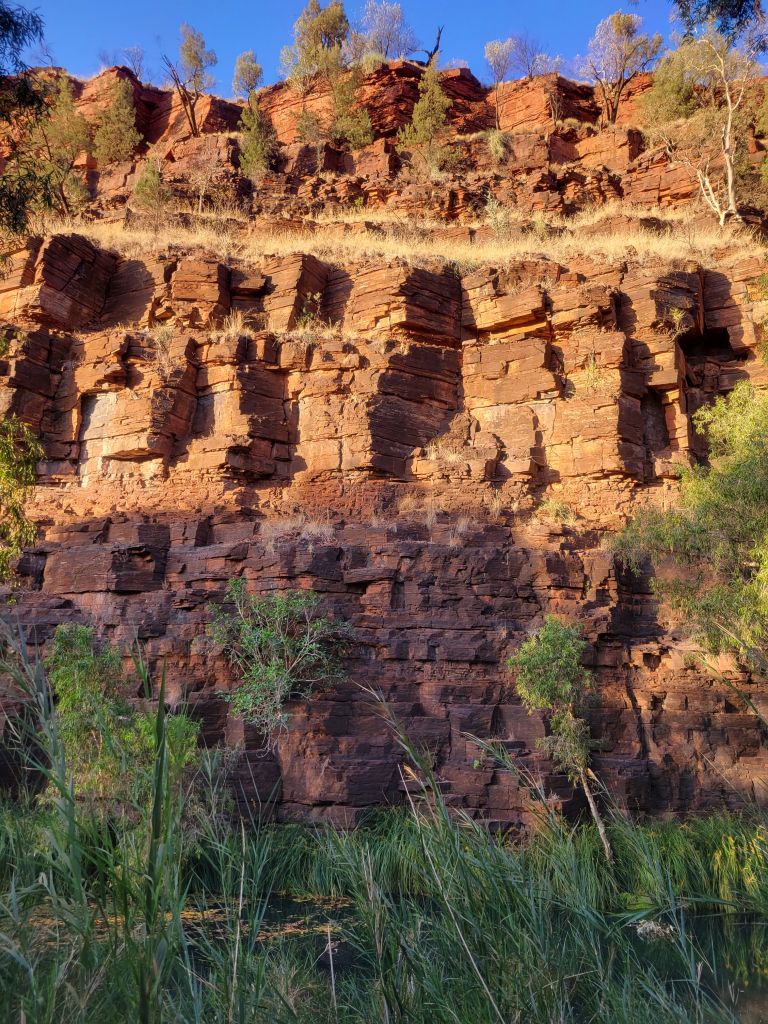
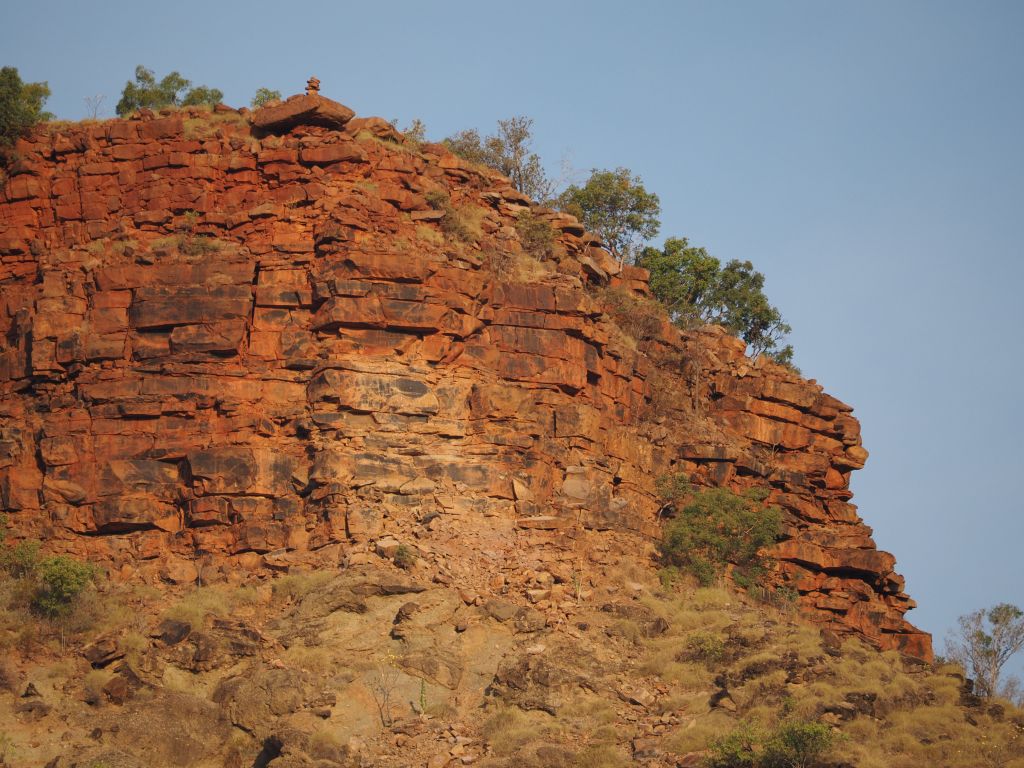
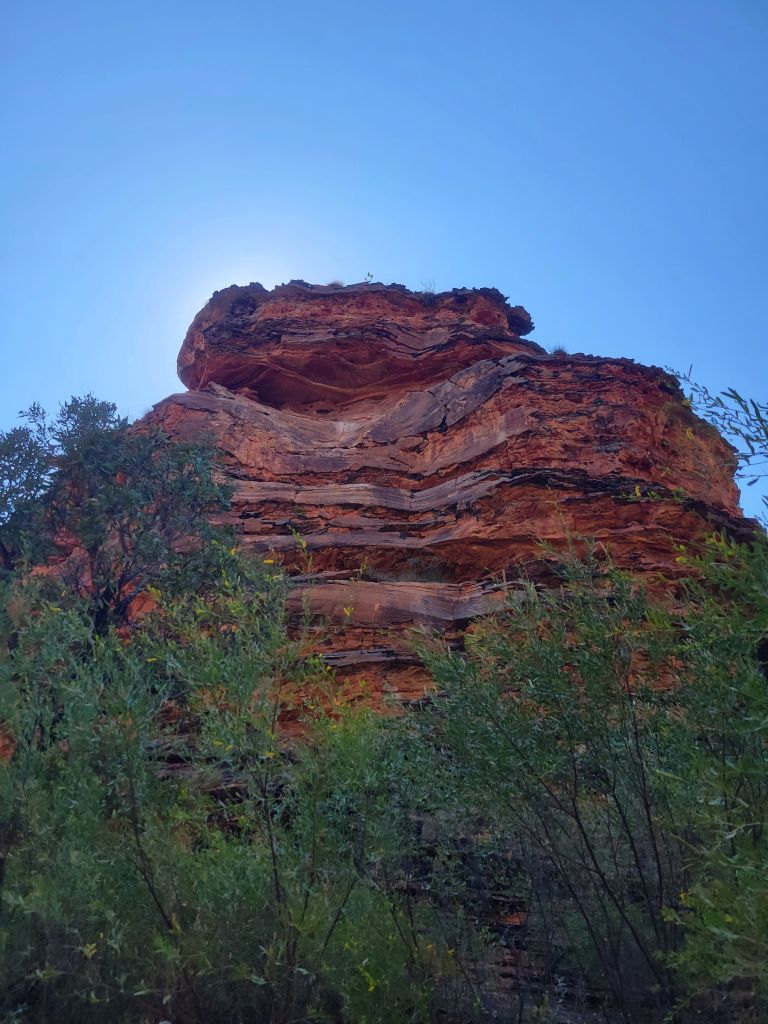
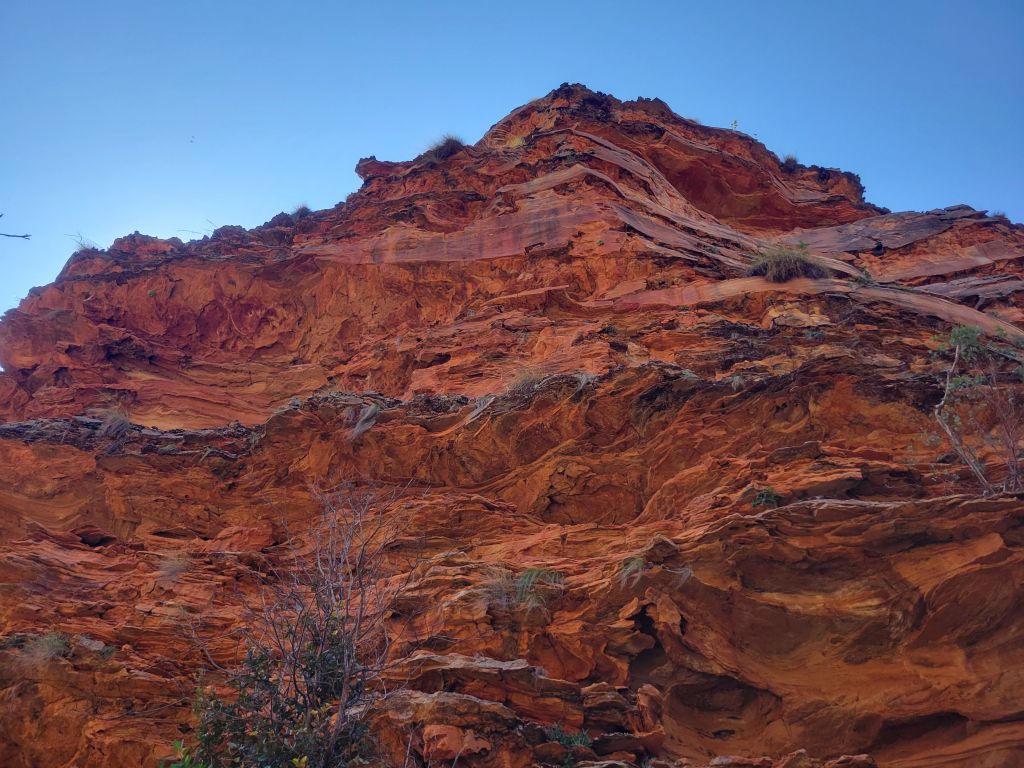
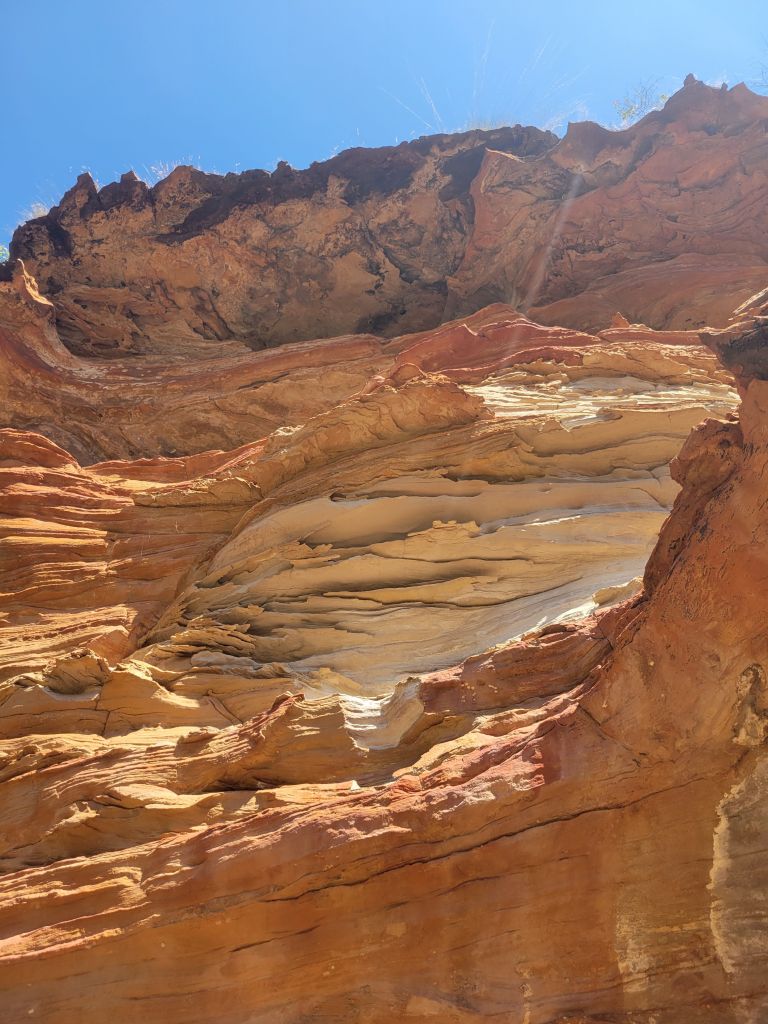
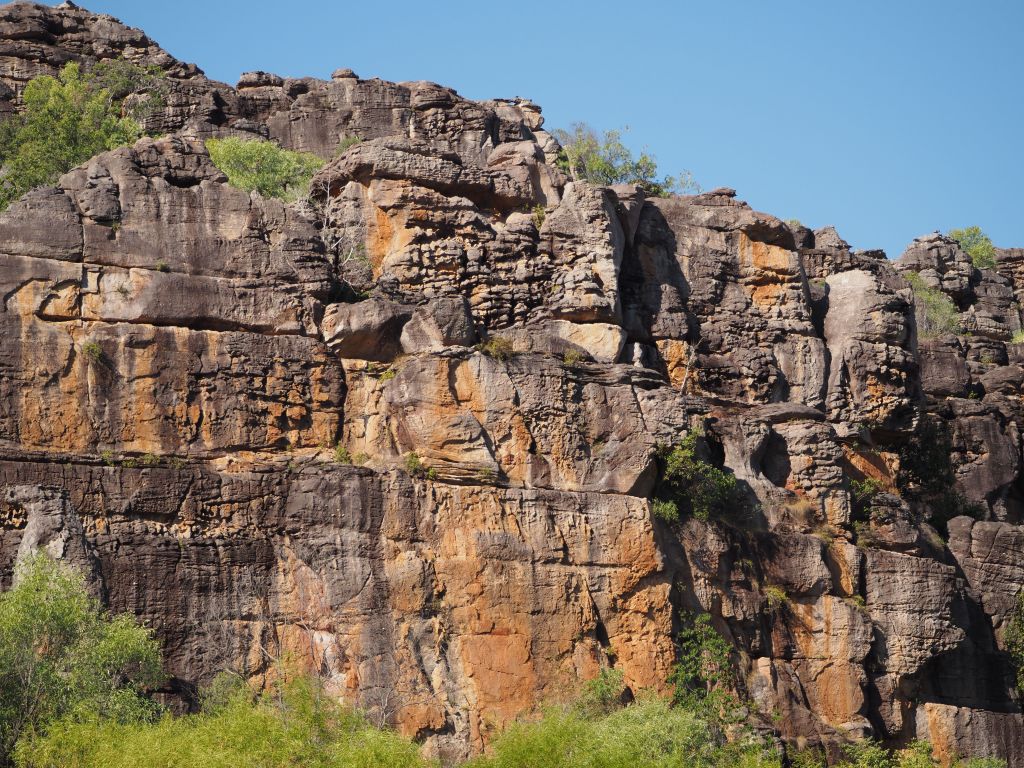
The deal with Karijini, as it turns out, is that it’s a huge area in the middle of an iron-rich desert where there are a collection of deep gorges that the rainwater flows down through. There is also a long geological history along the lines of: ancient seabed, silica and other things filter down and get compacted forming distinct layers, tectonic activity causes the seabed to buckle and lift up, erosion smooths everything back down. The result are these massive gorges where the rock is all stripey, where it’s not just bright red because of the iron, and it is absolutely stunning.
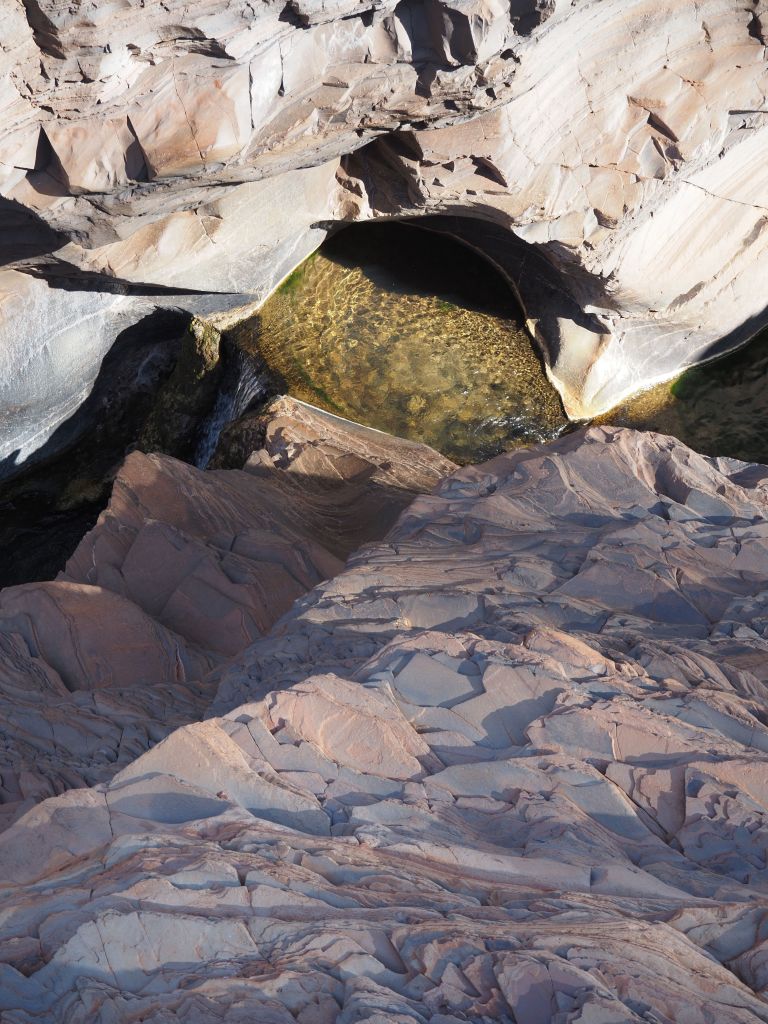
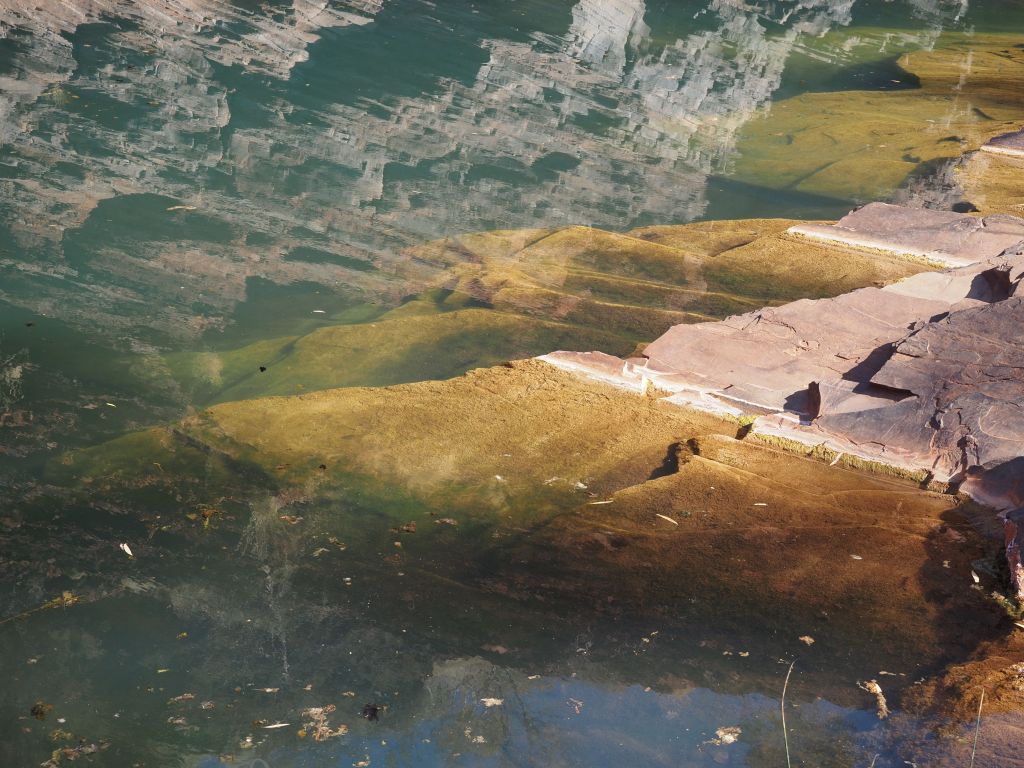
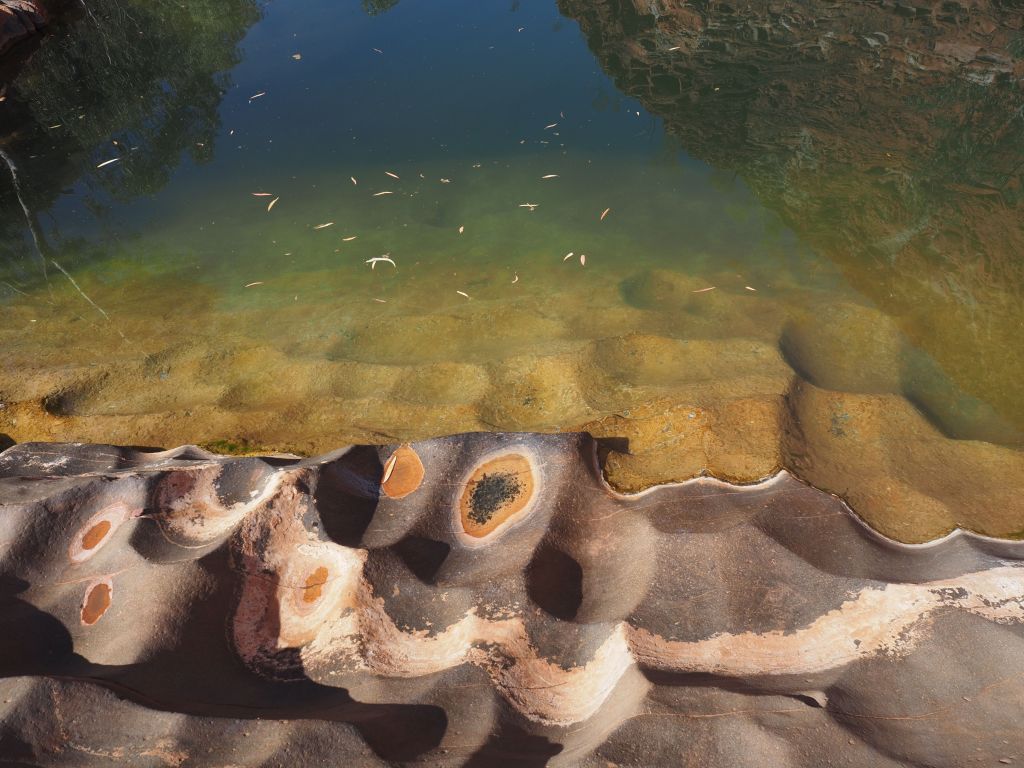
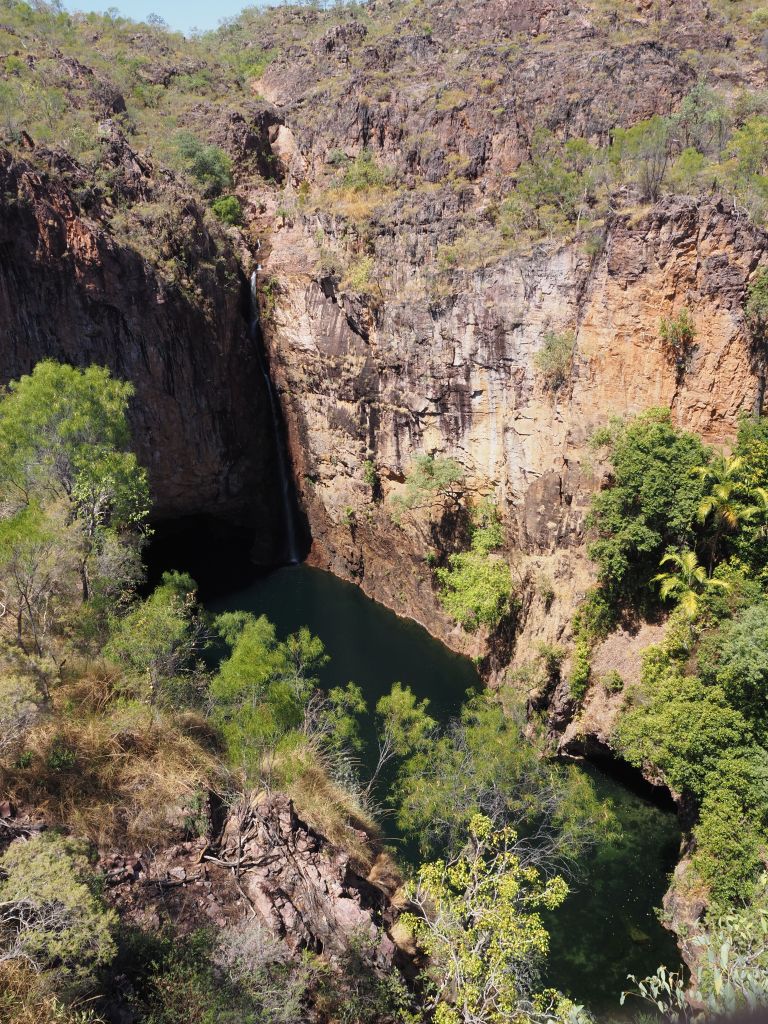
So, first stop Hamersley gorge. Similar to most of the gorges, there was an easily accessible pool, amazing rock walls on either side of the gorge, beautifully carved smaller pools and rock structures, little waterfalls, and lots of fun scrambling to do.
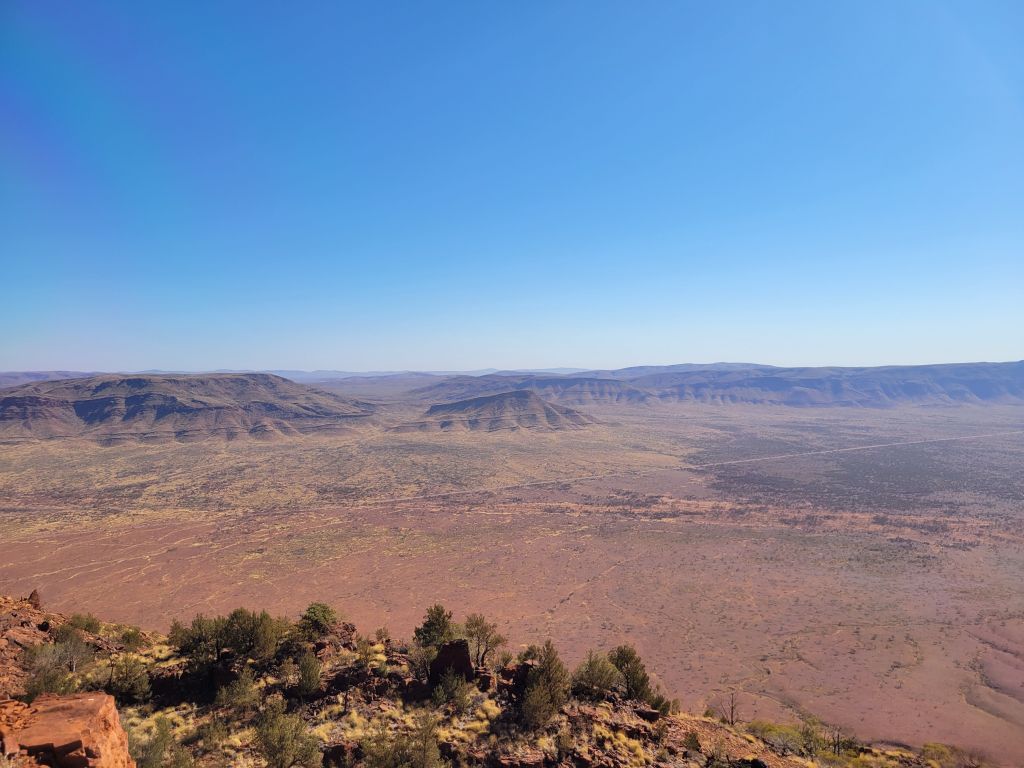
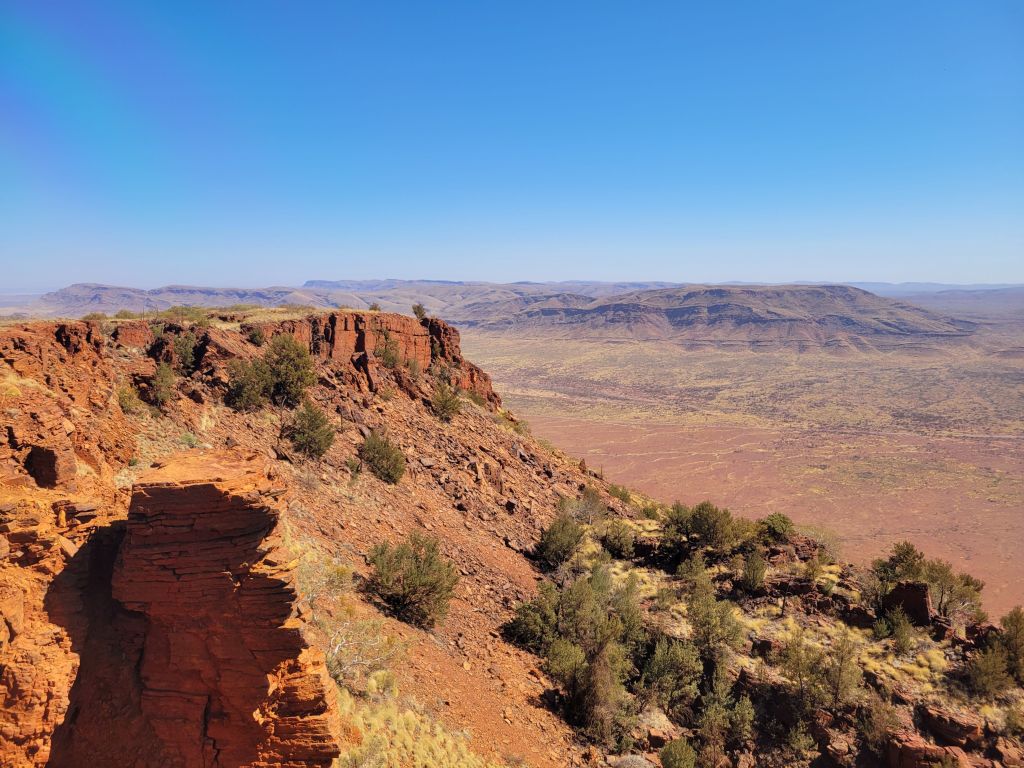
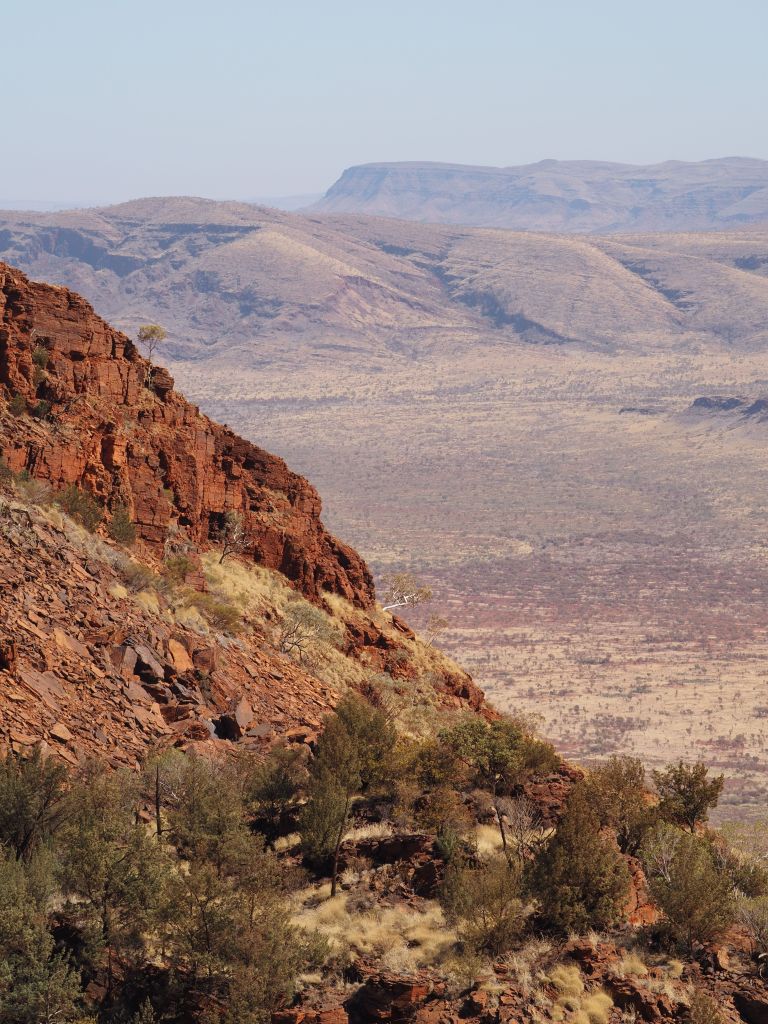
After a couple hours of exploring and taking pictures I drove down to a campsite right next to Mt Bruce, the big hike in Karijini. It’s apparently the second highest mountain in WA, standing a towering “not really very tall for a mountain” meters tall. The hike is not especially long and not especially steep, but it’s entirely exposed, very windy, and very hot. The views are expansive: open desert in one direction, a string of mountains to oen side, and a huge iron mine to the other.
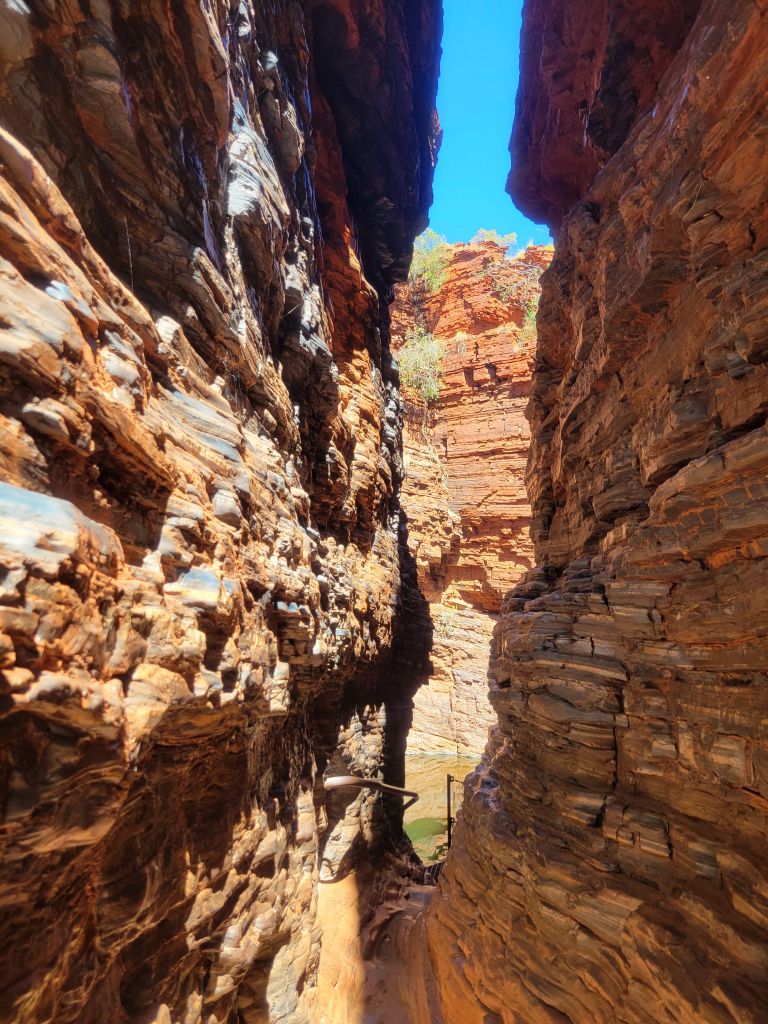
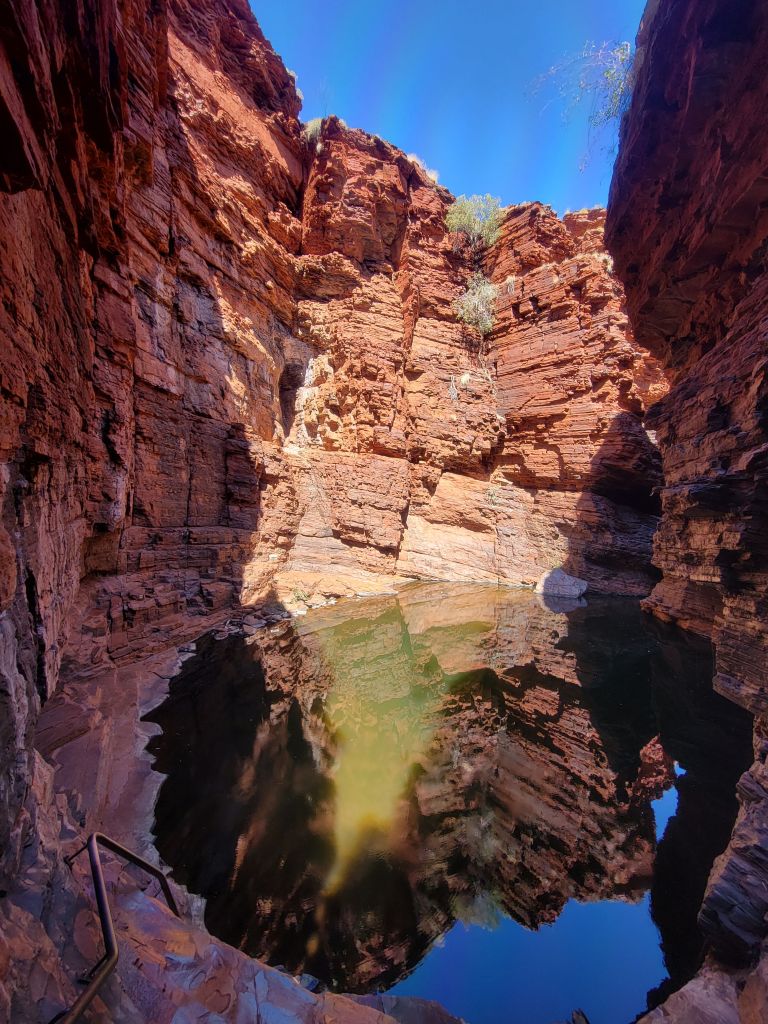
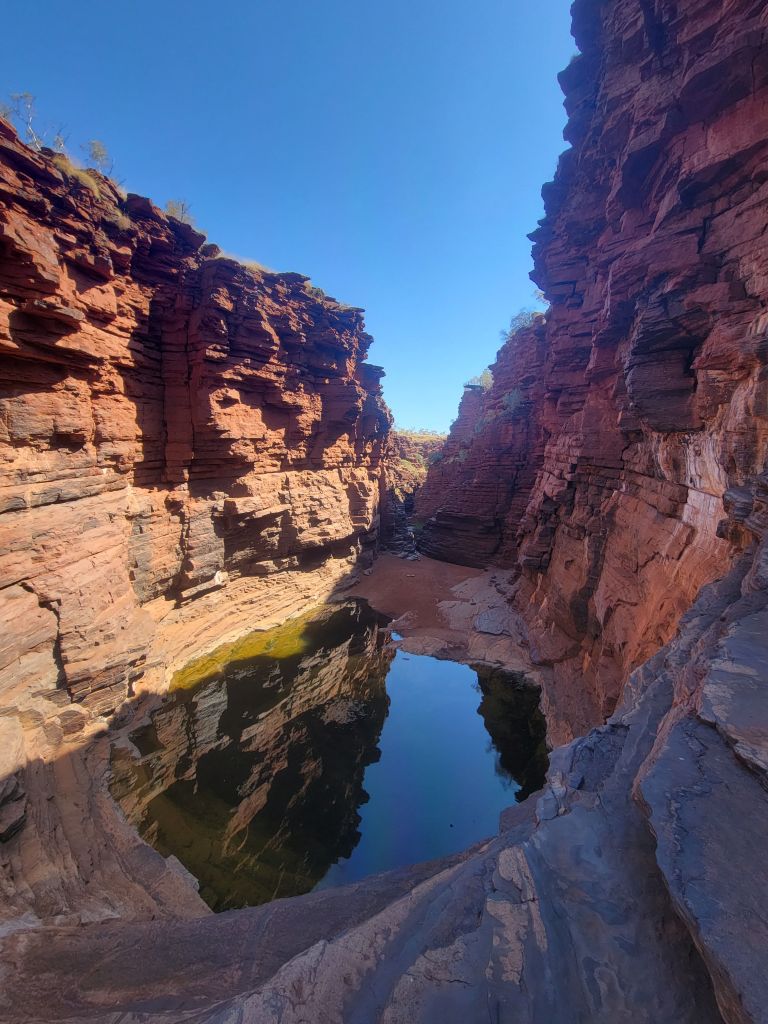
Since you have to get up early to beat the heat, after my 3 hours on Mt Bruce and a very lazy lunch it was still only around noon. The next destination was the Weano area, where there’s a lookout along with Weano and Hancock gorges. My first move was the Weano gorge loop, which lets you stroll through the scrub for a bit before descending into the gorge. The scrub is beautiful and the gorge is absolutely spectacular, with narrow passages opening up onto crystal clear green pools. The main attraction is handrail pool, imaginatively named for the handrail that helps you negotiate the steep and slippery rocks down. Thanks to reviews I’d read ahead of time I knew that you could actually swim across the pool and keep walking along the gorge for a bit, getting to another narrow pool that you also swim through, and ending up at a view of a narrow chute leading to a big drop down to a pool at the bottom of a 3 way intersection of gorges. I first got there around 2pm, with the sun still high enough that it cast a line of light across the various pools. It was, frankly, magical.
After two trips through handrail pool (I ran back to the van to get my gopro so I could take pictures of the other side) I moved on to the lookout. After being down in the gorge it was amazing to get a view from above of this red plateau covered in scrub with a few deep gashes cut into it. Finally, I crossed the road and checked out Hancock gorge. I’m going to be honest with you here—I’m pretty sure it was beautiful, and the pictures look quite nice, but at this point it had been a very long day and I just don’t really remember it that well!
I spent the night at the Karijini Eco Retreat, which in spite of the fancy name was only $22 per night given offseason pricing. This was well worth it for the water alone—with temperatures right around 100 every day (and it feeling much hotter than that in the sun), I was probably drinking somewhere around 8 liters, or 2 gallons, of water per day. The only other water source in the park is at the visitor center, it’s untreated, and I don’t have any purification equipment besides boiling, which would be a real last resort. At the eco retreat the water is all potable and they’re fine with you filling up water bottles as long as you don’t fill your van tanks, which I’d say is fair. I must have gotten more than 5 liters from them, which was the perfect amount to tide me over for my time in the park.
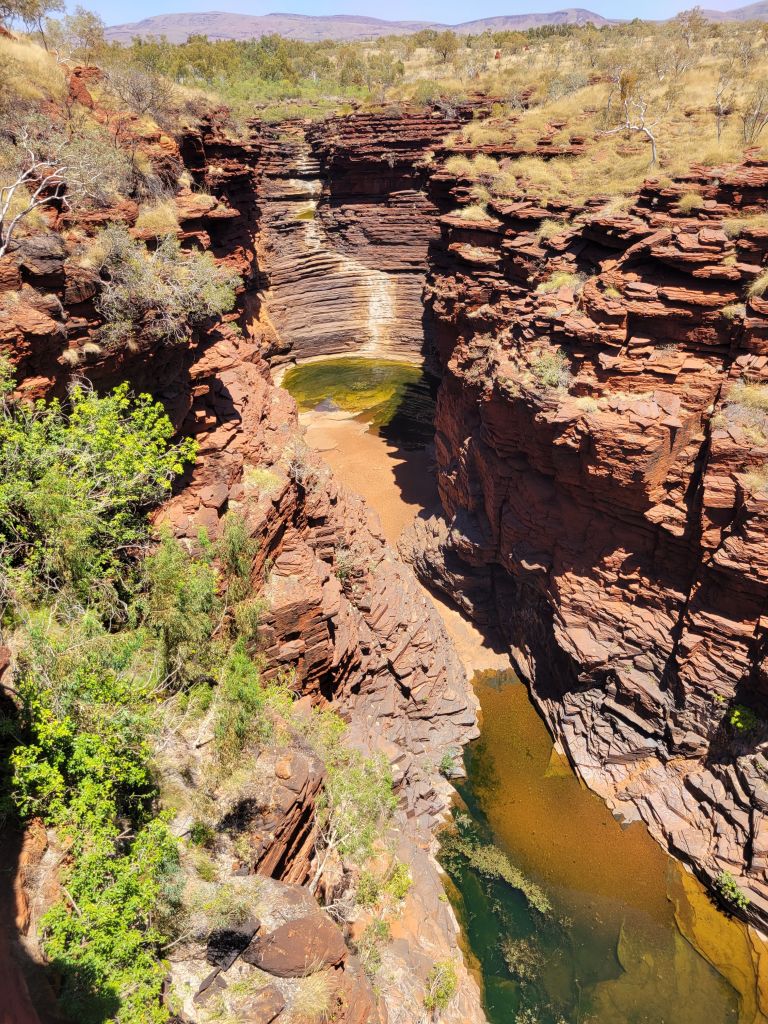
The next morning I started with Joffre gorge, which you can walk to right from the campsite. It was a nice quick stroll through the scrub before lots and lots of stairs to get down to the bottom of the gorge. With the weather heating up it’s the offseason now, and man am I grateful for that. I never saw more than a handful of people anywhere I went, and on this morning I had Joffre gorge entirely to myself. It wouldn’t be any kind of exaggeration to say that sitting in this beautiful space all by myself was a spiritual experience.
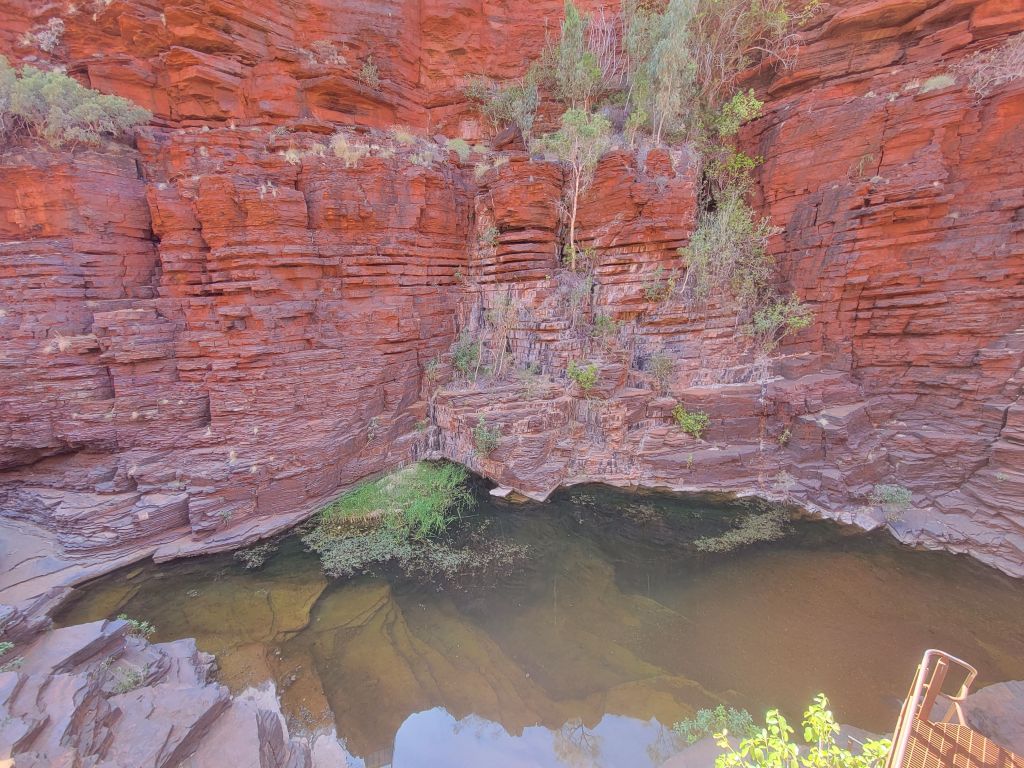
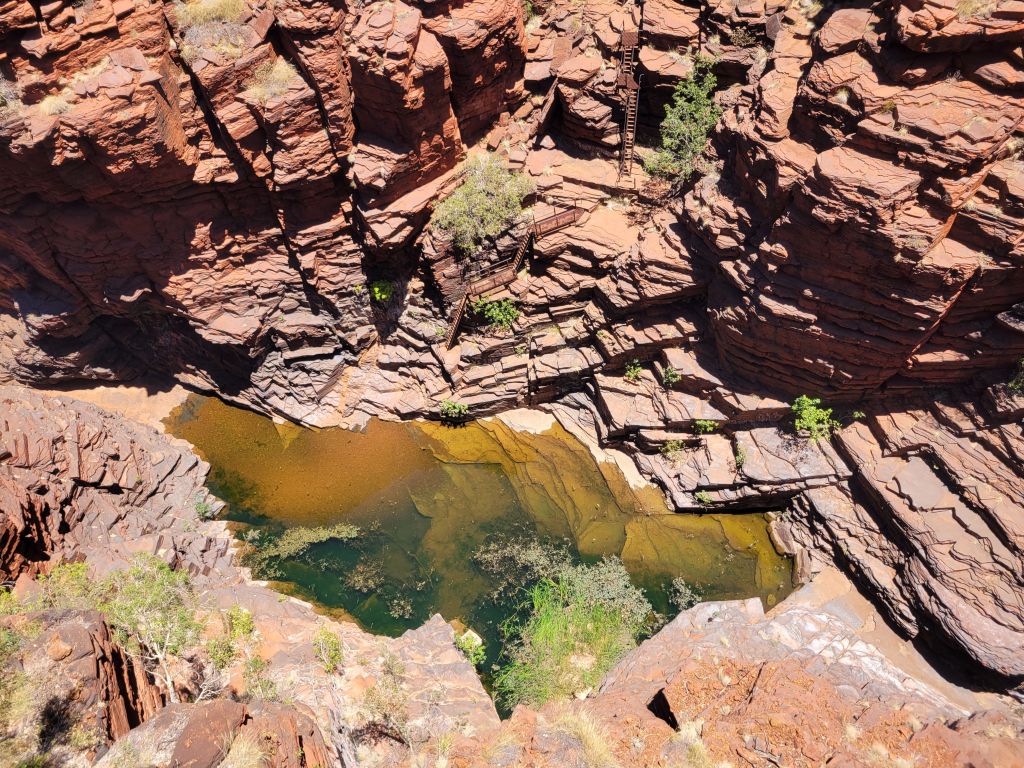
The stairs let you down to a first spot with a large pool. To the right is the main attraction, the amphitheater. When there’s been rain there’s a waterfall, but currently it’s just an enormous bowl of beautiful stripey rock with a pool at the bottom. After clambering around and checking out different views for a while I headed back the other way. Skirting the first pool and going the opposite way, a short rock scramble leads to a very narrow passage where the only option is to swim. The water filled the gorge past the next bend so I couldn’t tell how far the swim was, but luckily this time I’d at least come prepared with my gopro. The previous day’s experience told me my personal preference was to swim with my shoes on—everything dries insanely fast when it’s 100 degrees and bone dry, and shoes are more comfortable on pointy rocks and less slippery on smooth rocks than bare feet. So I dropped my pack, stripped down to my shorts, put my gopro in my pocket, and got in the water.
The swim turned out to be pretty long, 10 minutes of casual breast stroke in each direction. It was a pretty incredible feeling (and you don’t need to worry now knowing that I made it out alive) to just keep swimming through this incredible landscape, completely alone, not knowing where it was leading. The walls of the gorge widened, narrowed, and widened again, and eventually I got to a large pool that gave onto a wide expanse of dry land. After a bit of gravel I got to a section which was just huge pieces of the stripey rock that makes up the gorge, all broken along the layers that they’re made up of, each sort of reminiscent of a boxy stack of pancakes. After scrambling over and around them I got to another massive amphitheater which funneled down to a thin waterfall with a huge boulder wedged into it, and then a long drop to another pool farther down. It was stunning.
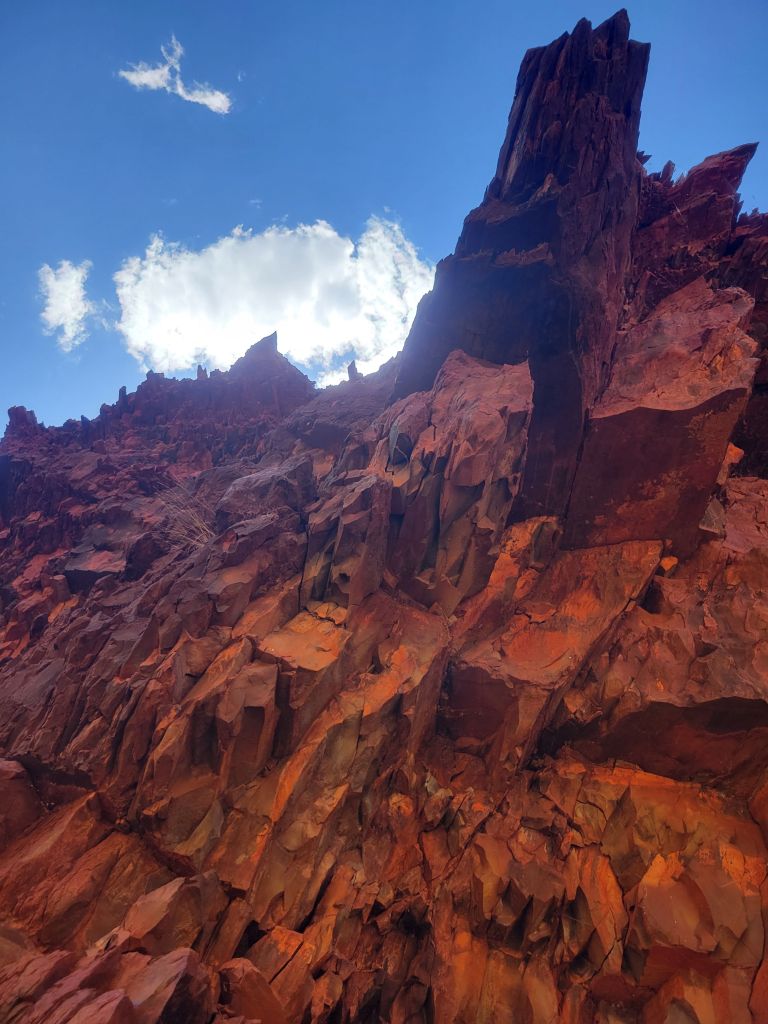
After all that exploration I had some lunch and then looped around to check out the viewpoint on the other side of Joffre gorge. Once again, the shift in perspective to see the place I’d just been exploring from above was extremely cool, giving a whole different sense of scale. Then I continued down the road to Knox gorge. The descent into Knox is, rather than a staircase, an actual, honest to god, rock and dirt trail, so of course the many Aussie safety signs warn of the incredible difficulty. After the trip down I again explored as much of the gorge as I could. I was able to stay dry this time but got to walk a fair way down the gorge, eventually getting to the Aussie safety stop sign and cordon, which was fair enough since at that point continuing would have meant going down a steep, narrow chute which led to a sheer drop and a pool a long ways below. The towering walls of the gorge are all bright red, right angled-rocks, and the effect is spectacular.
This wrapped up all the gorges I could get to on the west side of the park so I hopped in the van and headed for the east. The east side of the park has the visitor center (closed when I was there unfortunately), and the Dales’, both gorge and campground. I was pretty tired by this point but it was only around 4:30pm, and the thing about Karijini is that sitting around in the heat in your van at the campsite is way less comfortable than going down to the cool gorge. I initially planned to just go down and have a dip, but ultimately I caught a second wind and went for the loop walk of Dale’s gorge.
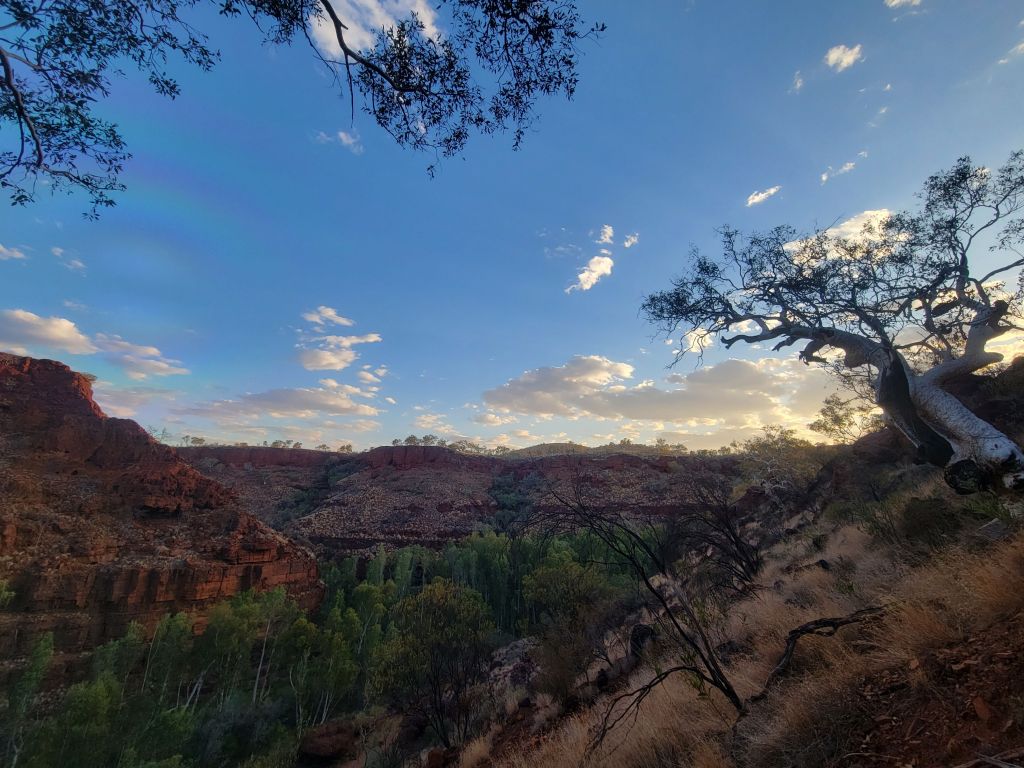
Dale’s seems to be the more popular one, unsurprising given its accessibility and proximity to the huge campground. The way down is just a series of stairs and boardwalks, and gets you to beautiful Fortescue falls. A short stroll to the right leads to shady Fern pool, where everyone was hanging out hiding from the heat. After Fern pool I turned back and headed down the gorge. Dale’s is one of the bigger gorges, quite wide at the bottom, and seems to have more water, so that the whole thing is full of trees and grass. The walk criss crosses the water a few times before getting to a staircase back up to the rim. From there I checked out the circular pool lookout, which was absolutely spectacular. Finally, with the sun setting, I strolled back to my van along the rim of the gorge, enjoying the changing colors of the red rocks and the mercifully lowering temperature.
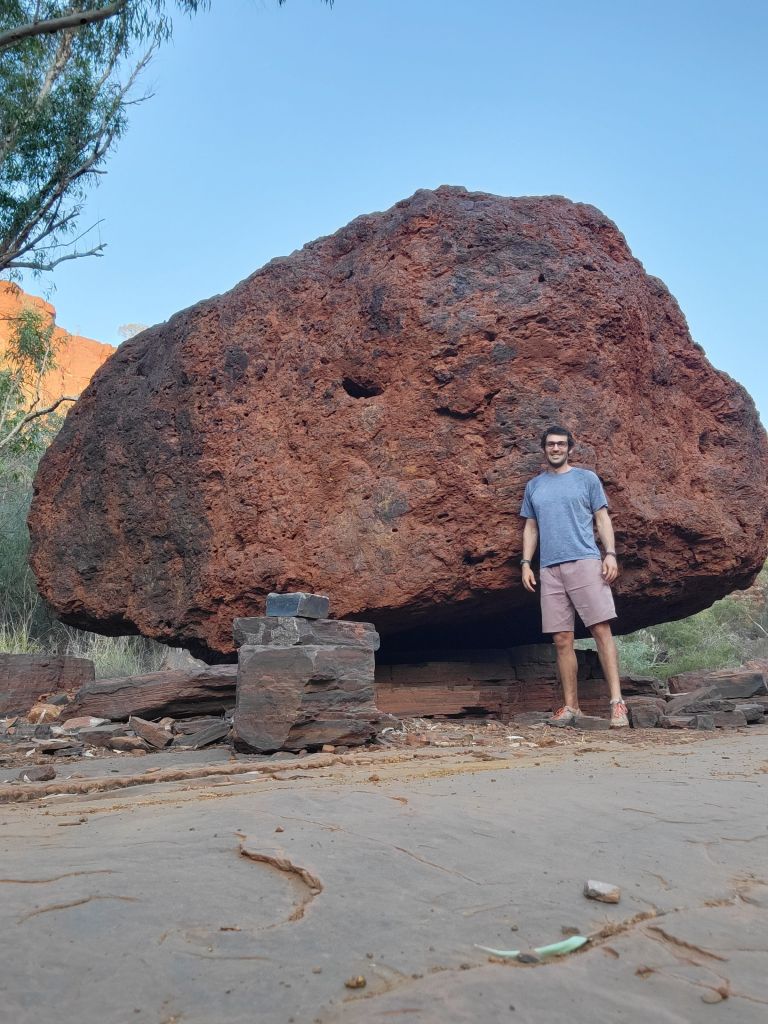
Big rock!
The next morning I went for a quick dip at Fern pool and then said my goodbyes to Karijini. It’s a short drive to the next town, a mining outpost called Tom Price, apparently after an American geologist who helped them realize how rich the area was in minerals (hurray…). Mines aside, the area is absolutely stunning, and just looking around from town gives great views of the surrounding hills. I was feeling pretty tired and puttered around for a while, getting coffee and lunch, grocery shopping, and filling up on water. By mid-afternoon there was nothing left to do but head on down the road.
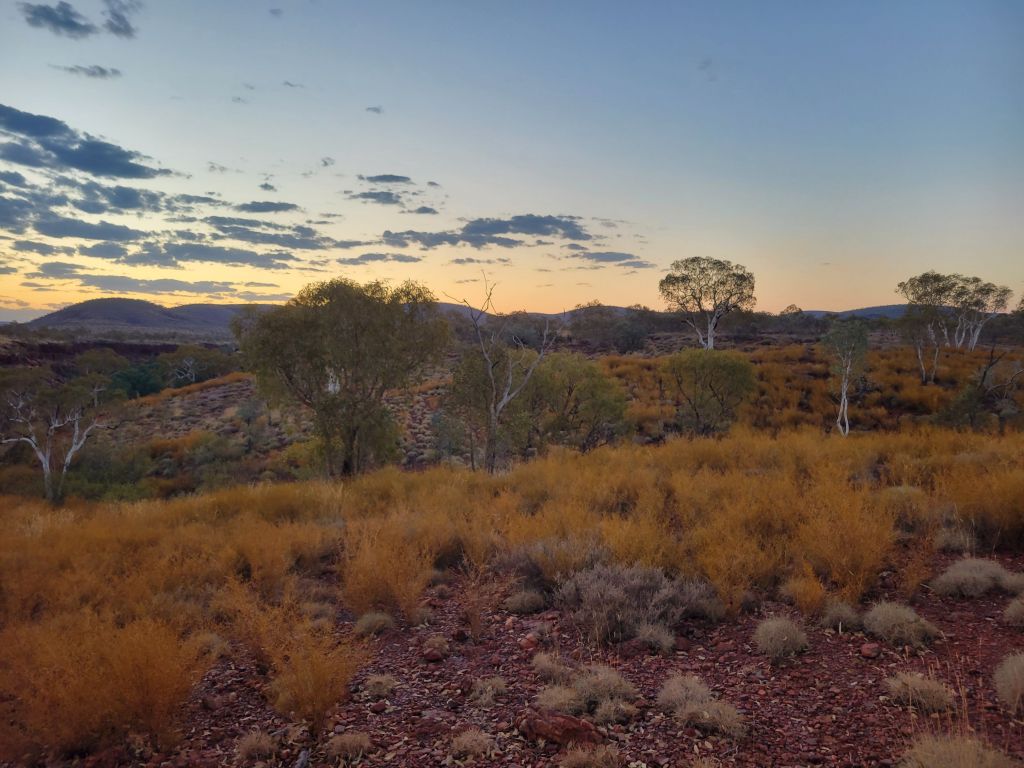
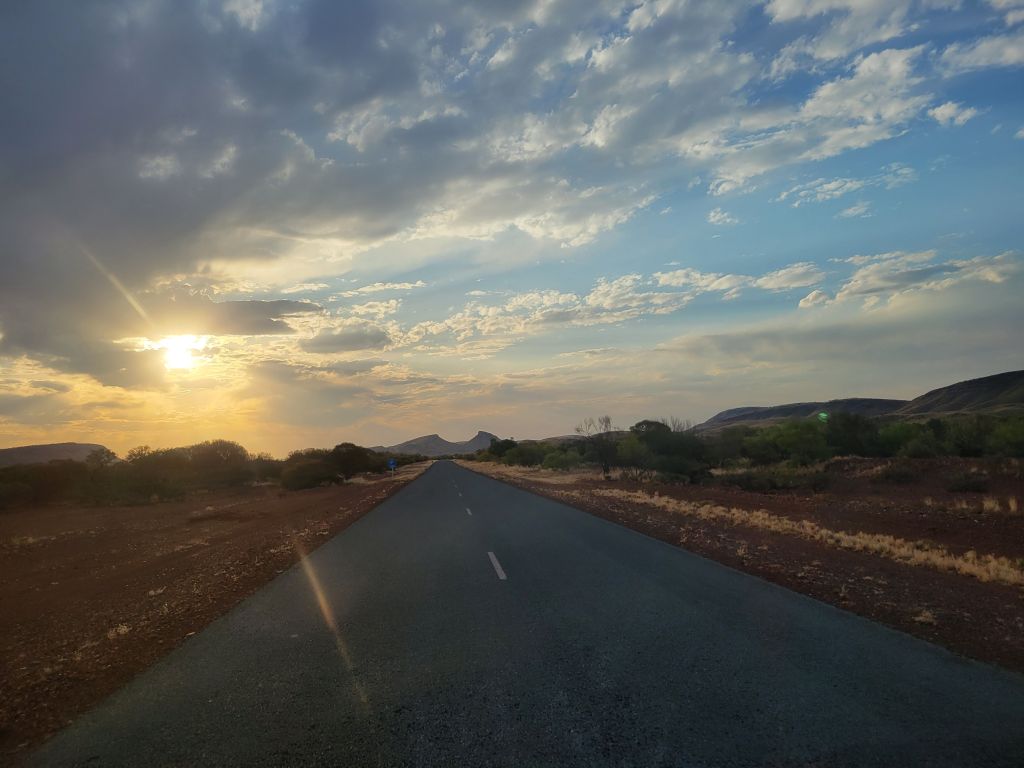
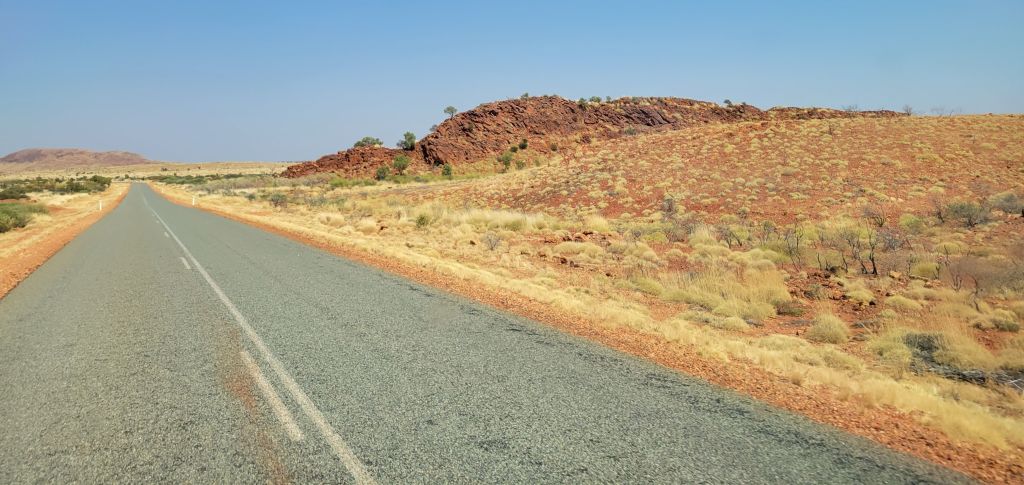
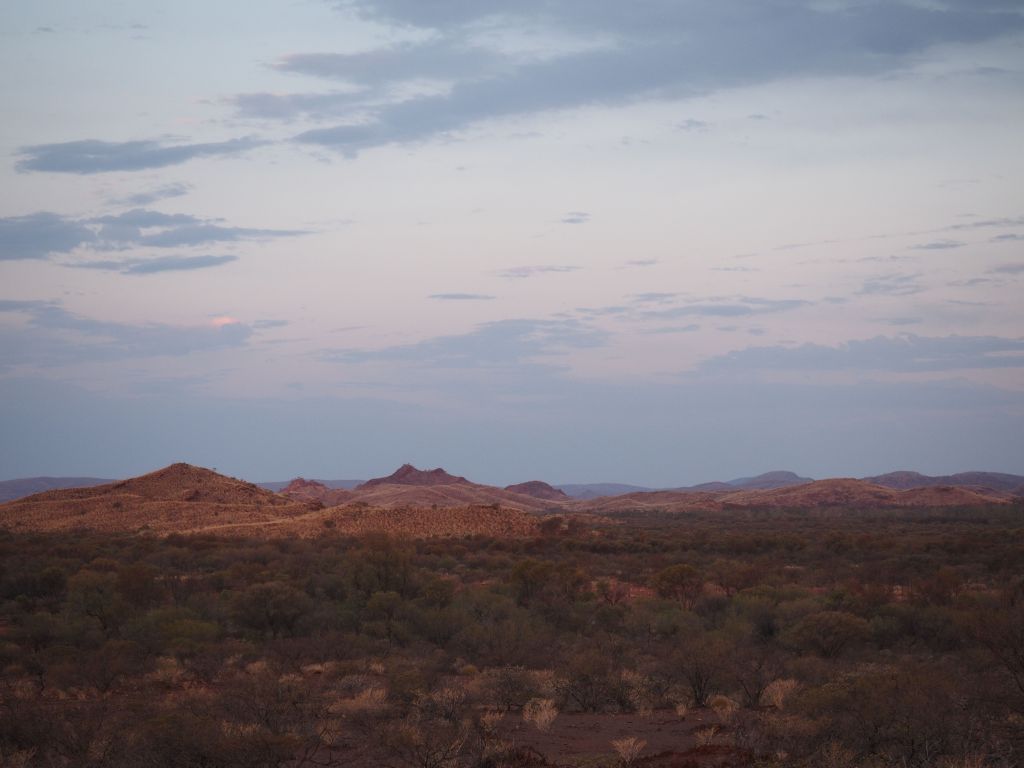
This region is called the Pilbara, and I have to say, it is absolutely spectacular. Several people had told me about the Kimberley, which is the very northern region of WA, and it certainly is beautiful up there. After today’s drive from Karijini, through Tom Price and Paraburdoo, I have to say I think the Pilbara gives it a run for its money. It didn’t hurt that today was the rare cloudy day, making the light play on the various rolling hills and mountains, but man I spent the whole drive to my campsite tonight just yelling “It is SO beautiful out here!”. I’m not sure when I’ll come back to Australia, but if I do you can bet that it’ll be to tour around WA in a 4 wheel drive. This is my kind of place.
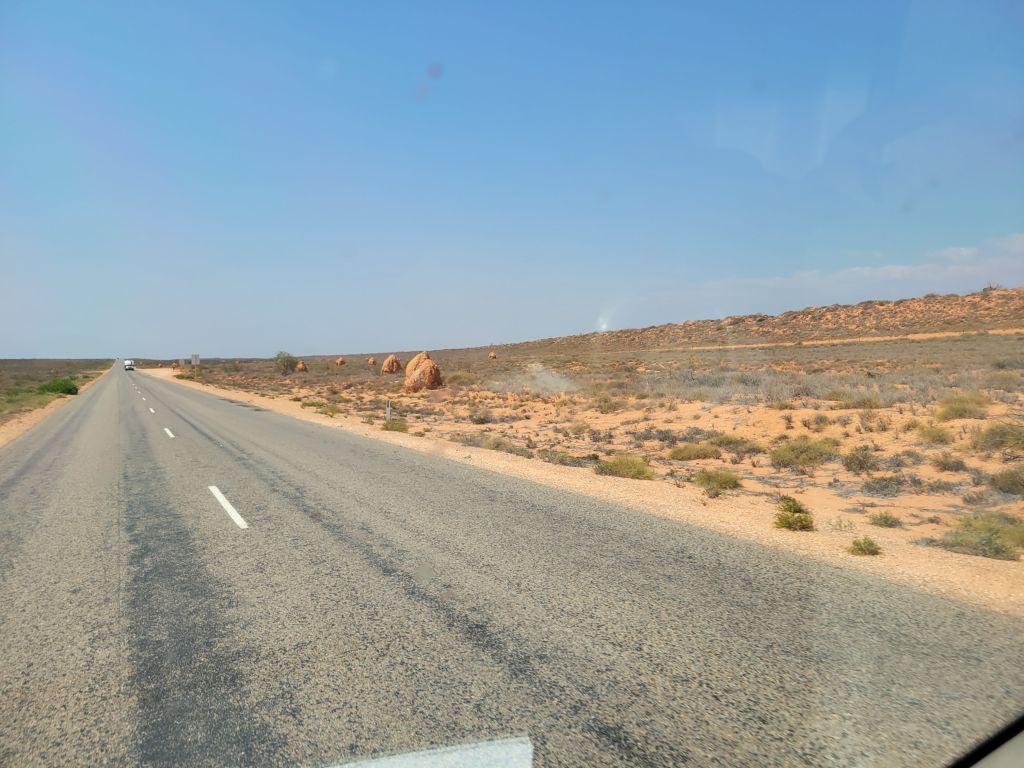
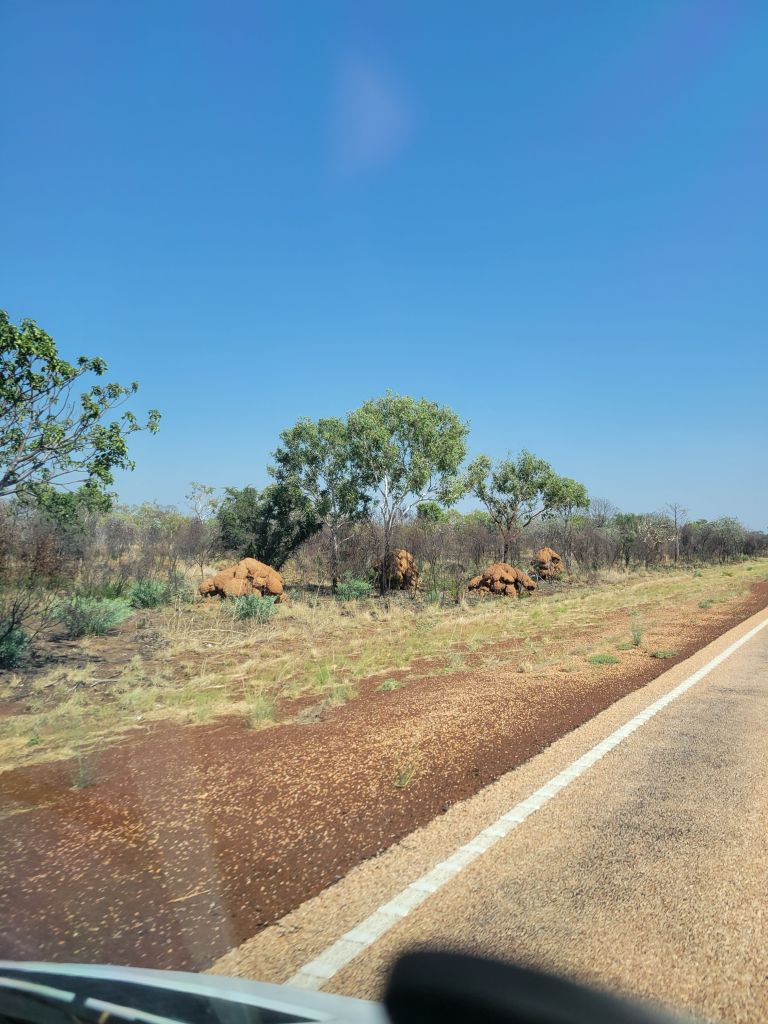
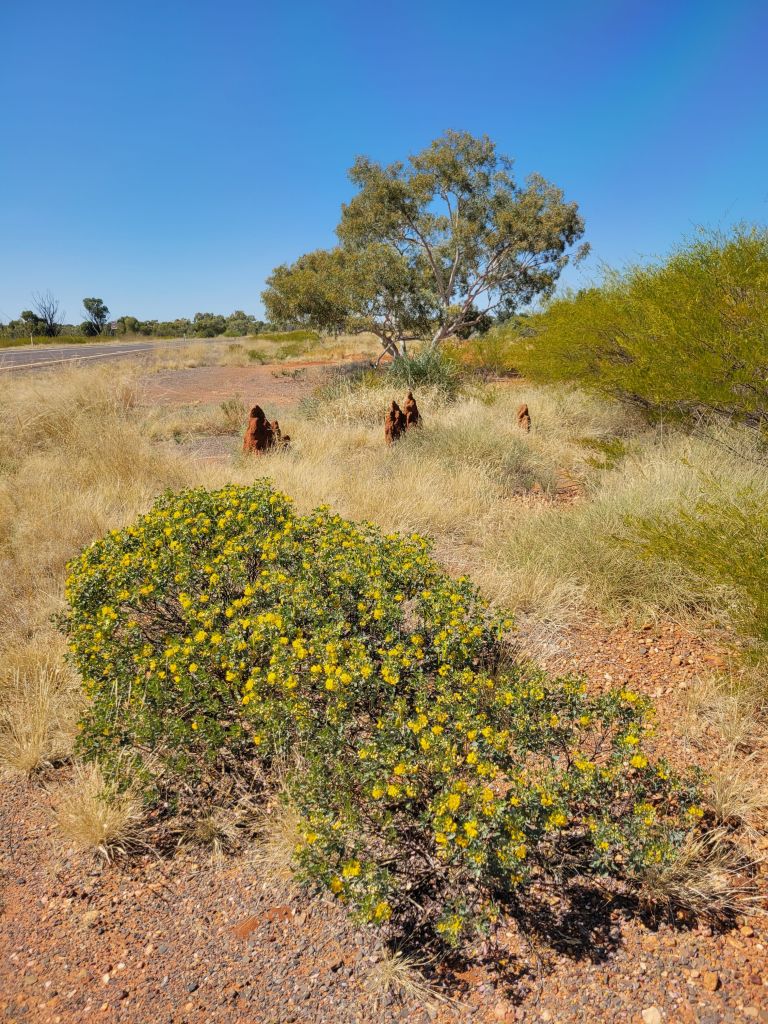
The termite mounds are huge, bulbous, and plentiful on the road to Exmouth
Greetings from the industrial paradise of Port Hedland. Every single person I talked to told me it wasn’t worth stopping here, and, well, I get it. As it turns out I’m here for a regular service on my van (nothing actually wrong, hopefully) because with industry come qualified mechanics, at least. So today’s a relaxing day of hanging around cafes and libraries, and I’ll be off to another free camp outside of town tonight.
I actually just left Broome yesterday, so those couple of days I thought I would stay turned out to be a couple of weeks. Diving over the long weekend was great—I got out 3 days in a row, and it felt great as always to give tips, do safety dives, and watch people hit PBs and generally have a really good time. Sometime the following week I then had to move, because Graham and Linda rent one of their rooms as an Airbnb, and for some reason the listing doesn’t mention a vagrant living in a giant van in the driveway. As it turned out this became a chance to mooch even harder when Anna and Sam, an incredibly nice couple from the freediving group, said I could stay at theirs.
I thought I would just be parking in the driveway but when I got there Anna said “We’ve got a whole granny flat empty in the back, just move in there”. People, let me tell you, what a life of luxury. Two rooms! An actual kitchen! AIR CONDITIONING! A shower! Seriously, air conditioning! The temperature in Broome has been hitting right around 40 degrees Celsius, which is 104 Fahrenheit, every day. Air conditioning!
Even better than the, I cannot stress this enough, AIR CONDITIONING, was the company. Anna and Sam are the kinds of people who really fill their schedules, so I didn’t see them the first couple of days and worried that I’d just be a weird stranger haunting their back yard for a week or two before disappearing. Luckily it didn’t turn out that way, and I was able to join them for a couple of dinners, a couple of breakfasts, and a couple of hangouts with their group of friends, most of whom are also freedivers. Every single person I had the chance to hang out with was really genuinely nice and friendly, and it did me a world of good to slide into their social group for a week or two. I distinctly remember, during the first dinner that I joined in on, thinking “Man you know this is really a totally standard social situation, just a group of friends having a low key dinner, but wow it feels great!”.
I think it’s been pretty clear throughout, well, several of my past posts that I was having a bit of trouble finding my footing, in the broadest possible sense. So I’m glad to be able to switch it up in this post and say my footing feels firmly found. I’d started to feel like I was turning a corner in western Queensland, but then took a bit of a step back with getting robbed. After that, through Kakadu and Katherine and the beginnings of WA, I got over the robbery and felt like I got back the momentum I’d had, until I really started feeling like myself again right before Broome. I think this really contributed to my having such a good time in Broome. Mostly it’s just that everyone was really nice, but also my feeling better and more comfortable with myself helped me jump in, make friends, and just enjoy the time. So I’m grateful for that, and excited to keep the momentum going.
Next up is Karijini, a huge national park smack in the middle of the desert. I’ll spend a few days there [Spoiler alert: I’m finishing this post from Karijini, and hoo boy, strap in for the next one because it is gorgeous here. Dylan, there are great rock pictures incoming.] and then head to Exmouth to dive my little heart out. Exmouth is apparently tiny and I’ve heard accommodation can be a real struggle, so we’ll see how that goes. Worst case I’ll just have to pony up for a caravan park, and I’m pretty confident that’ll be worth it.
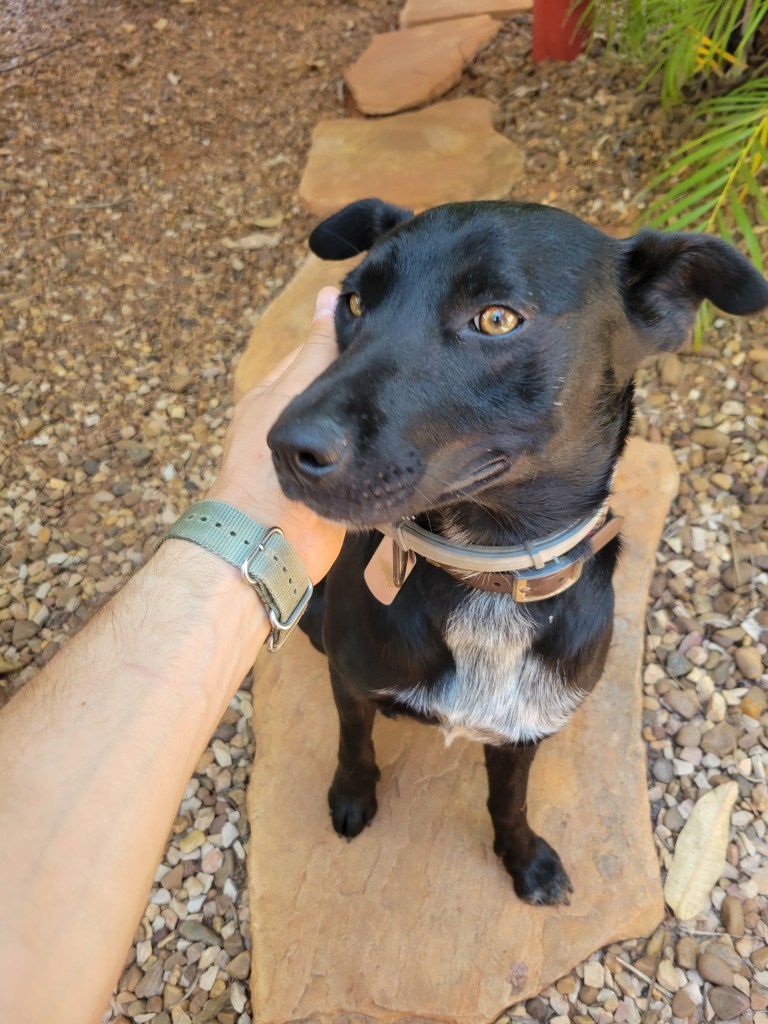
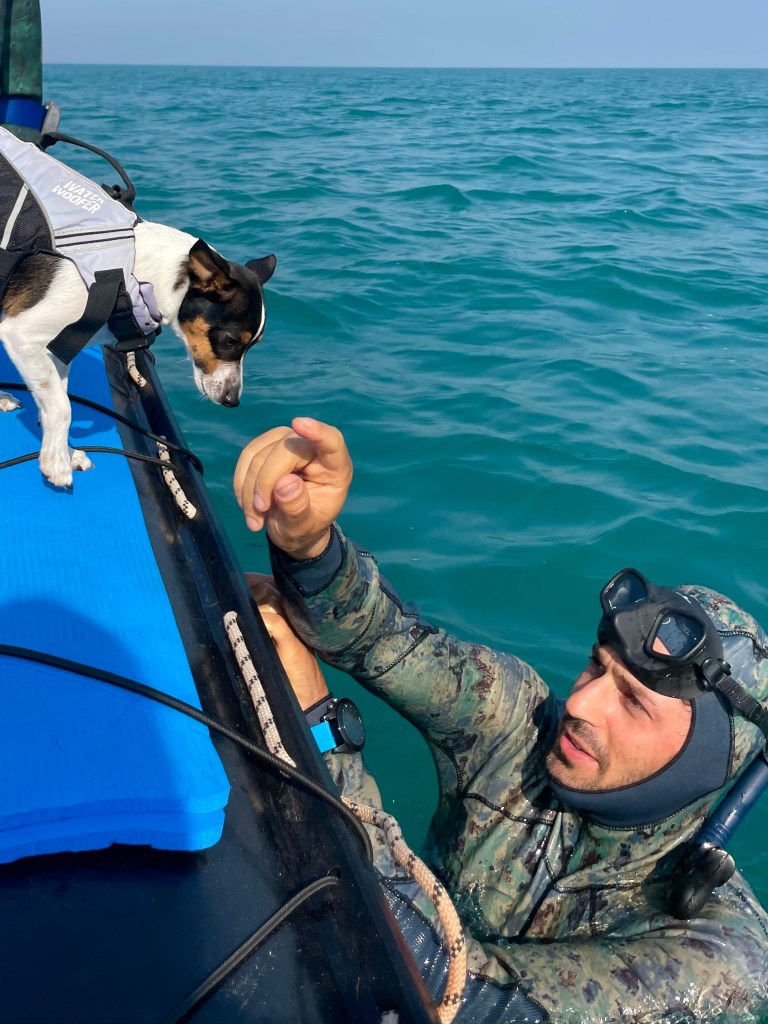
Linda and Graham’s dog Blaze, too adorableWhat?Anna and Sam’s dog Elly, who’s quite skittish but eventually warmed up to meBlaze bravely coming to my rescue
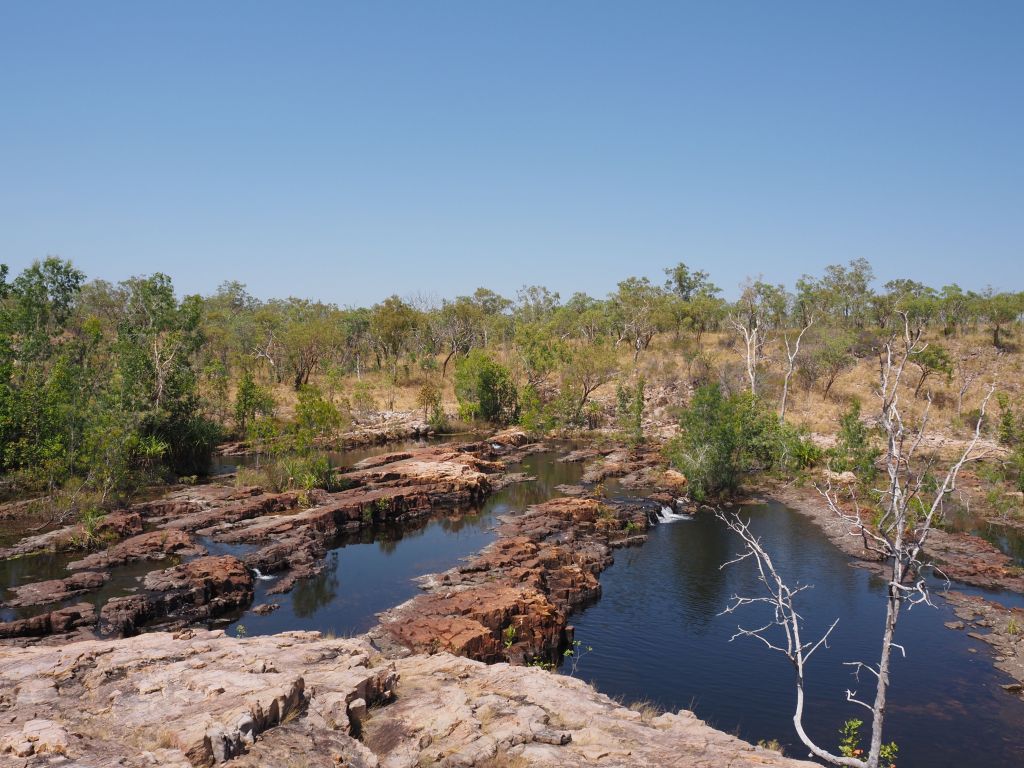
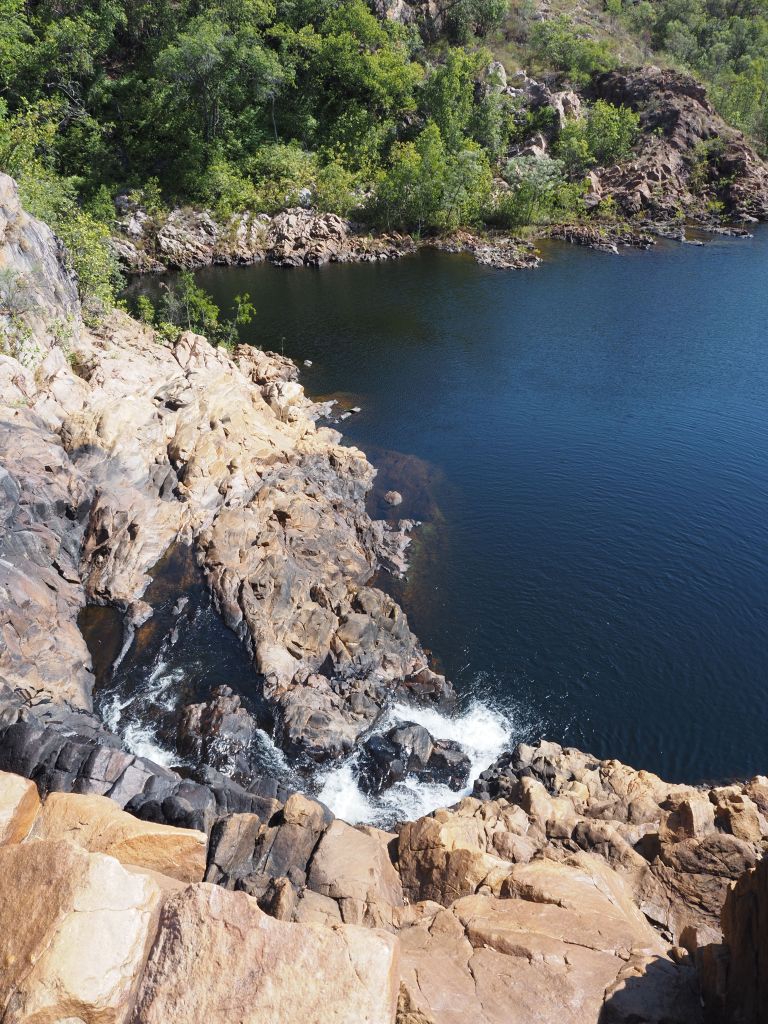
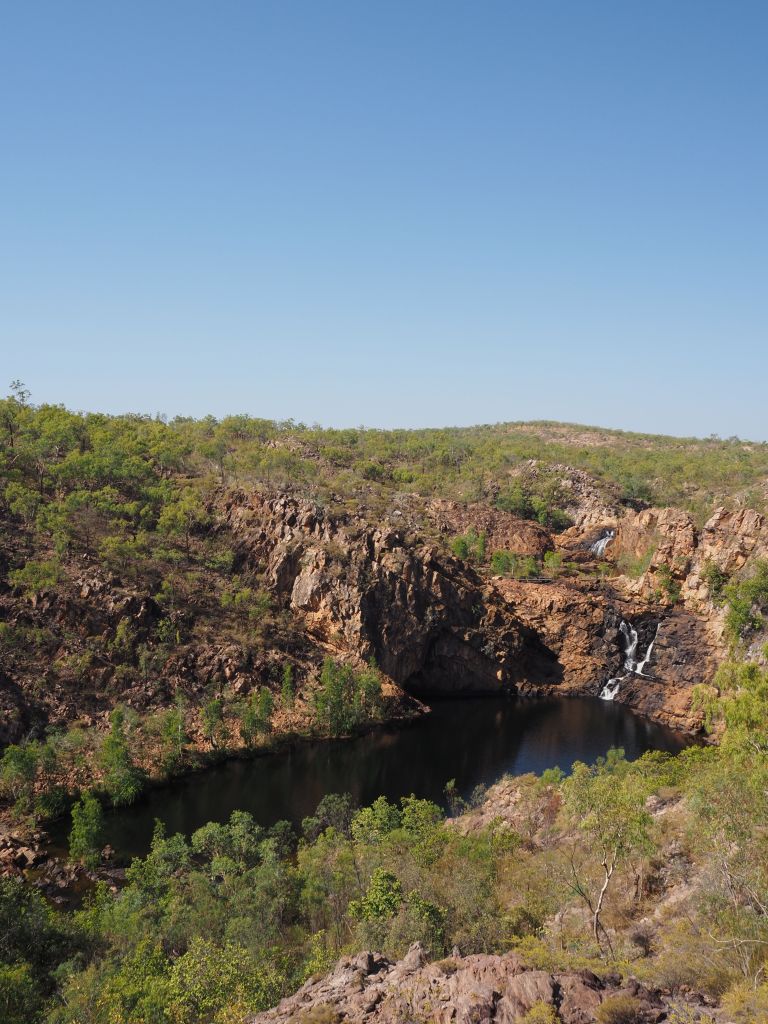
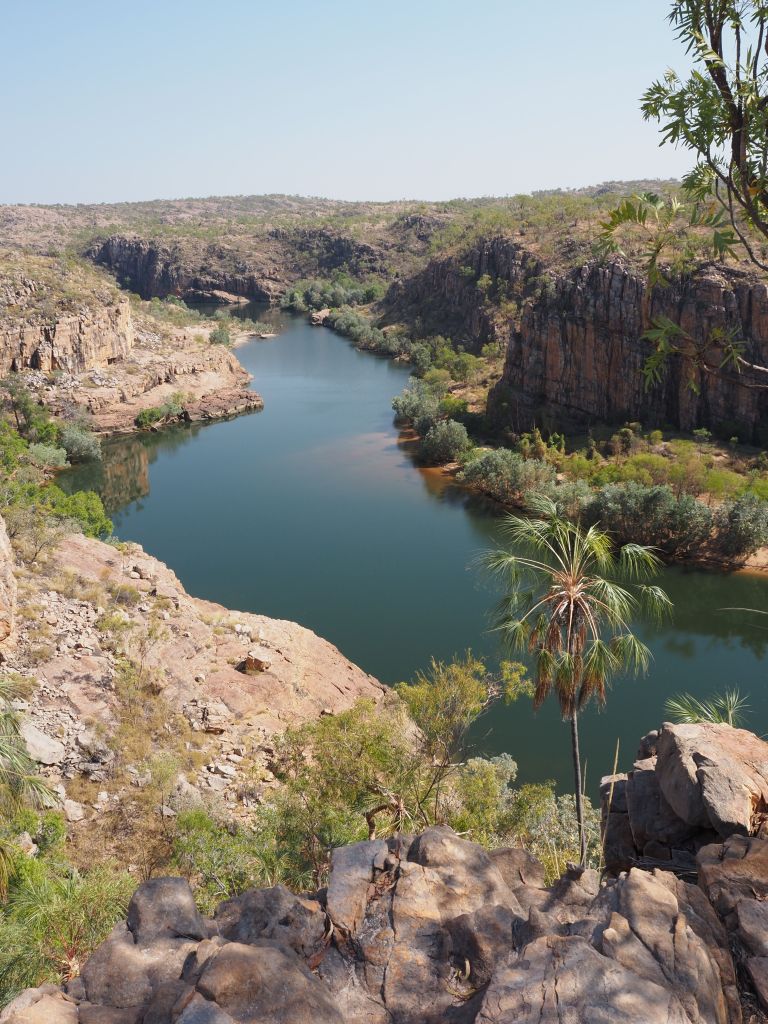
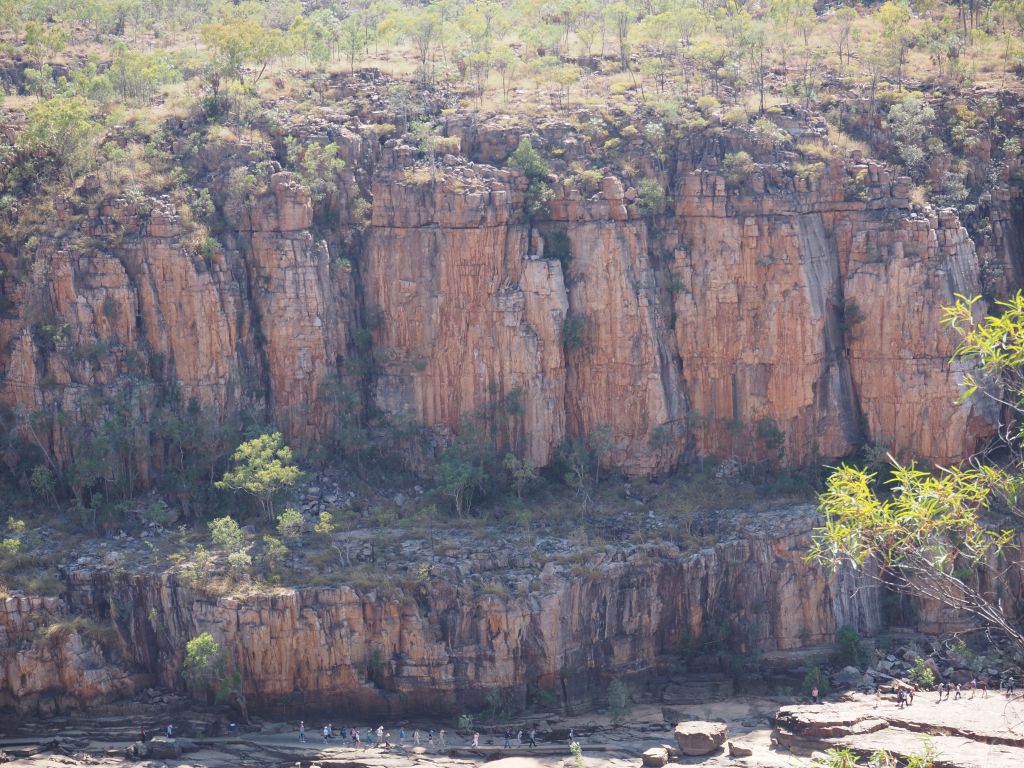
Hello from beautiful Broome, Western Australia. It’s been a slow few weeks and I haven’t felt like I have a lot to write about, but I’m way overdue at this point so we’re back. Nitmiluk gorge was beautiful. The first day I went to Leliyn, or Edith Falls, at the northern end of the park. It was an easy stroll along the water to a swimming spot, where I met a very nice family, got to chatting, had a swim, and ended up walking the rest of the day with them. The area was pretty but not necessarily a standout for me, but the company was nice and swimming felt great in the heat. I spent the night at a free camp and the next day went to Nitmiluk Gorge itself for a hike. This was much more impressive—the huge, deep green river meanders between sheer cliffs of red rock, each bend giving you a new view to enjoy. I had a tremendous day, hiking for several hours in the increasing heat, barely crossing any other people, getting views of the gorges completely to myself.
Humans for scale
After that I was ready to hit the road to WA. I did a big grocery shop, filled up on fuel and water, and then just as I was laying my head down that night I thought “Wait, did someone mention something about an agricultural quarantine for WA?”. Sure enough, apparently Western Australia is devoid of certain agricultural pests and they’re intent on keeping it that way, so you’re not allowed to bring any fresh fruit or vegetables in. Good thing that, in my enthusiasm after getting my broken fridge fixed, I’d done an extra big shop and had a fridge absolutely crammed with vegetables and a pantry full of fruit! So I did what any reasonable person would do and spent 2 days sitting around Katherine with nothing to do, eating an entire week’s worth of fruit and vegetables.
Eventually I got my stocks low enough to finish the next day and was able to hit the road. All of the landscapes in this northwest part of Australia are just absolutely stunning. The rocks are red, there are huge boulders and rock piles reminiscent of the desert in Southern California, and it’s sort of surprisingly desert green. Unfortunately this is the region where you really actually do need a 4 wheel drive to get out and explore a lot of things, so I had to stick to the main road. Even still, I spent most of the drive just blown away, staring out at the rocks and hills passing by. I stayed at a free camp up on a cliff with incredible views out to the north and west, and the next day it was a quick trip to the border. It felt a bit uncalled for when, after having me open my fridge, the border guard remarked “That’s the saddest fridge I’ve ever seen”, but he was very nice and the whole check was quick and easy. After that I drove straight to the library in Kununurra, the town right across the WA border, to get my bearings. I’d made it to WA, the promised land that everyone had told me I would love. So far I think they were right.
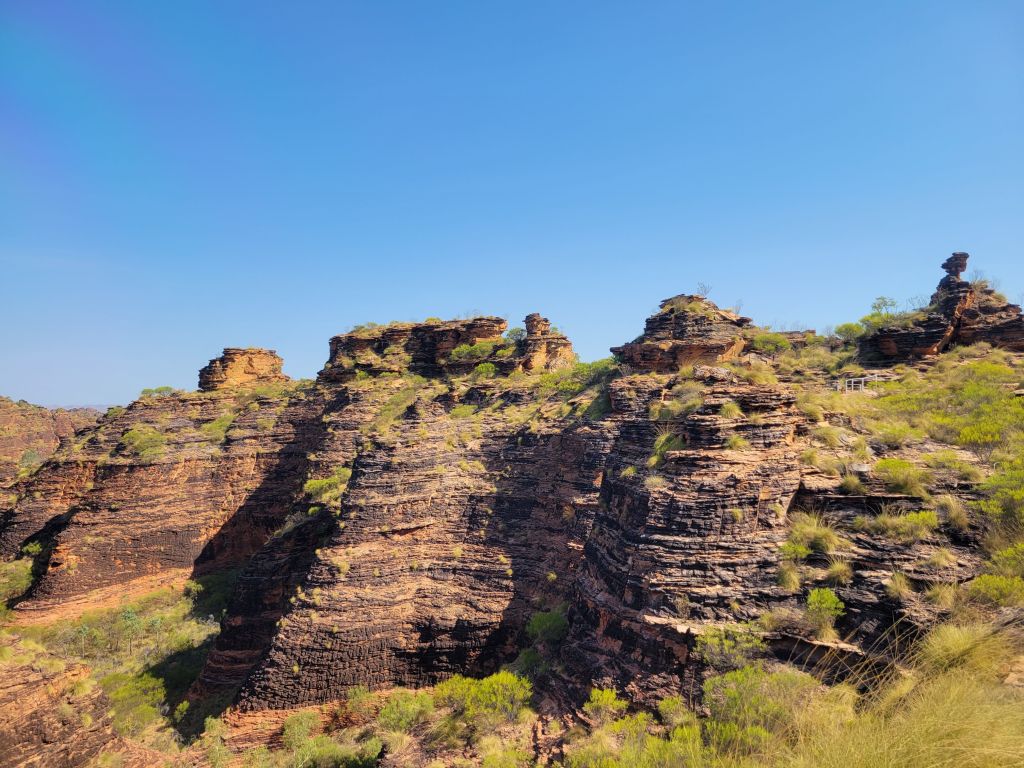
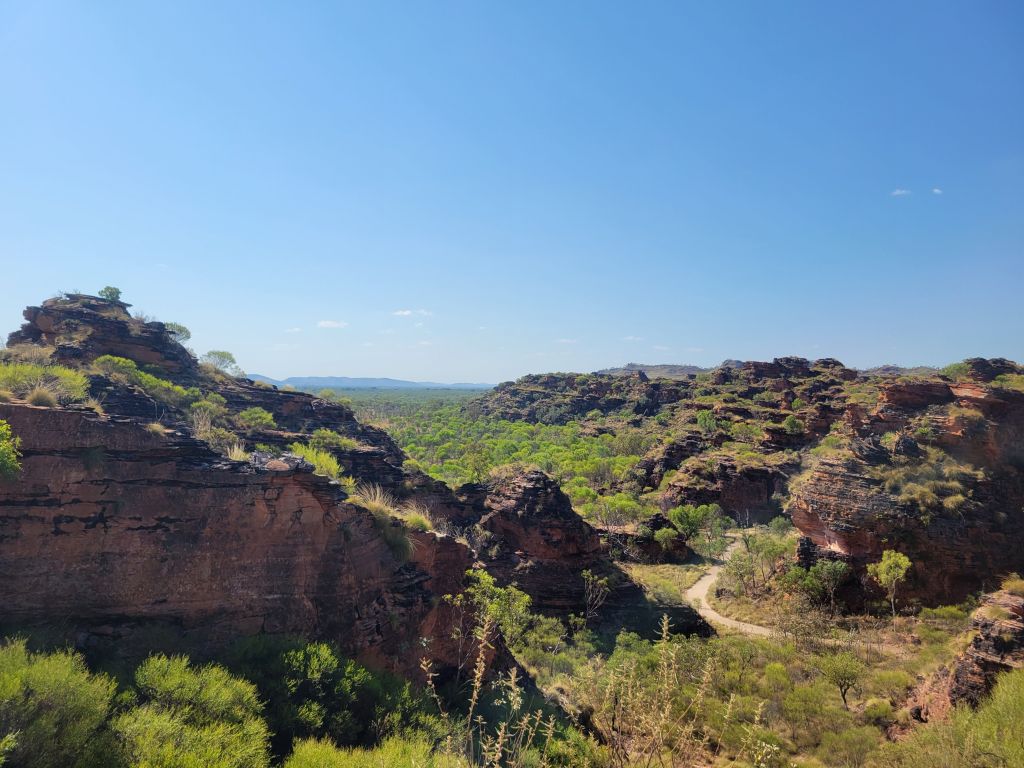
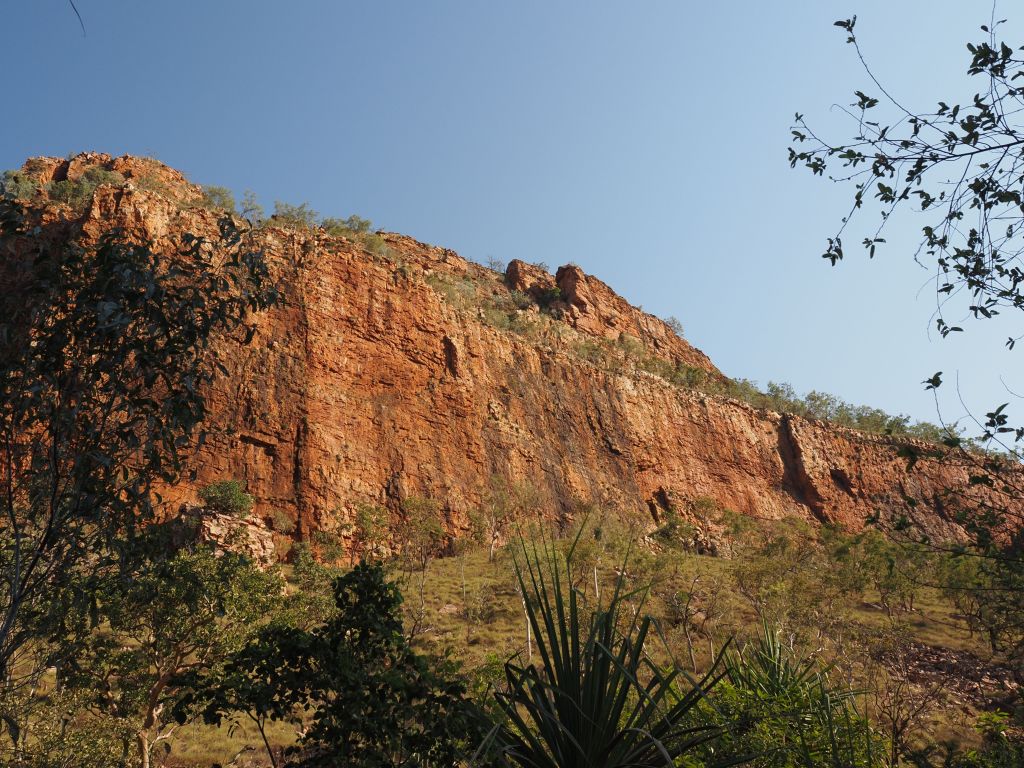
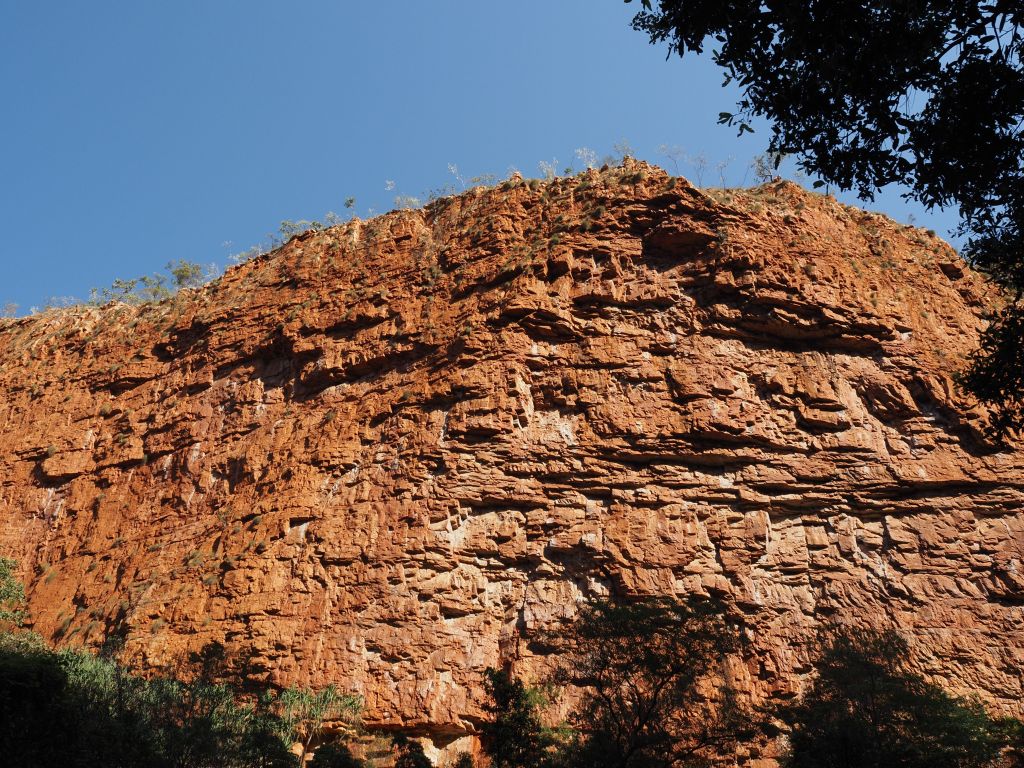
I spent a nice couple of days in Kununurra, with Mirima National Park, right in town, as a highlight. I also spent a day running around town to confirm that my check engine light was nothing to worry about (it wasn’t, and it’s back off now). On my way out of town I went to Emma Gorge, where a nice, fairly short walk up along a riverbed leads to a beautiful large swimming hole surrounded by tall cliffs, with a waterfall and a small hot spring bubbling away in one corner. Luckily I made it over in the morning and got to enjoy a bit of stillness and snap a few pictures with no people in them before the hordes descended.
Proof of life. No, I don’t know why I look so awkward in this photo.
Then there was nothing left but a 10 hour drive to the ocean. I split the drive into two relatively easy days with a beautiful free camp in between, and got in to Broome in the afternoon, ready to hit the beach. I wasn’t sure what the swimming situation was since this is still saltwater crocodile territory, but I guess they monitor the area or something, because everyone swims at Cable Beach, which also happens to be the van life center of the city. The reviews I’d been seeing made it sound like the local council was quite strict about van life, but I guess that’s mostly just during the high season because no one seems to be checking anymore.
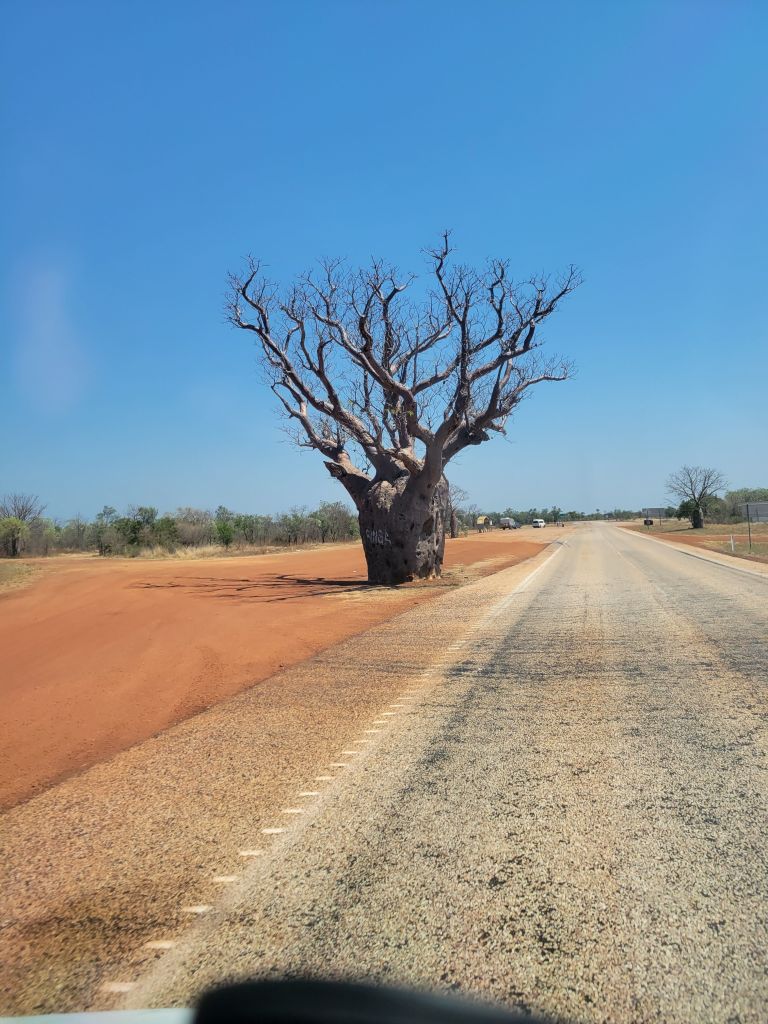
The termite mounds are decidedly more bulbous hereBoab trees!So cool!Tourist highlight
In the weeks before heading out to WA I tried to find any freediving instructors/schools/clubs/whatever that I might be able to work for or just dive with. It was not an especially fruitful search, with the notable exception (so far) of the Kimberley Freediving Club, based here in Broome and powered almost single-handedly by an affable Kiwi named Graham, who’s an extremely knowledgeable and experienced diver. Looking at their website I wasn’t really sure how active the club was, but I figured it was worth taking a flyer and sending a quick message. Graham got back to me right away, confirmed that the club did weekly pool training and line diving pretty much every weekend, and said I should come by and check it out. At this point I’ve trained in the pool twice and gotten out to line dive twice, including getting the chance to do a 40 meter dive today. And man, it feels absolutely excellent. I wasn’t sure how I’d feel line diving for the first time in a while, but it really just confirmed, again, how much I love freediving. On my first dive I slowly pulled 10 meters down and then hung for about a minute, holding the rope and listening to the whales singing, and I just did not want to come up.
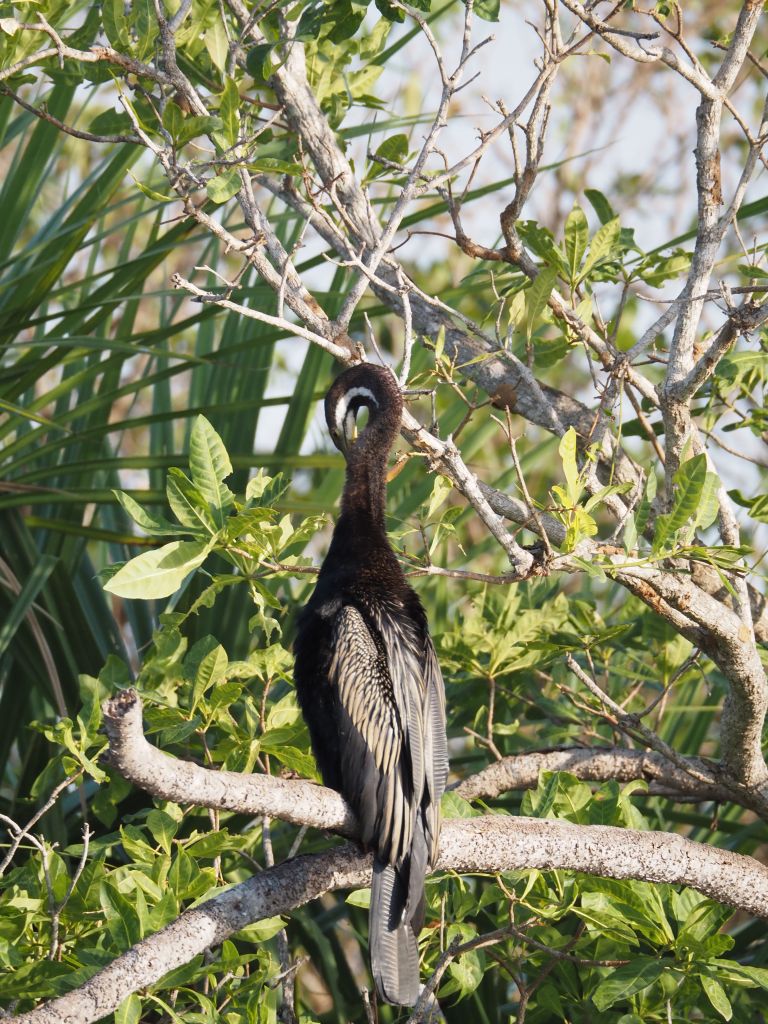
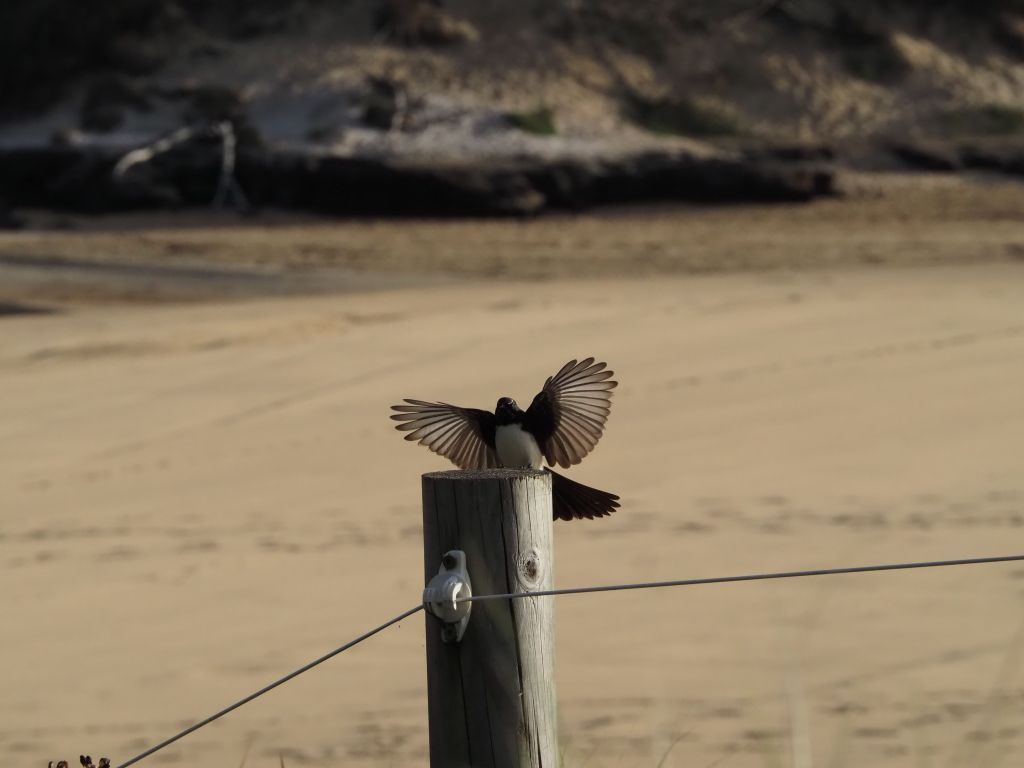
Besides the diving (which it’s not really known for) Broome is… a sleepy town. I’ve been spending the vast majority of my time shuttling between the beach and the library, enjoying body surfing and my online biology class in roughly equal measure. I also spent a night at the Broome Bird Observatory, where, besides just enjoying a beautiful campsite, I got to see lots of birds and wallabies and play with my camera. Graham and his wife Linda have graciously adopted me and let me park up at their house, where I have free access to a bathroom and Wifi and shade and laundry—a real deluxe experience for me. As payment for my club dues I’ve been sprucing up the club website a bit, which has been a fun project, helpful enough to feel good about but small enough to limit any frustration. It’s been a slow, relaxing, relatively civilized couple of weeks for me, and if I had a single complaint it would be that I haven’t done that good a job of making friends or filling the days. Par for the course, I’d say, and a minor worry.
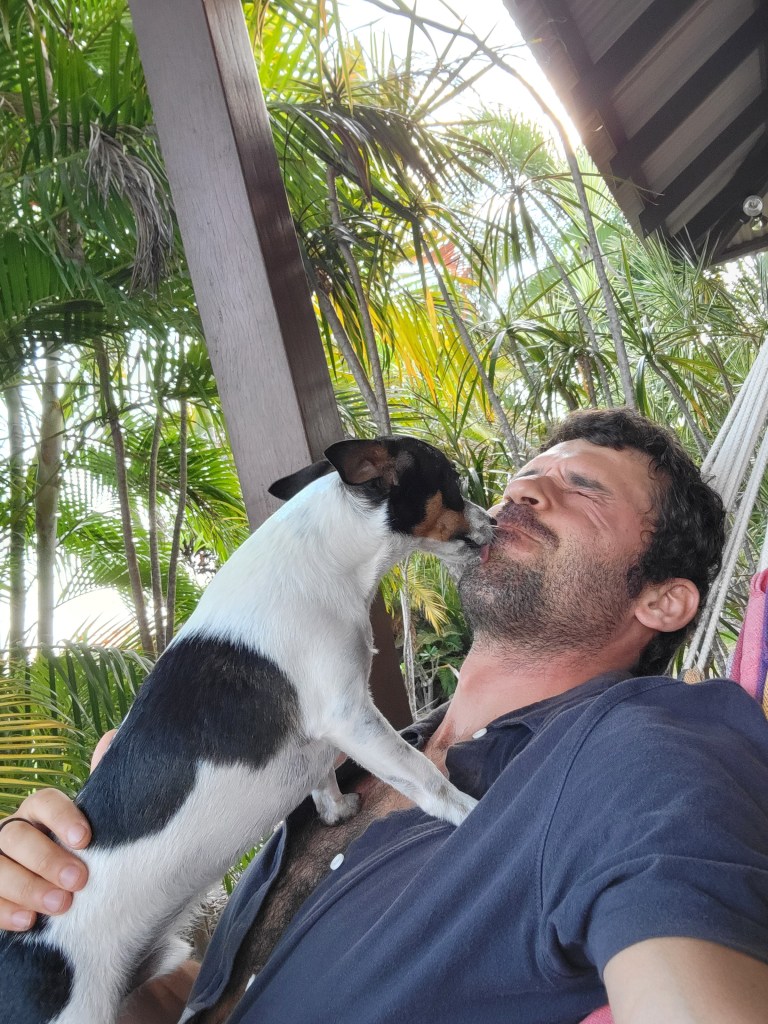
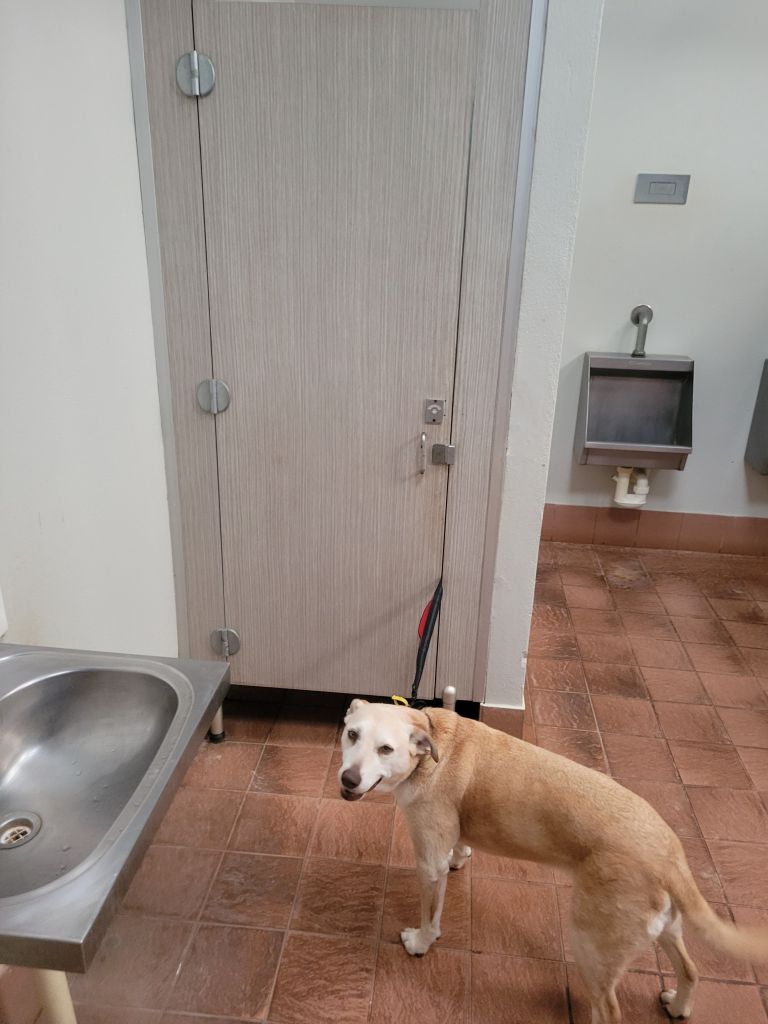
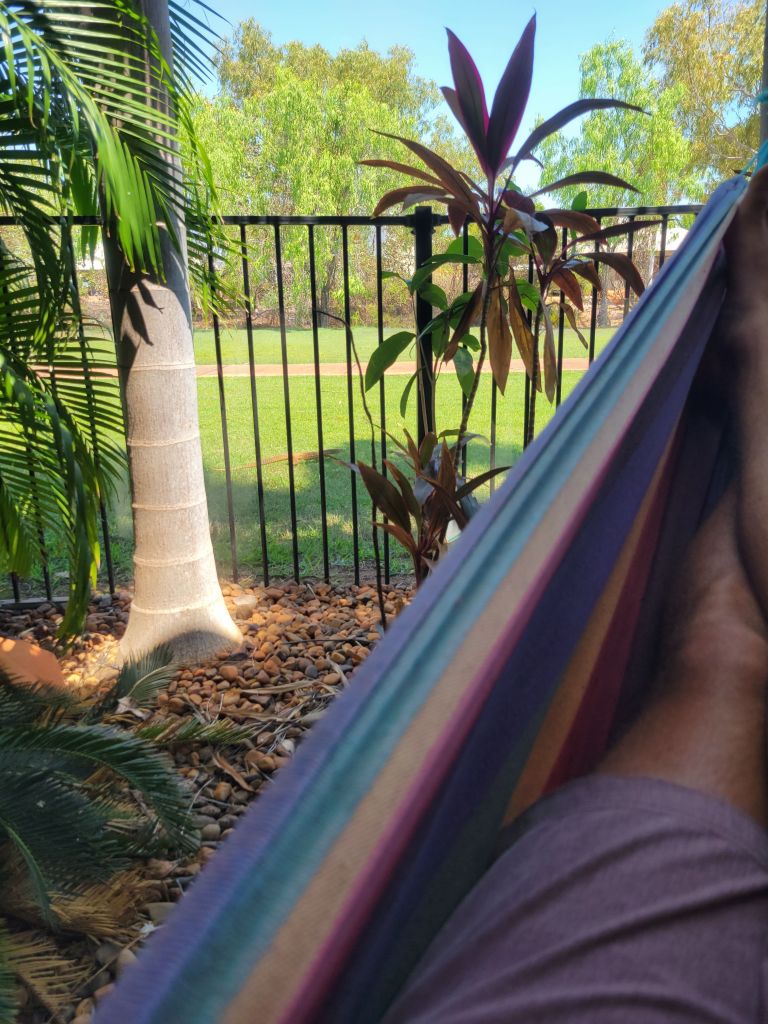
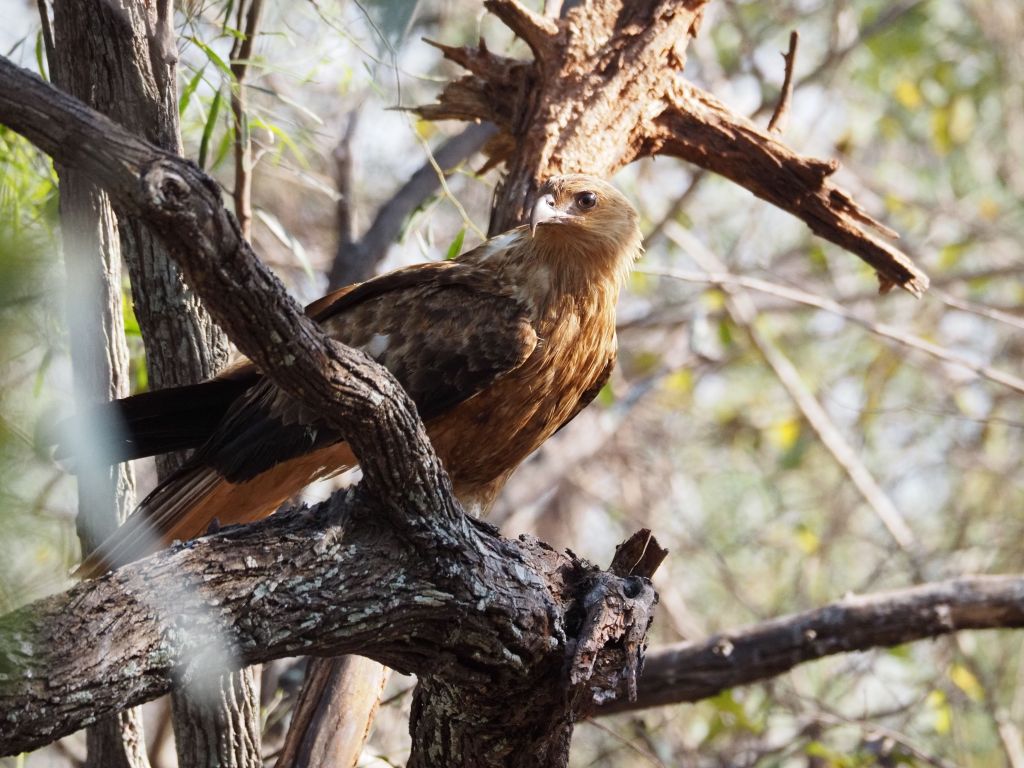
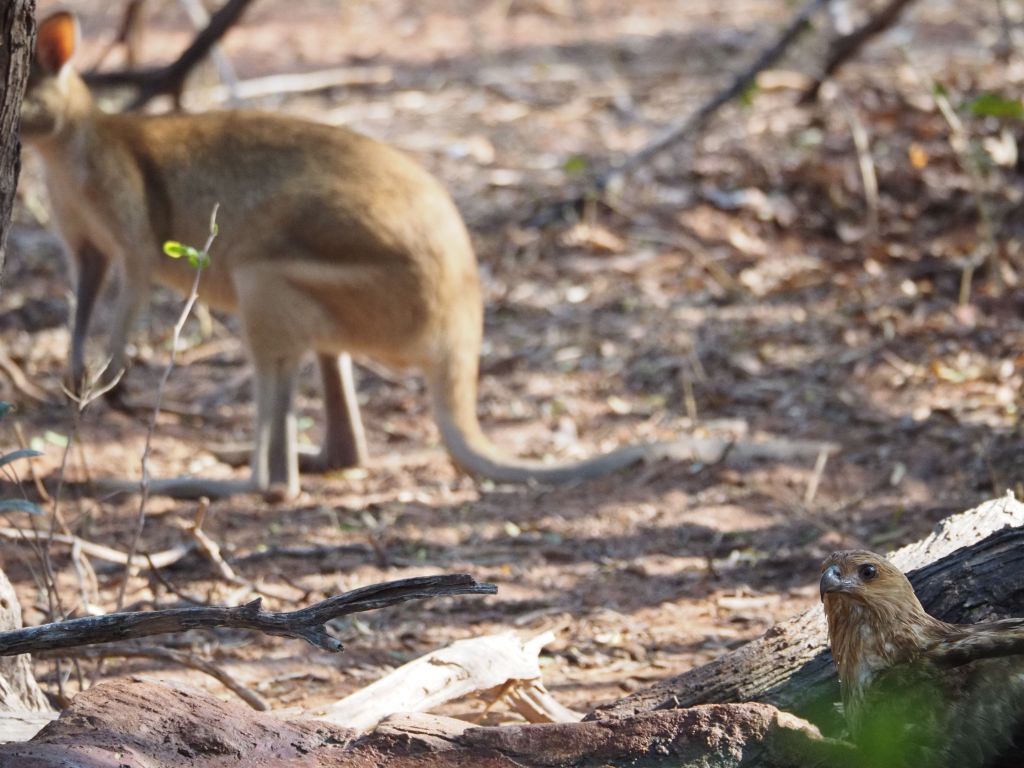
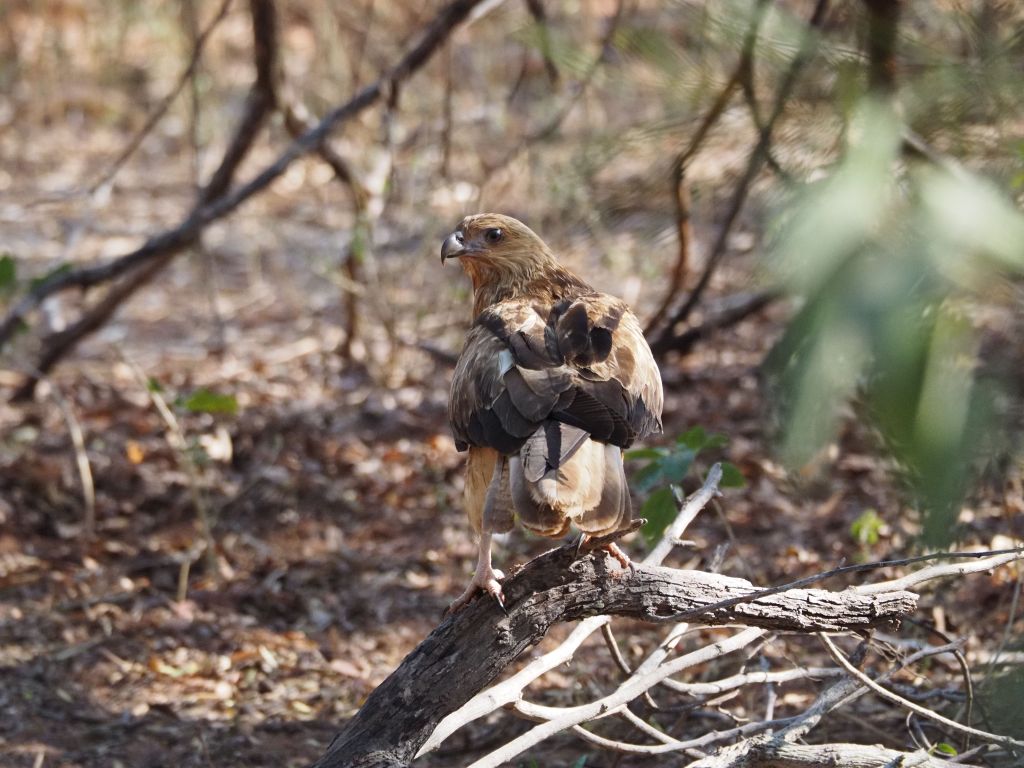
Never seen anyone do this before. The dog was so friendly but somehow I didn’t feel good petting it.There are clouds again!The hammock in Graham and Linda’s back yard, aka my office. That’s a big lizard.Lots and lots of wallabiesCheck “watch a whistling kite take a drink” off the bucket list.
It’s a long weekend in Australia so we’re planning to line dive each of the next two mornings, which I’m really excited for. Most of the club members are fairly inexperienced divers, and after today’s deep dives I’m excited to focus more on coaching and helping for the next two days. After that I may spend another day or two in town running errands, but I think pretty quickly I’ll start the shockingly long drive to Exmouth. When I was in Sydney, way over in the opposite corner of Australia, I often scrolled around the map, eyeing this area where the diving is supposed to be so good. I’d heard Broome and Exmouth were the main tourist destinations, and from where I was sitting they looked more or less like neighbors. Turns out, in a country that’s also a continent, neighbors are over 14 hours apart. So it’ll probably be 3 slow days on the road to Exmouth, and I should really look up cool things to do on the way. Either way I think it’ll be a beautiful drive, and Exmouth is supposed to have decent surf and amazing snorkeling right from the beach, so I can’t wait. You can find videos for this post here.
Apologies, dear reader, for the extended delay. I can just about imagine you, every morning waking up and hoping that’ll be the morning you get that magical email, a new dispatch from your not-that-faithful correspondent. While life isn’t about making excuses, this time there’s a slightly more solid reason than “I’ve been extremely lazy”. It’s been an up and down couple of weeks…
I had a marvelous time in far west Queensland, with lots of free camps, incredible stars, and red dirt galore. I felt like I was finally starting to see the things that had attracted me to Australia in the first place, these incredible desert landscapes. As I was driving through I felt a powerful urge to just wander around the bush, and I got to do just that on a couple of occasions, which was as beautiful and satisfying as I’d hoped.
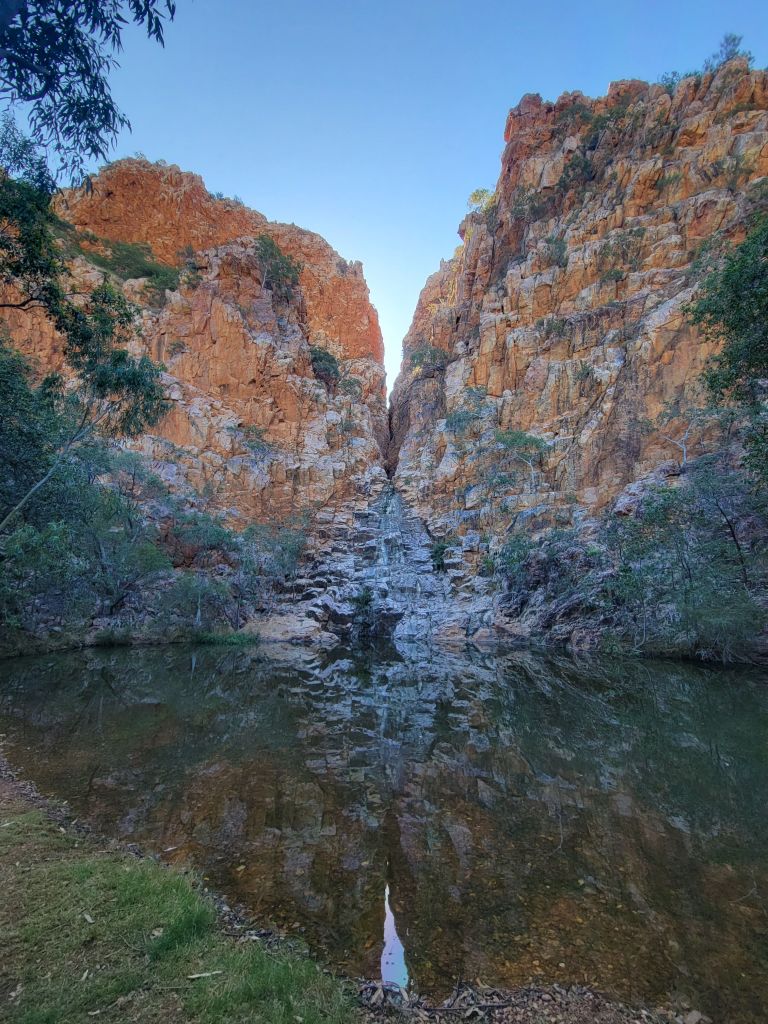
There were a couple of notable highlights in the western part of Queensland. The first was Fountain Springs, a picturesque natural pool fed by a bubbling underground spring that I stumbled upon at the end of a 20km dirt road through various abandoned mining towns. It’s an absolutely stunning spot, with huge cliffs split in the middle by a seasonal waterfall as the backdrop for the pool. I spent the night there, watching the sun set at the pool and generally loving life.
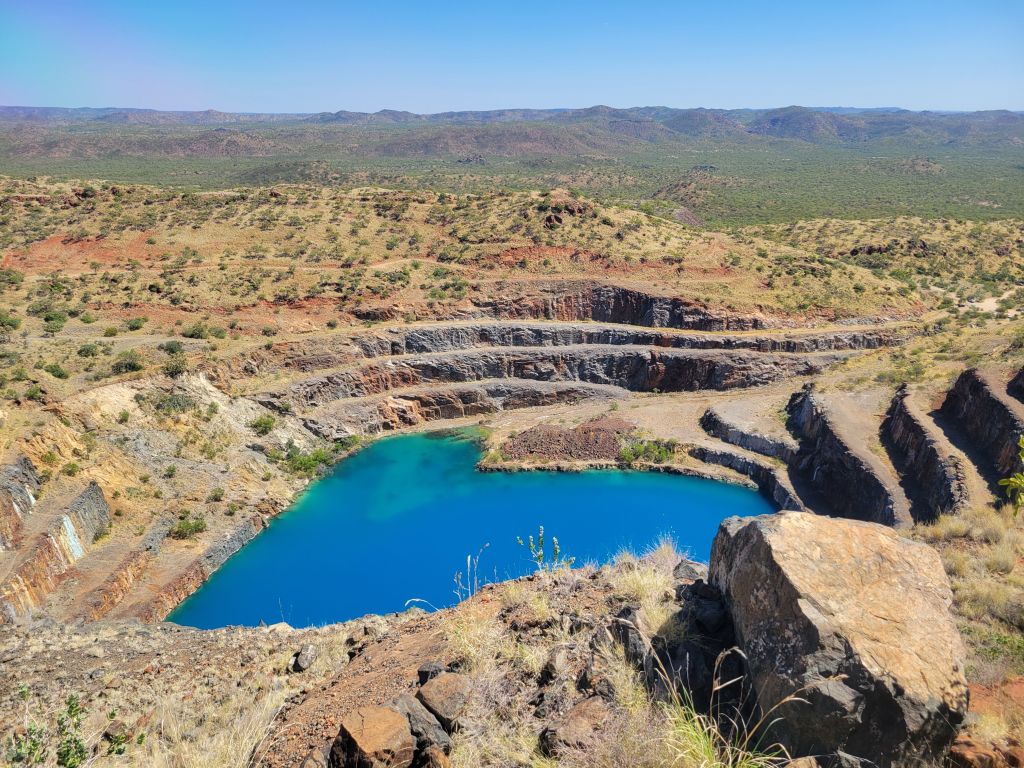
The next day I went and checked out the Mary Kathleen abandoned uranium mine, which is a pretty psychedelic vista, and not just because of radiation poisoning. It’s a huge open cut mine, the bottom of which is filled with turquoise water, looking somehow almost fluorescent for some reason… It’s really a beautiful view. This was one of the chances I took to wander around the bush—I walked up and around the mine to the high side, and then just kept going until I finally reached the ridge with a view to the other side. I really, really enjoyed this walk. There was no real trail (don’t worry, I had my trusty offline maps, GPS watch, and satellite communicator) so I just picked my way, following cattle and kangaroo trails, just walking upwards towards the ridge. The views were incredible—huge vistas of shrubby desert with rocky hills and buttes sticking up here and there. I had flashbacks to times wandering around the desert in Southern California, one of my favorite things. On the way back I went out on one of the levels of the mine at the high side, sat on a huge boulder, and just took it all in. This was a good day.
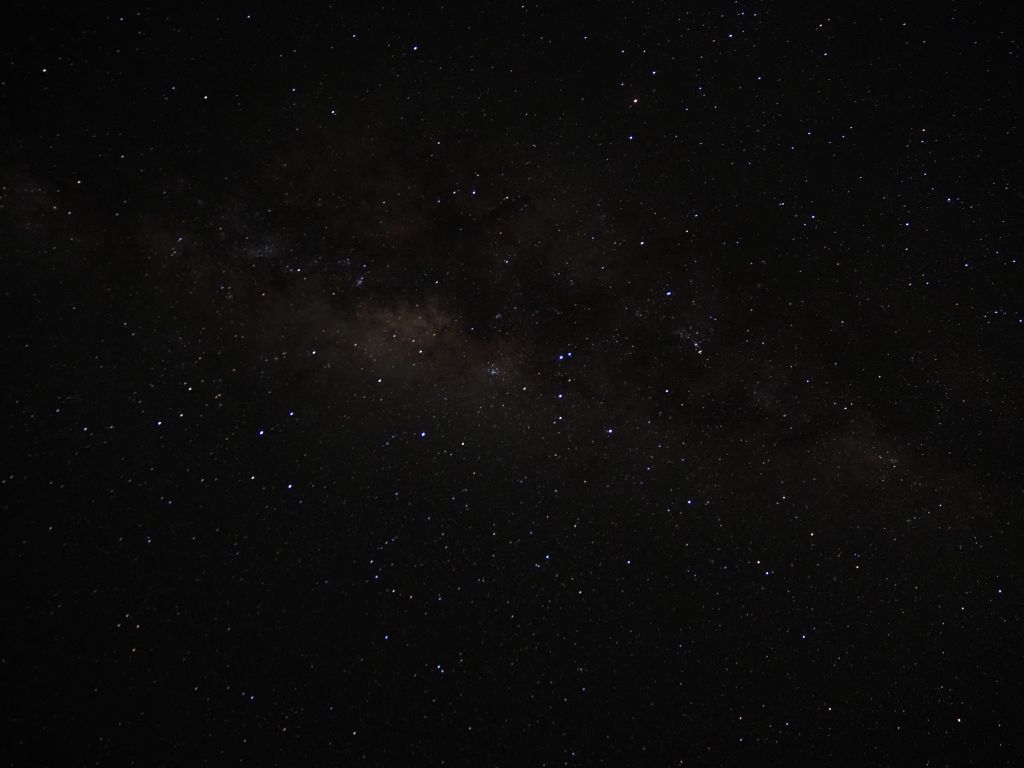
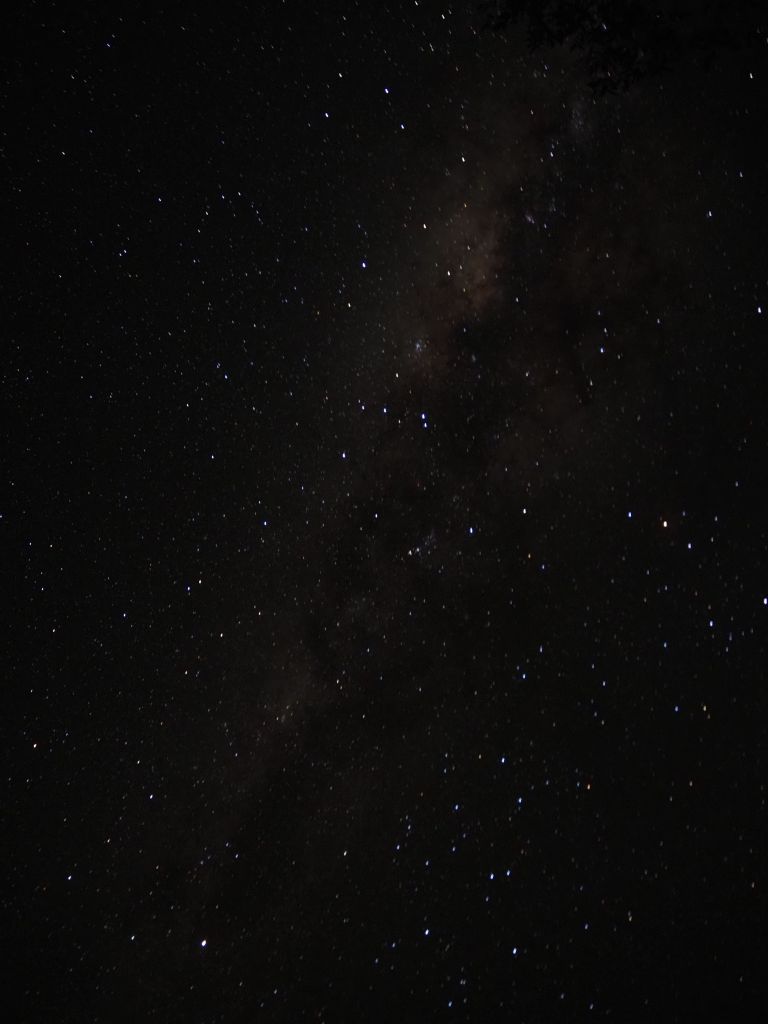
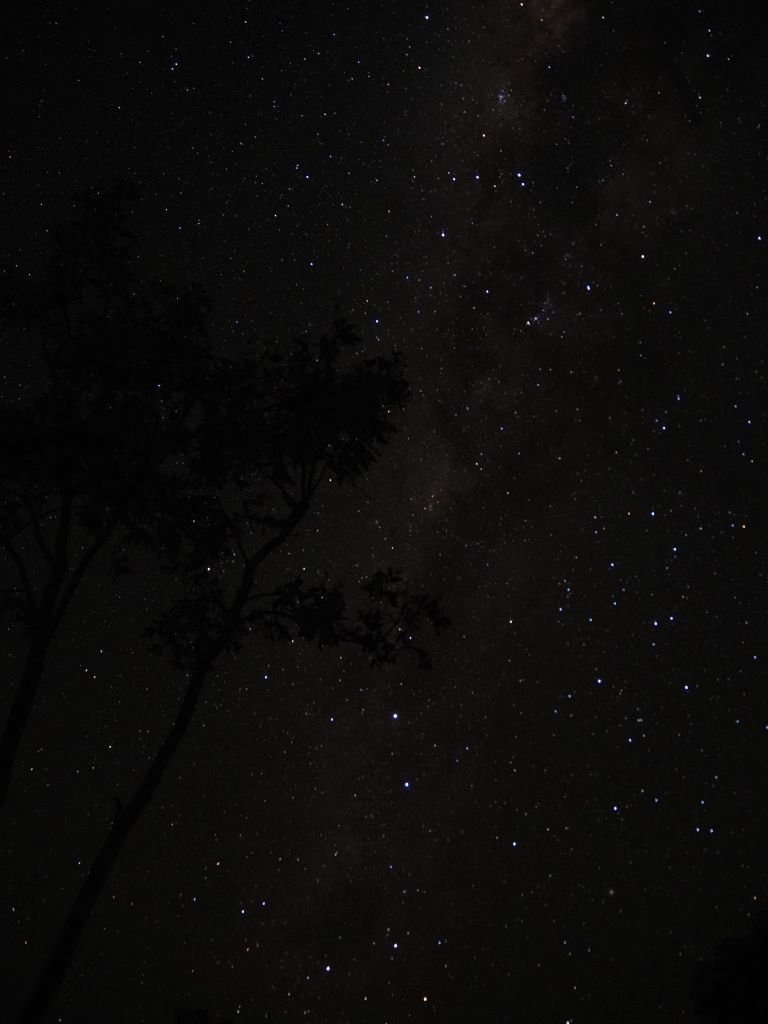
This made me chuckleYou may have to look at these in a very dark room to see the milky way, but it’s there
After that there was nothing left to do but cross into the Northern Territory. which is actually the whole top half of the middle third of the country. The NT is an interesting place. It’s not actually a state, for reasons that escape me. It has a substantial aboriginal population, with many people still living in their ancestral lands, and many others living in poverty and dealing with high rates of homelessness, alcoholism, and domestic abuse. The older generations are trying to preserve their culture (the oldest continuous human culture in the world!), and the younger generations are caught between two very different ways of life. It’s a complicated situation and I am, frankly, quite ignorant on the matter, but it certainly seems to me like a conundrum without any really good solutions. It also made me reflect a bit on my own heritage in the US, the terrible conditions that most Native Americans still face, and how ignorant I am on that matter as well.
My plan had originally been to make tracks to WA, with a quick detour up to Darwin, but skipping the “red center” of the country, whose main attraction is Uluru, the giant sandstone monolith sticking out of the desert. When a friend told me that Alice Springs, the main town in the red center, was only a 5 hour detour, I decided it was worth it to go check it out. Several people warned me that Alice Springs has a very high crime rate (I think the highest in the country), with lots of break-ins, so my plan was to stop in, get some information from the visitor center, and then head to a campground outside of town to marinate in the incredible landscapes. Unfortunately, in the hour I hung around the visitor center between 3 and 4 in the afternoon, the titular robbers smashed my passenger window and grabbed my two backpacks, which I had conveniently packed up for them with absolutely all of my valuables. I ended up getting back some of the stuff they ditched (notably my passports, which was huge), but losses included my laptop, camera, satellite communicator, GPS watch, headphones, kindle, binoculars, and pretty much all my hiking stuff.
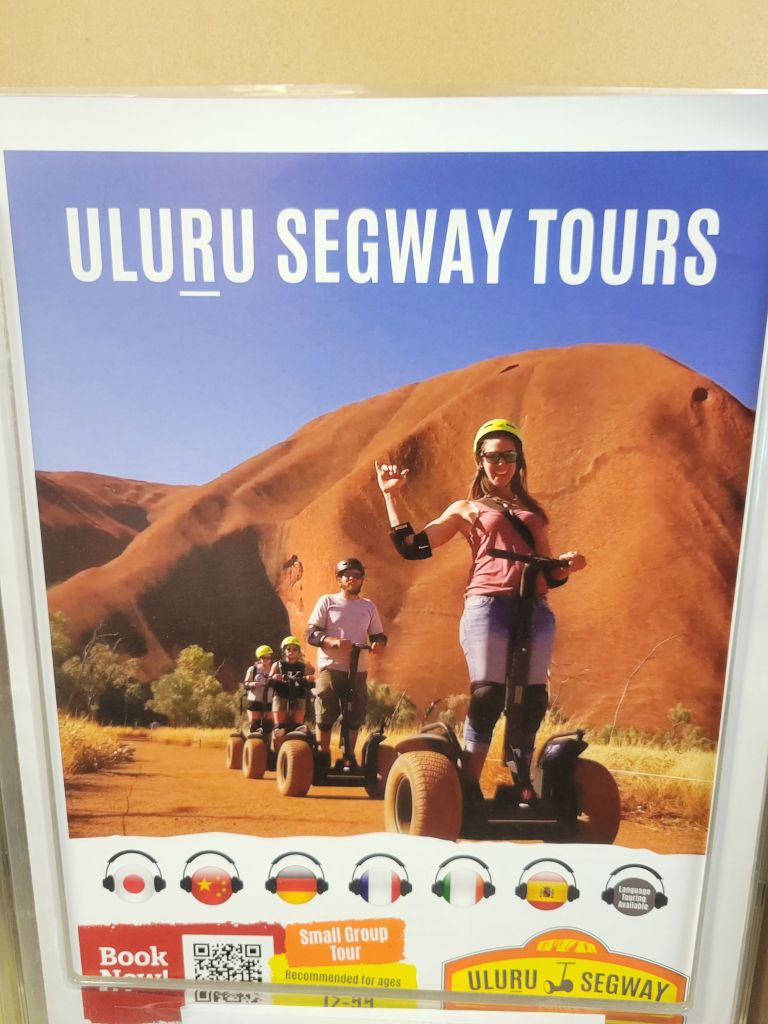
Spent a bit too long laughing at this brochure in the visitor centerMeanwhile…
This was a huge bummer. As many of you have picked up on, my time in Australia has been a bit challenging. When I headed down to Alice Springs I was just starting to feel like I was really hitting my stride. I’d had an amazing time once I got inland in Queensland, I was very excited to check out the red center, and I was looking forward to the tropics of the Top End. It felt like things were finally lining up, and so this obviously brought me crashing down to earth. While this was a considerable financial blow, I’m in the very lucky position to be able to absorb it. The emotional blow, on the other hand, was harder to swallow. I couldn’t stop thinking about all the things I could have done differently, parked somewhere else, not hung around the visitor center for so long, spread my stuff out in a bunch of nooks and crannies, etc… I couldn’t stop asking myself what I was even doing here in Australia. I didn’t feel comfortable parking my van literally anywhere for any amount of time—besides robberies, there are apparently also many cases of auto theft, which would have been pretty debilitating given that everything I own is in the van. And I lost all of the photos I’d been having such a good time taking on my camera since the beginning of February, covering many of the highlights from my time in New Zealand and all of my time in Australia.
There were a couple of silver linings though. At my campground that night I met a couple of really nice guys who had also been broken into and we enjoyed some misery bonding, which honestly lifted my spirits immensely. Cheyne, the guy I’d couchsurfed with in Sunshine Coast, actually lives part time in Alice Springs and turned out to be in town, and he graciously let me once again park in his driveway, use his shower, and enjoy his company. We had a fun night at a brewery with a handful of nice travelers from the campground, and that fun night was capped off with the news that I’d be getting my passports back.
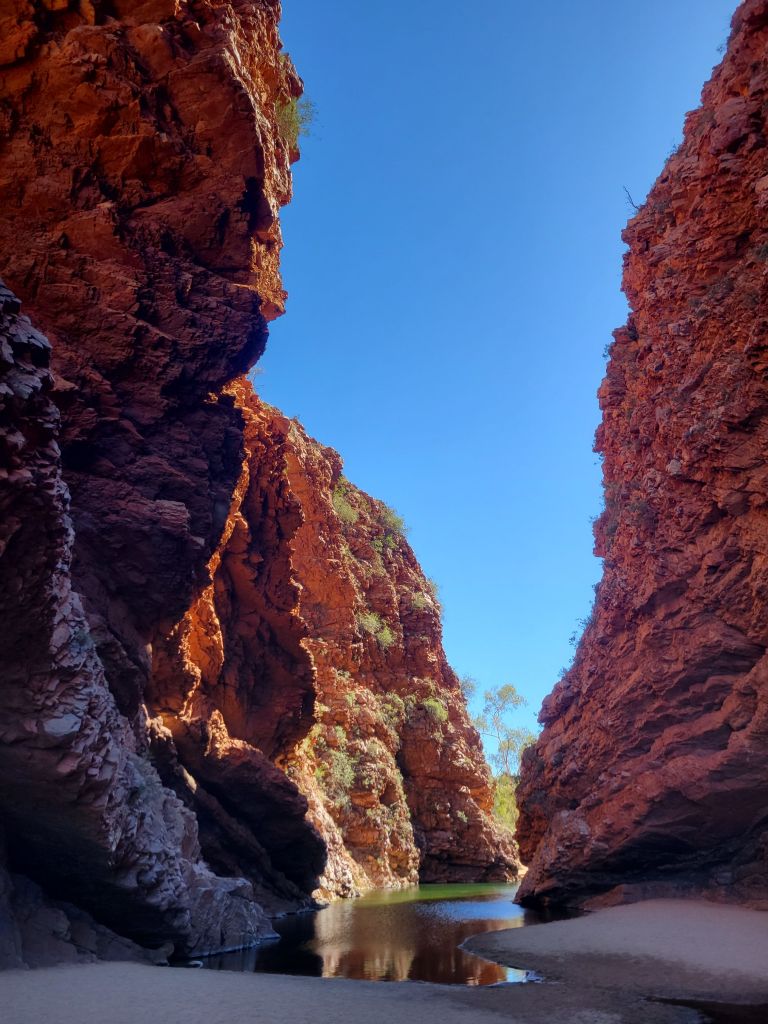
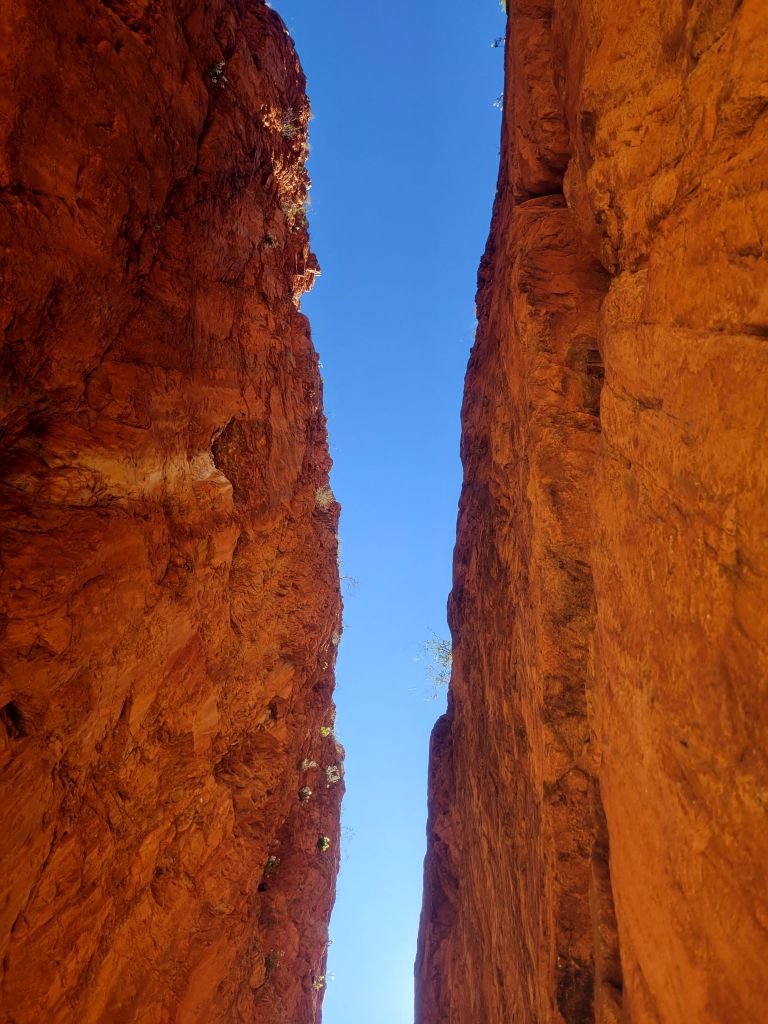
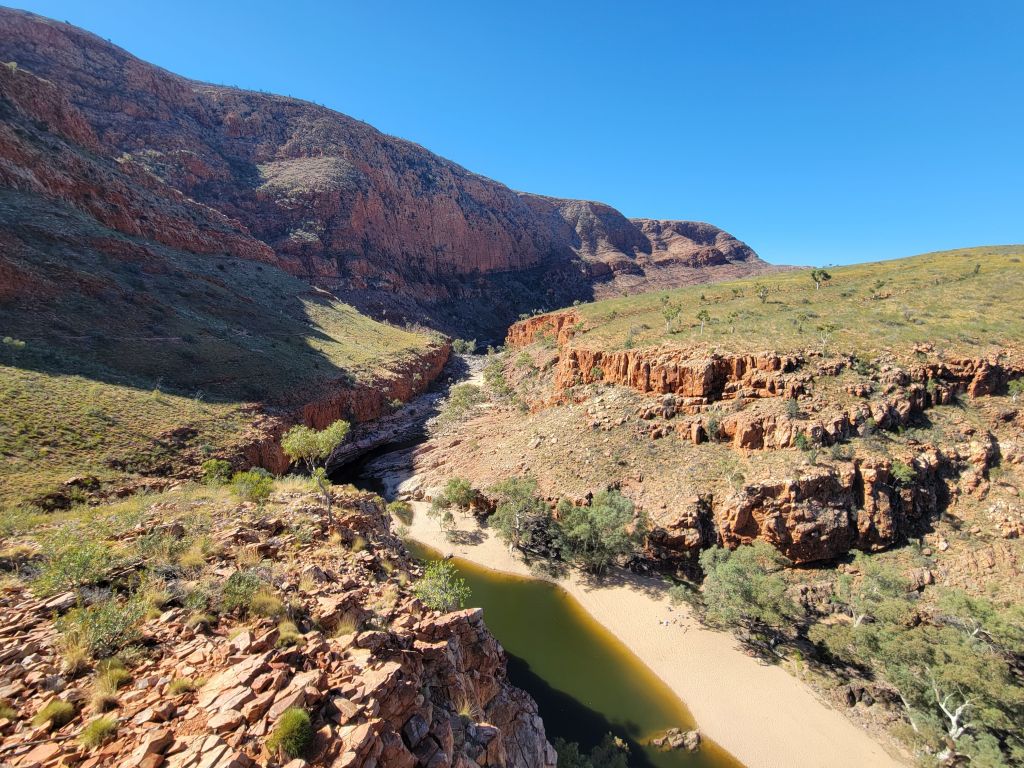
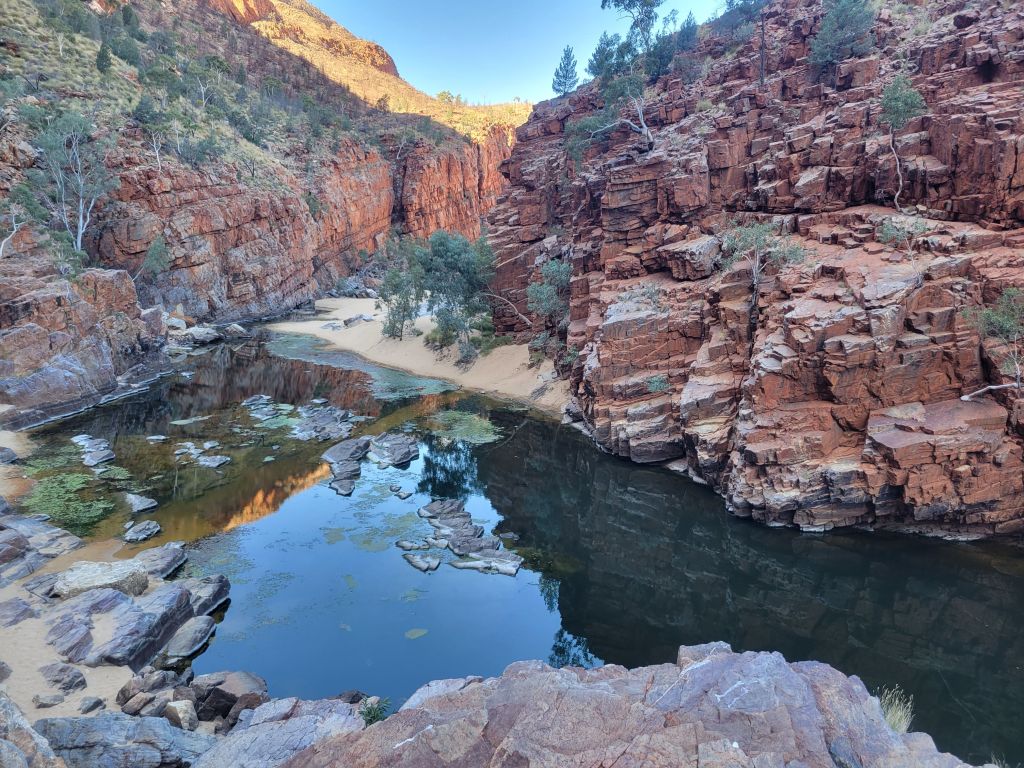
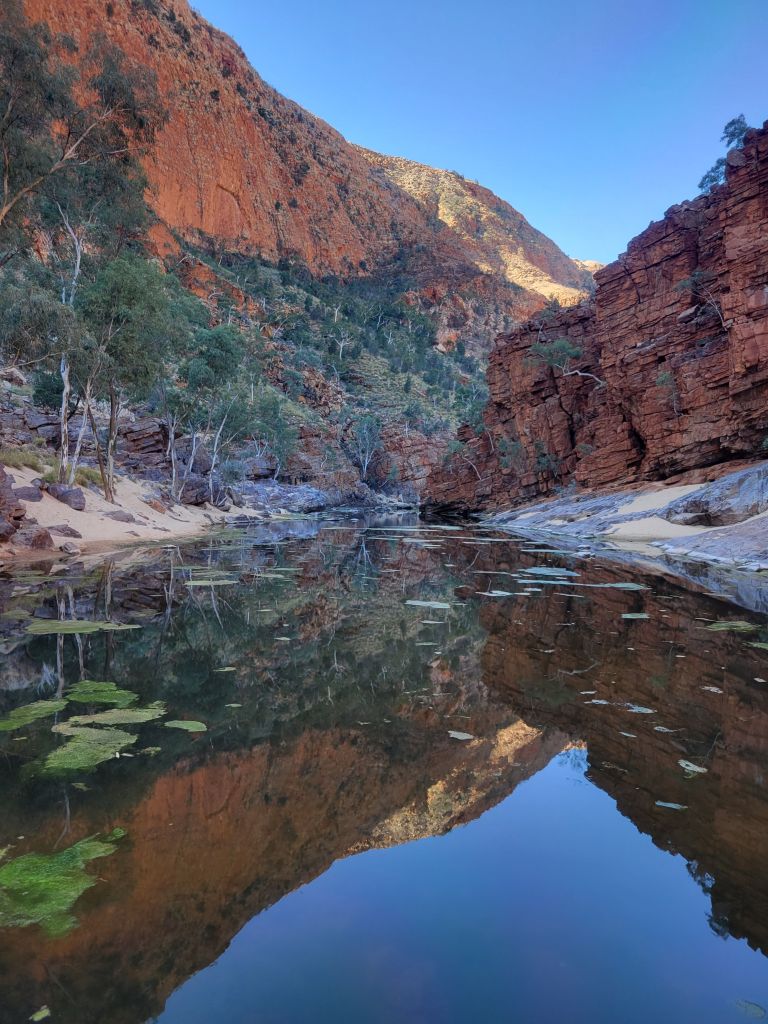
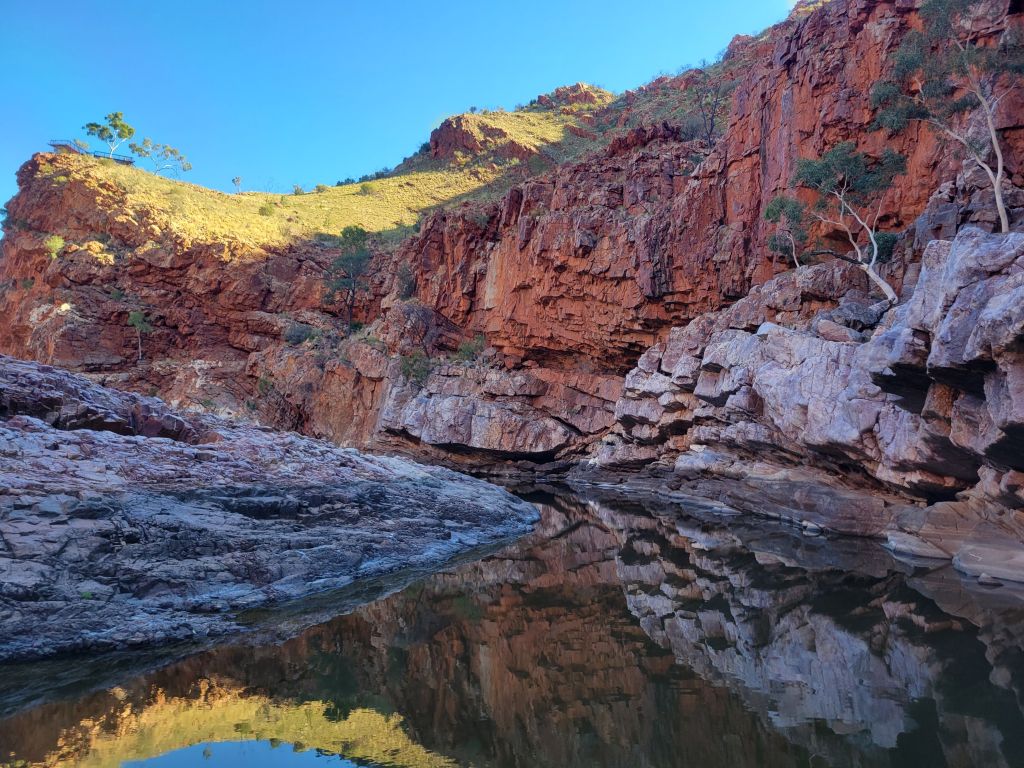
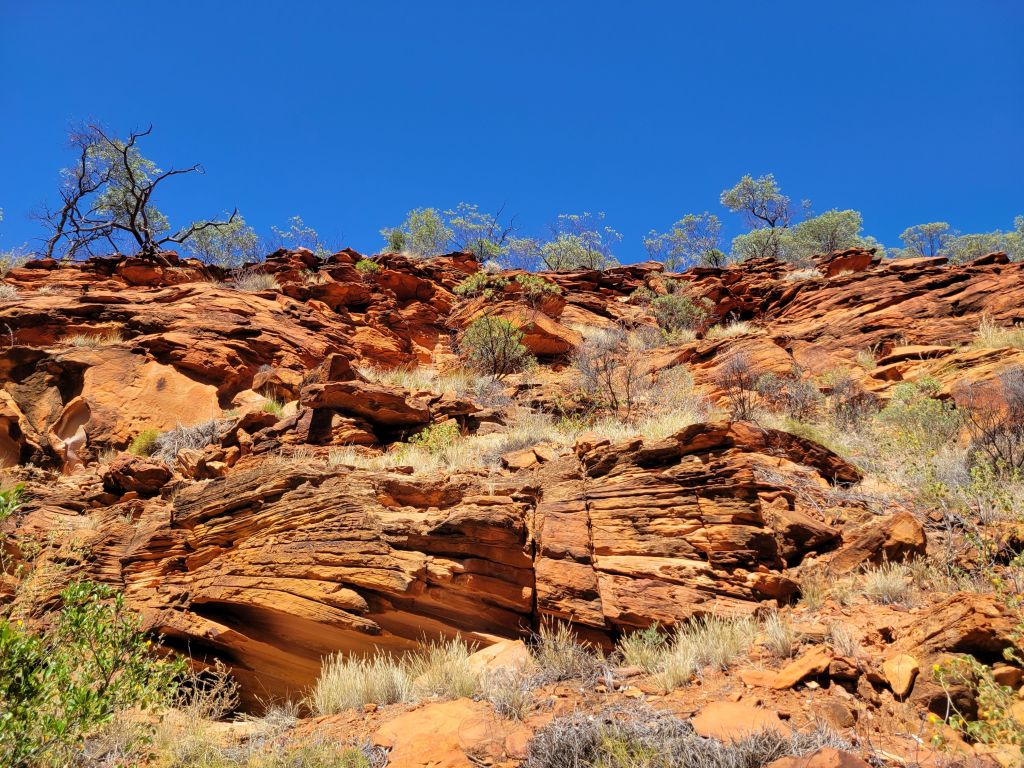
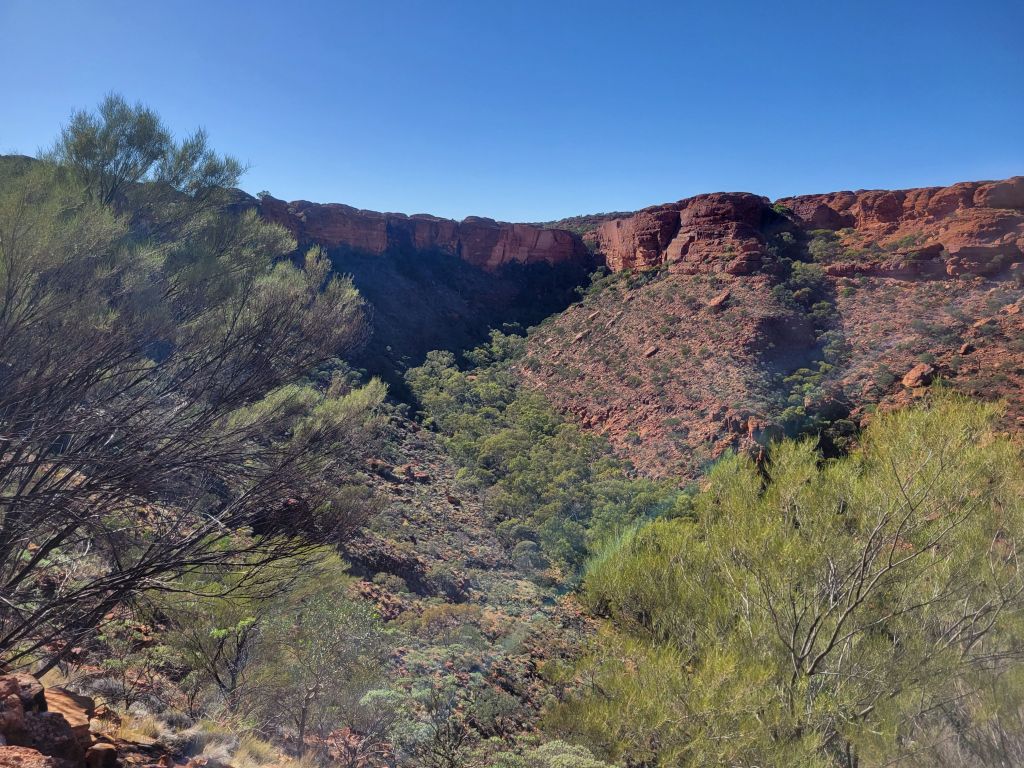
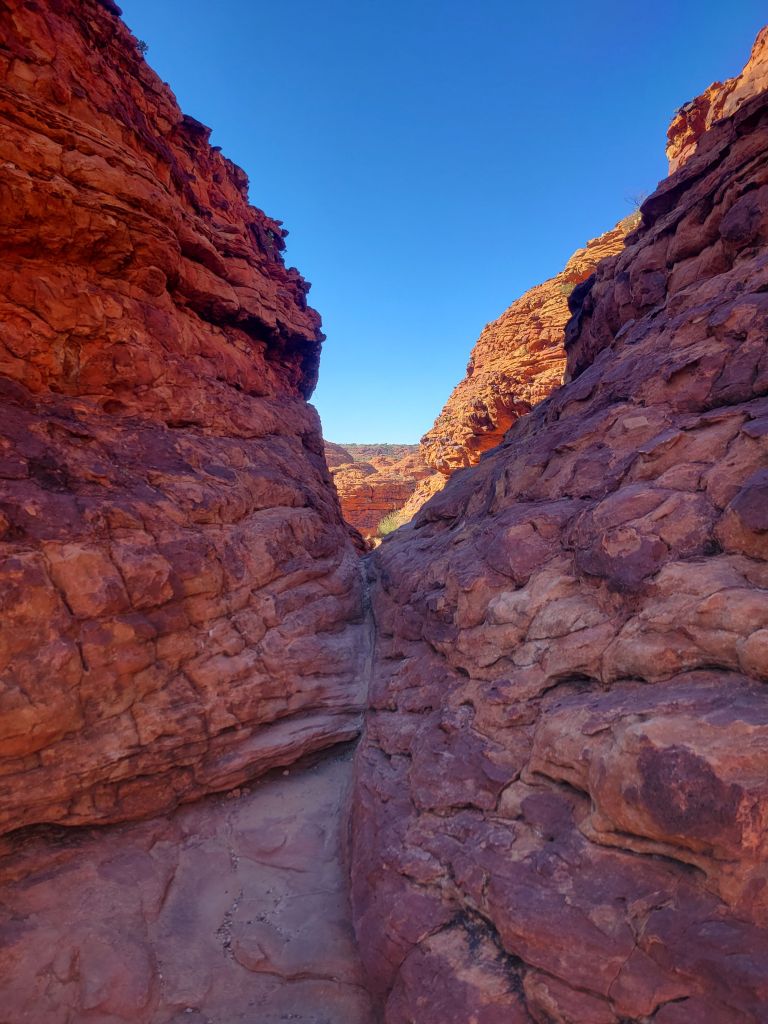
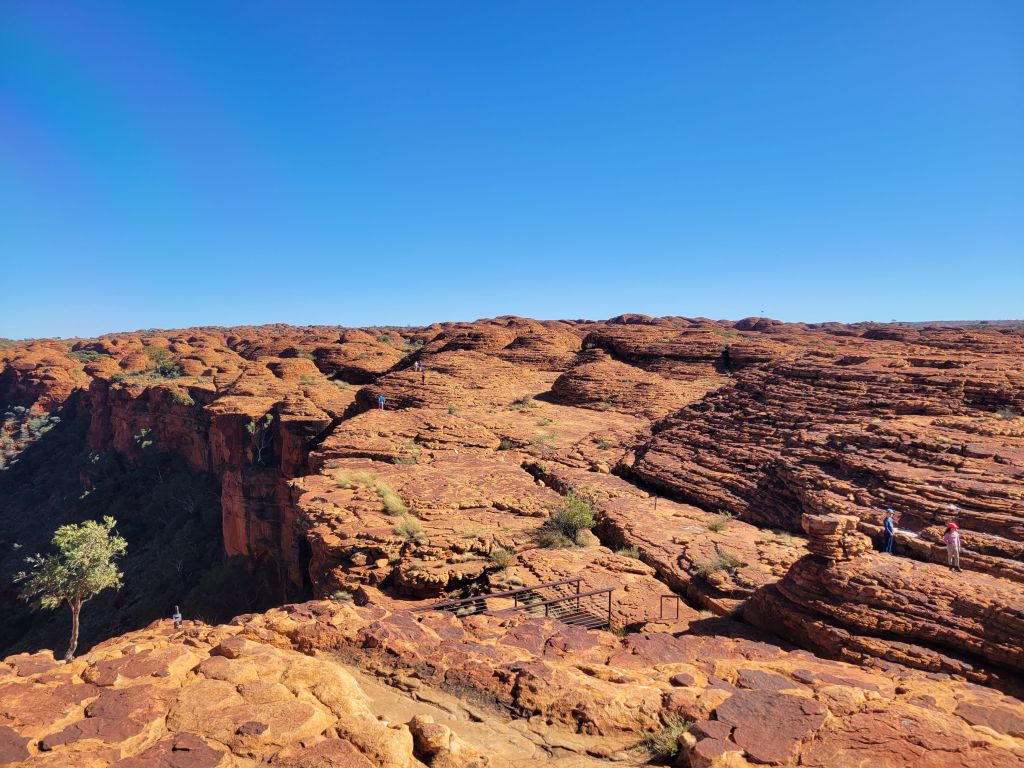
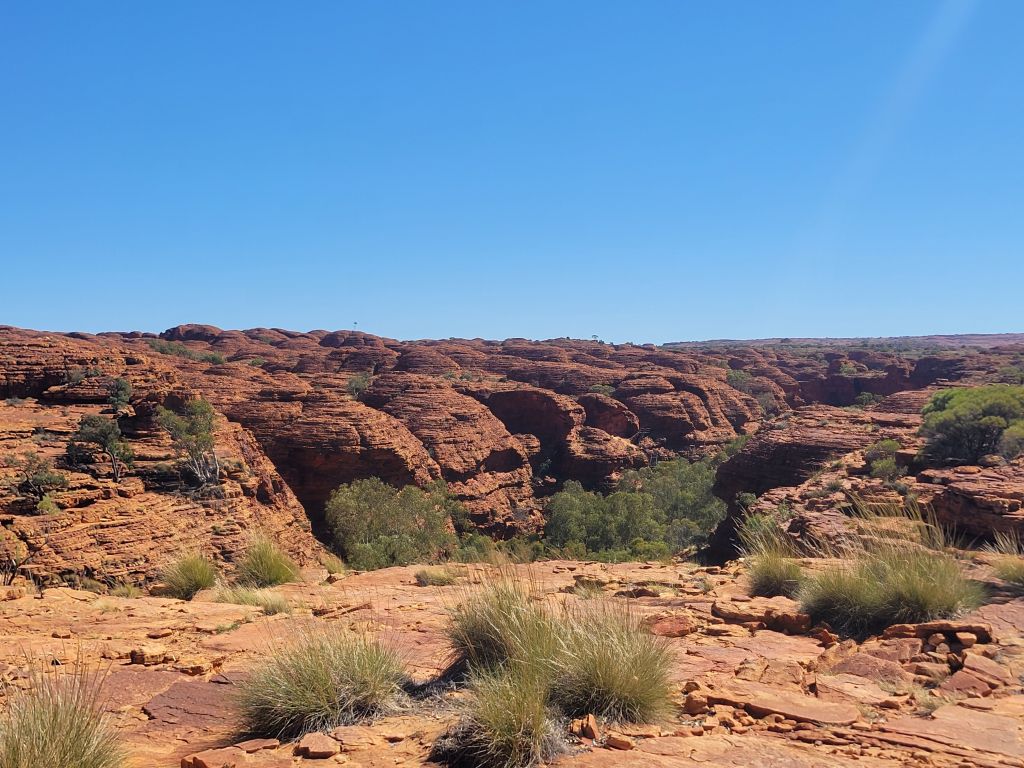
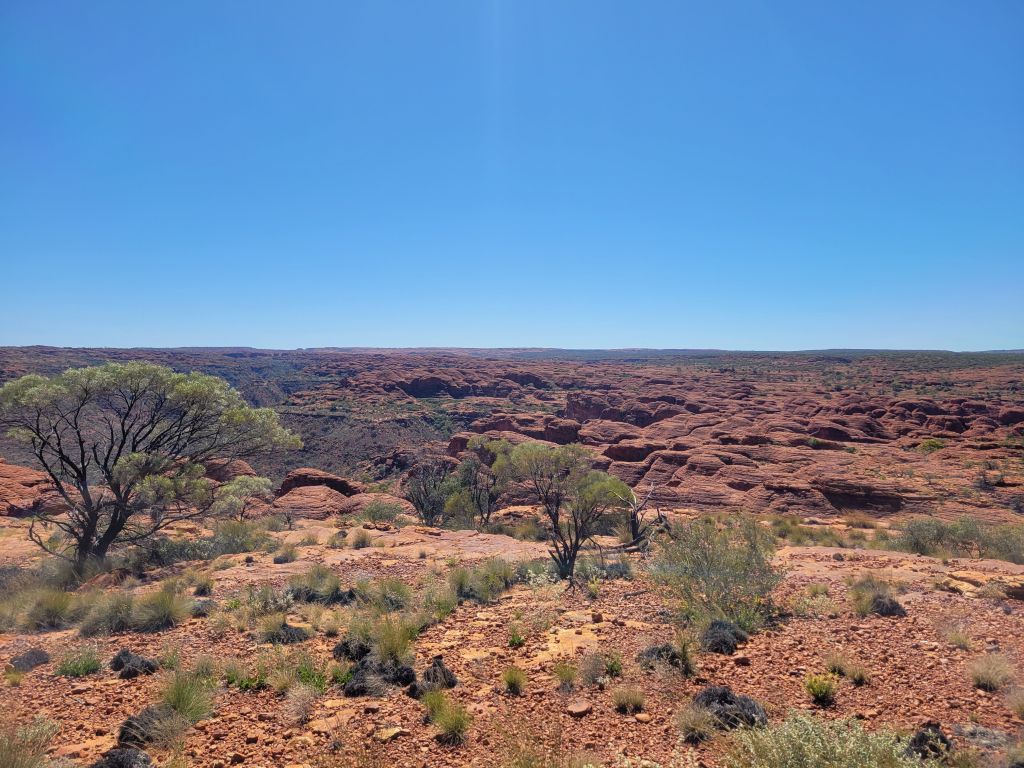
After that it was basically just a question of soldiering on and doing my best to enjoy it. I spent one day driving out along the West MacDonnell range, with stops at Standley Chasm and Ormiston Gorge, both beautiful. Then I went and checked out Kings Canyon, 5 hours southwest of Alice Springs. It’s an incredible place, with a deep gorge carved out of the sandstone, and an otherworldly topography of miniature domes on top, formed by cracks in the sandstone and subsequent erosion. I wish I’d been able to enjoy these spots more, but to be honest it was a deliberate effort to be present and to have a good time. There were a lot of reminders of my missing stuff, like the fact that I didn’t feel comfortable doing the hike I wanted to because I didn’t have any of my hiking safety gear, and of course my missing camera.
Are these photos for cliff safety or sick dance moves?
The camera, and the photos I lost, really hit me hard. It’s been a solitary several months and my old high school pursuit of photography has become one of my main activities. I’ve been really enjoying the act of photography itself, I’m honestly proud of many of the images I was able to capture, and I was excited about having these beautiful reminders of all the places I’ve been (all the more given my aphantasia). The camera I can replace, but I feel a real sense of loss for the photos.
Given how I was feeling, the fact that Uluru is another several hours from Kings Canyon, and my suspicion that just standing and looking at it with several tour buses full of my new closest friends wouldn’t really light up my life, I decided it was time to just cut my losses in the red center and head north. I made it up to Darwin in a few days, and with some much needed and appreciated encouragement from my friend Liz, set about just biting the bullet and replacing all my stuff. She rightly pointed out that, while things are expensive in Australia, it was worth it to just replace everything and then enjoy the rest of my time instead of trying to do without and then just feeling bad every time I was confronted by something I was missing. It was quite a shopping spree, and frankly it did make me feel better.
Darwin is the main city in what Australians call the Top End, which is the tropical northern part of the NT. Being that this is the tropics there is a wet and a dry season (the aboriginal people actually recognize 6 seasons with various finer grained aspects of temperature, humidity, storms, etc…, which are important for determining when to back burn, what to hunt or forage, when to perform ceremonies, and other aspects of life), and the landscape completely changes between the two. It’s the dry season right now, meaning that waterfalls trickle but roads are not flooded, so all in all a good time for me to be here.
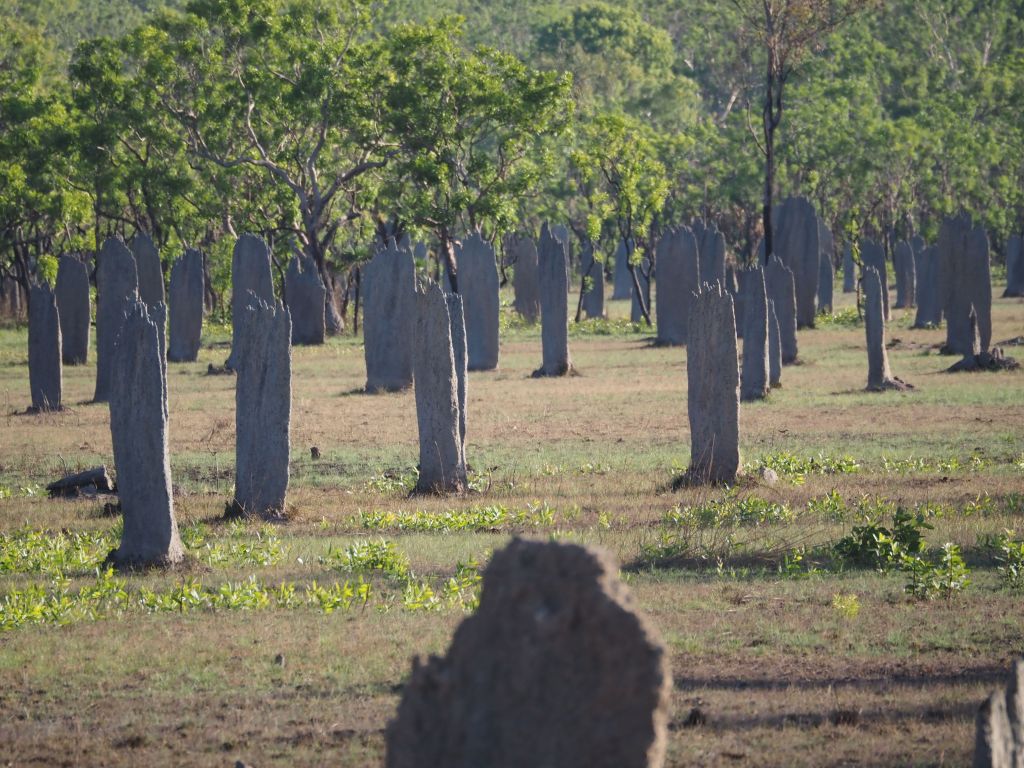
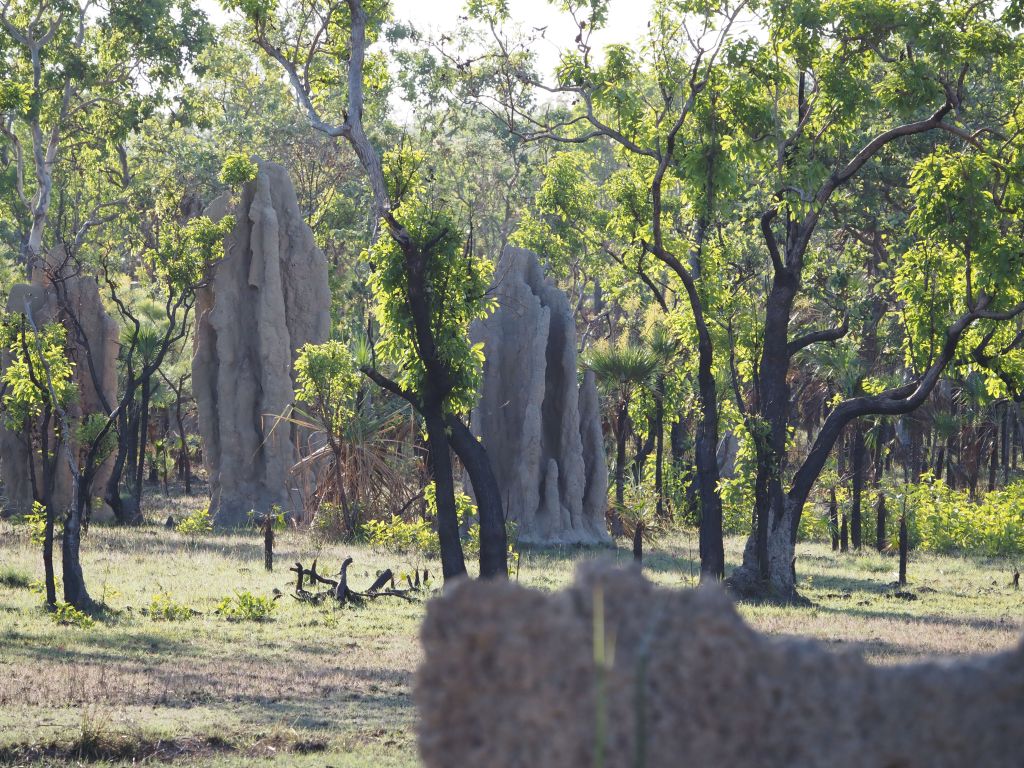
After a couple of days in Darwin I went for a day in Litchfield National Park, about an hour southwest of the city. It’s pretty much a sequence of beautiful waterfalls with accompanying plunge pools, and people around here seem to use it as a natural waterpark. The scenery is stunning, but I have to admit that the large crowds of families and retired folks with pool noodles in the water, while comical, put me off a little bit. Litchfield is also home to a couple of notable termite populations. The cathedral mounds are just insanely huge—they can be over 10 feet tall. There are also the magnetic termites, who align their mounds north-south so that there’s always a shady side for them to cool down (they’re completely blind, and scientists confirmed their magnetic sense by putting some in a magnetic field and seeing that they built their mound aligned with it). The field full of perfectly aligned termite mounds is eerily reminiscent of a cemetery. That night I stayed at an absolutely incredible free camp right next to a burbling stream, with a short walk up to a trickling waterfall. It was a full moon, and once I got over my fear of the incredible amount of noise a frog can make jumping around on dry leaves I walked up to look at the waterfall by moonlight. I was the only one there and it was really just a staggeringly beautiful sight. I missed my bedtime that night but I did feel better about what I’m doing here in Australia.
Magnetic termite mounds, all alignedCathedral termite mounds. Friggin huge!
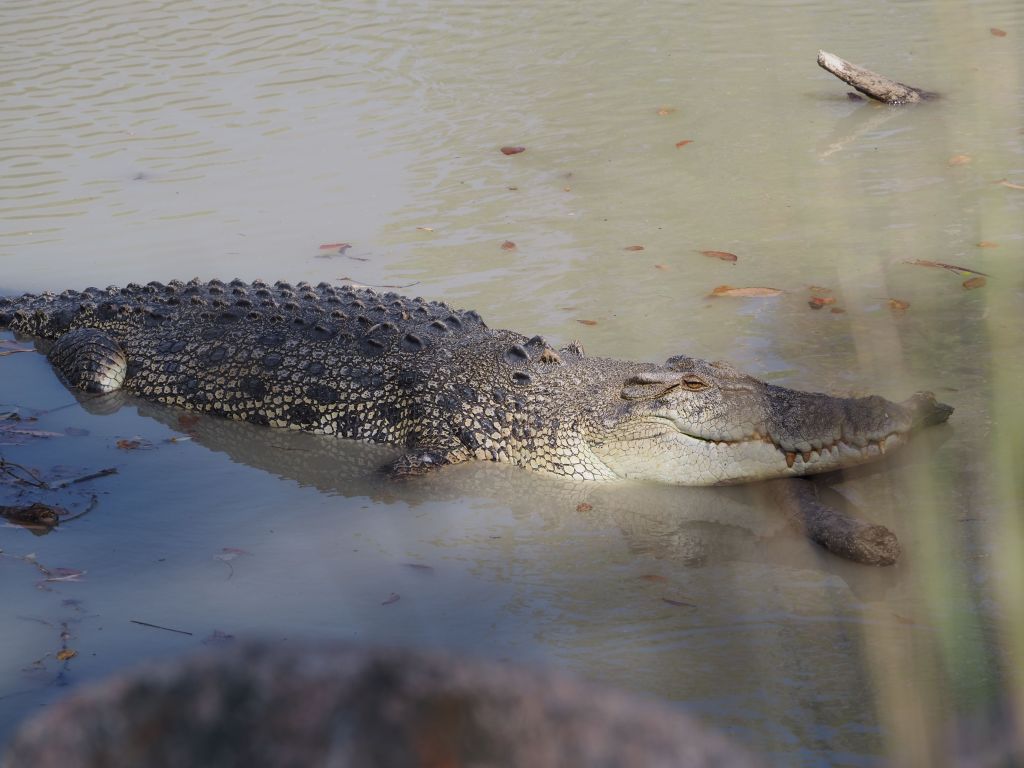
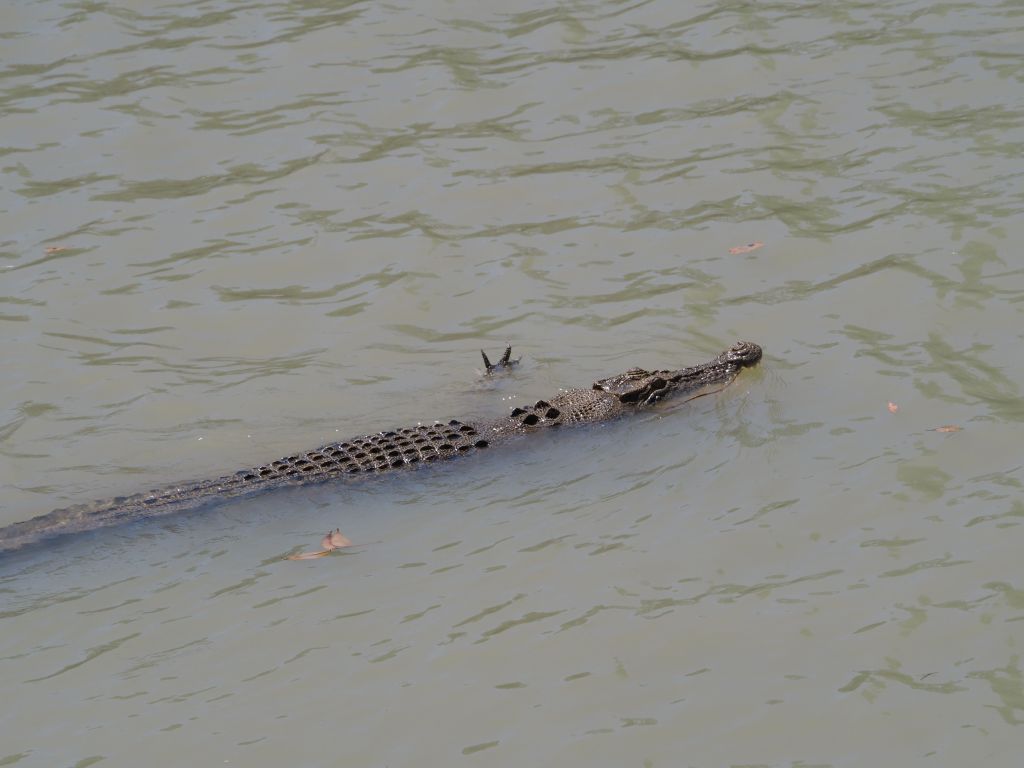
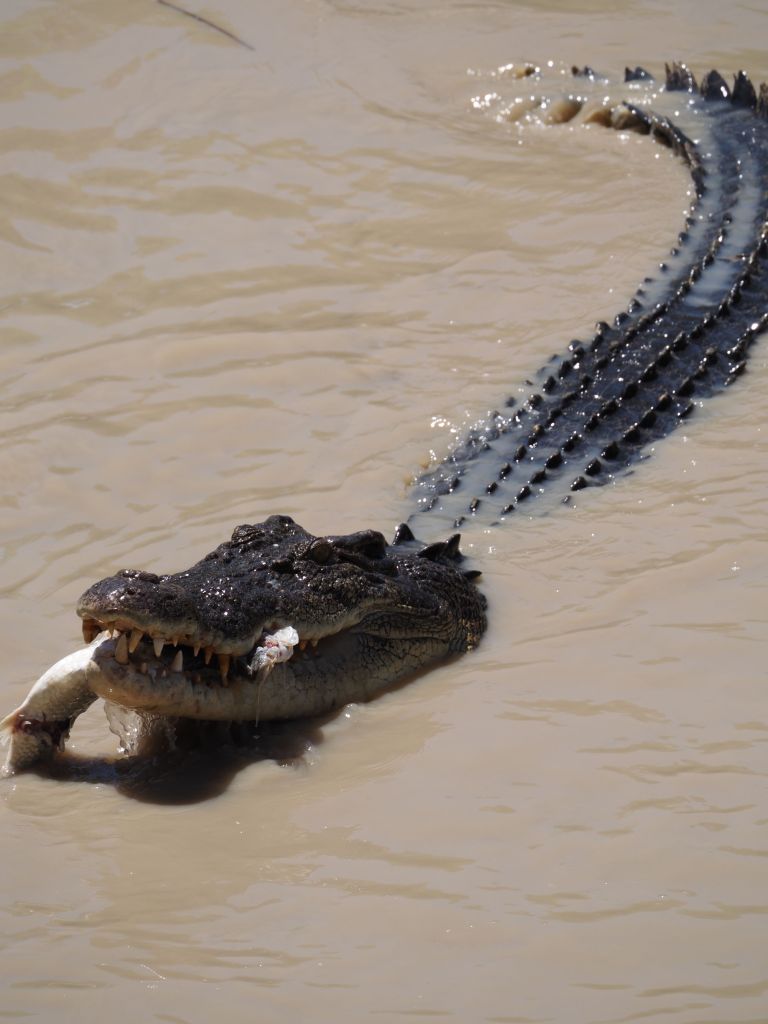
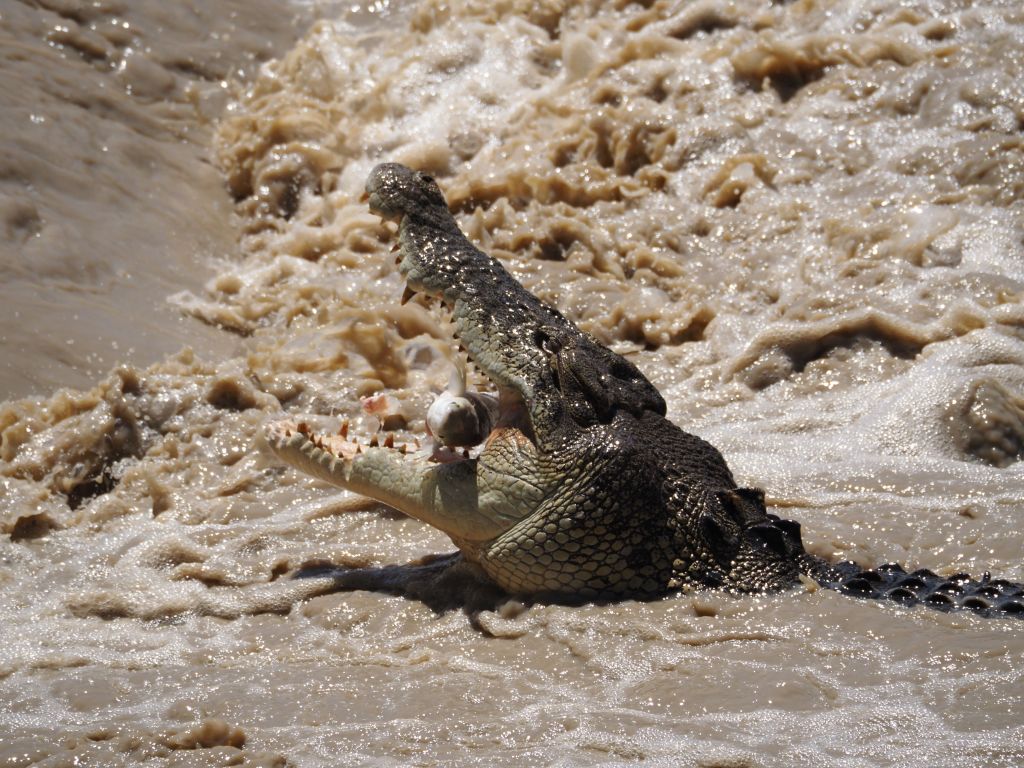
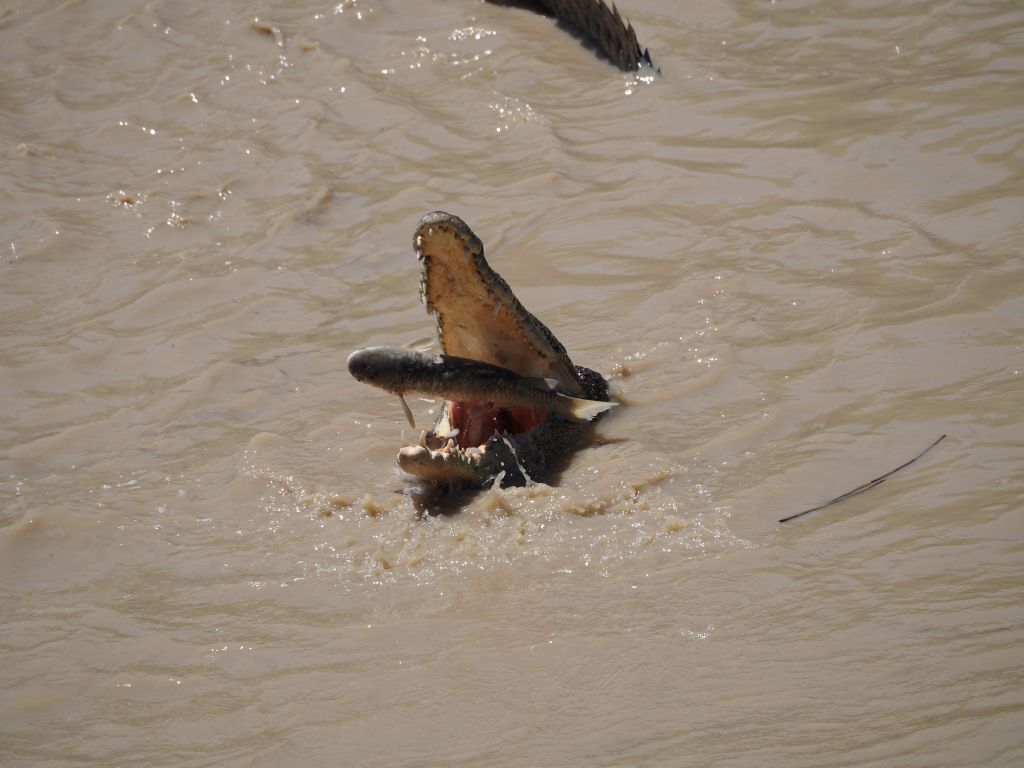
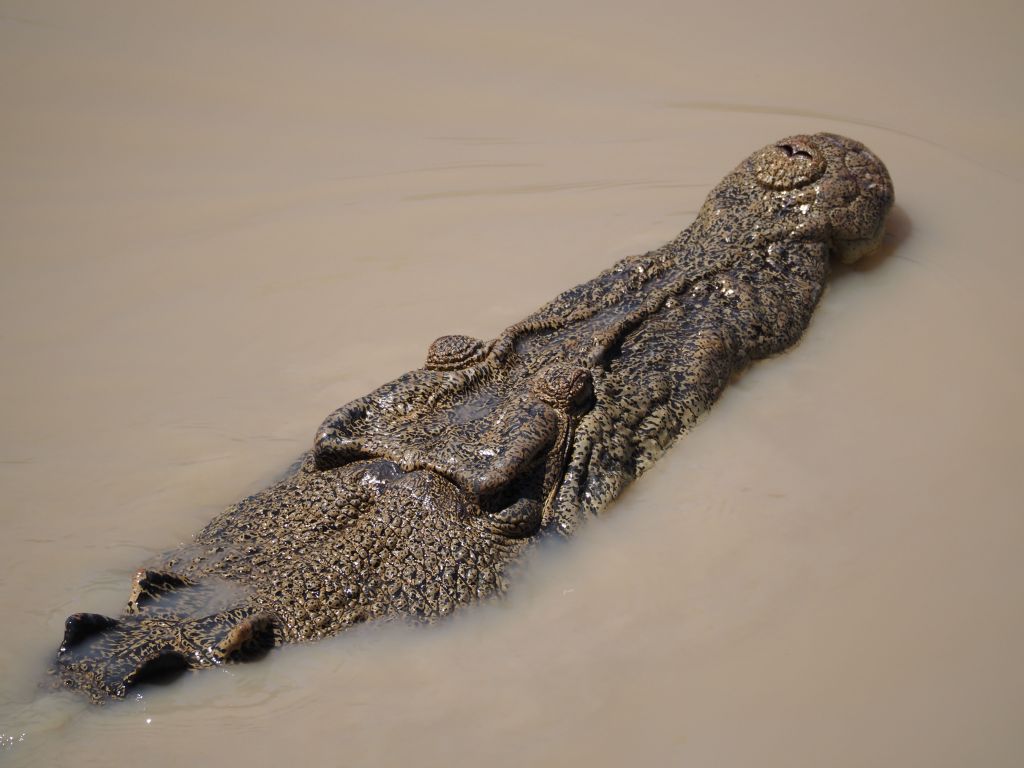
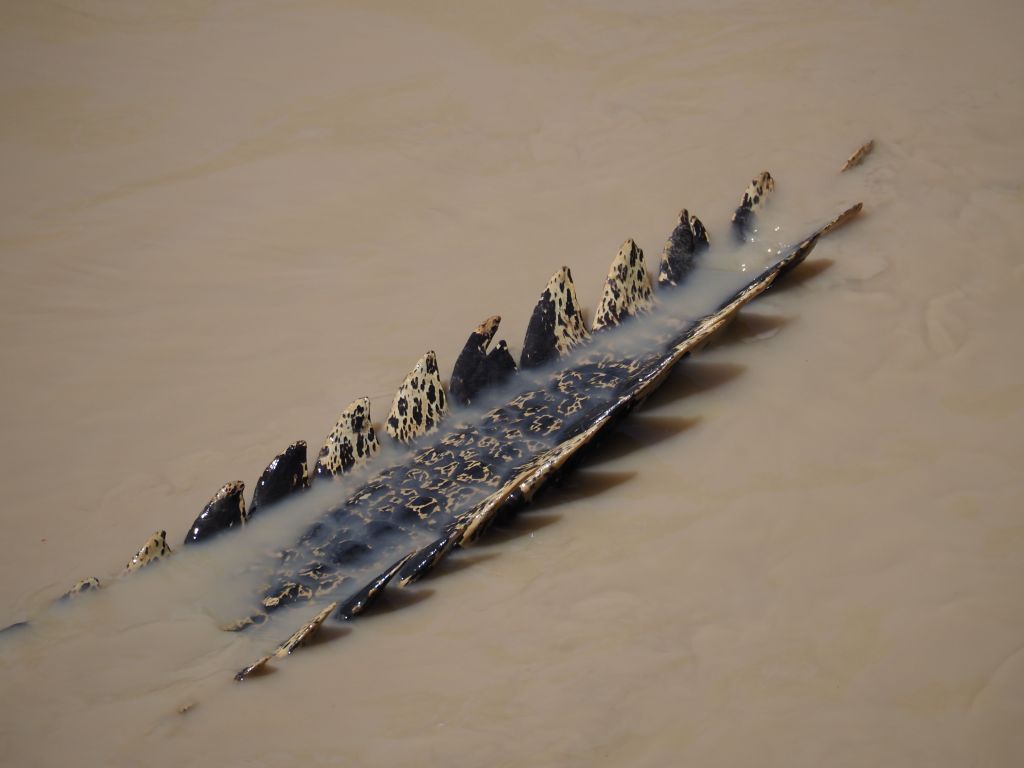
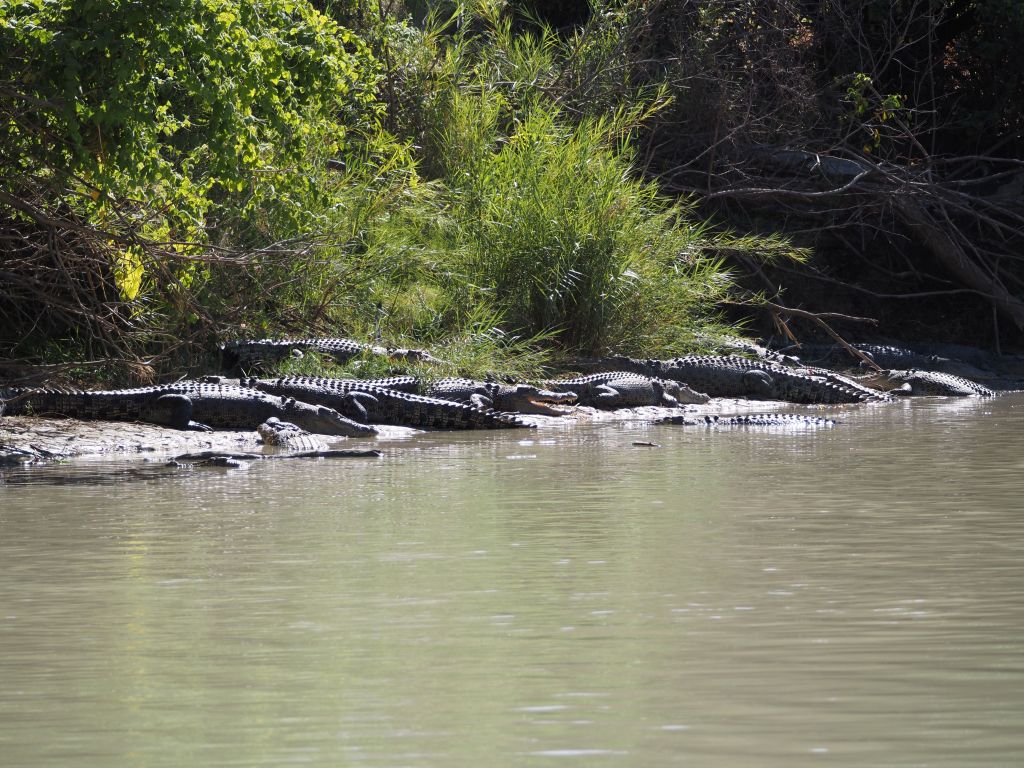
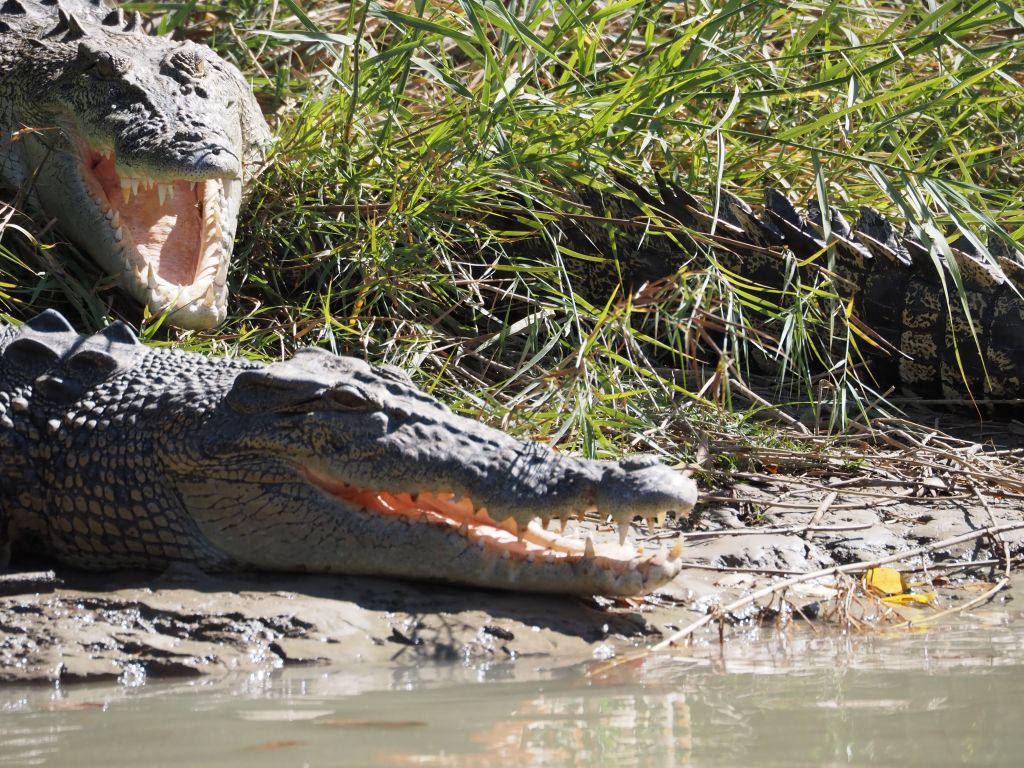
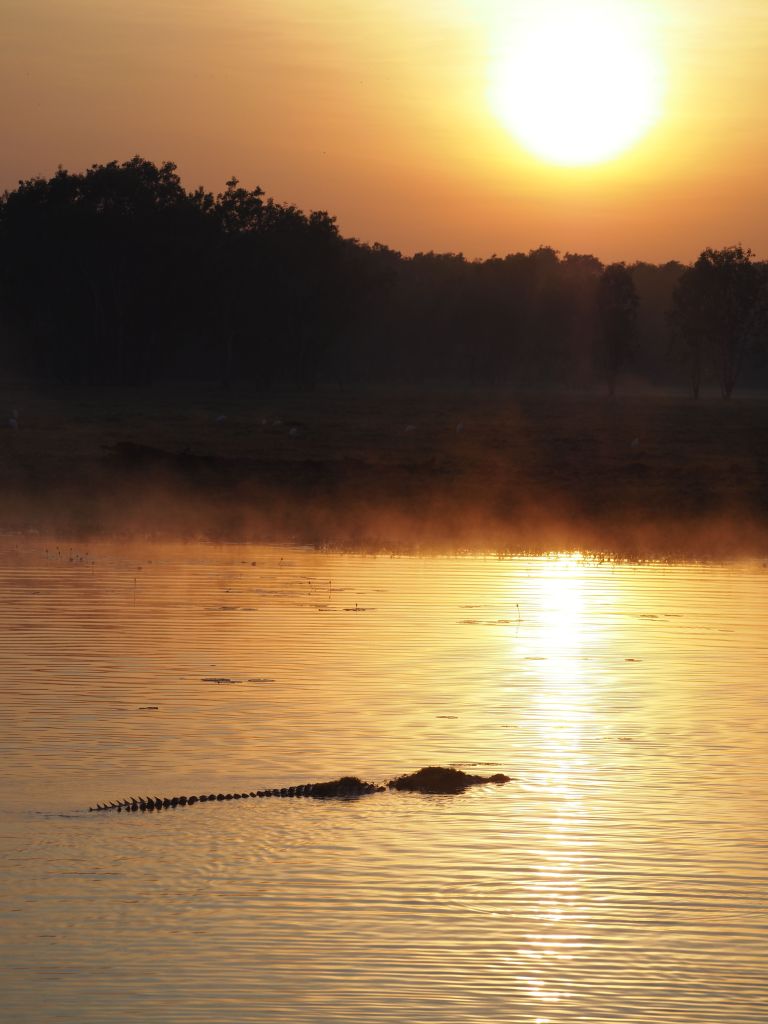
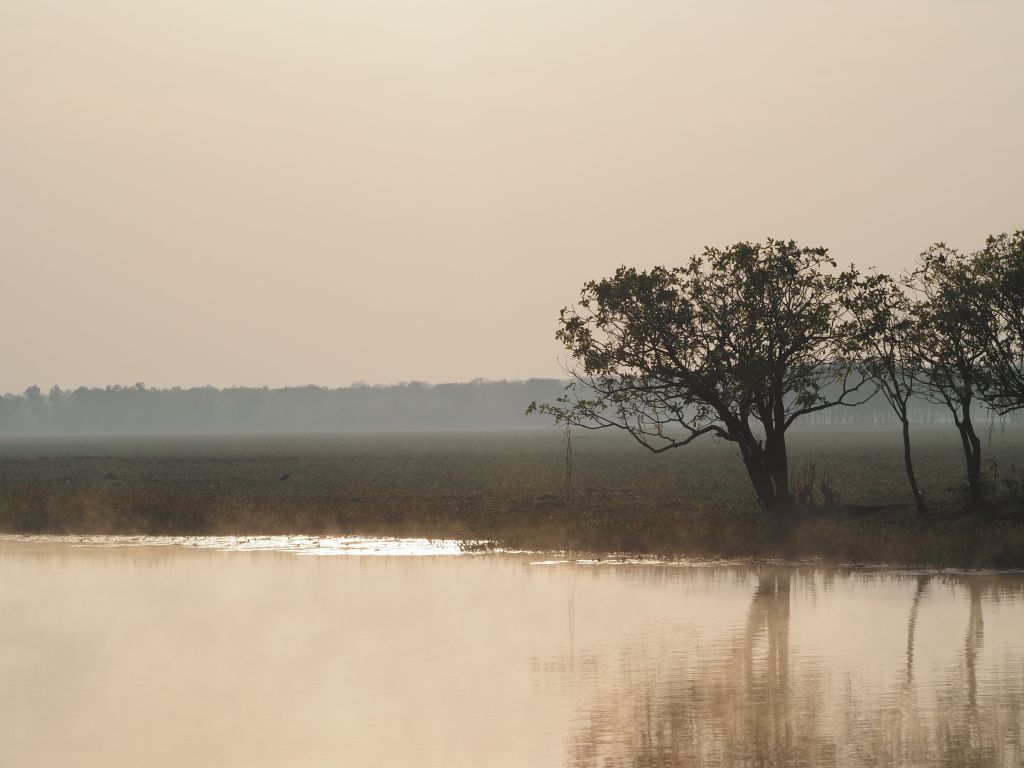
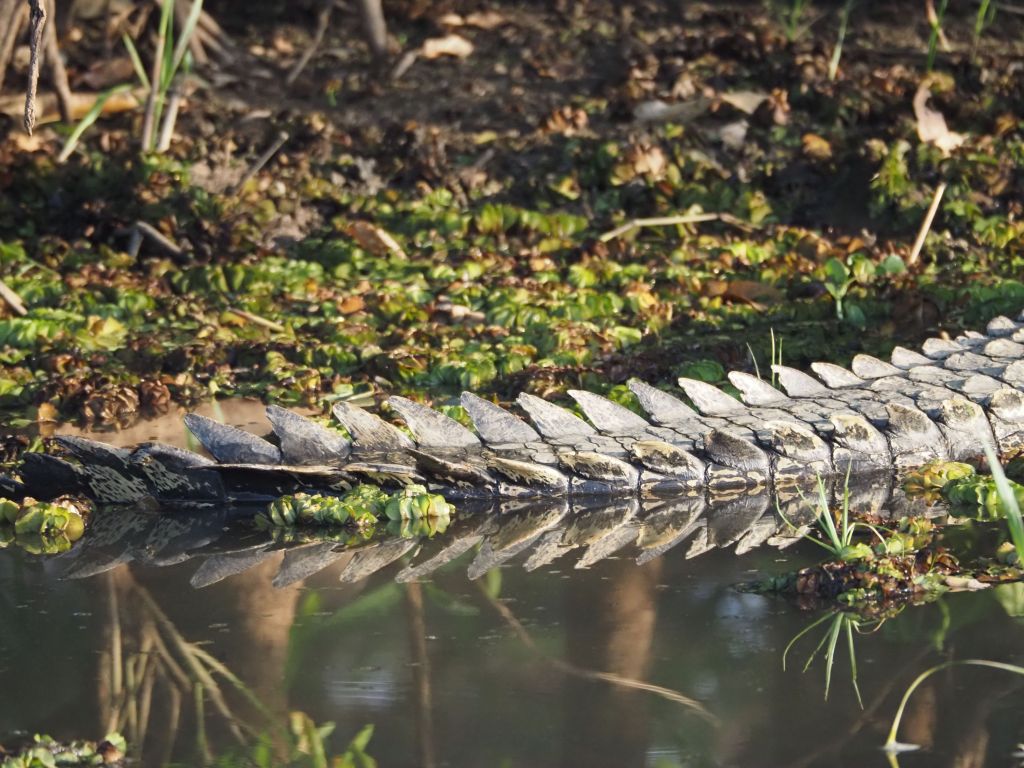
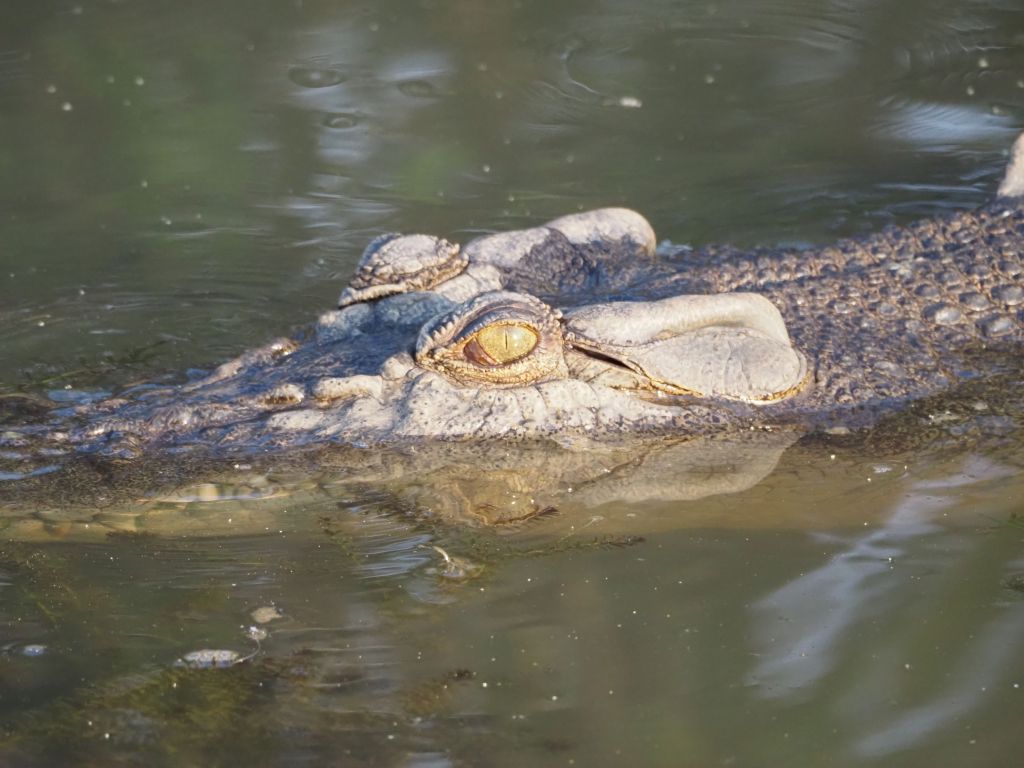
Next up was Kakadu National Park, the largest park in Australia. With how long this post is I’m running out of adjectives, but this was really the top of the top. One of the main features of the park is that it covers an entire river system along with its extensive floodplain. Right now, in the dry season, the rivers look like what you’d expect. In the wet season the water level can rise 15 feet or more, leaving enormous swathes of the park underwater. Even dry, the gigantic floodplains are quite a sight to behold, and the wildlife here is abundant. The stars of the show are certainly the estuarine, commonly called saltwater, crocodiles. Estuarine is a better term because they’re actually perfectly happy in fresh water. Anyway, these are the ones you think of when you think of Australia, the crocodile hunter, and all that jazz. They can grow to be 20 feet long, live up to around 100 years, and eat absolutely anything that moves. They’re the reason you can’t swim in the ocean or in any rivers anywhere around here, unless the spot has specifically been cleared of them. They were hunted nearly to extinction but since gaining protected status their numbers have exploded, and their population is estimated around 150,000 now in the Northern Territory. They are really impressive and beautiful animals (you can see some of their different colorings in the photos), and the park features an incredible place to get a look at them.
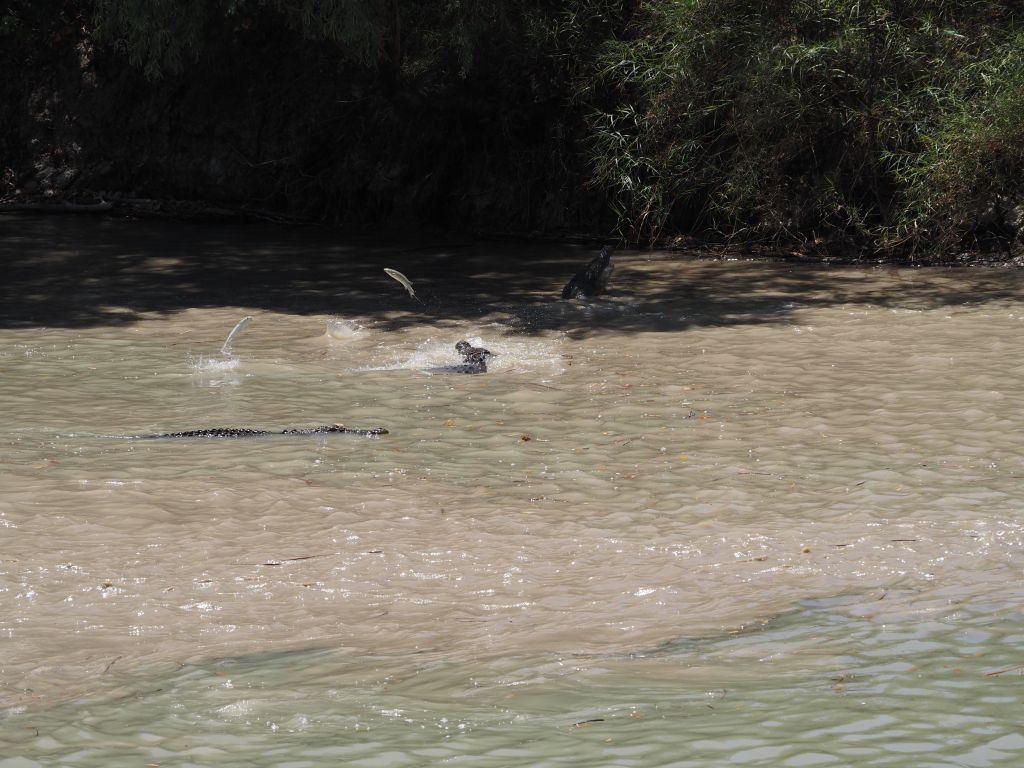
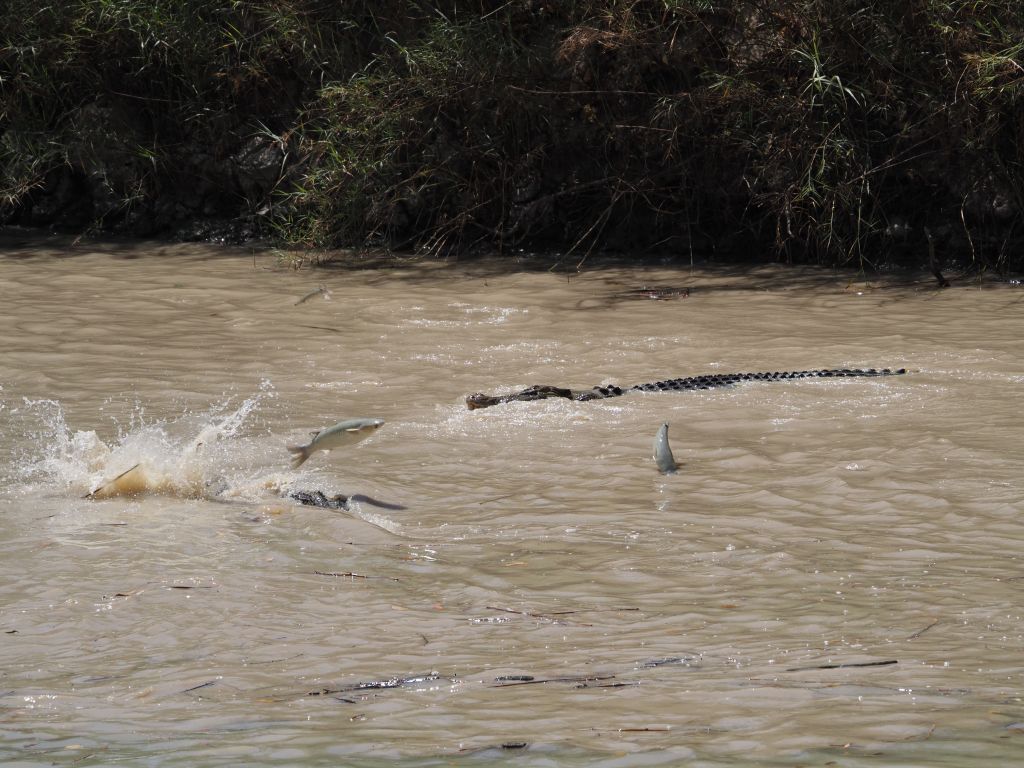
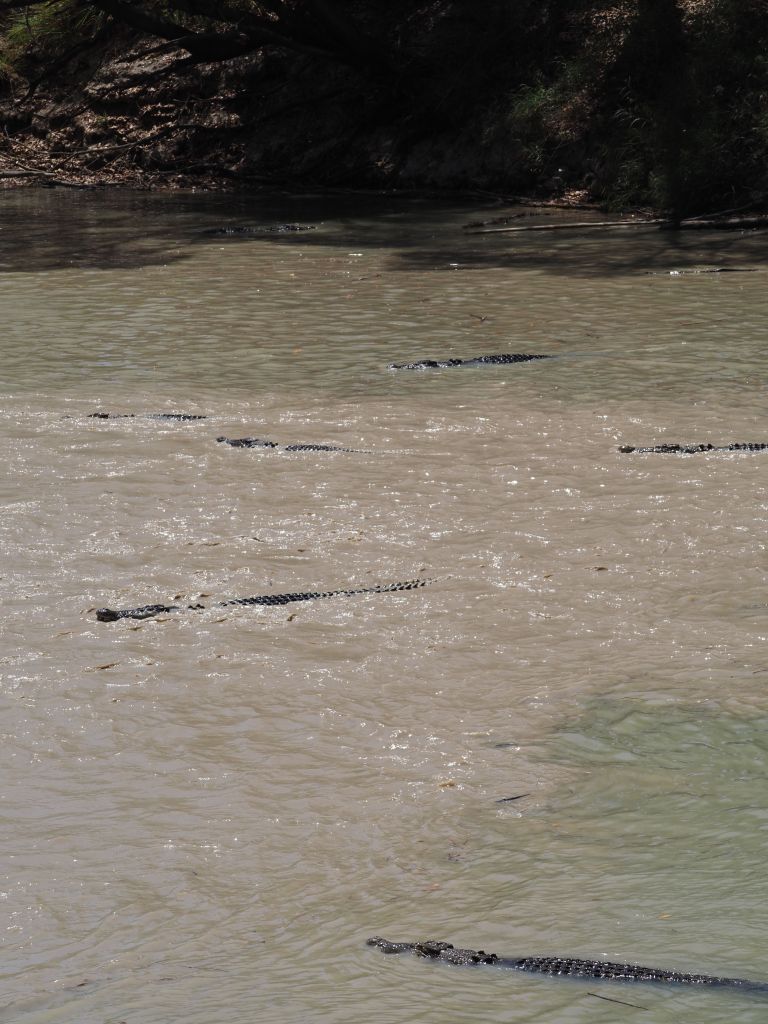
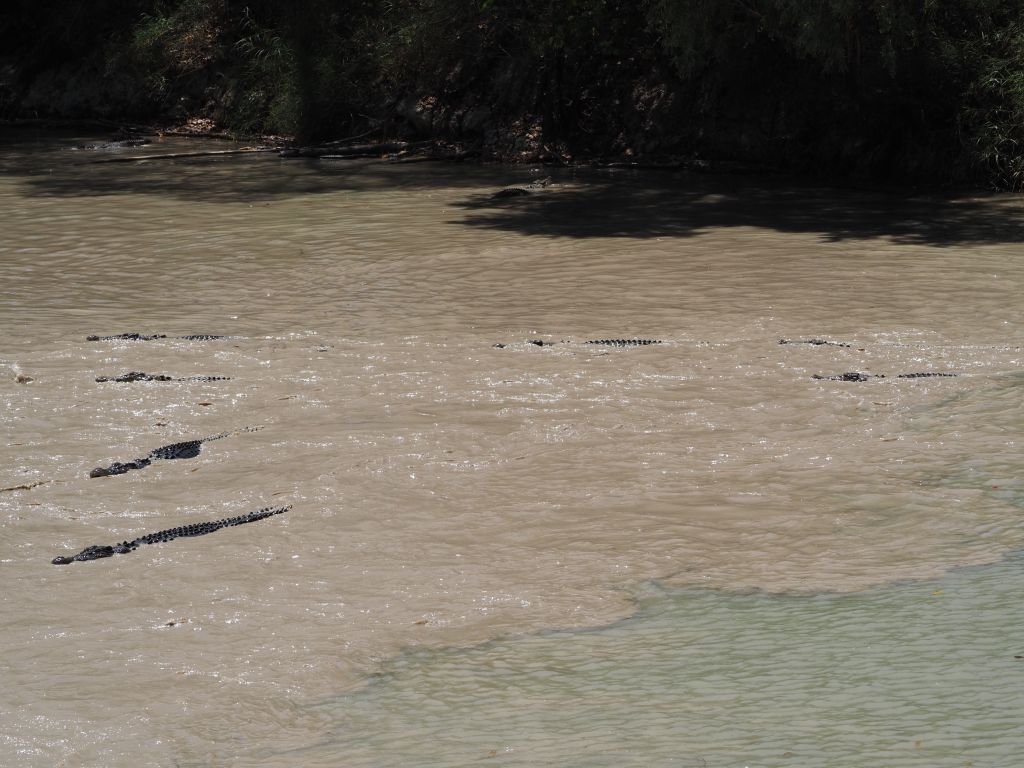
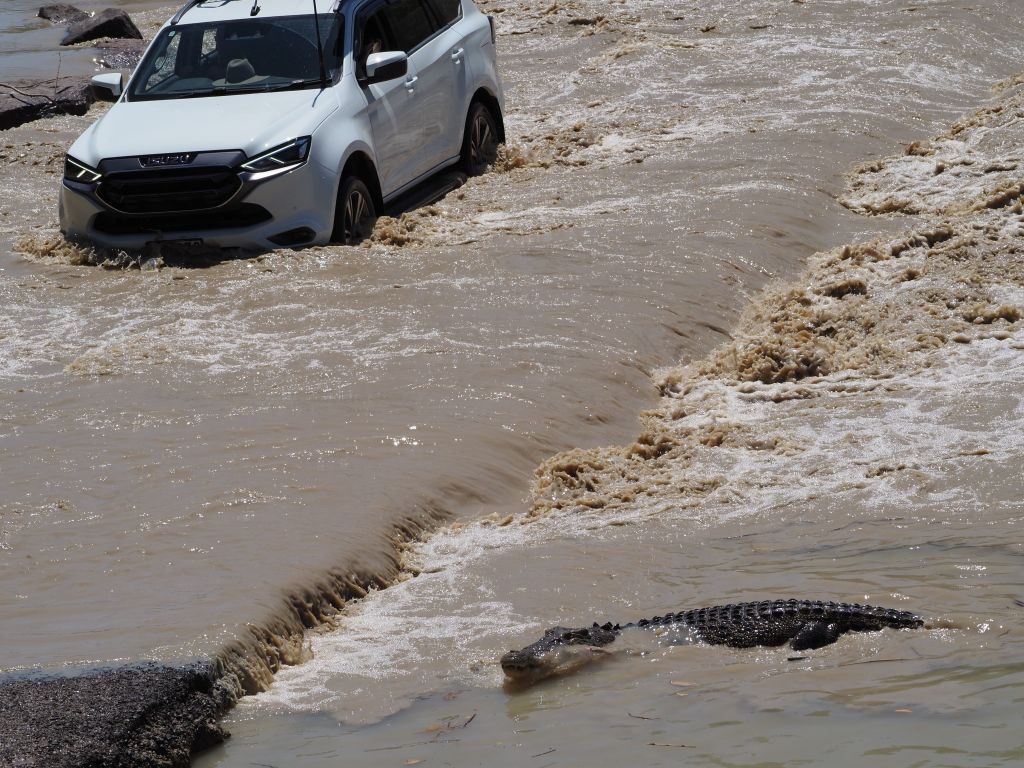
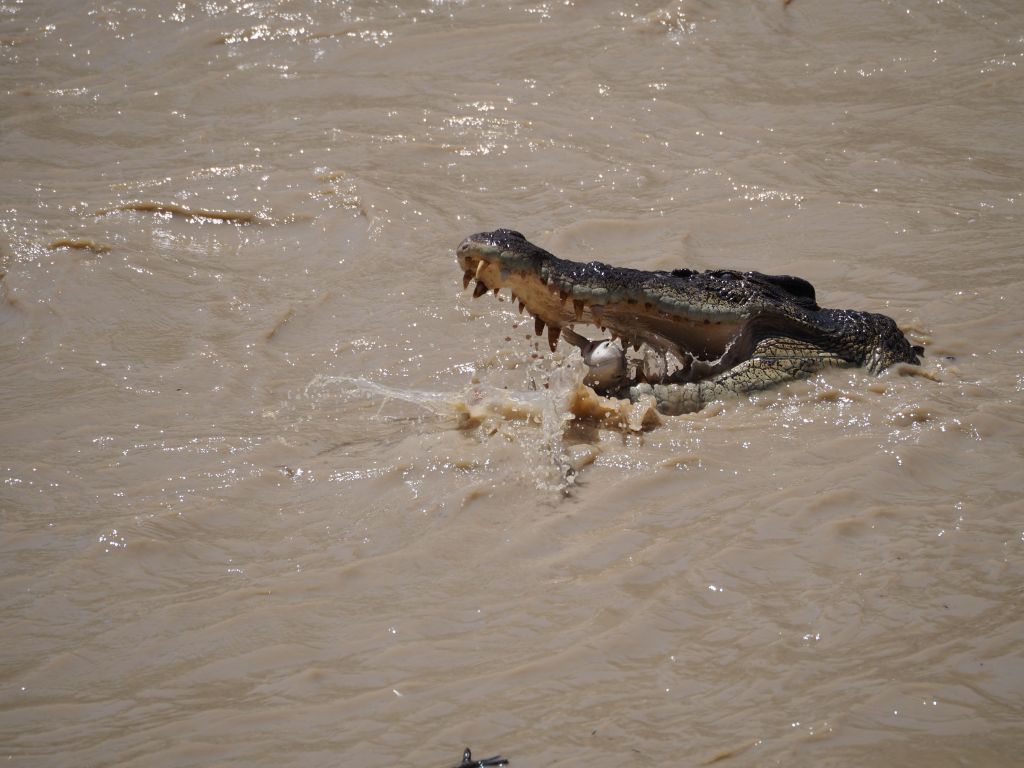
Cahills Crossing is a causeway crossing the East Alligator River (the rivers in the park are named alligator because British explorers were stupid), the middle of which is a little bit underwater. It’s close enough to the ocean that at high tide the water pushes inland against the river, and the fish take the chance to cross the causeway. This sets up a scene similar to grizzly bears at a salmon run, with something like 30-40 crocs lining up for their chance to munch on some shockingly large fish. It’s… wild. You can hear the loud snapping of either crocodile jaws or fish bones, I’m not sure which. You can see how terrifyingly fast a crocodile can move when sufficiently motivated. You realize it’s not a joke that a crocodile completely disappears the moment it goes under the water. I had a hell of a time.
The fish try to jump out of the way, with moderate success.Crocodiles hunt by sensing vibrations through the water. They hold out their feet like this to better triangulate the location of the fish. A ranger told me they’ve only been seen doing this here in Kakadu.That’s a lotta crocs…
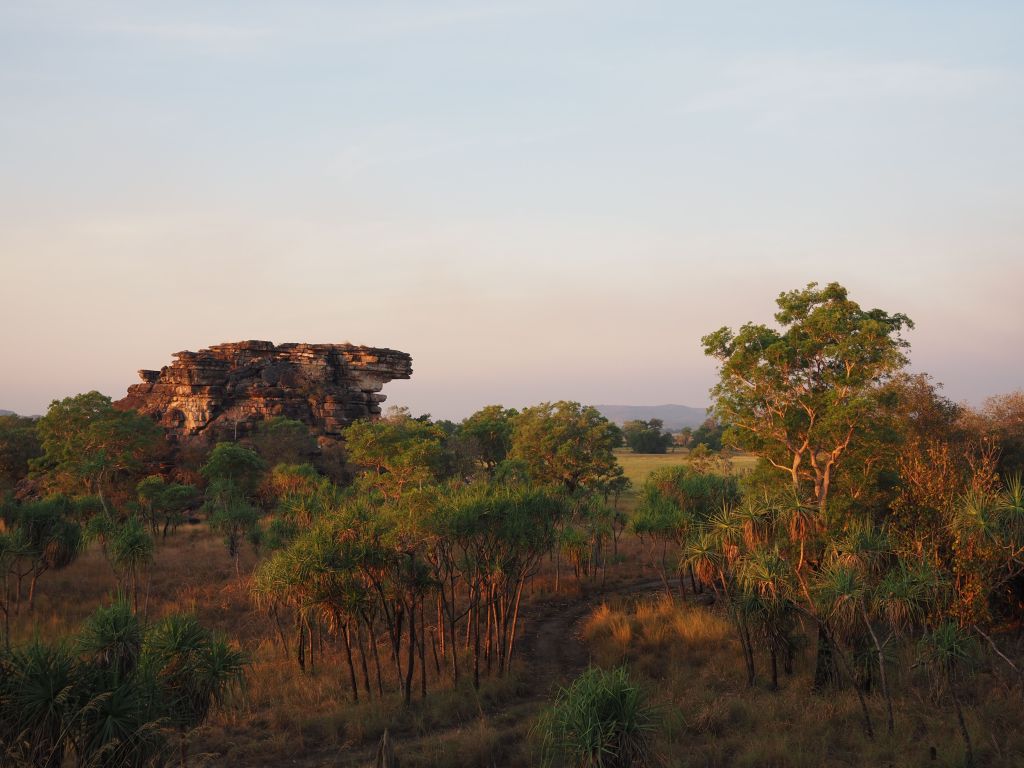
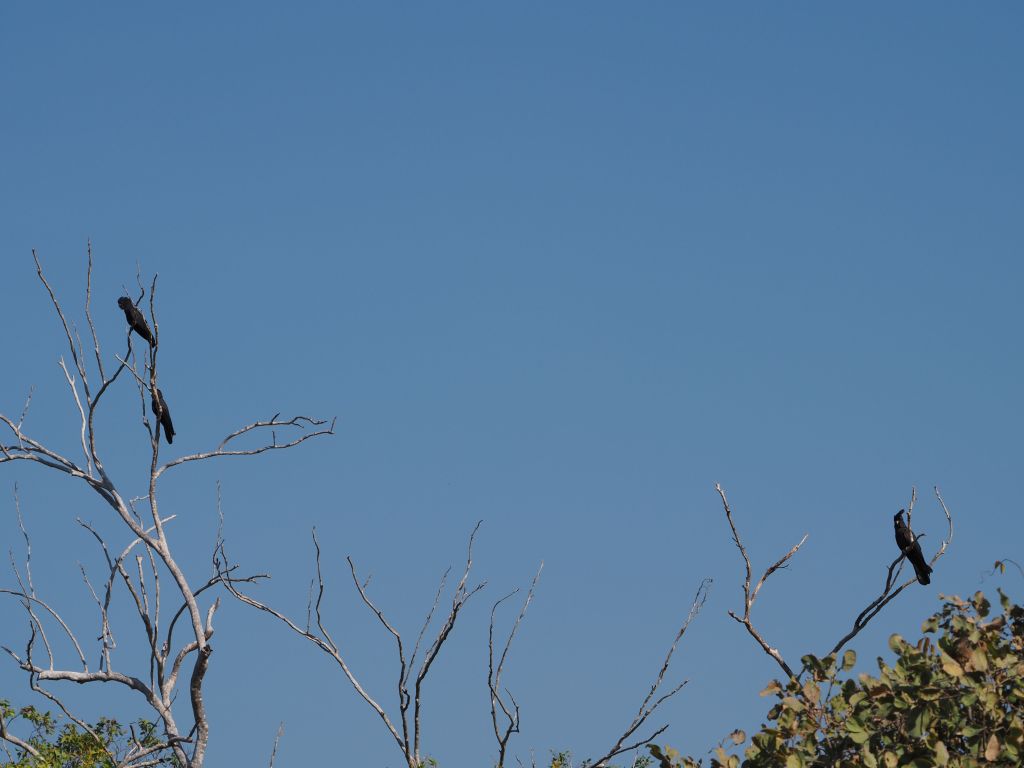
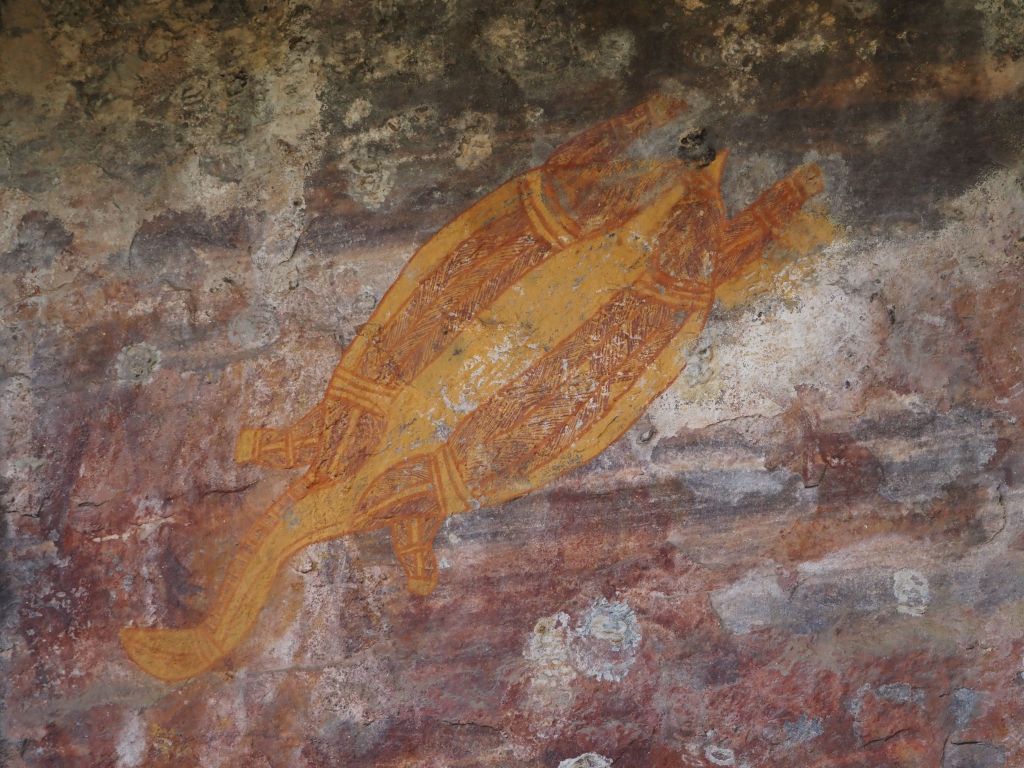
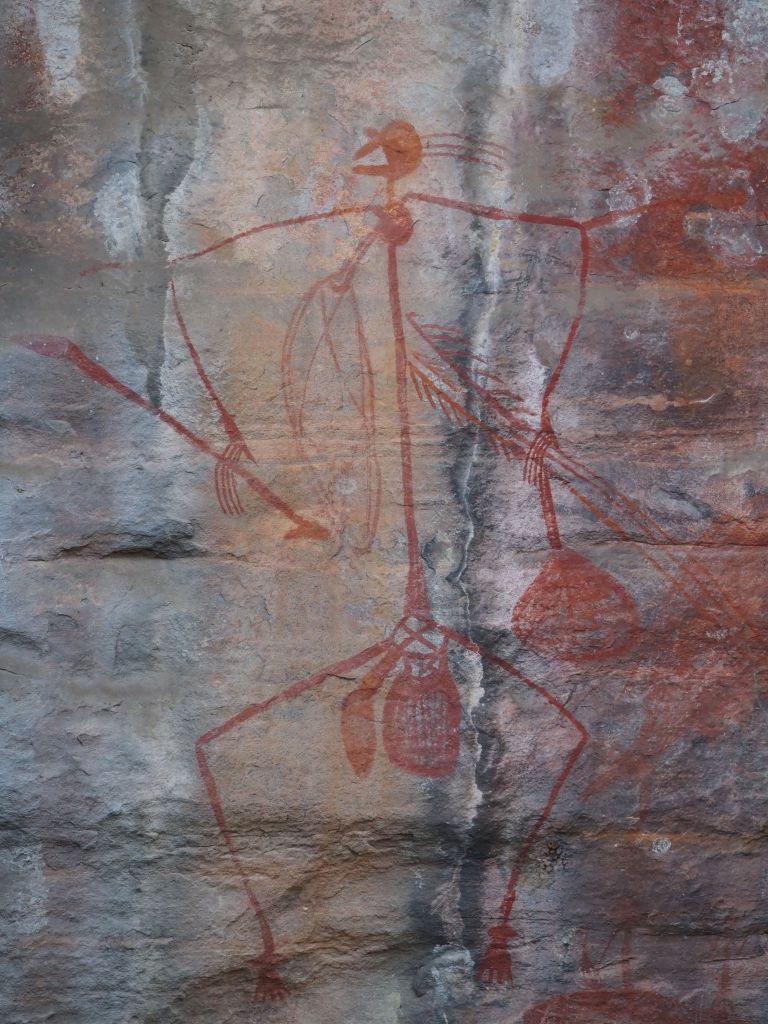
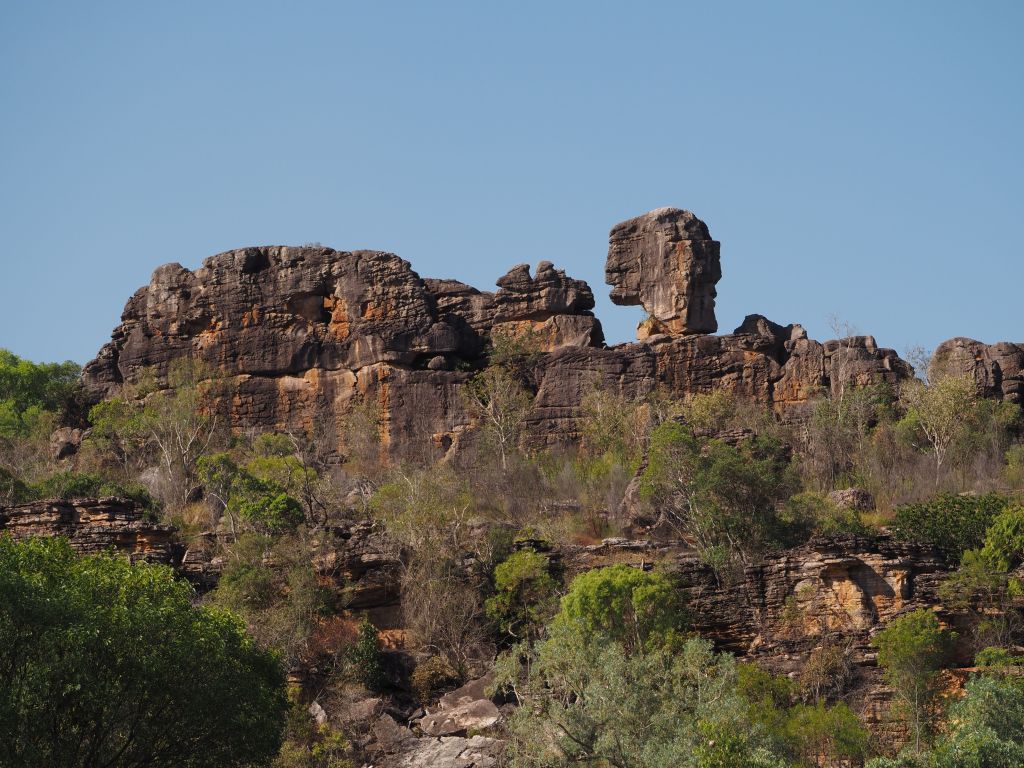
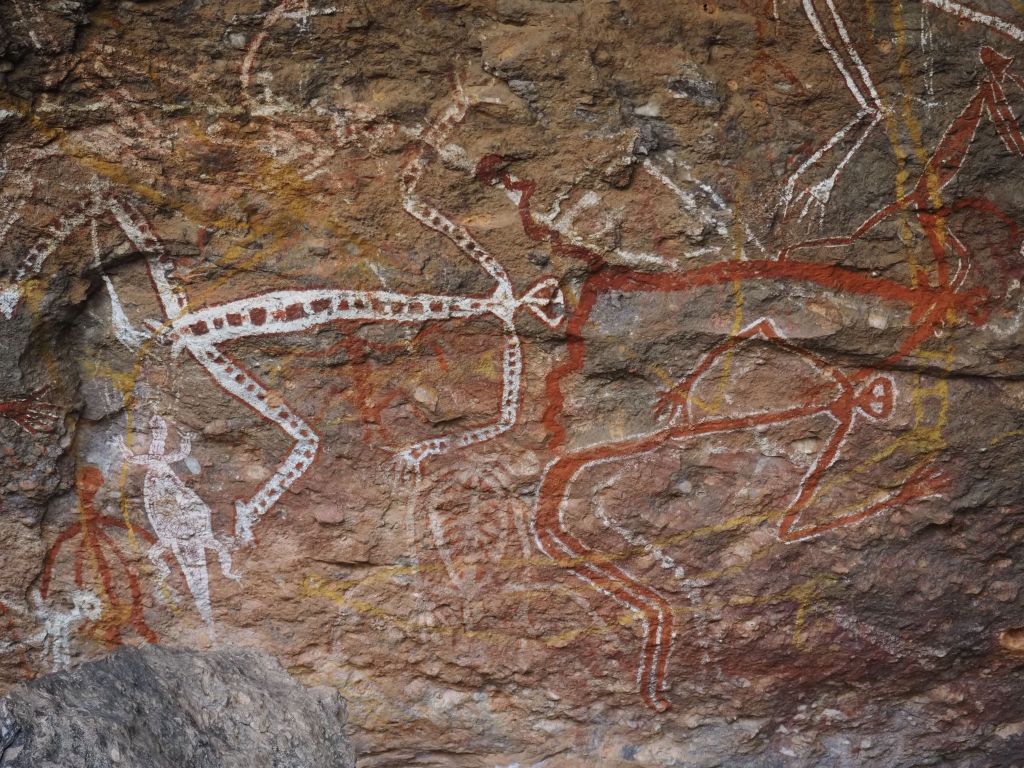
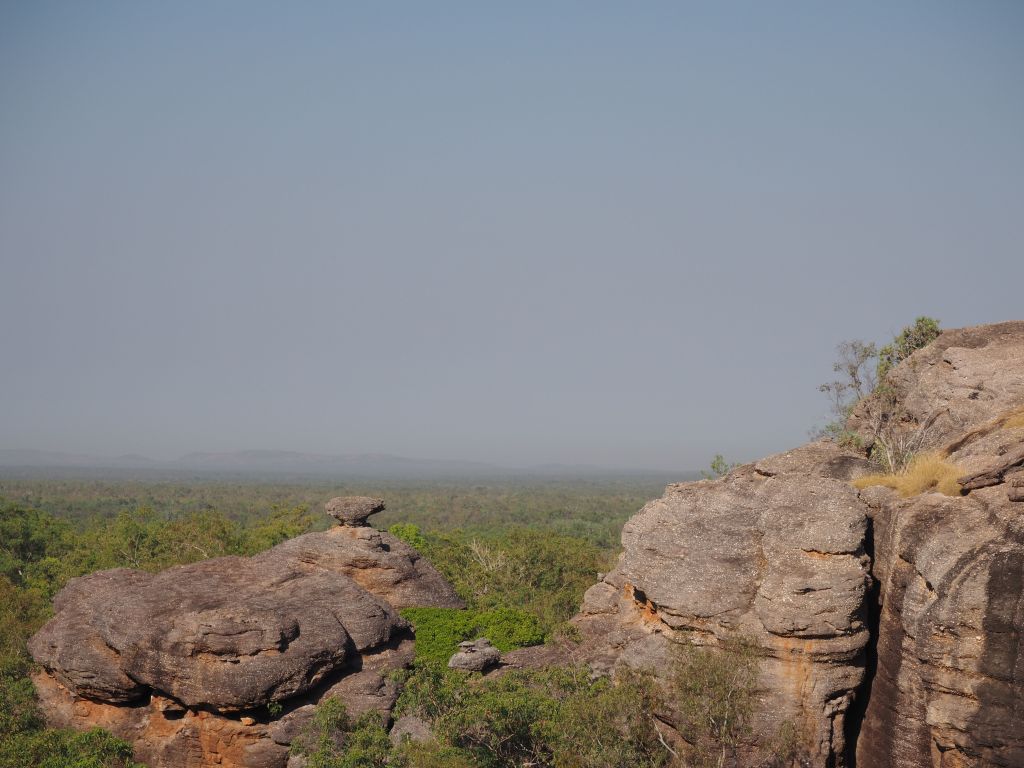
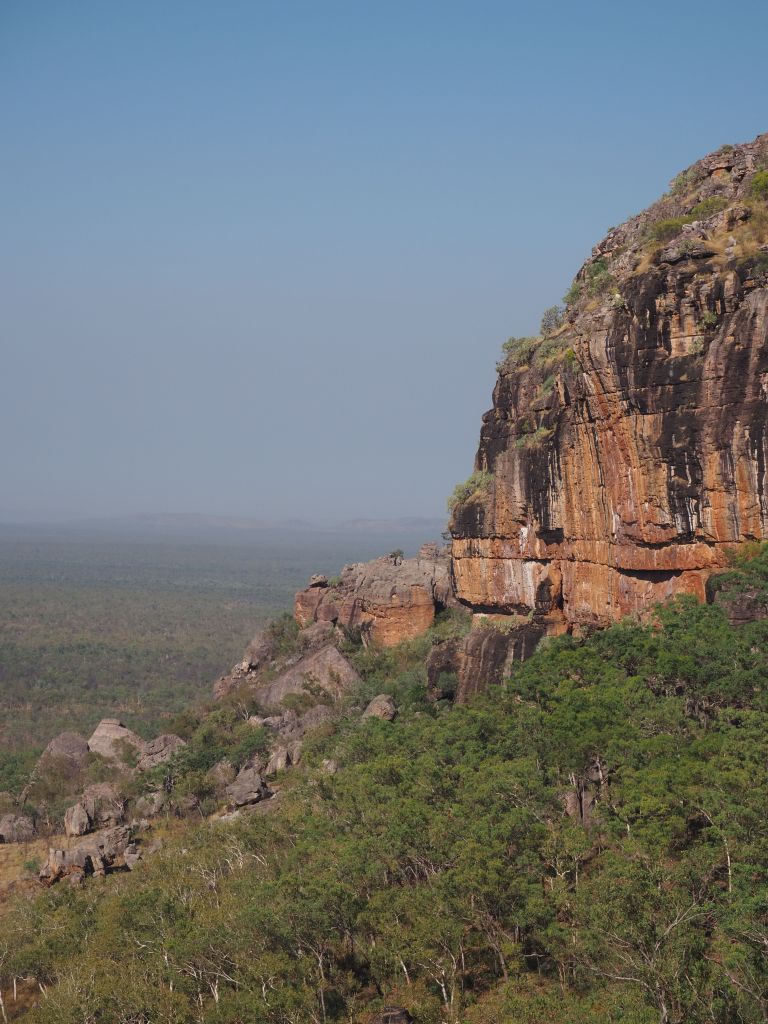
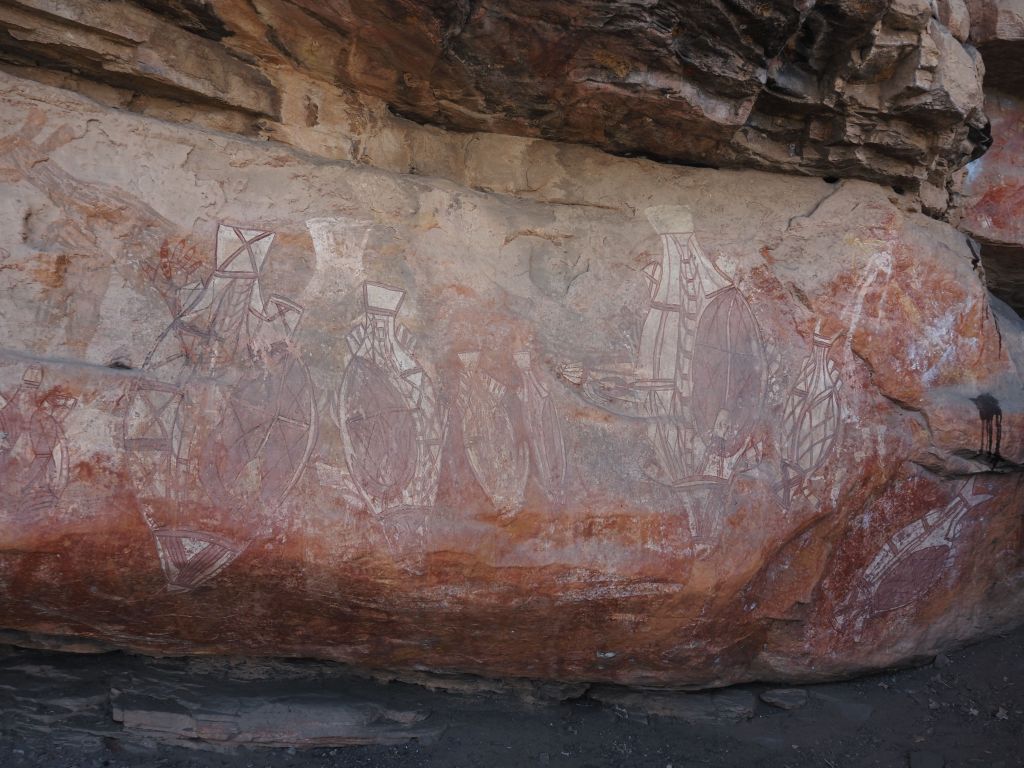
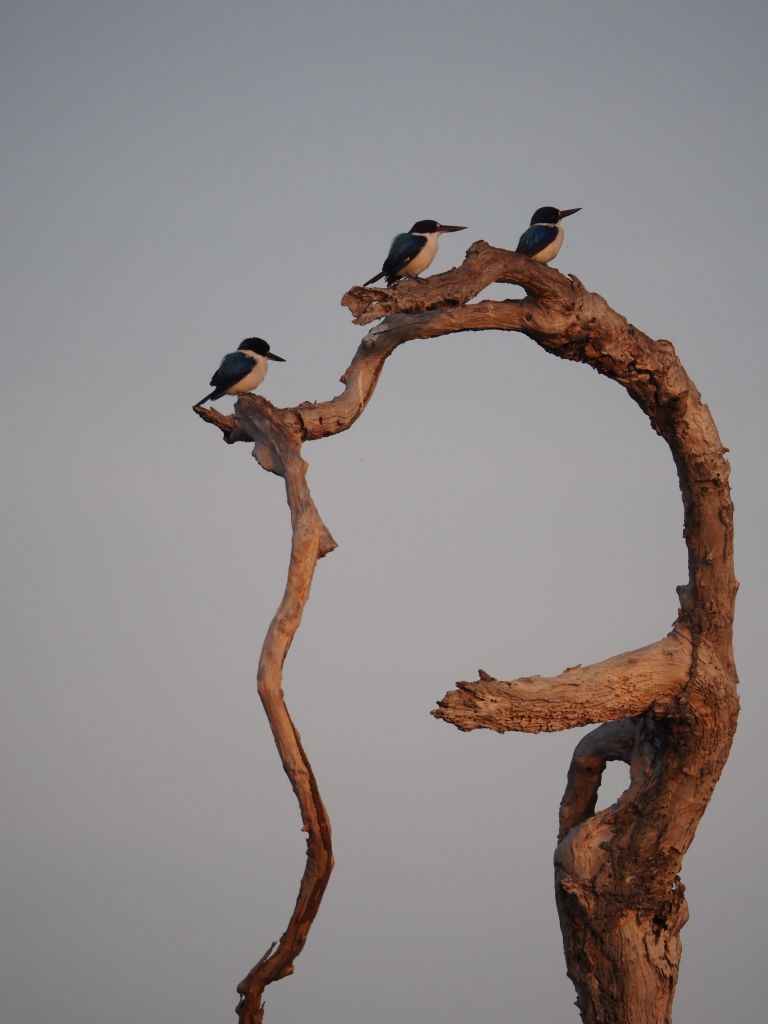
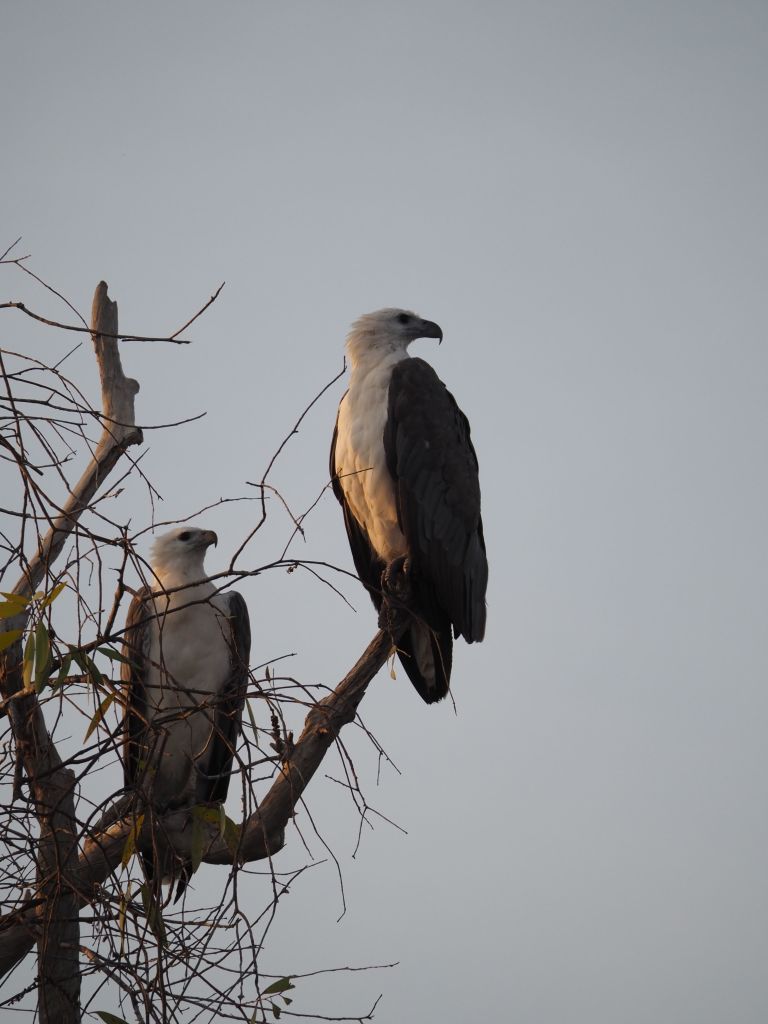
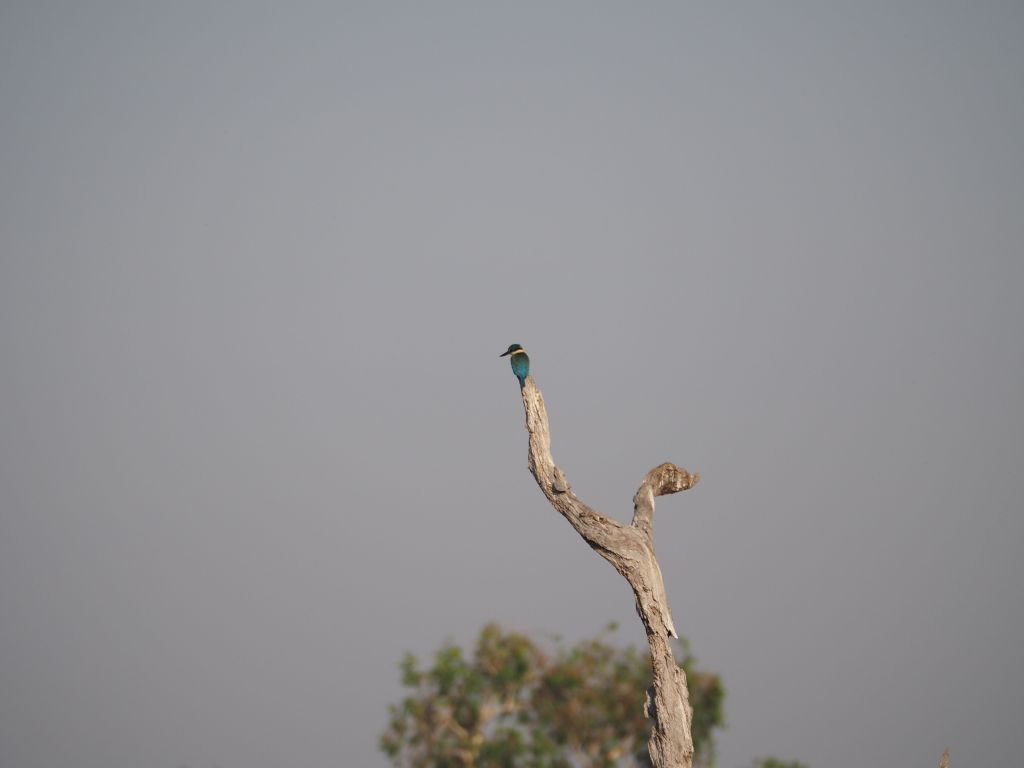
After Cahills Crossing I went to check out the incredible rock art gallery at Ubirr. The art ranges from more than 6,000 years old up to the 60s and features creation stories, spirits, and detailed drawings of various animals. It’s beautiful and the stories are fascinating. The area itself is also stunning, huge piles of sandstone sticking up out of the floodplain and monsoon forest. I got more acquainted with the variety of ecosystems in the park on the Barrk sandstone walk, a 12km loop through forest and all kinds of beautiful sandstone formations, with huge views at various points. The next day I went for the sunrise cruise on the Yellow Water Billabong, which stays wet all year round. The main attraction here is the incredible variety of bird life (though there are still lots and lots of crocs) and the views of floodplain all around, and it was a tremendous experience.
And that’s pretty much that. I’m back in Darwin now, running errands and stocking up for the next part of the circuit. Tomorrow or the day after I’ll be heading to Nitmiluk (Katherine) Gorge for a day or two of swimming and waterfalls, and then it’ll be full steam ahead for WA. I’ve got my stuff (including a zoom lens that’s twice as powerful, which is huge), I had a tremendous time in Kakadu, and I’m feeling good about what comes next. I’m including a map here to give you a rough idea of the geography involved here—blue dots are the places I’ve already been, and purple is what comes next. You can also see a couple of videos for this post here. Assuming I don’t manage to misplace this laptop you should hear from me again before too long.
Greetings from an absolutely gorgeous free camp spot about an hour northwest of the bustling metropolis of Winton. I’ve been making steady, unhurried progress towards Darwin since picking up my van on Thursday.
For those of you who haven’t already received personal confirmation, I did in fact go to a medical center the day after my last post. After a quick chat and some local anesthetic the doctor made a small slit and shoved in what I can only describe as a miniature ice cream scoop, which he proceeded to vigorously scoop all around. When he had mentioned local anesthetic I made a joke about skipping it, and then when he was scooping away all I could think was “wow thank god for local anesthetic”. One painful night later I went back to have the dressing removed, and things have been gradually feeling better ever since. I also had to take a course of antibiotics, which I had been hoping to avoid. Don’t worry though, I’ve been eating a good mix of vegetables and trash, and my iron stomach seems not to have skipped a beat.
The 3 nights I spent in the hostel were pretty much entirely uneventful, toe gelato experience aside. Everyone there was a lot younger than me, and most people seemed to be staying at least semi-long term, so they all mostly knew each other and didn’t have much time or interest for getting to know a weird, limping old man. That was fine frankly—when I first got there I met a woman who was staying in the same room, and she informed me that she absolutely needed a break because she’d counted and was on 18 straight nights of drinking. When I checked in a couple of days later, it was 20. I’d say those days are behind me, but frankly I never had anything close to that level of stamina in the first place.
Luckily things lined up pretty well for my van and everything got done by Thursday (much earlier than the potential worst case of having to wait until the following week). I can tell you I was a bit emo, as Mark DeBoever would say, when I picked it up. It really does feel like both home and freedom for me, and I was stoked to finally, really hit the road.
I had originally planned on following the coast up to Townsville, where I would link up with the highway that crosses to the west. That turns out not to be the most direct route though, and I decided I’d had enough of skipping from one little identical coastal town to the next and was ready to hightail it to Darwin, now skipping from one identical farm/frontier town to the next. Leaving the coast you cross some hills and forest, and then fairly quickly it starts to get flatter, hotter, and drier. There’s a lot of agriculture out here but somehow the drive isn’t quite as mind-numbing as through the central US, I think because much of the land here is for cattle grazing so it still has trees and bushes, rather than being absolutely uniform. You also get the striking red dirt out here, which is very cool.
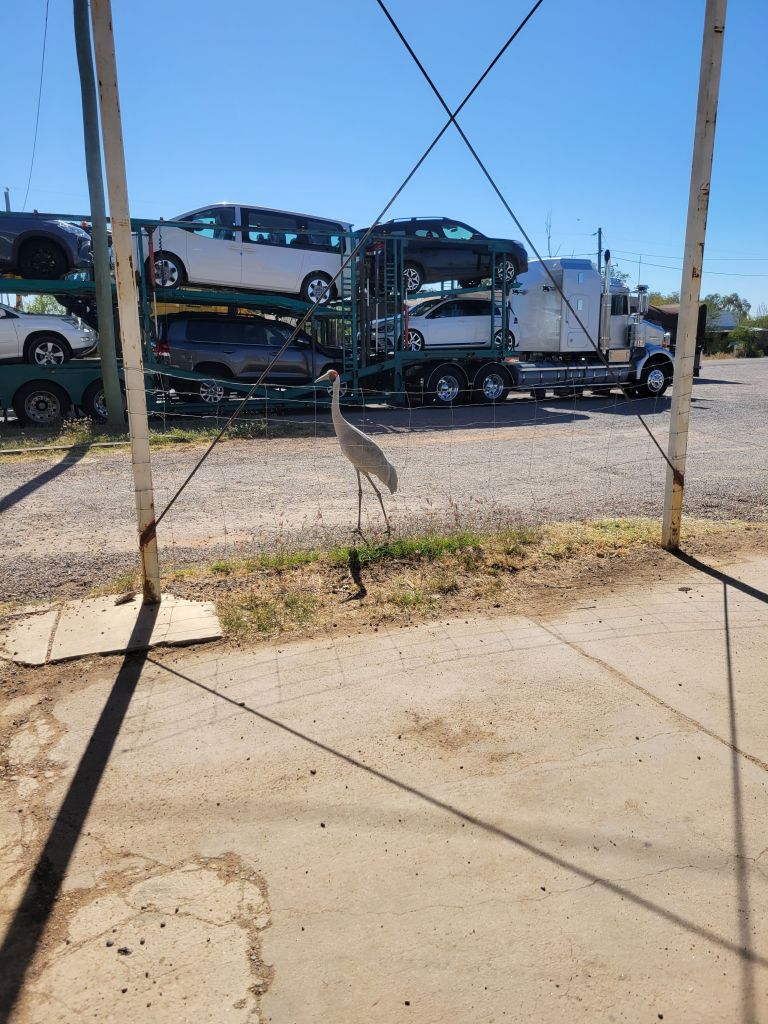
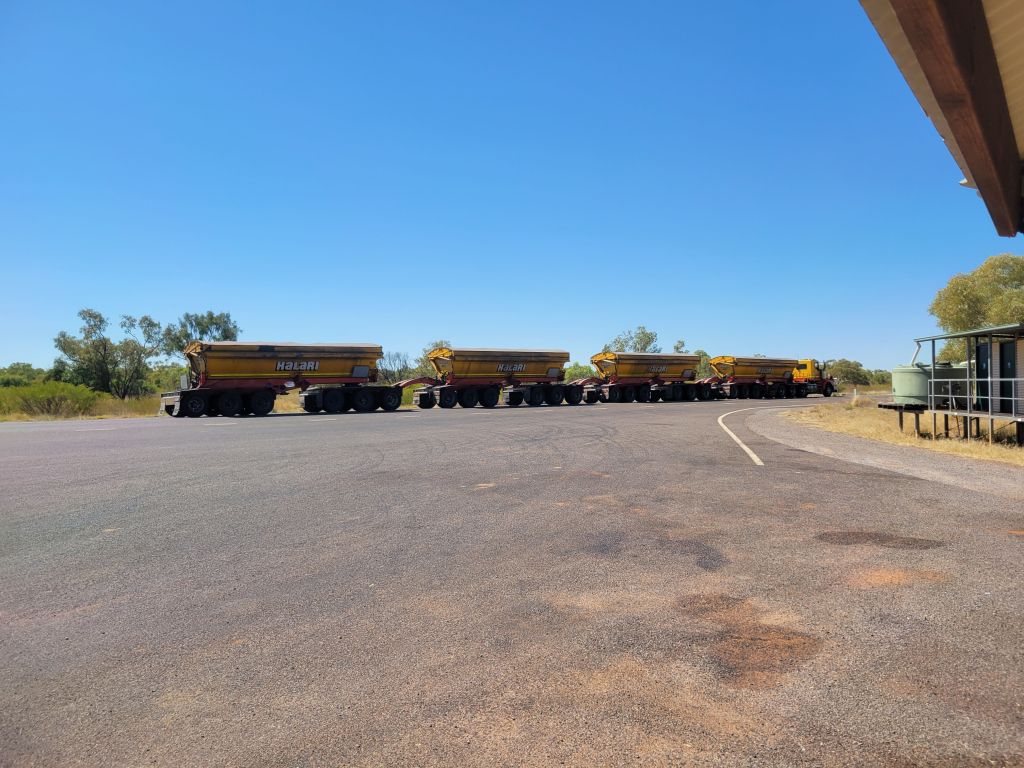
Look at this brolga!Union power, hell yeahThis is a road train. One day I hope to freedive as deep as road trains can be long (53m!).
So yeah. So far there’s been a bit more infrastructure than I expected—the little towns I’m passing through are actual towns, with cafes and parks and internet and whatnot, and you come across one every hour or three. By the day after tomorrow I should be in the Northern Territory though, and as I understand it that’s when I’ll really understand the meaning of “the middle of nowhere”. So I’m thinking of taking some time to stroll around this beautiful area tomorrow, and then stopping in a town long enough to post this blog and do a bit of research on parks and activities on the way up to Darwin. I’ve tested my satellite communicator, I bought an extra 10L jug of water, and the van damn well better be just about bulletproof at this point, so after that there’ll be nothing left to do but a last shop and fill up on water, and then I expect to be more or less fully out of touch for… some number of days that I’ll have a better idea of once I do some research. See you on the other side.
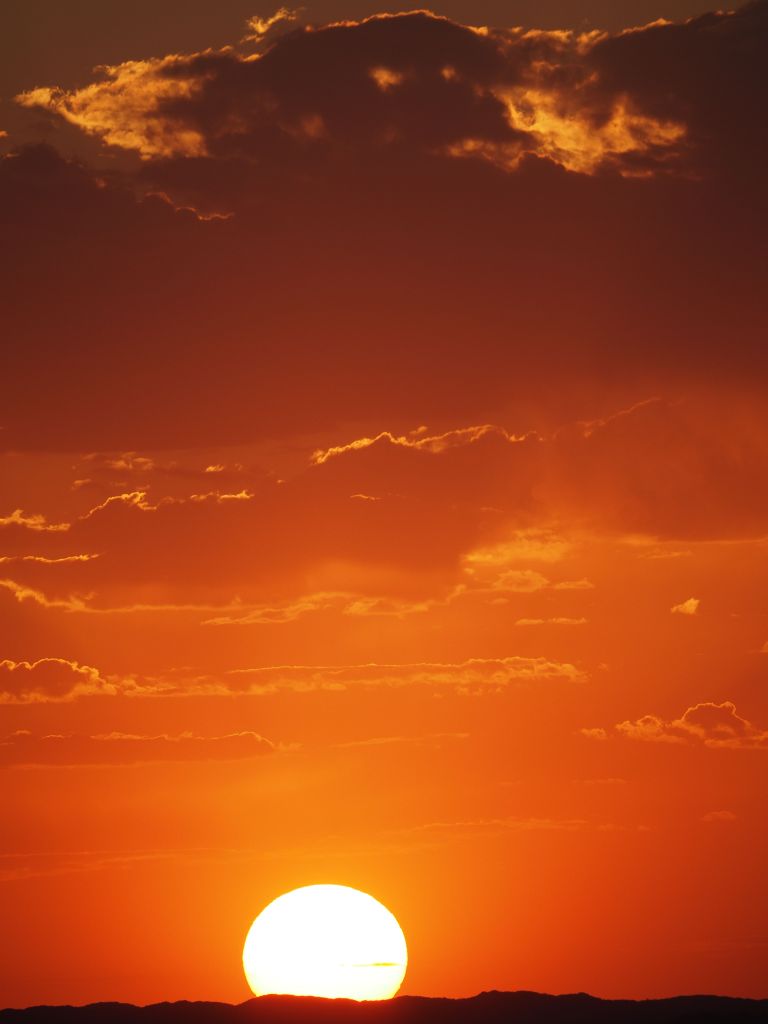
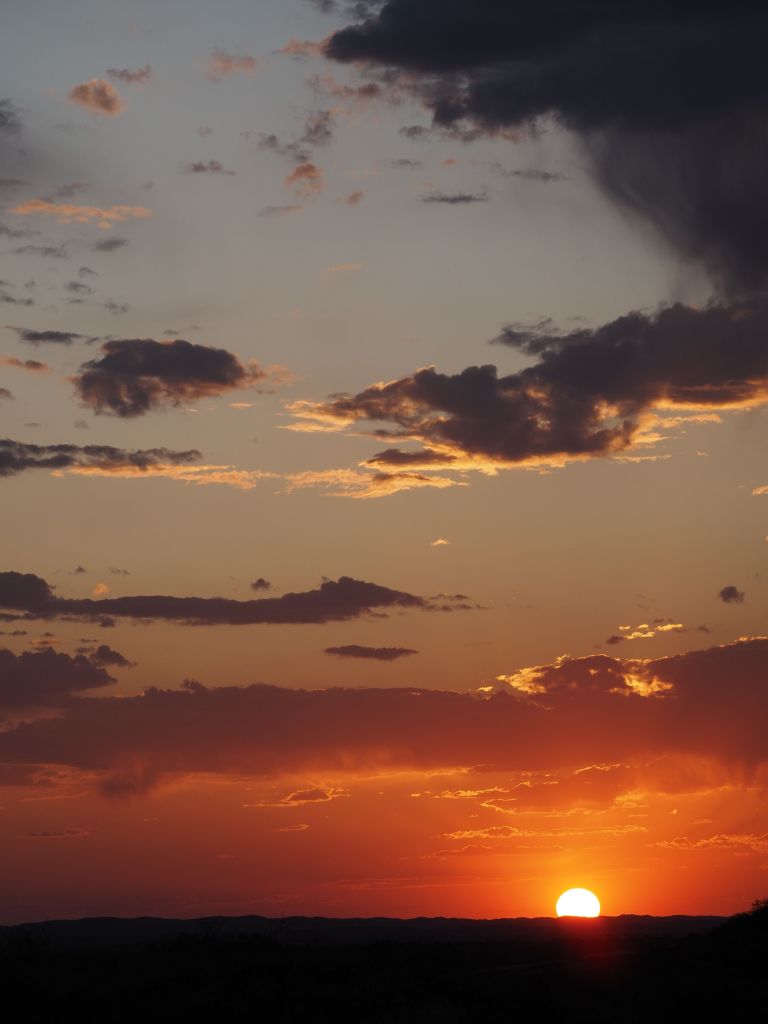
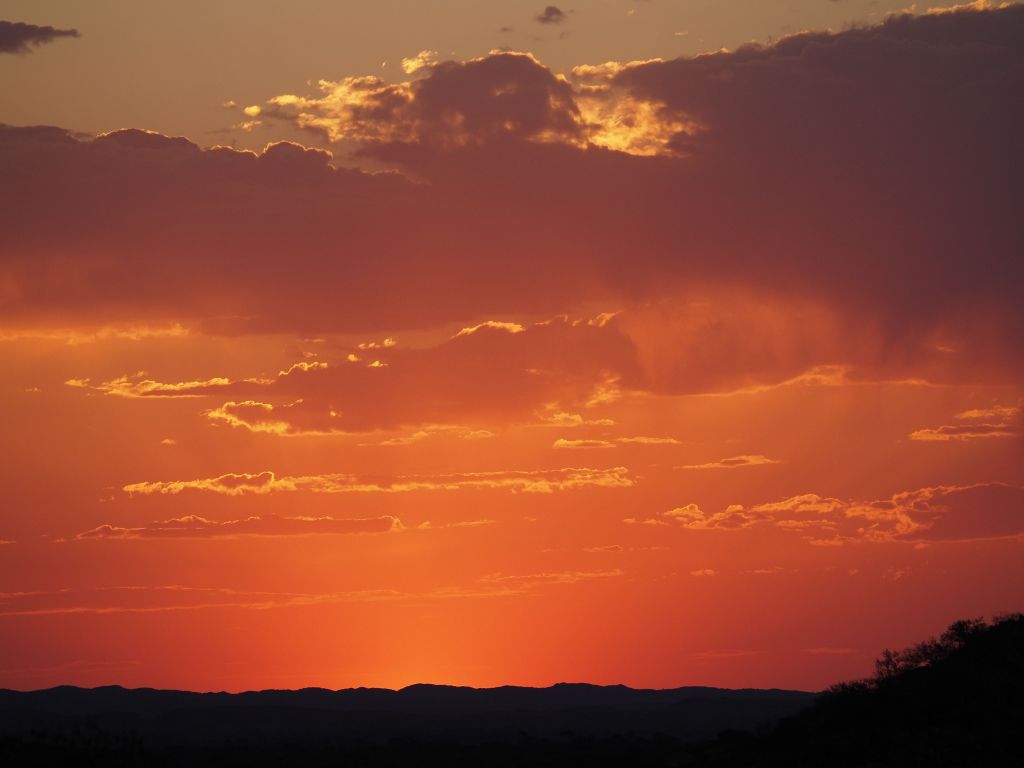
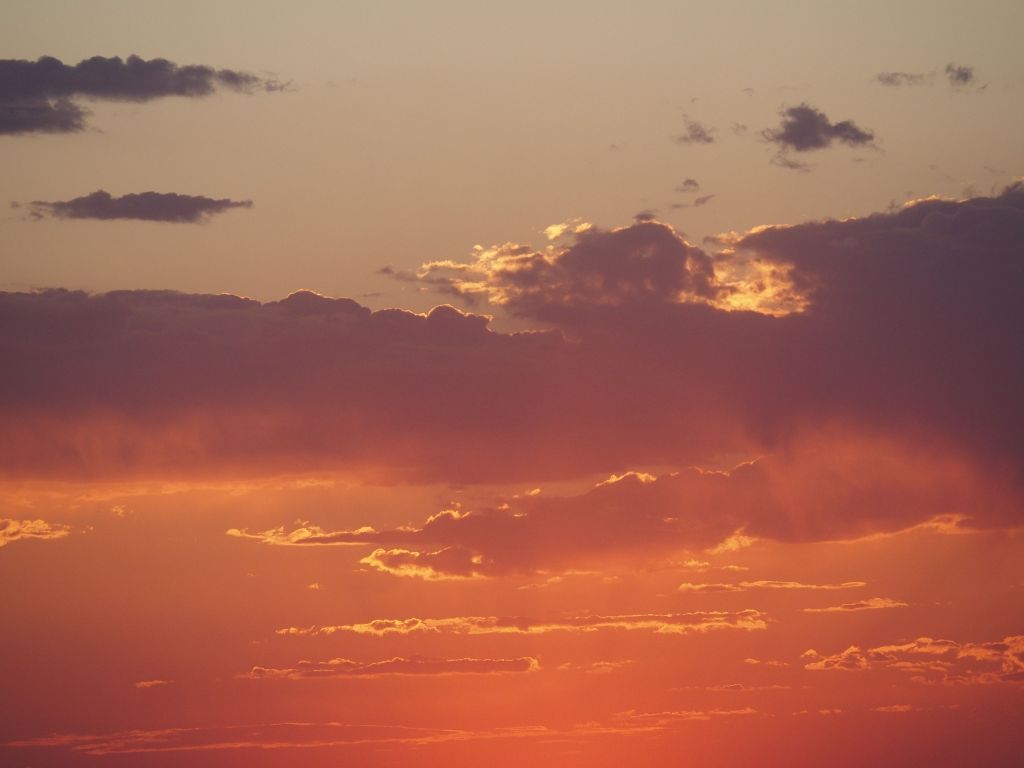
Just throwing some text in here to break up the photos, if I’m honest. Fair warning, it’s going to be a lot of sunsets and desert landscapes for the next while I think.
You can find a couple videos for this post here. I’m going to start experimenting a little with mini-vlogs, largely at the recommendation of Cheyne, who I had the pleasure of couchsurfing with in Sunshine Coast. If you don’t like them blame him.
Apologies, dear reader, for the long delay since my last post. I’m in the midst of one of my typical “hanging around not doing much so don’t feel there’s anything to write about” spells. As it turns out, I’m still on, in, or around the Sunshine Coast. My oil change turned up a bit of work that needed to be done on the van, and I decided it was best to play it safe given that my next move is going to be driving across the absolute middle of nowhere to the other side of Australia. But of course that work couldn’t get started for another week and a half, so I just dropped my van off this morning, and I won’t be able to hit the road until the end of the week at the very earliest.
In the meantime I didn’t get up to too much. One nice thing was getting back on couchsurfing and meeting a really nice guy named Cheyne, who let me park in his driveway for a few days, provided some very pleasant company (much needed), and let me take hot showers and use fast internet. It was true luxury, especially since I’d been feeling a bit lonely and hadn’t found many ways of connecting with people. Besides that I also got back to surfing a bit, which was really fun, and spent a fair amount of time hanging around libraries working on the online biology course I recently started, which I’m enjoying. I’ve also been reading a little bit more recently. I read both of Ed Yong’s books, I Contain Multitudes and An Immense World, which deal with the beautiful world of bacteria and the incredible variety of animal senses, respectively. They’re great and I highly recommend them. And then just this morning I finished The Man in the High Castle, which was something of a thought experiment/philosophical musing, and a fun and quick read.
Now, the bad news. My barnacle-sliced toe remains an annoyance – it’s been very mildly infected on and off (don’t worry, it’s fine, I’m taking care of it), and while keeping it clean and using antiseptic cream helps, it seems to want to get worse again every few days. I’m pretty sure there’s something still in the cut, and have been very slowly coming to terms with the idea of going to a medical center and just having them cut it open and clean it out. Should I have done that fully two weeks ago and saved myself the nagging annoyance this whole time? Probably! Will I, having said that, continue to keep an eye on it and put off going to the medical center? Almost certainly!
The toe is ultimately small potatoes compared to my most recent injury, unfortunately. My last surf session was the best yet in Australia, right up until the moment when a wave caught and tumbled me, somehow yanking my leg to the side and very, very thoroughly pulling something in my groin. I’m no doctor, but I am a sporting enthusiast with an exquisitely fragile body, and my long history of sports injuries tells me this is going to be a recovery on the order of months rather than weeks. The good news is that it seems to be involved in fairly specific movements, so I can walk fine and generally go about my day unencumbered. And who knows, maybe I’m way off base. Either way, I’ll be keeping an eye on it and slinking into a physical therapist’s office when the time is right, and in the meantime I’ll have to lay low for a bit.
If reaction to my post about having a bit of the blues in Sydney is any indication, many of you will now be beside yourselves in consternation, given that this post mentions not just loneliness but also grievous injury of the groin. I just want to reassure you, dear reader, that I’m doing ok. This is certainly a bit of a valley (now you finally understand the title!) but I’m taking it as an opportunity to try to keep perspective and approach things somewhat philosophically.
There are always peaks and valleys, and the feeling of “when it rains it pours” has as much to do with your own mindset as it does the actual events. I’m reminding myself of that, and also taking the chance to practice trying to stay present and not stress about the future. I had planned on being in the Northern Territory or all the way over in Western Australia by now, unhurt and doing lots of physical activity. While it’s a bummer to think about that not being the case, I can also consider how lucky I am to be in a situation where unexpected car trouble, grievous injury of the groin, or tenacious infection of the pinky toe are just minor setbacks that I can adjust my plans around, and nothing more. I’ve got nice weather (mostly), good books to read, interesting biology to learn, and even the possibility of making a friend or two at this hostel. As the Aussies like to say, “she’ll be right”. And now, some random pictures.
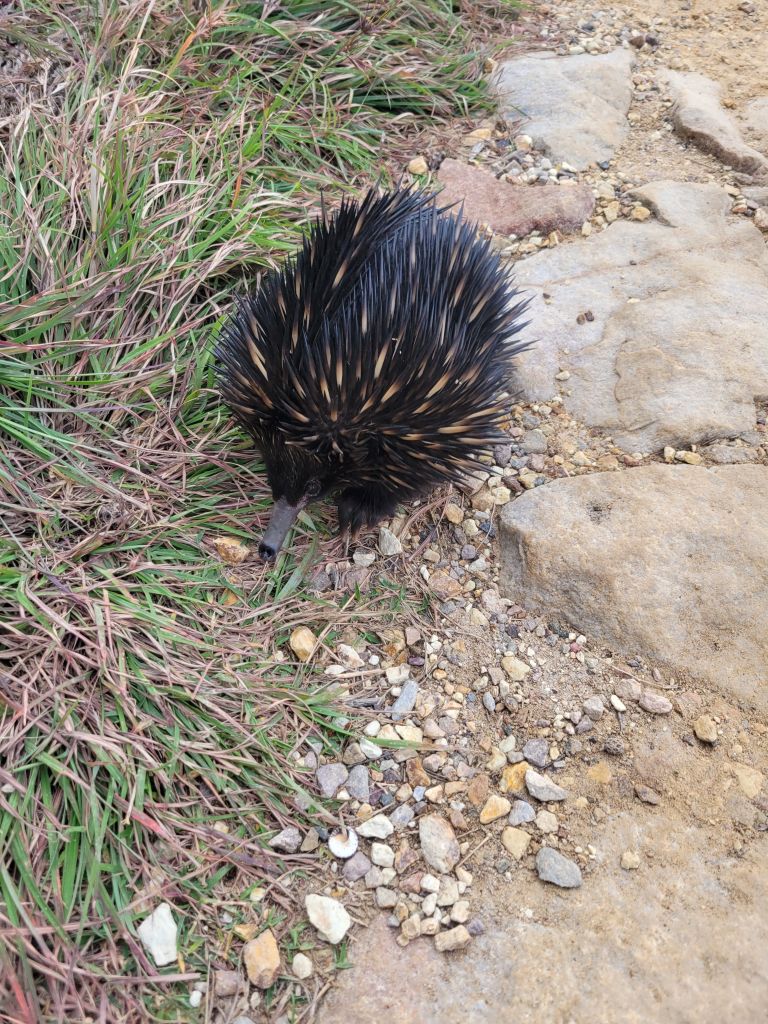
I saw an echidna!I had to see these horrendous commas and now you do too.
It’s been a good couple of weeks here on the aptly named Sunshine Coast. As an aside, I have to say I don’t really understand the nomenclature here. Sunshine Coast seems to be the name of both the city and the region? Am I on the Sunshine Coast? Am I in Sunshine Coast? Truly, these are the big questions.
Anyway, things have been moving along since the last post. I found an actual free camp and immensely enjoyed the feeling of sleeping without a nagging voice in my head worrying about whether I would end up getting a ticket. I got blackout curtains set up, cut to the shape of the windows and with magnets sewn in so I can stick them on and remove them when I want. It’s not what anyone would mistake for high quality work, but it mostly does the job (I’m going to add a couple more magnets to make them fully cover all around the edges) and considering I have absolutely zero aptitude for arts or crafts or fine motor skills, I’m pretty happy with them.
There has finally been some surf this past week, so I’ve spent lots of time getting out and trying to get stronger so I can become something of a competent surfer again. Trying to get to be a decent surfer is really a philosophical and attitudinal challenge as much as anything else. You need good enough conditions to surf, but not such good conditions that there are tons of other people out and you can’t get any waves. There are many skills you need to learn—reading the waves, paddling, getting through waves that are breaking on you, catching a wave, standing up, any kind of turning, the right kind of turning to stay in the wave and maximize your ride, and probably more that I don’t even know about. Many of these skills depend on each other. For example, you can’t practice turning and staying in the wave until you can read waves well enough to catch them well enough to stand up well enough to learn to turn.
But the precursor to all of these skills is simple strength and endurance. Paddling a surfboard is surprisingly hard work, and unless you have incredibly favorable conditions, a surf session involves a lot of paddling. When you’re just starting out you really only have one or two attempts at catching a wave in you, before your arms feel like wet noodles randomly pinballing around. This makes getting into surfing, and even more so getting back into surfing after having once been competent, mostly a Zen type challenge in striving without expectation. To put it simply, trying to surf when you’re not strong or good enough isn’t especially fun. And I’m not especially tuned to delayed gratification. So it can be a struggle.
The key for me to learn, and now re-learn, to surf, has been to completely reset my expectations. Rather than going out thinking “I’m going to surf today and it’s going to be fun!”, I go out thinking “I’m going to exercise today. It’s going to be lots of paddling, and it’s going to be hard. As an aside, there is a slim possibility that at some point my feet may touch the board. That would be an unexpected and delightful bonus.”. There’s definitely a lesson here about applying this attitude to all of life, but that’s still a work in progress.
Anyway, I’m happy to report that I was able to bring that attitude out for a bunch of surf sessions, I’m already feeling a lot stronger, and there is at least some “it’s like riding a bike” aspect to it. I’m still definitely not a good surfer, but I’m reasonably close to competent, and I’m able to have fun, which is most important. I spent a few days surfing at not very good beach breaks, with the upside that there was literally no one else out there. This is key because it lets you try for every single wave. After getting a bit more confident I decided I should, in fact, try the world famous Noosa surf spots. Turns out they’re famous for a reason! The wave is incredibly consistent and the area is gorgeous. The downside to this is that the spot is always a bit more crowded than the waves are good, and if you’re not very good at surfing it’s a bit of slim pickins out there. So I’m glad I tried it out (barnacle-sliced feet notwithstanding), but I’m also excited to go back to a lonely beach break today.
That’s pretty much it these days. I’ve got an oil change scheduled for next week, and am thinking more and more about starting the journey westward. I don’t have those plans nailed down yet so won’t ramble about them here, but the summary is that I’m really excited to see some desert. Lastly, here are some photos.
Hello from a shockingly large and modern library in bustling Caboolture (the place names here are just excellent), where the internet is fast and the outlets are easy to find. I’ve just spent a lovely week and a half with Daniel and Jennifer checking out Byron Bay, Gold Coast, and Brisbane.
We started out in Byron, which is a formerly sleepy, now touristy small surf town at the very northern edge of New South Wales. It has lots of beautiful beach and tons of cafes, restaurants, and trendy shops, though as we discovered once we got to Gold Coast (which is, confusingly, the name of a metropolis) it’s still relatively small and quiet. We took it pretty easy in Byron Bay, hanging at the beach and strolling around and just generally catching up.
The big activity we did was a snorkel tour of Julian Rocks, a very famous dive site just off the coast. Unfortunately the tour operator only handed out spring suits (i.e. thinner, short arm and leg wetsuits) and it really was not warm enough for that, in the air or in the water. This meant that everyone on the boat was cold just on the ride over, and it was a little bit harder to savor the snorkeling. The spot was still beautiful though, with lots of fish, a couple of turtles (including a rare, critically endangered hawksbill), and some sharks milling around down below. It’s also whale season right now, with humpback whales migrating north along the coast, and we got lucky and got to see some very close on the ride out and back. Their breathing is extremely loud!
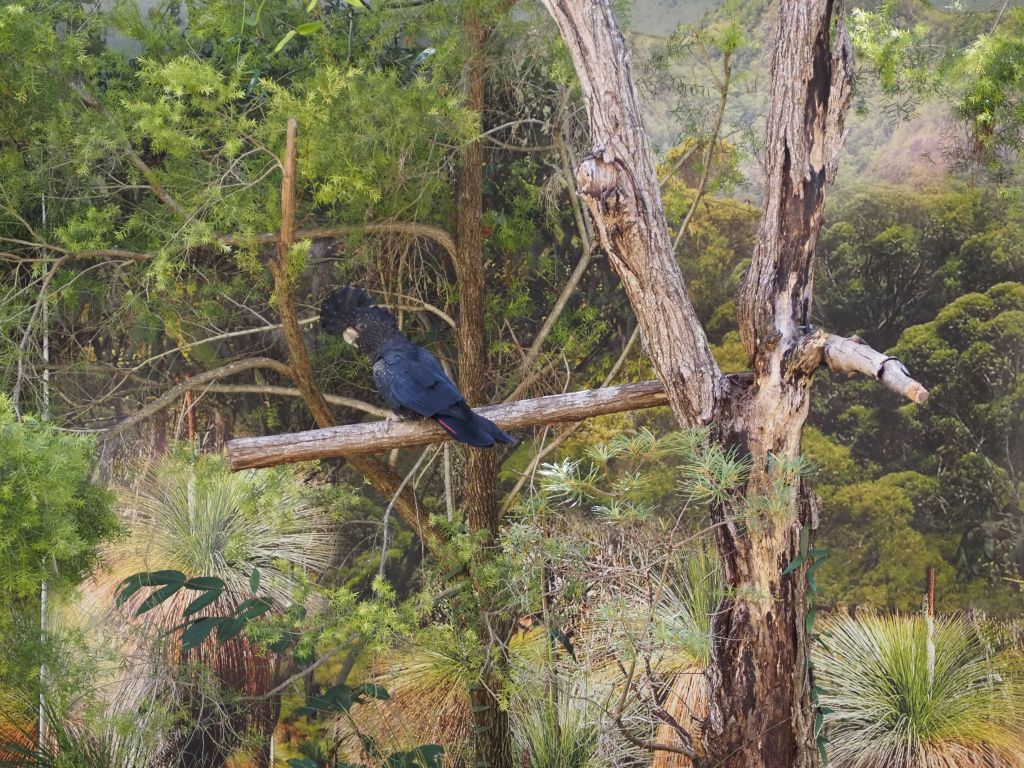
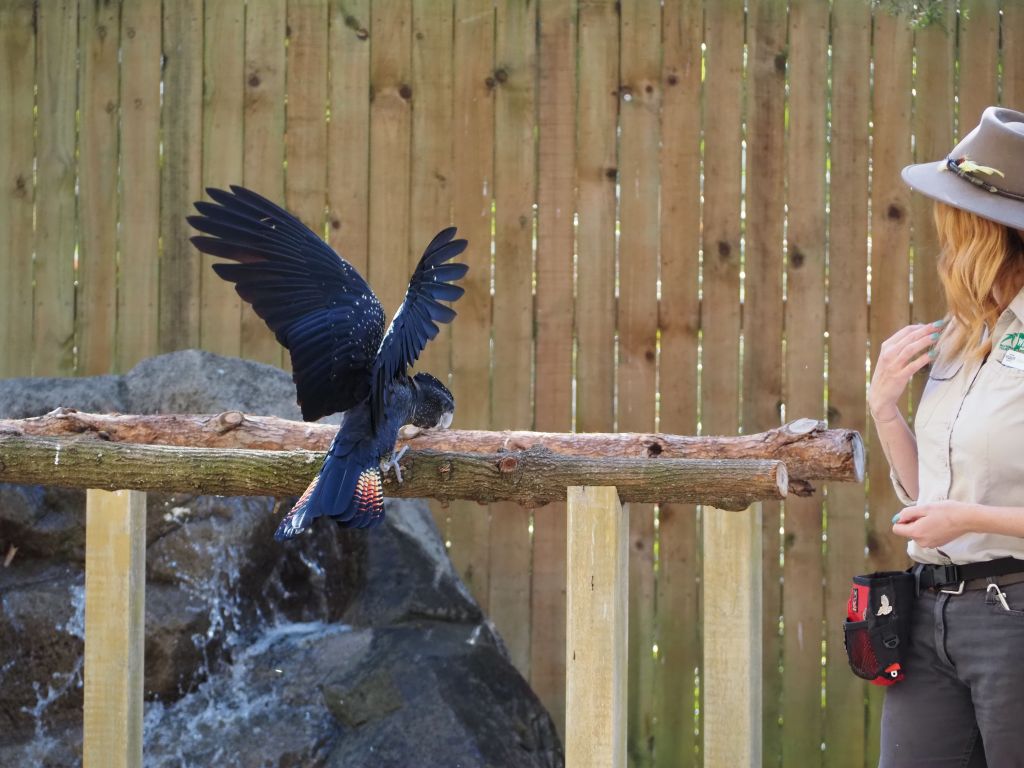
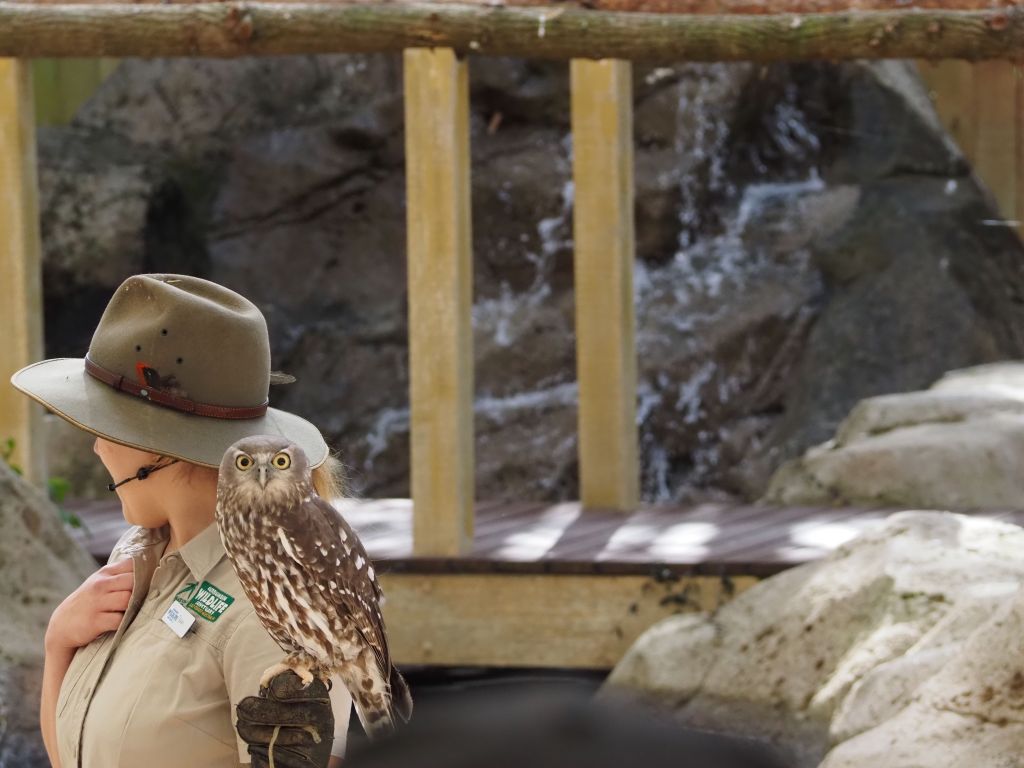
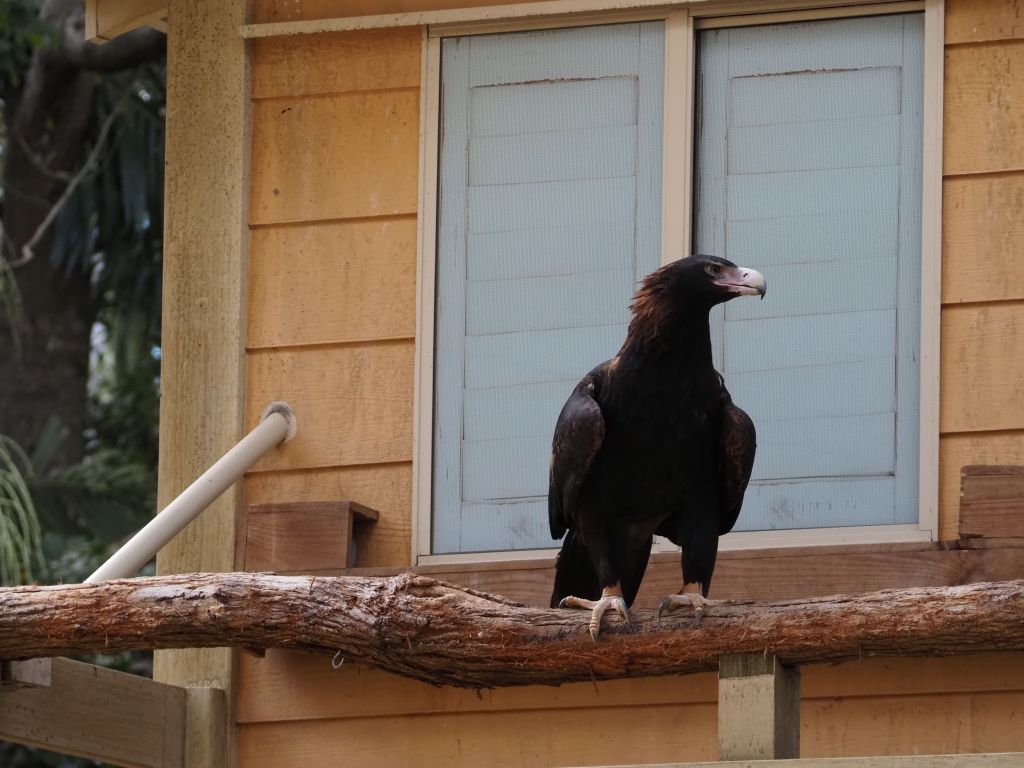
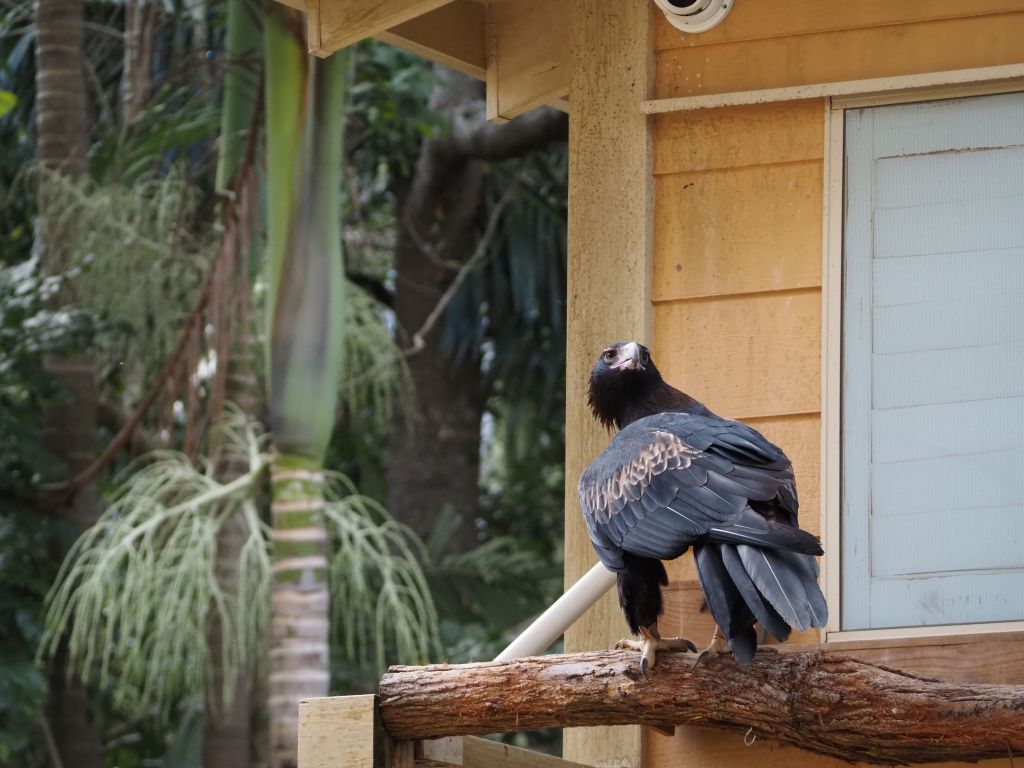
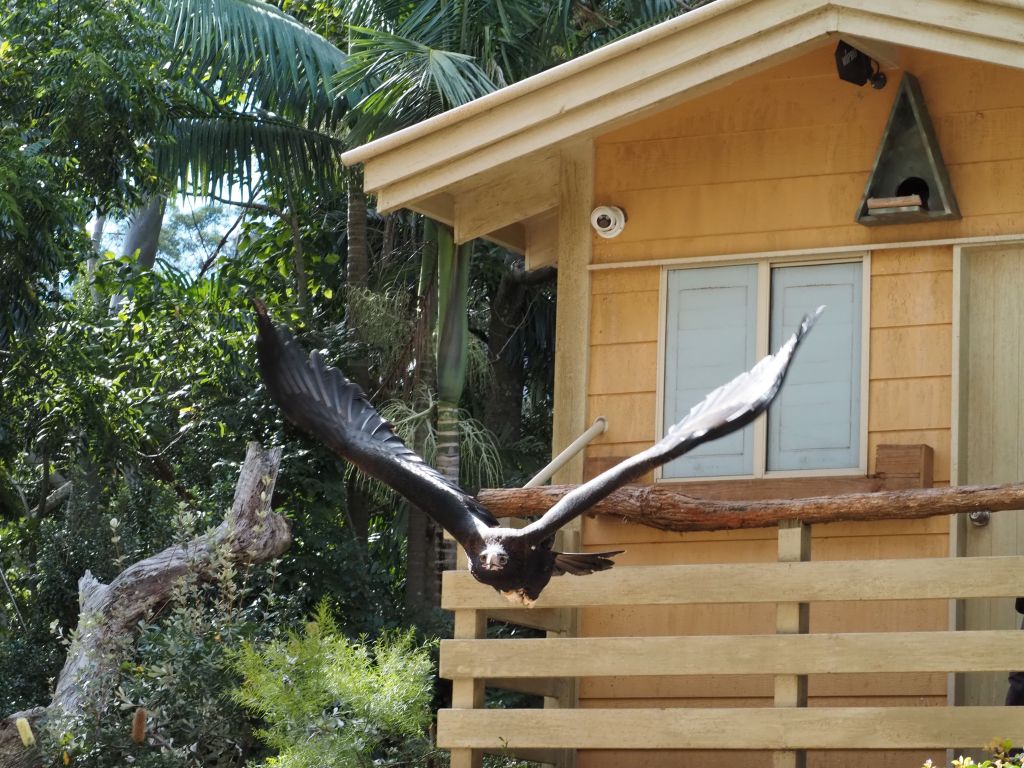
After Byron Bay we meandered up to Gold Coast by way of a nice stroll to a dry waterfall. Gold Coast turns out to feel a lot like Miami, with basically just several rows of high rise apartment buildings lining a long, long beach. Needless to say we fit right in. We had some delicious Indian food and wandered around a night market, but one of the very coolest things we did on the whole trip was visit the Currumbin Wildlife Sanctuary. They have a ton of different very cool animals to look at, and their bird show, where the shockingly well trained birds fly around right over the audience’s heads, was incredible. We spent a very fun several hours wandering through the whole park gawking.
Kookaburra!Owls aren’t the only ones with flexible necksHelloTasmanian Devil!Wallabuddies? Wallababies?
Then it was time to head on to Brisbane, which we did by way of Tamborine Mountain. The day started with a winding drive up through vineyards and trendy cafes, with a quick stop off at a spot with an incredible view where parasailers were launching. Once we got to the national park (everything is a national park here) we did the Witches Falls track, which turned out to be an absolutely gorgeous hike through eucalyptus and temperate rainforest. At one point Daniel was absolutely convinced he’d seen a wild pig, which turned out to be a turkey. Everyone playing their part.
Brisbane was nice as well. It is, in fact, an actual city, and we spent time wandering around, checking out a great viewpoint, and chowing down. Our last big activity was a day tour to Moreton Island. Moreton is one of several large islands around here that you can take a ferry to, but then can only get around with a 4 wheel drive. That meant my van unfortunately wouldn’t cut it, so we booked a tour where they took us sandboarding down a huge dune, then kayaking and snorkeling around a series of shipwrecks right next to the beach. Sand boarding was pretty fun but a bit uncomfortable—the highlight was either Daniel getting the only board that wouldn’t slide, or me destroying a board (and myself, to a certain extent) trying to take a flying start, depending on where you’re sitting.
Kayaking was quite silly. The shipwrecks are all in a line quite close to the beach, and the directive was basically “go check them out”. The thing was that there was a substantial current, so the result was basically a while spent on a kayak treadmill. Even with kayaks made out of clear plastic there really weren’t enough shipwrecks or fish to look at for it to be that fun for that long. The snorkeling was surprisingly good though—it turns out you can see a lot more fish in the water with a mask on than you can through the bottom of a kayak (surprise!). The extra maneuverability of swimming also let us get more into the wrecks, where we could see how much beautiful coral was growing everywhere.
And then, before we knew it, that was it! We packed up that night and I dropped Daniel and Jennifer off at the airport early the next morning. This was the longest I’ve gotten to hang out with them in a long, long time, and it was decidedly good for the soul. It was a brief taste of the high life too, sleeping in a building, showering whenever I wanted, eating a diet that didn’t include beans every other meal. What a world!
Now I’m back in the van and it’s been a good couple of days. I was inspired by a friend in Sydney to randomly go and donate blood, which was great. I’d never donated blood before because, after my 6 years growing up in France, the US suspected me of having mad cow disease. It had always annoyed me, because I’m generally healthy and large and not afraid of needles, and donating blood felt like pretty much the easiest possible way to do some good. So that was an item checked off the bucket list, and I’m planning on donating another couple of time before I leave Australia.
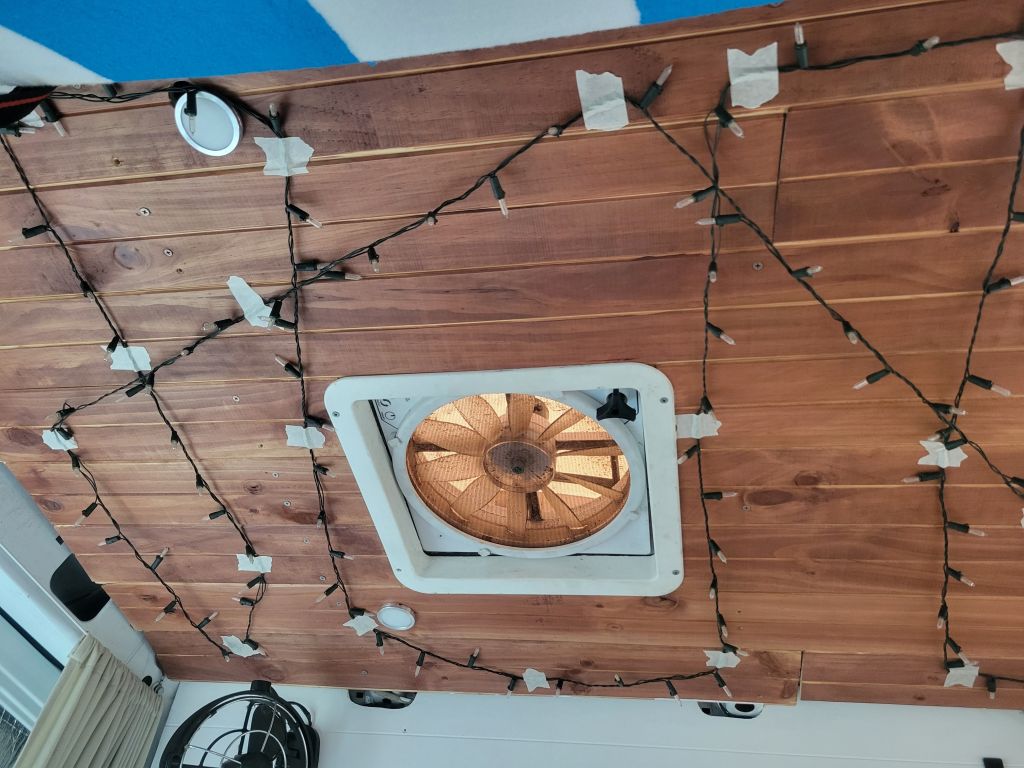
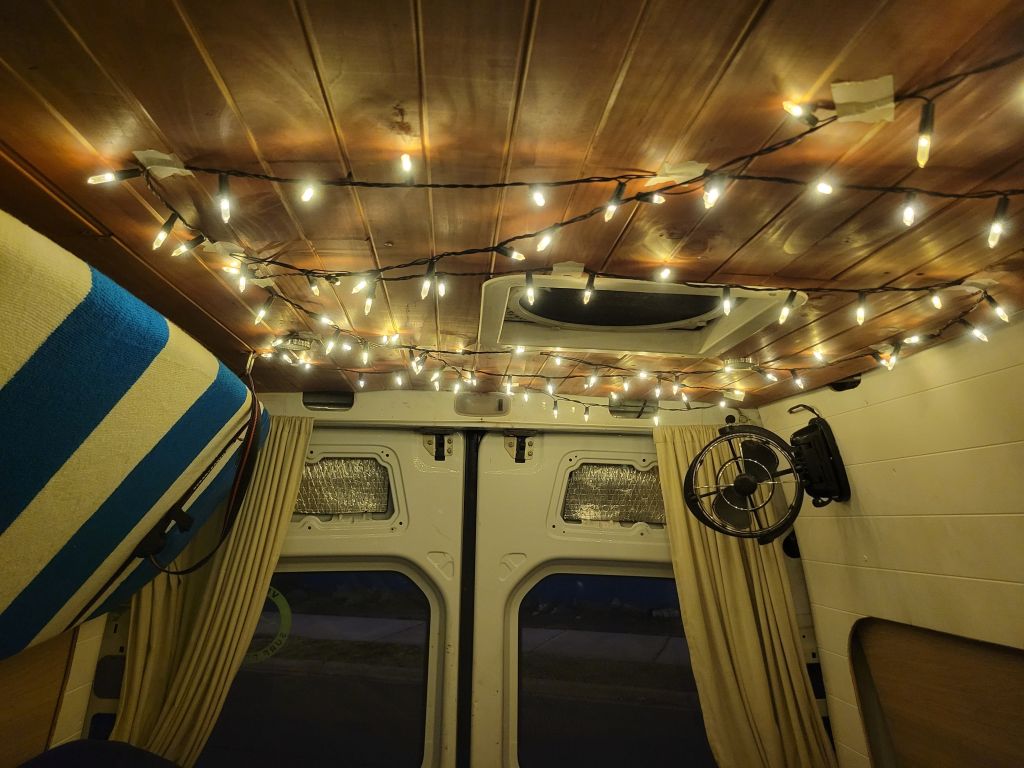
I’ve also been working on the last few errands/purchases to get fully settled into the van. I finally bought a pan, taped up fairy lights so it looks very homey, and bought the materials to fully block out my curtains when I want to. I even went for a run!
Van life in Australia is a bit less straightforward than in New Zealand, and not just because of the camping issues I talked about in the last post. The other thing I’ve been finding tricky is just deciding where to go and what to do. New Zealand is so small, and so dense with incredible hikes, that it was quite easy to just wake up, hike, look at the map for the next hike down the road, and repeat. Here there are a couple of things that make it a bit harder. For one, it’s much bigger (duh). For another, the main activity I want to do these days is surf. But surfing is heavily dependent on the conditions, and the forecast is for very little swell this week. On top of that, I’m only a mediocre surfer, so instead of just looking for the best surf spots I’m actually looking for the least crowded ones, which is a bit trickier to figure out. It seems obvious that the solution is just to drive up the coast and stop wherever looks good, but the geography here seems to be predominantly a series of peninsulas with the beach at least 30 minutes from the main road. That means you have to pick your spots to go check out, or you could spend all day driving back and forth and barely get anywhere. And since I’m not totally comfortable with the totally standard technically illegal camping approach, I’m already doing a fair amount of driving back and forth.
Anyway, these are ultimately minor issues. I’m excited to finally get fully settled in the van, start cooking all my meals, get in surfing shape, read a bunch, and maybe even do some projects. Since they’re almost certain not to actually happen, these projects will remain unnamed.
You can find the videos for this post here. They’re all courtesy of Jennifer, documentarian par excellence. That’s me with the extremely cool hat surfing—look how close those whales are! Look at Daniel failing at sandboarding, even with a push from the guide! Listen to the sound I make when I hit the dune with a flying start! It really conveys the sensation quite faithfully.




































































































































































 A Phil Abroad