Ningaloo

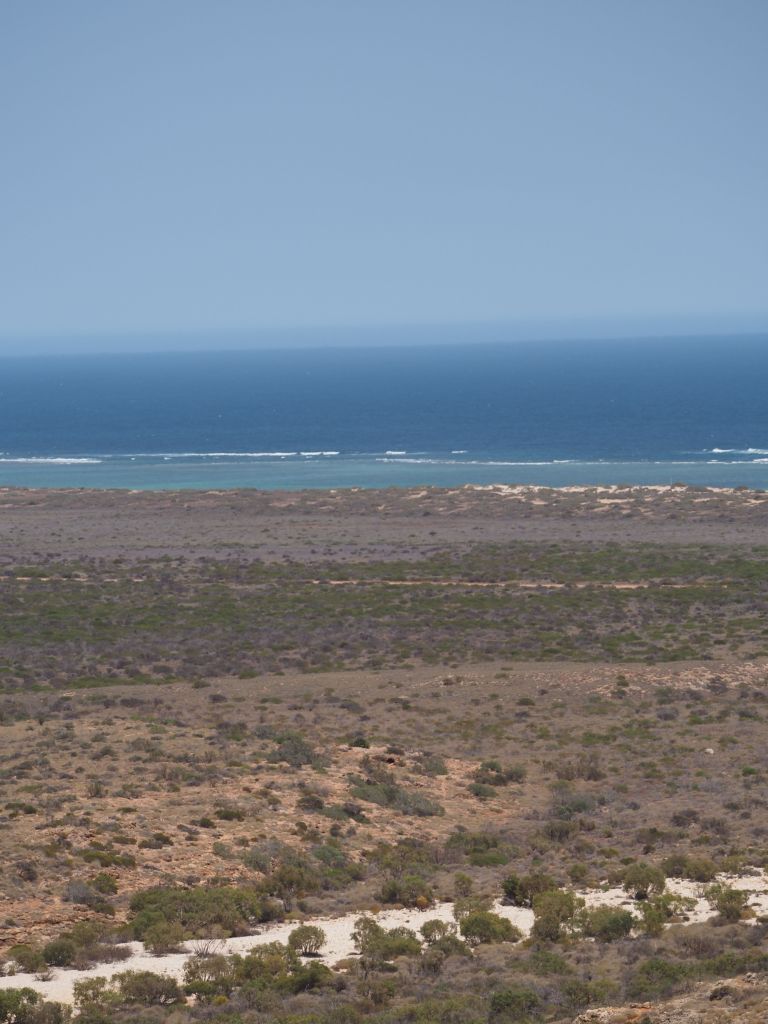
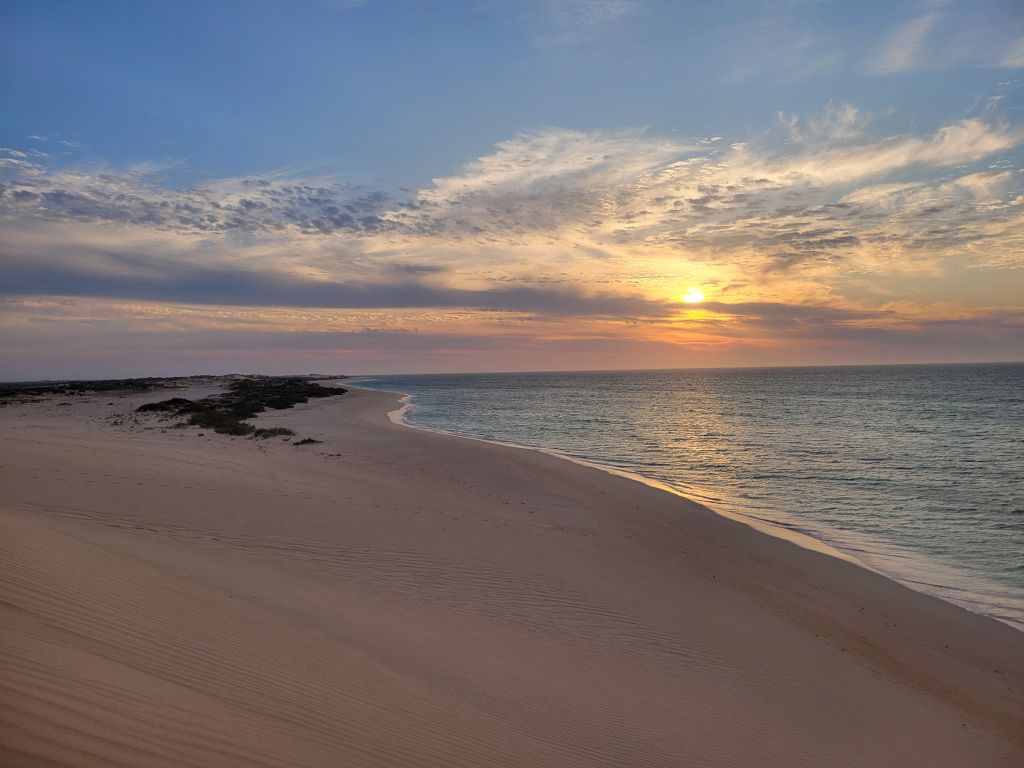
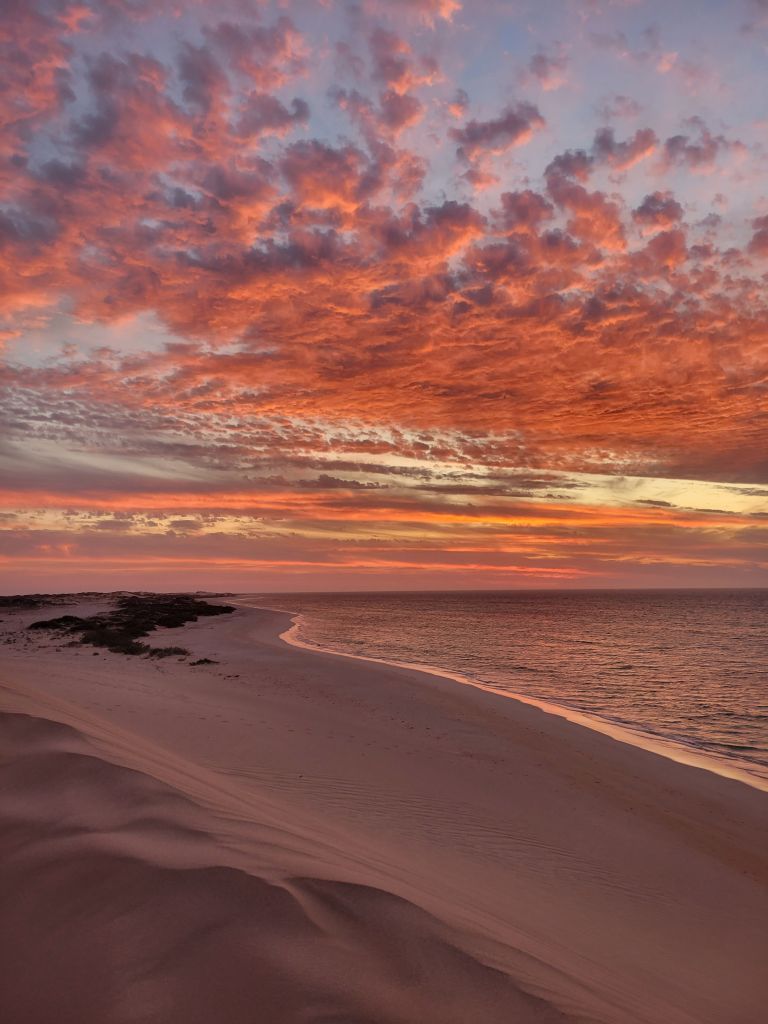
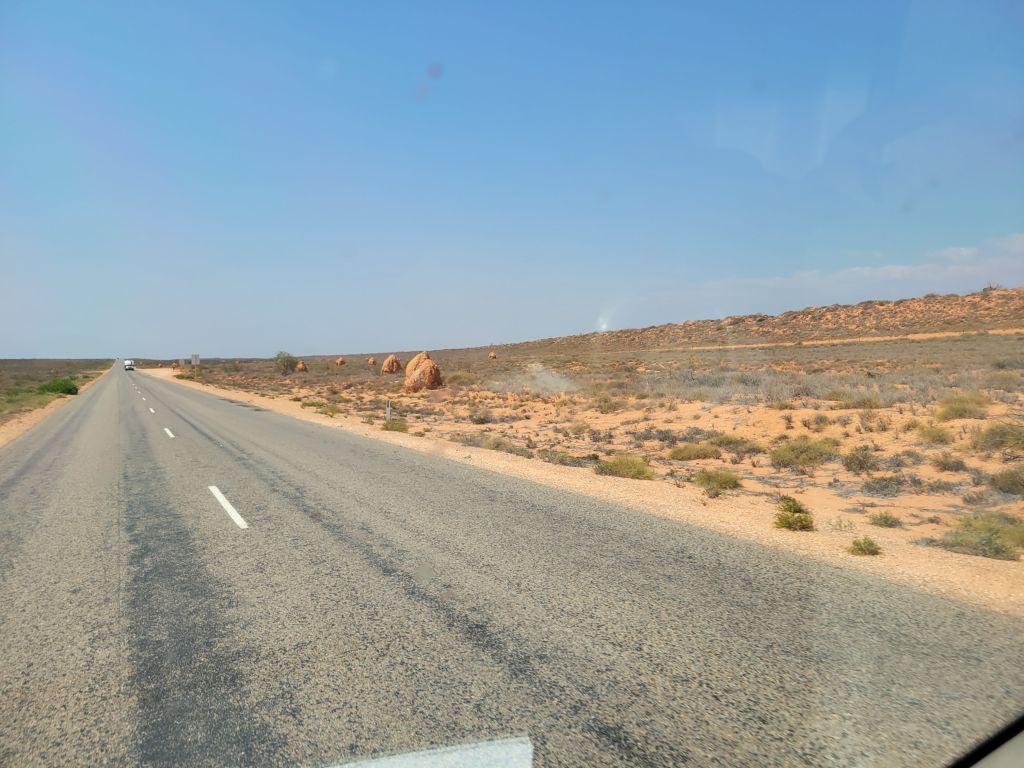
I’ve finally made it to Exmouth and the Ningaloo reef, which I’ve been hearing so much about the whole time I’ve been in Australia. The Exmouth area reminds me a fair bit of a much smaller Baja California—it’s a thin peninsula, pretty much barren desert with a mountain range through the middle, and lots of very cool deep water marine life. Just like in Baja there’s a seasonal whale shark aggregation here and migrating humpback whales, as well as the possibility of seeing manta rays, orcas, sharks, turtles etc… Unlike Baja, however, Exmouth has the Ningaloo reef.

Exmouth itself is a bit of a weird place. It’s a tiny town of only 2-3,000 people that swells to somewhere like 10-12,000 during the height of tourist season. Everything is very expensive and there are generally only 1 or 2 options for whatever you need. During peak season absolutely everything is totally booked, so lucky for me I arrived right after school holidays, which is pretty much the close of the high season. If I had gotten here earlier I’m not really sure what I would’ve done—all the campgrounds book out well in advance, and the town is notoriously strict in stopping people from free camping. Happily that’s only a hypothetical, because while the town certainly hasn’t been empty during my stay, I haven’t had too much trouble getting campsites in the national park.

I made an especially soft landing in the area thanks to an extremely hospitable guy named Roger that I got in touch with through Couchsurfing. He turns out to be a park ranger in nearby Coral Bay and had lots of useful information about the area. He’s traveled all over the world, often meeting people through Couchsurfing, and nowadays hosts travelers when he’s at home. He was extremely generous, hanging out, feeding me dinner, letting me fill up my water tanks, and helping me plan out my stay.

Exmouth town sits on the east side of the peninsula, and is really just a place to get supplies and go on tours. The reef, which is the main attraction here besides whale sharks, runs along the western side of the peninsula, which is all a national park. Some fun facts—it’s the biggest fringing reef in Australia, at 260 kilometers (160 miles) long, and at certain points it’s less than 500 meters (about a third of a mile) from shore. I guess the proximity to shore is what makes it a fringing reef rather than a barrier reef like the, um, Great Barrier Reef, which is way way way bigger but also much farther from the shore. What all this means is that you have your pick of absolutely incredible snorkeling just swimming out from the shore.

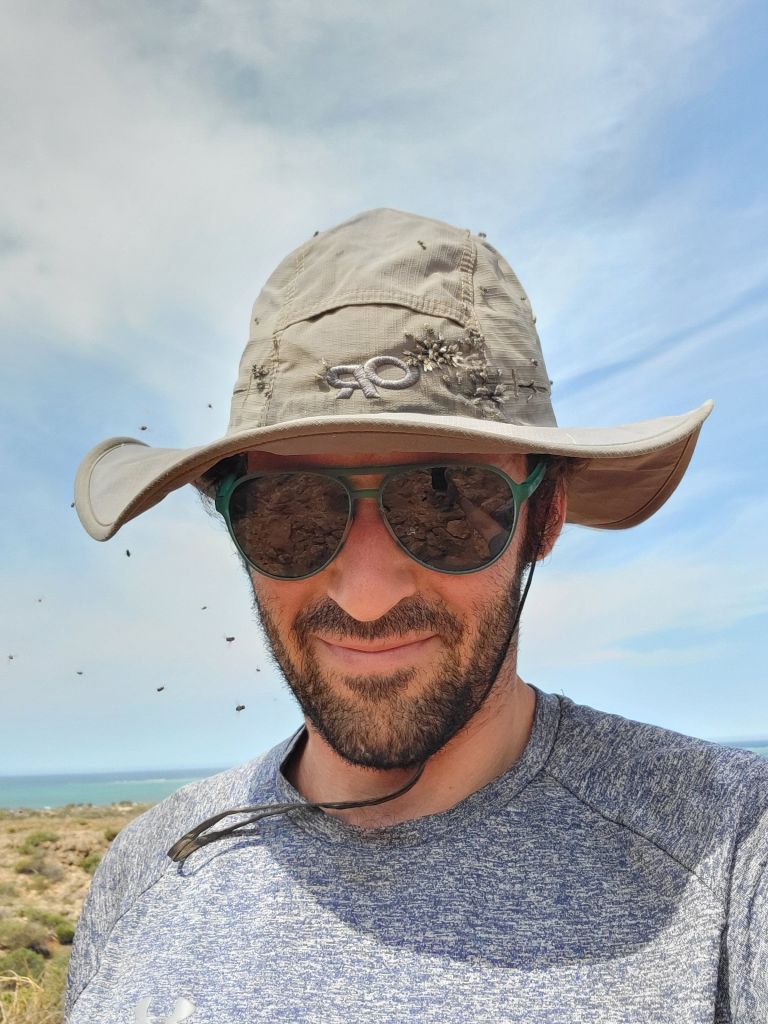
After a couple of nights staying with Roger I loaded up on supplies and headed over to the park for 4 nights camping and snorkeling my little heart out. As it happens, besides the departure of the whale sharks, tourist season wraps up this time of year because it gets very windy, extremely hot, and infested with flies. And I have to say, I think I have a reasonably high tolerance for these kinds of things, but this was a bit of an exercise in finding exactly where the limit is. The first few days I spent in the park, where there is essentially no shade or shelter, all saw temperatures getting up over 40C (104F), with several days around 43-44 (109-111F). Overnight and into the morning the wind would blow in from the east, over the desert, bringing hot air and really giving the sensation of a fully body hair dryer. Temperatures would be over 30C (86F) by 6am and heating up fast, so sleeping in was pretty much impossible. And the second you emerged you would be absolutely swarmed by flies looking for all the nooks and crannies (mostly eyes and nostrils) of your face. Videos don’t capture it that well, but they give you an idea.

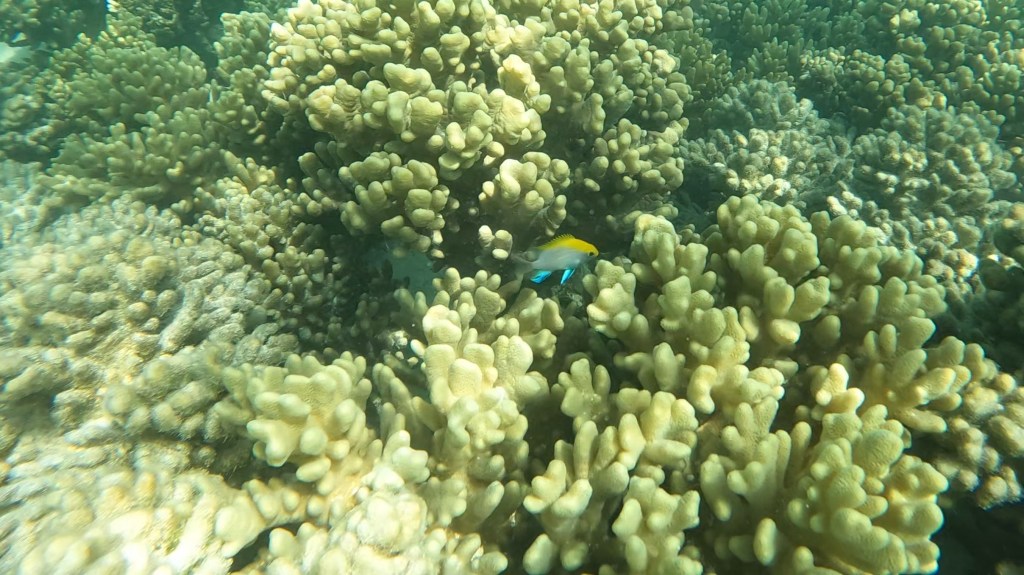
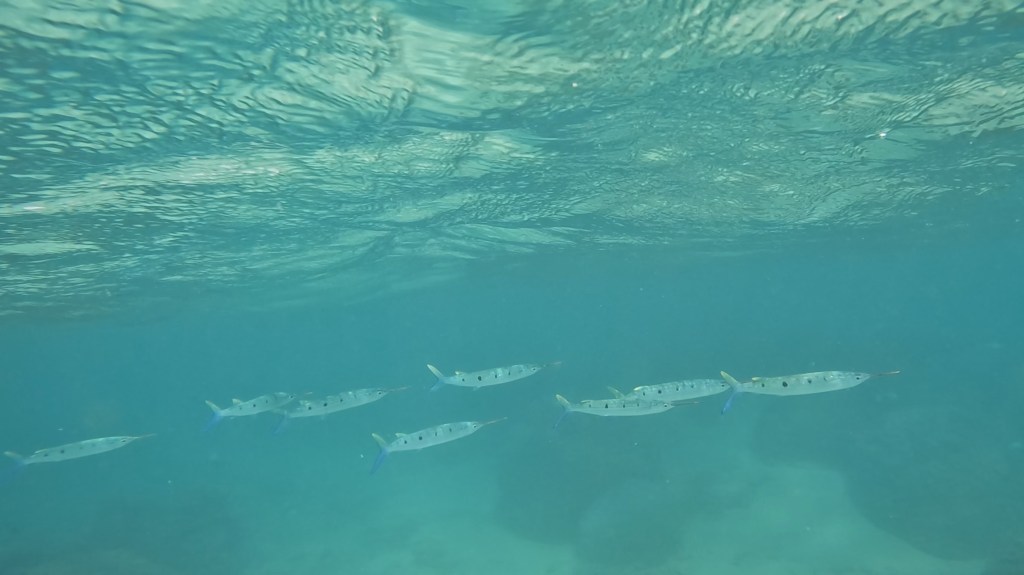
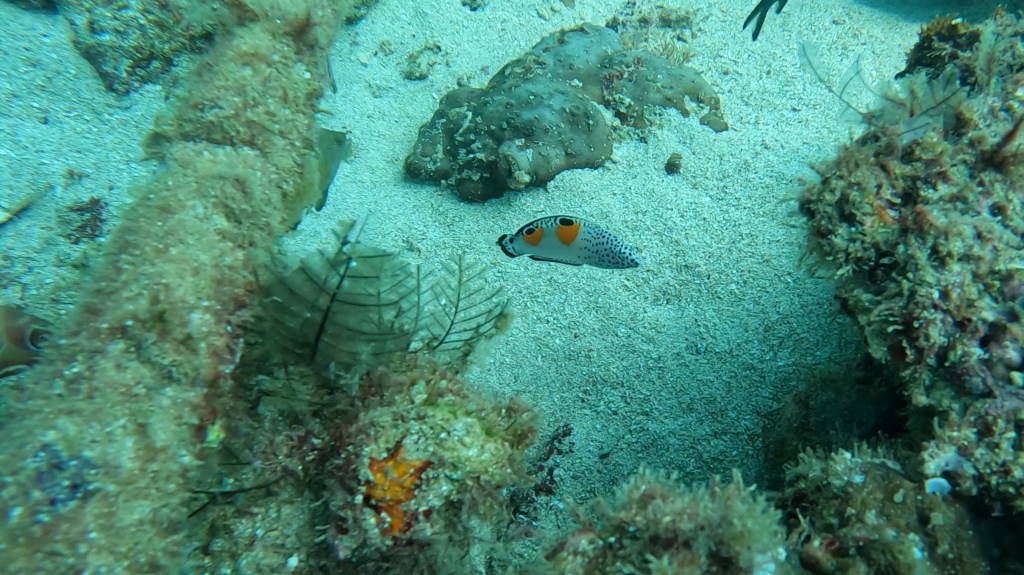
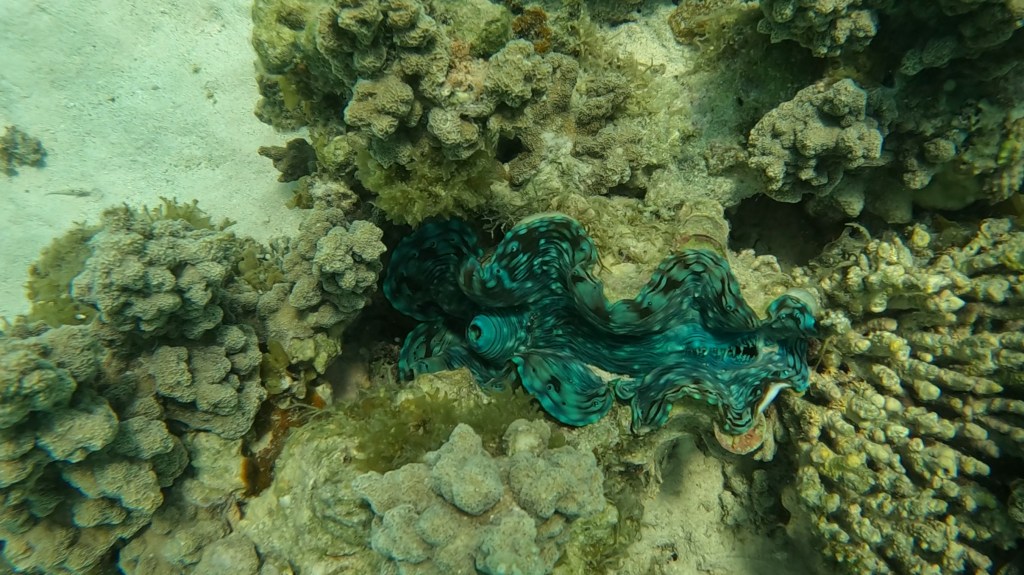
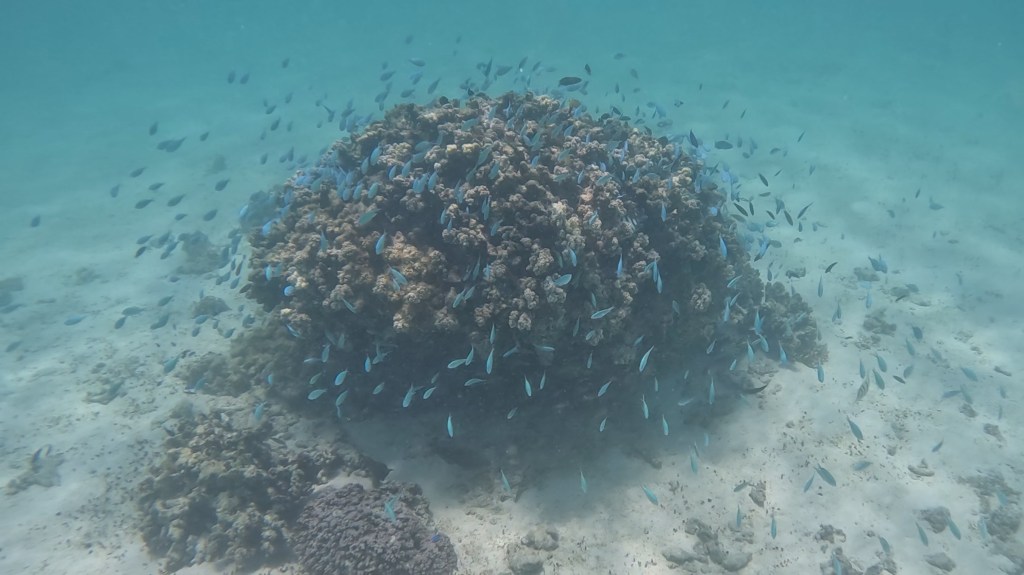
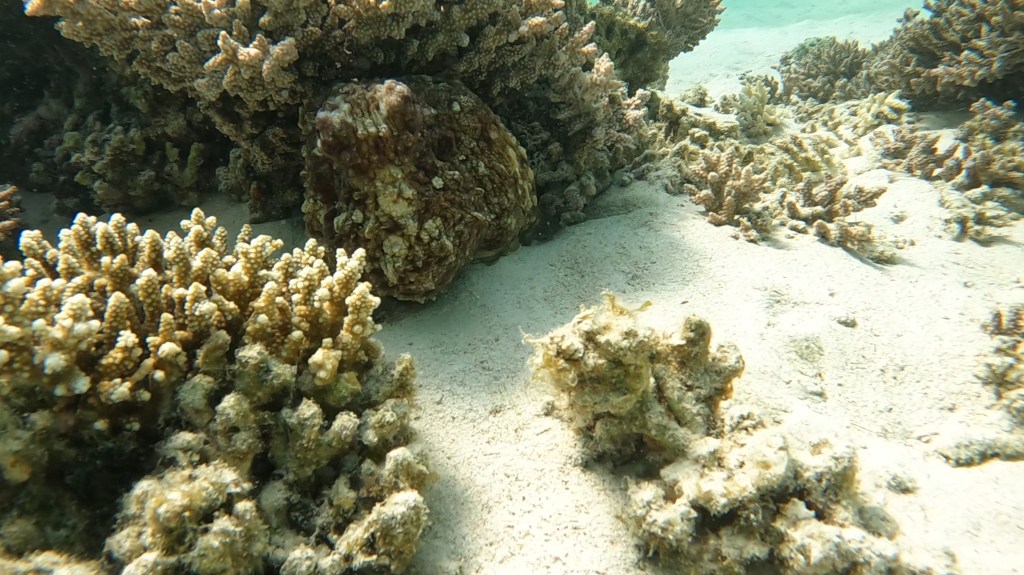
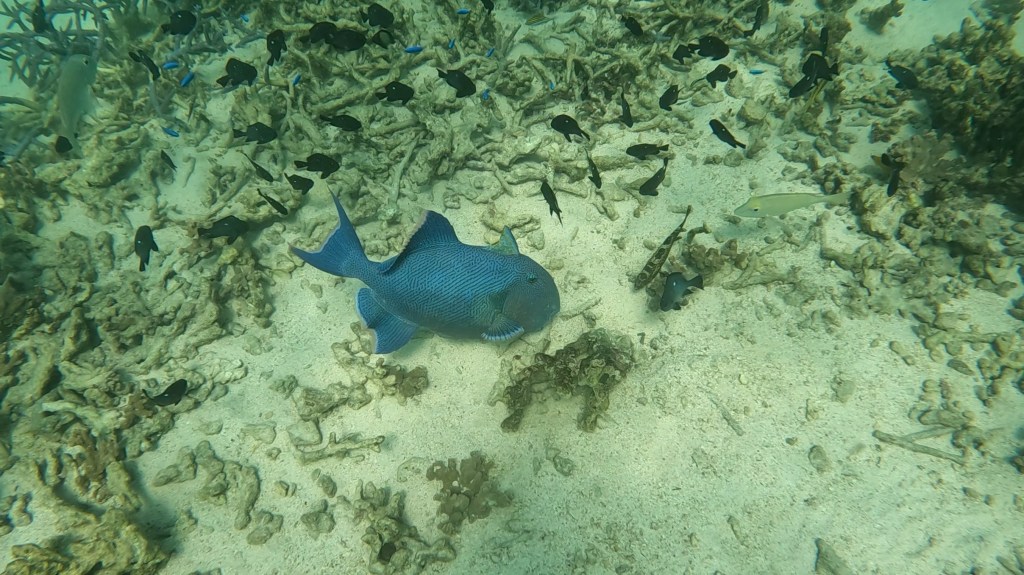
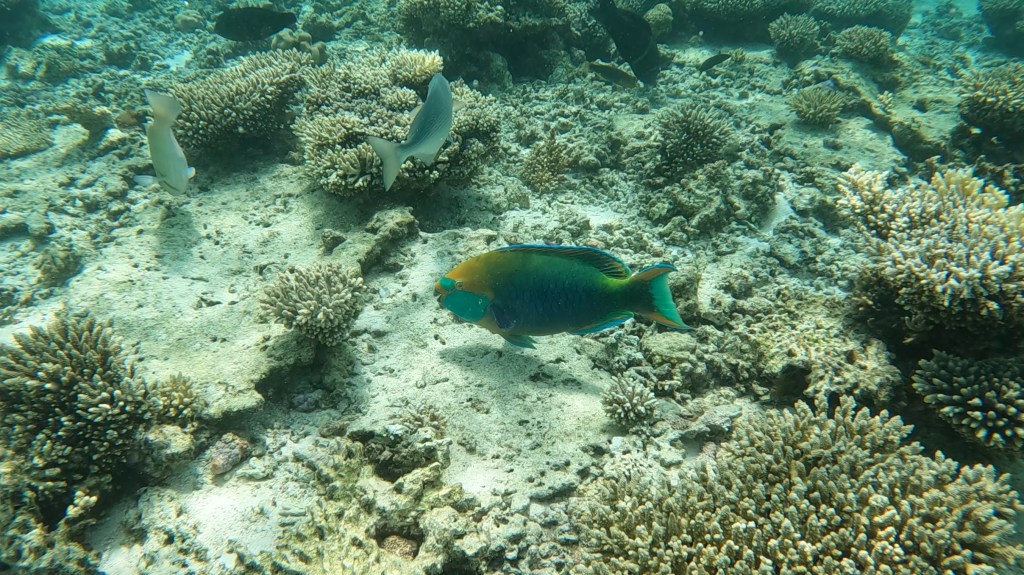
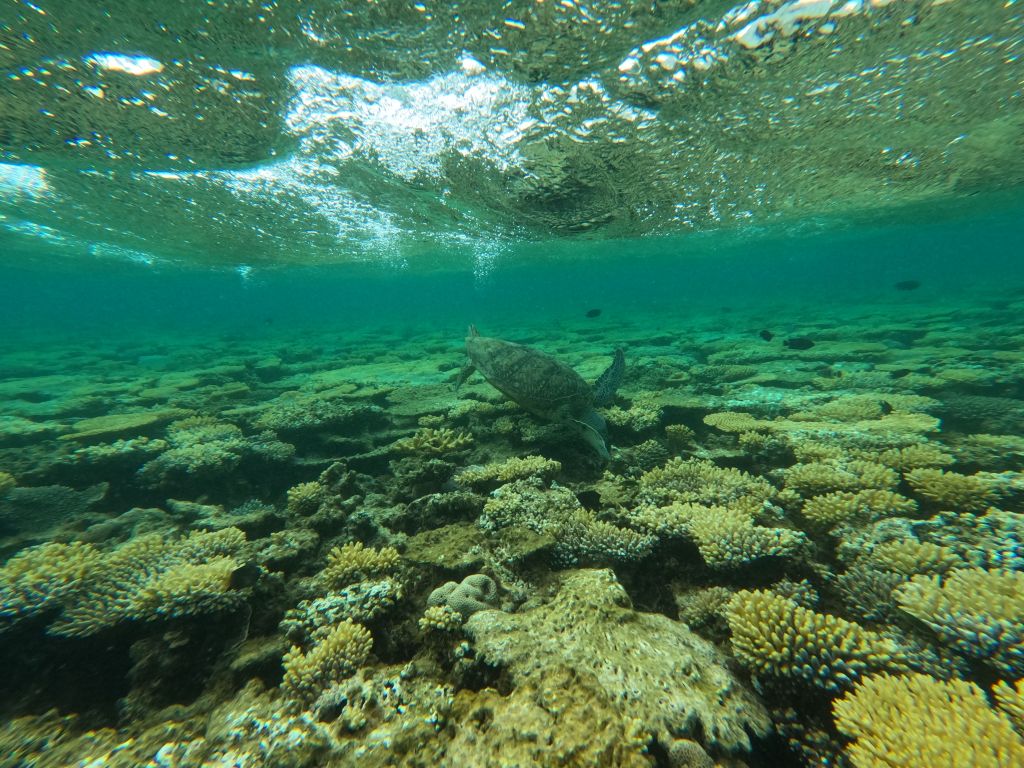
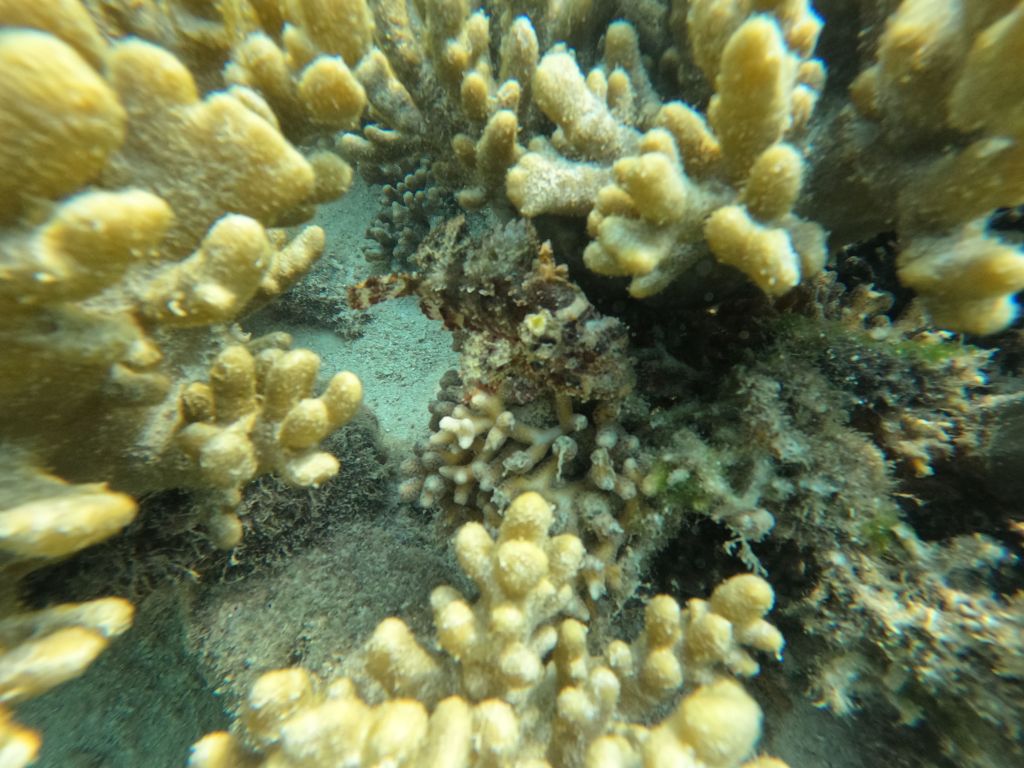
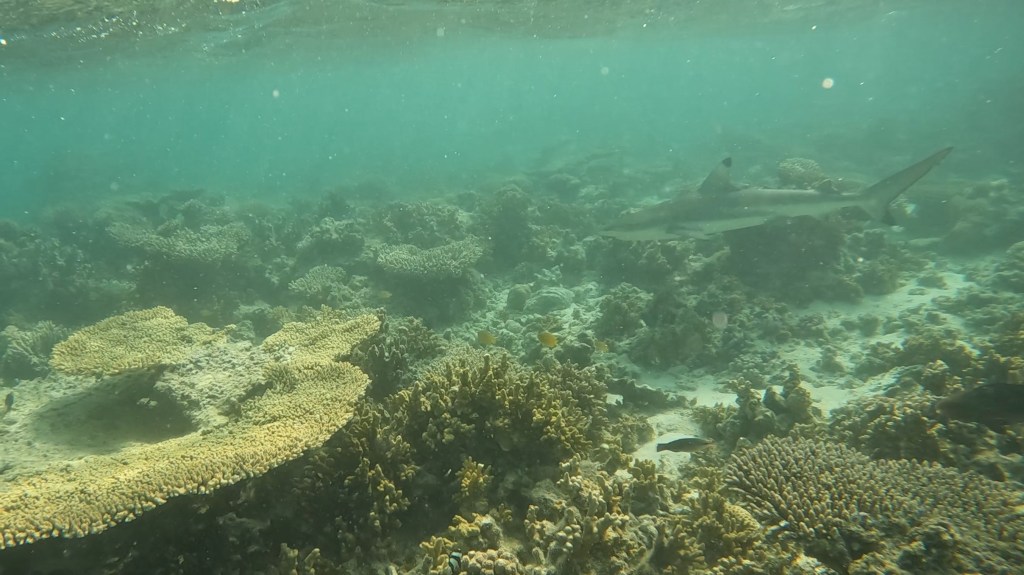
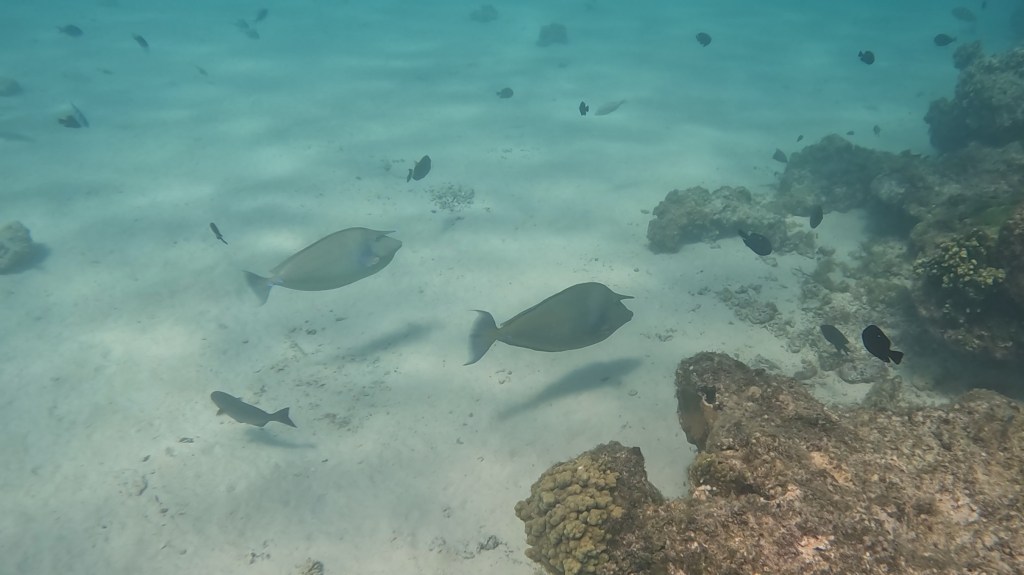
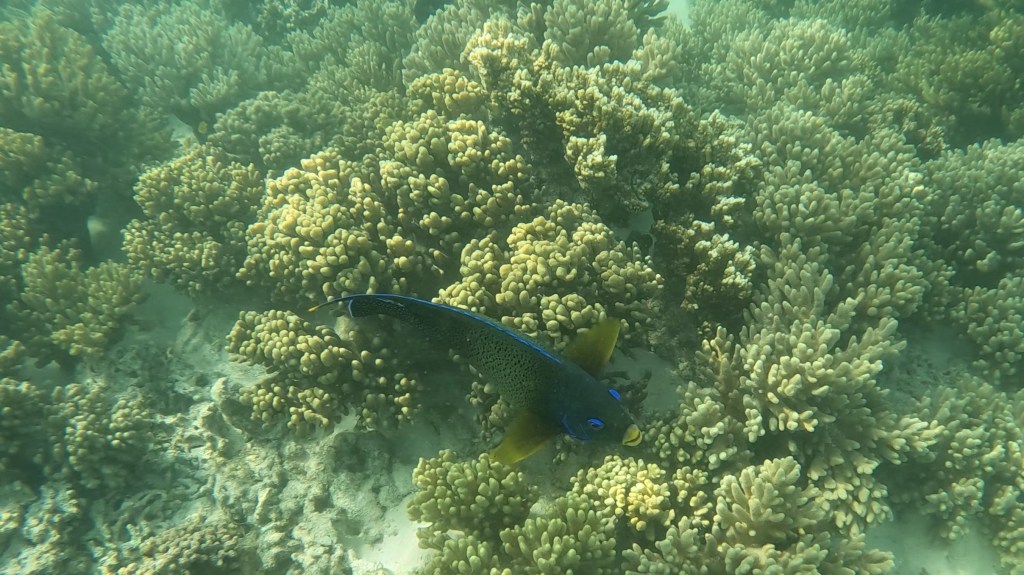
The saving grace of all this was that the main activity I was interested in, snorkeling, solved all these problems. So the thing to do was just spend 6 hours every day snorkeling, covered up as much as possible to blunt the sizzling sun. And the snorkeling here really is amazing. I saw buckets of turtles, lots of skittish reef sharks, tons and tons of fish, sea cucumbers, some octopus, huge groupers, fields of beautiful coral, one very well hidden stonefish, and probably much more I’m forgetting. You can take a look at a handful of videos here.
On my first night getting into the park I pulled up to my campsite, looked across the road at my neighbors hanging around outside their trailer, and went “holy crap, I know that guy”. It turned out that the lovely family I’d spent a day walking around Leliyn Falls with a month and a half ago were in the site right next to mine. What a world! It was great to see them again, they’re very nice and fun to spend time with, and it was good for my little heart to spend some time in a family dynamic again.

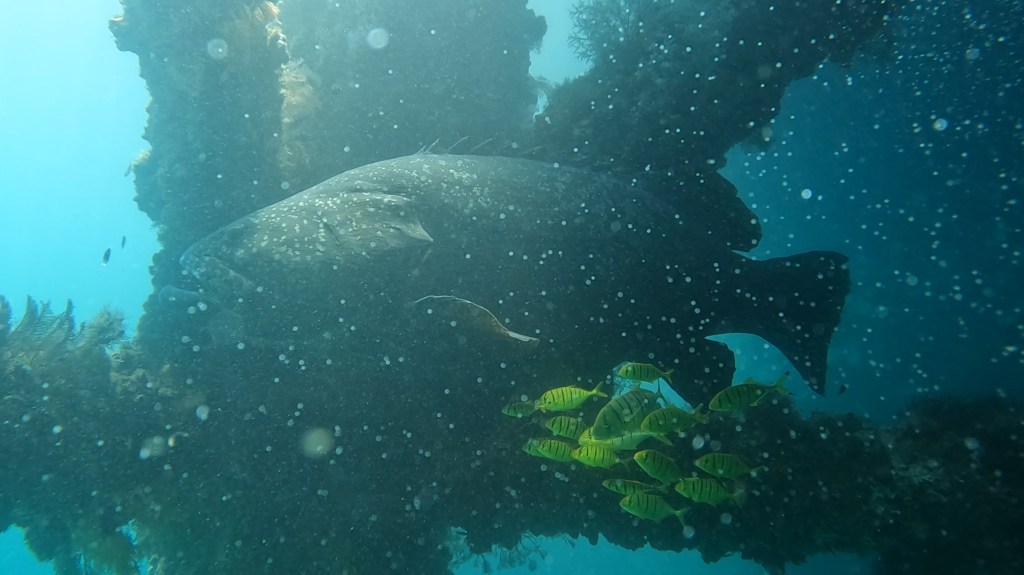
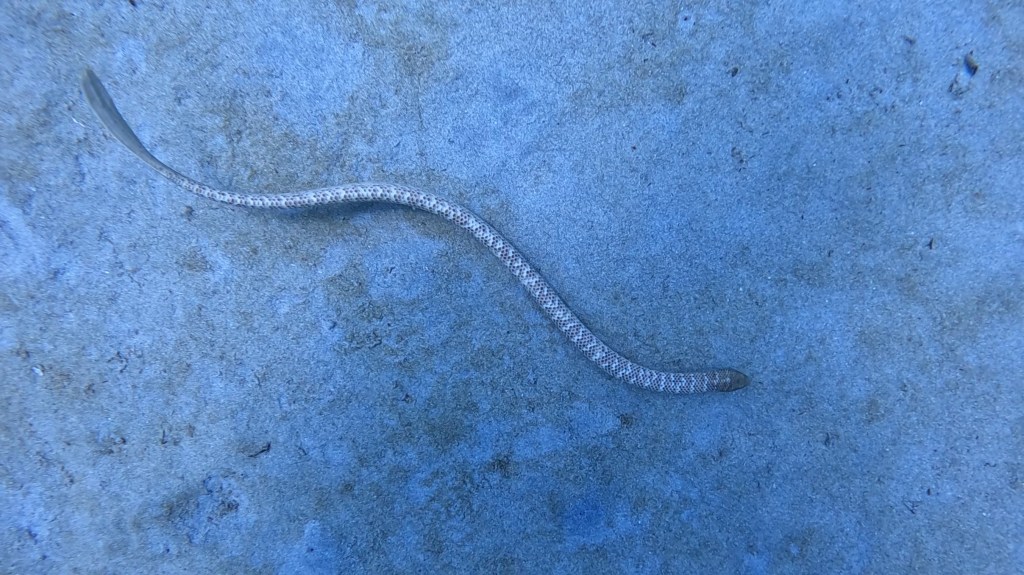
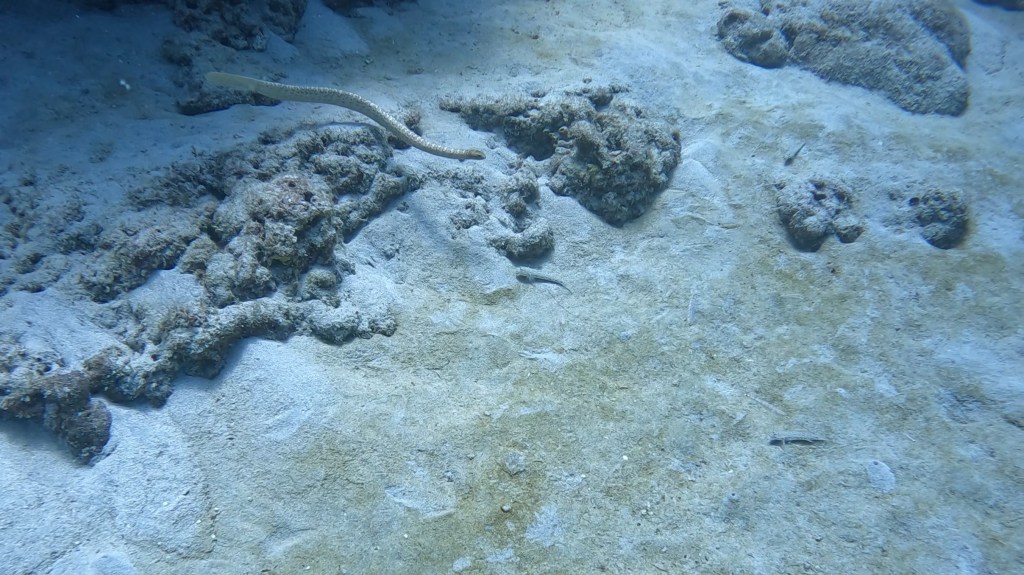
Another big attraction in Exmouth is the navy pier dive. This is a pier on an active navy base that they allow the public to SCUBA dive at. The pier supports are covered in all kinds of beautiful coral, and there are massive schools of fish, sharks, octopus, and truly titanic groupers that hang out there. It was fun to strap on the ole SCUBA gear again and the marine life was really amazing, all in this small area. I enjoyed the dive tremendously. The next day I did a dive out in a bay where the main attraction is a manta cleaning station, but unfortunately we didn’t see any mantas, and it wasn’t nearly as interesting as the navy pier dive. I did get to see a couple of sea snakes though, which was very cool.

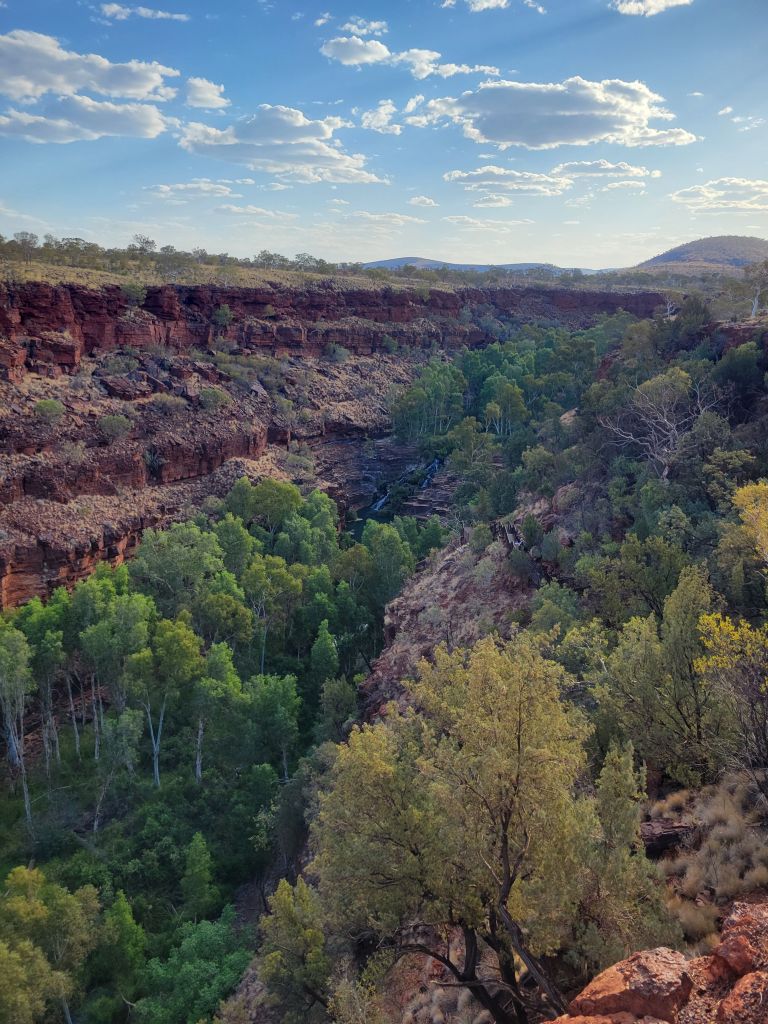
There are also a couple of gorges in the national park that you can walk through, eventually climbing up onto the rim and getting a view out to sea. I was keen to check these out for a change of pace, and of course I went for it on the hottest day I was here. The gorges were nice, the sun was sizzling, and the flies were ravenous. I still had a pretty good time and got that good bone deep tired feeling by the end.

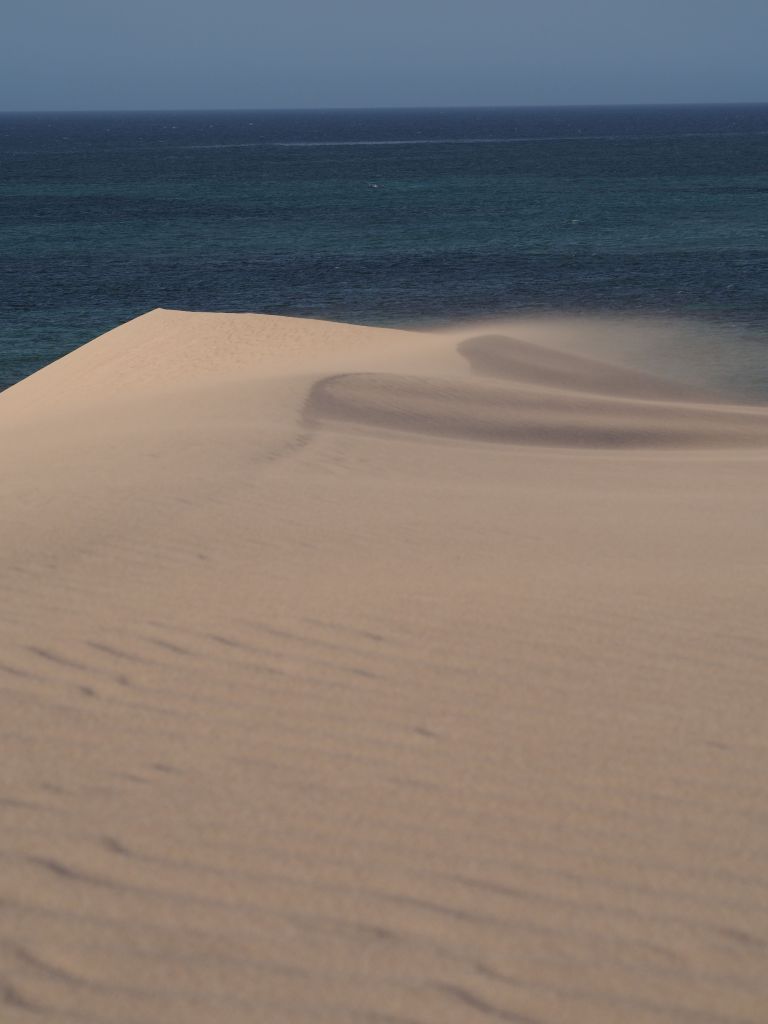
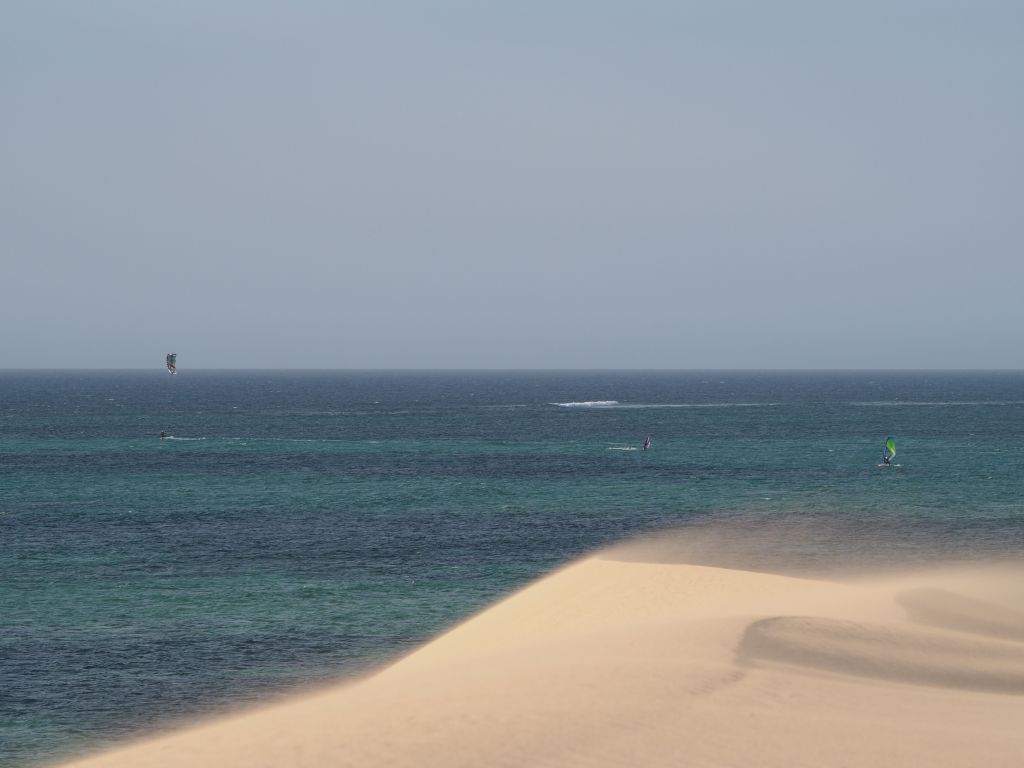
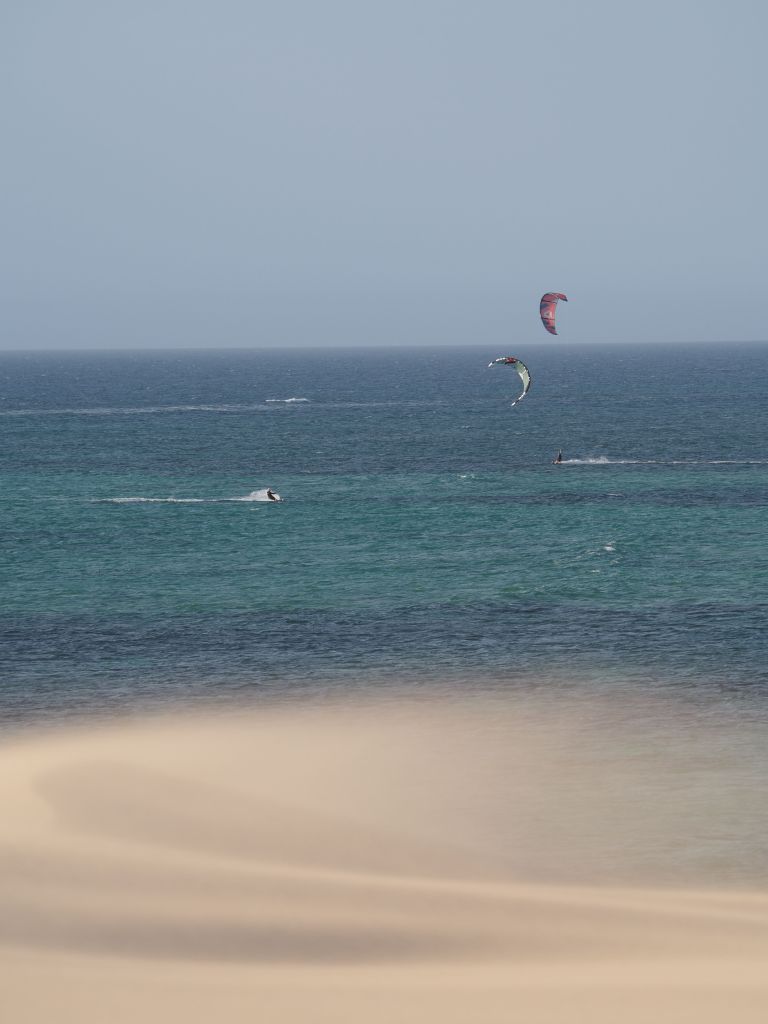
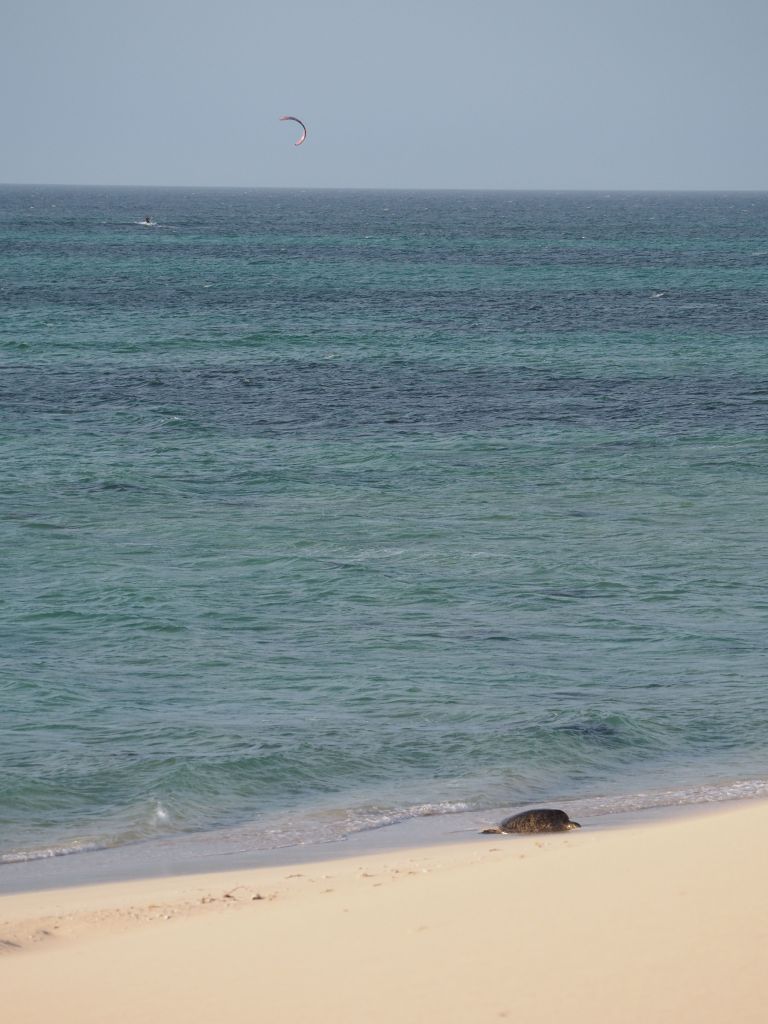
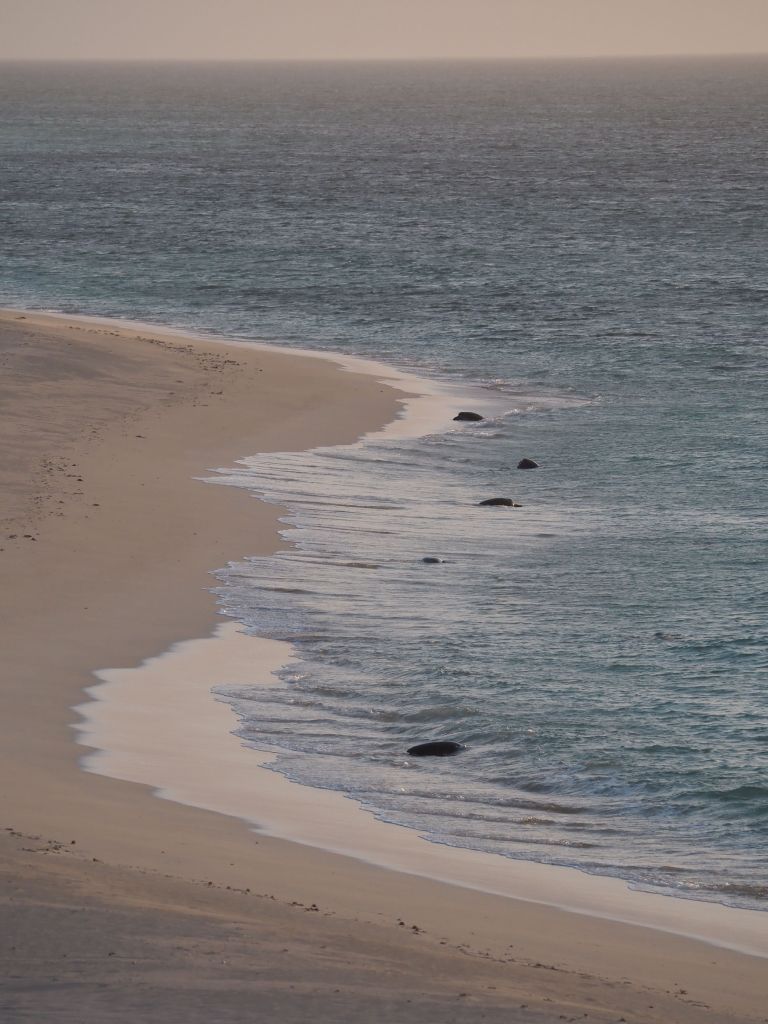
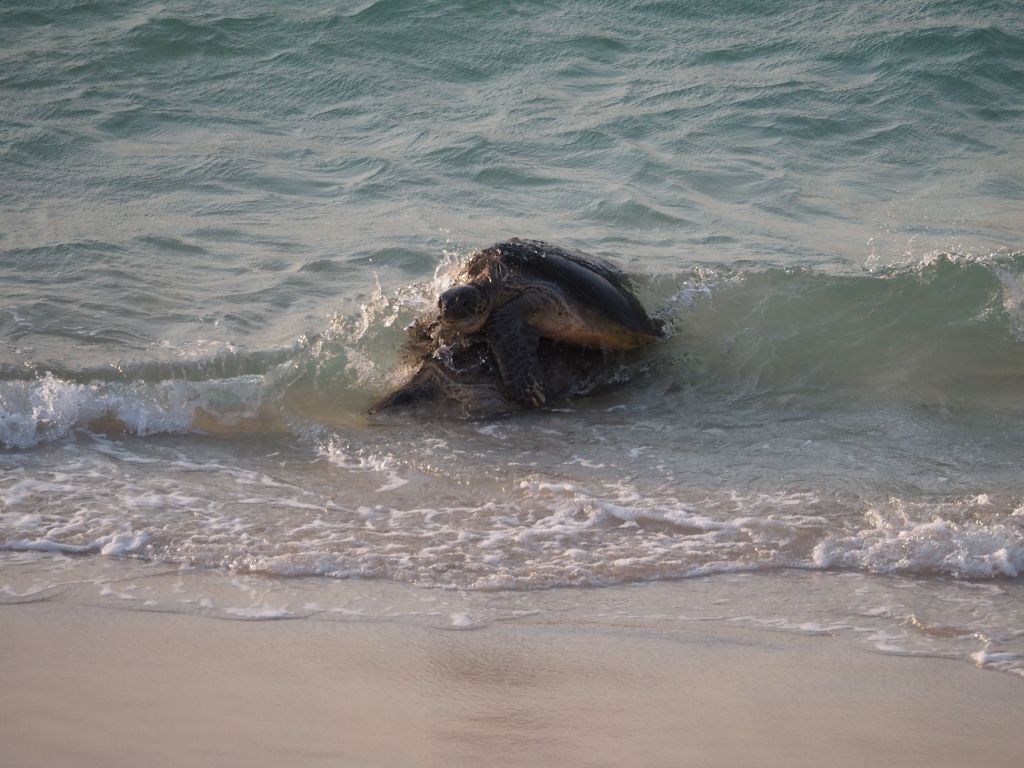
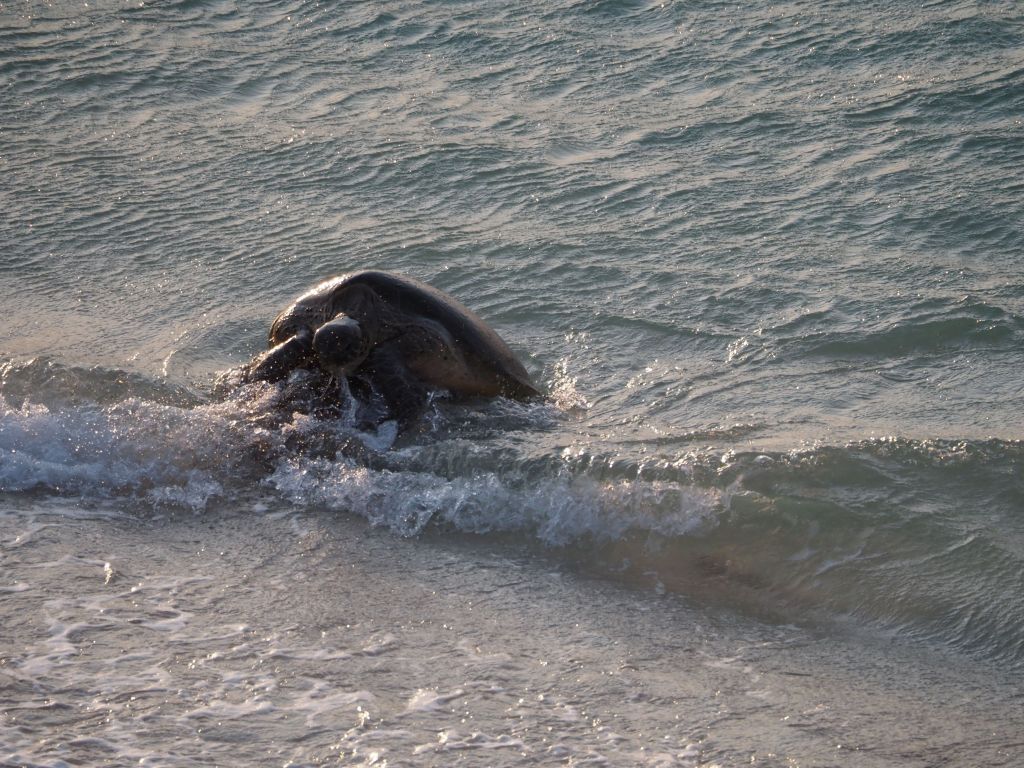
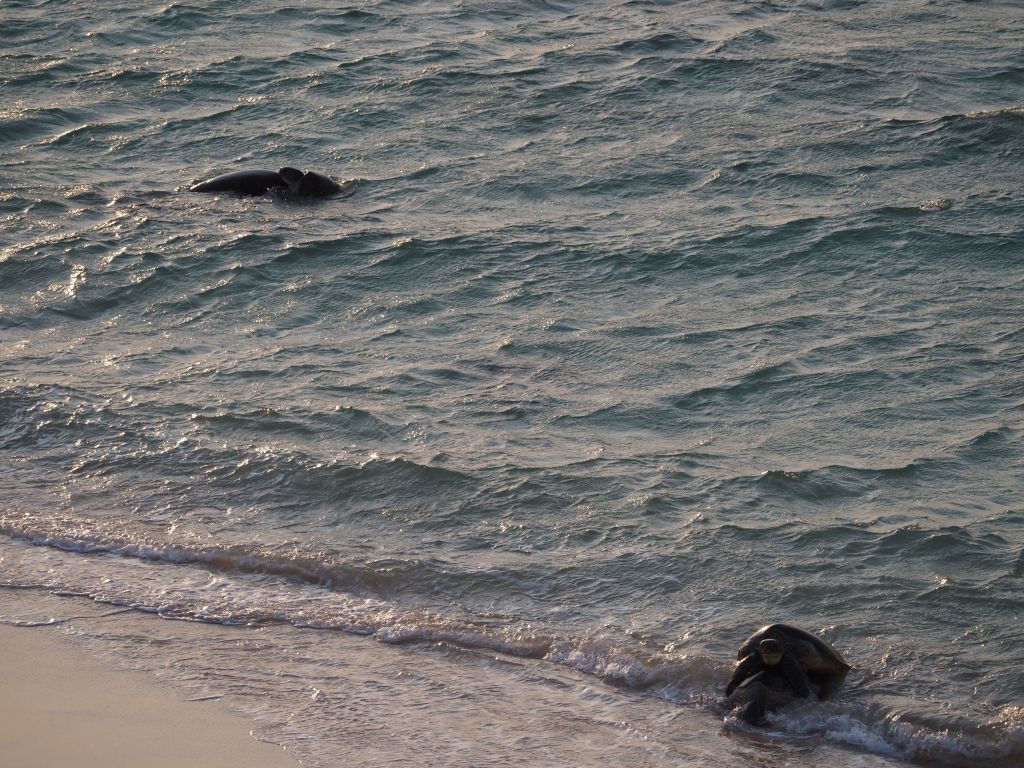
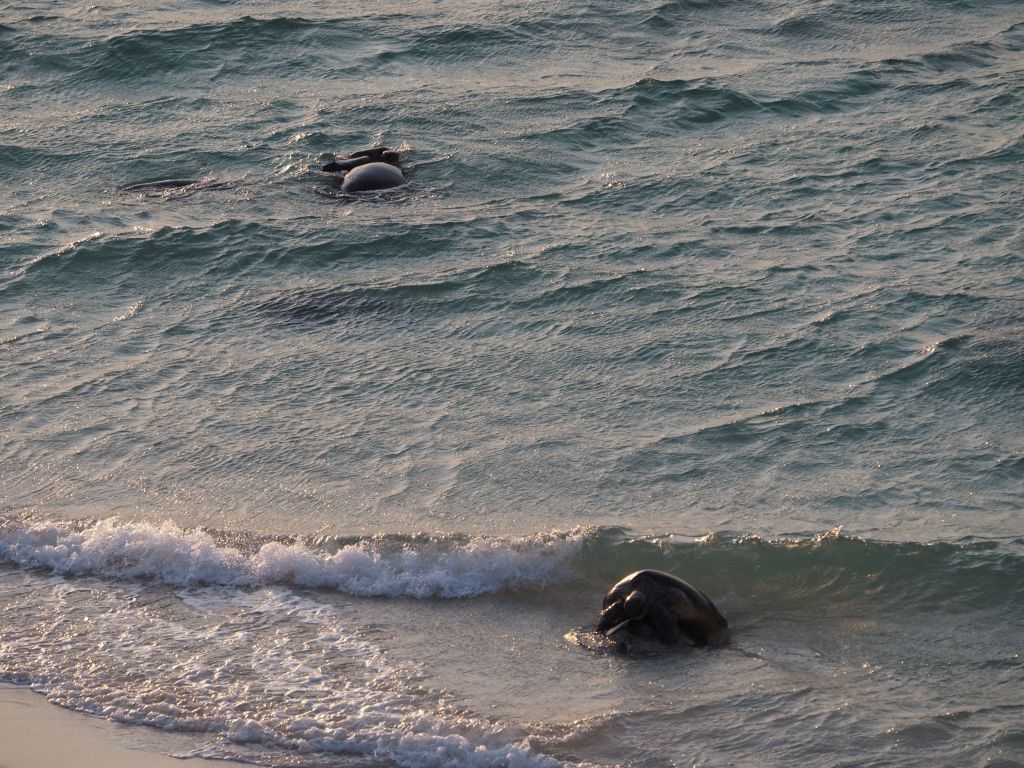
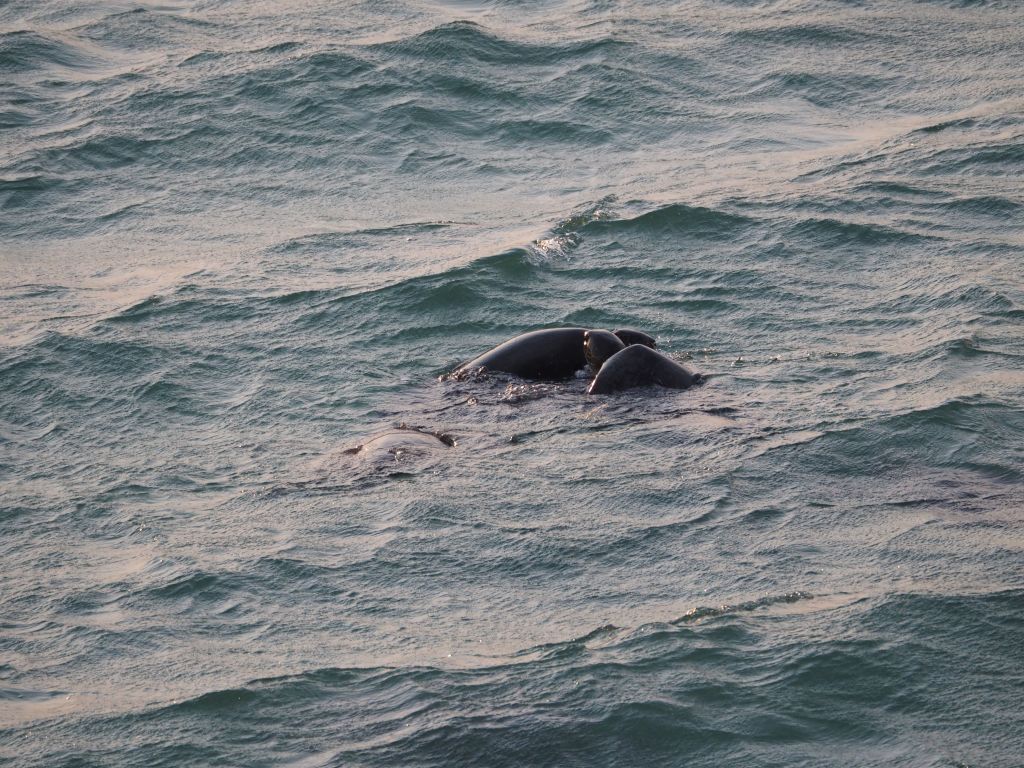
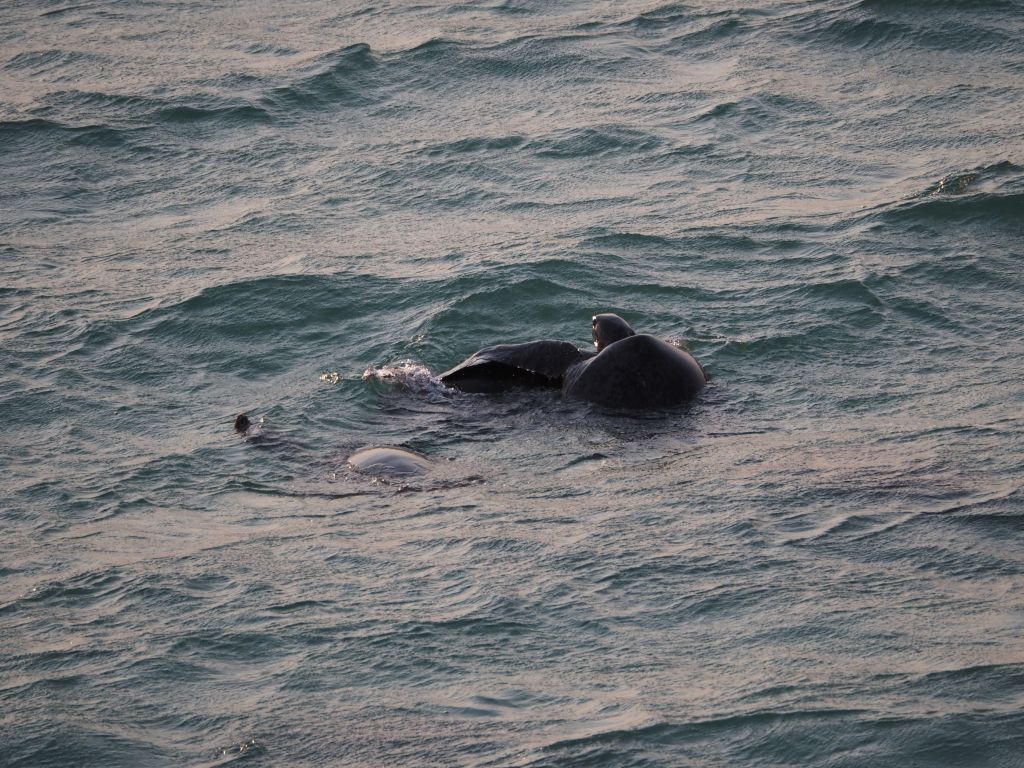
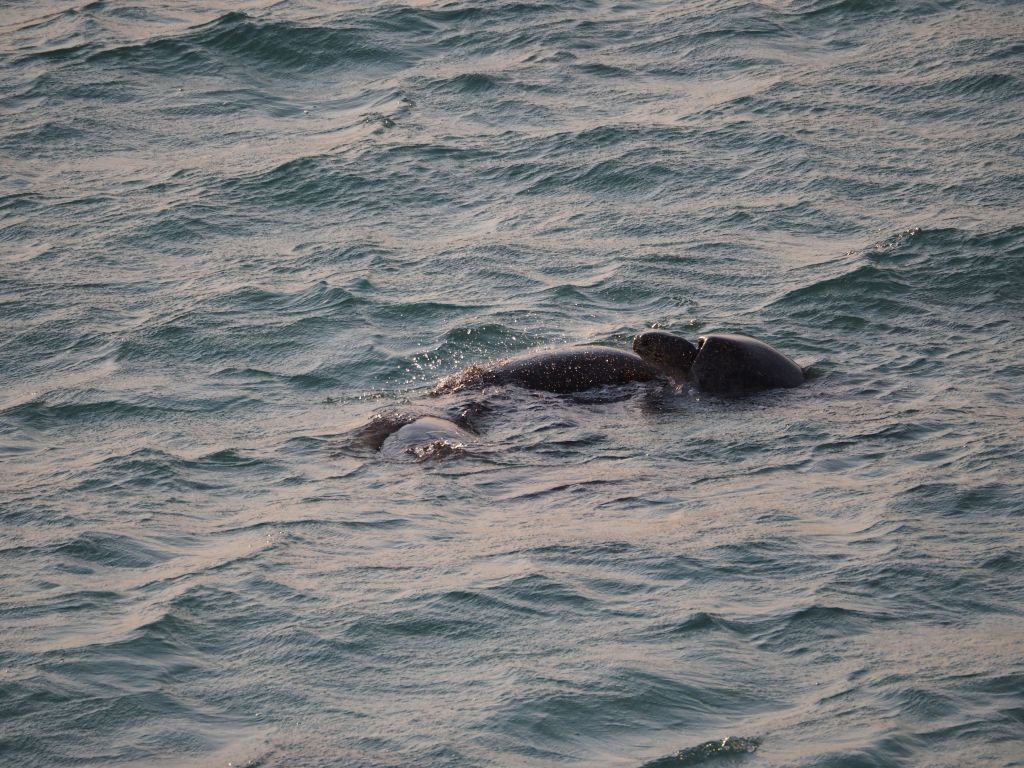
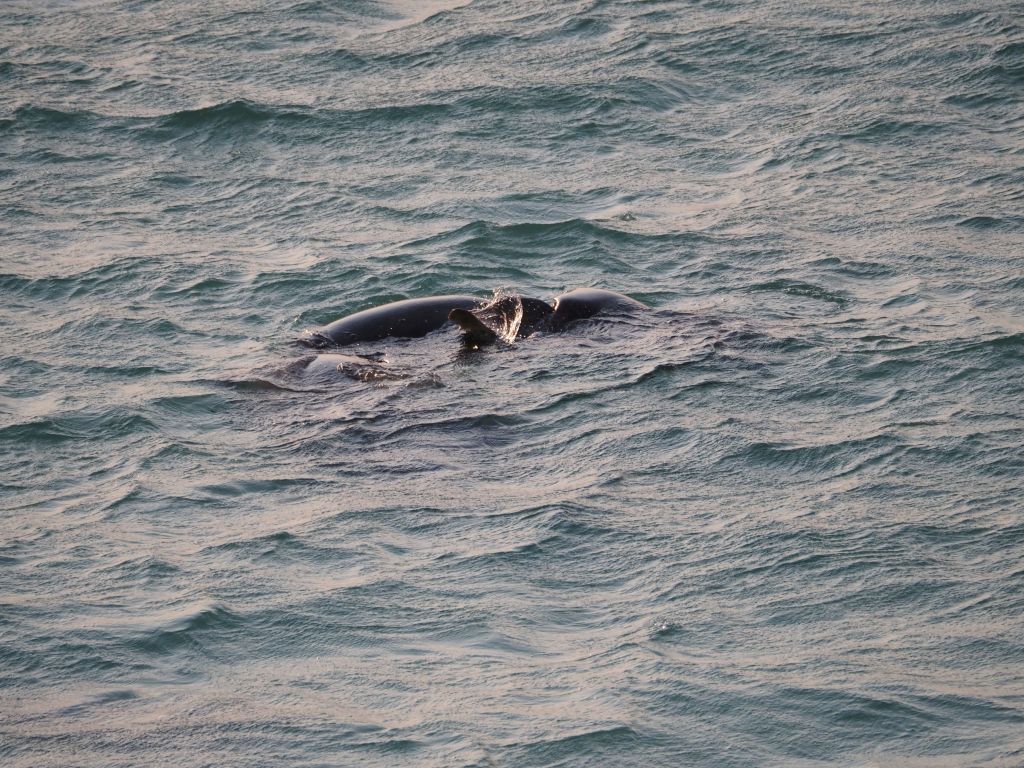
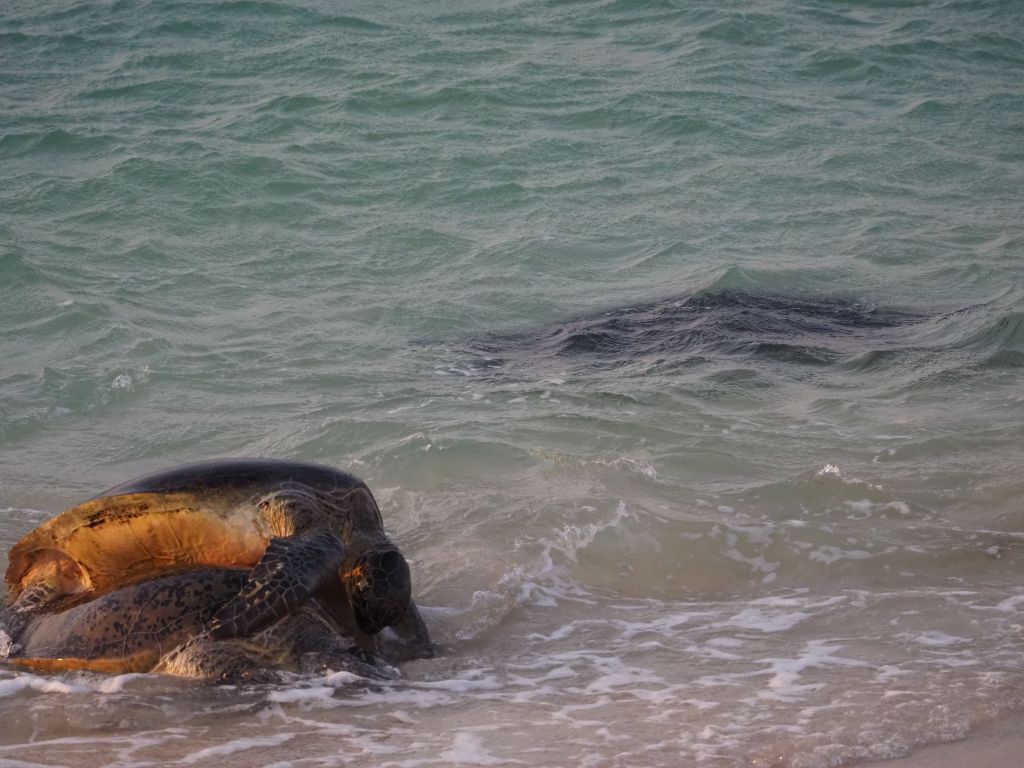
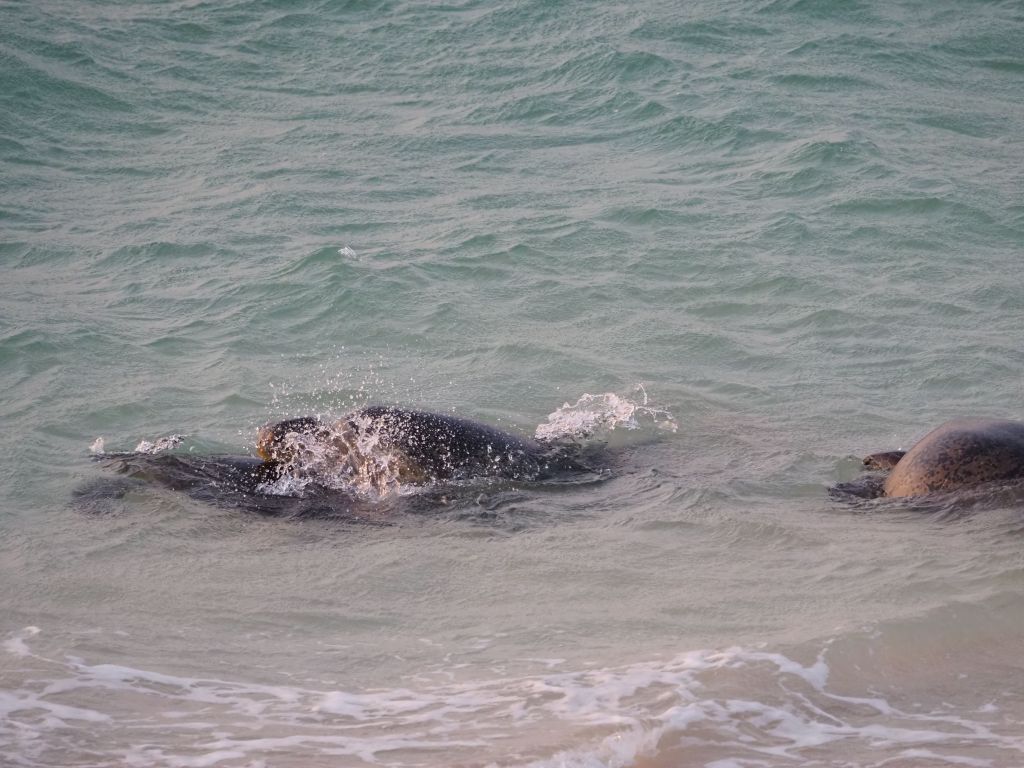
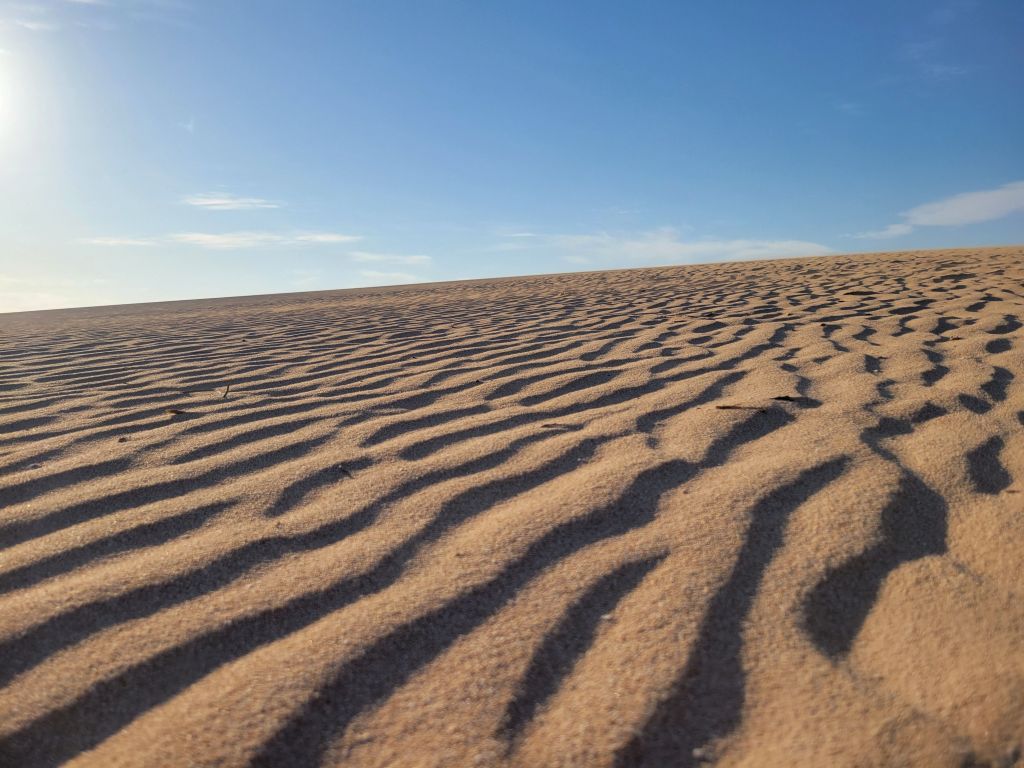
Lastly, Ningaloo is an important breeding ground for green, hawksbill, and loggerhead turtles. There’s a beach in particular where you can see huge numbers of massive loggerhead turtles, either doing the deed (frankly a pretty brutal sight, the males are relentless) or resting on the beach. The giant sand dune right there gives a great view down onto the water, where there are dozens of huge splotches showing turtles hanging out in the bay. In a little while the females will be nesting, and in another month or three the hatchlings make the dash for the ocean, but right now mating is the show.
That brings us to the present day, and the end of my time in Exmouth. Today I’ll be kicking around town writing this blog post and stocking up. Tomorrow morning I’ll get up early and head to Charles Knife canyon and the Badjirrajirra trail, and then continue south to Coral Bay, hopefully in time to catch some sharks at the shark nursery there. After that I’ll just be making my way down the coast, picking stops here and there, and eventually getting to Perth and the southwest, which I’ve consistently heard is beautiful. I can’t wait! You can see videos for this post here, that’s where most of the good stuff is.
Karijini and the Pilbara

It has been a tremendous few days exploring Karijini National Park and driving through the Pilbara region, though it didn’t get off to a very auspicious start. After my night spent outside of Port Hedland, at a free camp right next to a mine, I got up and headed towards Karijini. When I got to the last roadhouse before the park I discovered that the road was closed. Apparently there was a terrible accident, “car vs road train” as one Aussie described it to me, and the cleanup and/or forensics work was ongoing. To make things even trickier, no one had any idea how long the road would be closed, but several days was a distinct possibility.

It was only about 9am and I couldn’t decide what to do. I could just hang out at the roadhouse, in truly the absolute middle of nowhere desert, with nothing to do and 100 degree temperatures for $30 a night. I could go back to Port Hedland, get an alignment, and just kick around. Or I could try the alternate entrance into the park, going across the north and looping around to the west side, which would entail around 90km of dirt road. There was no real risk of getting stuck, and the road sees a fair amount of traffic from the several mines in the area, so it was more a question of whether my van (or my teeth) could handle what might be several hours of bouncing along a corrugated road.

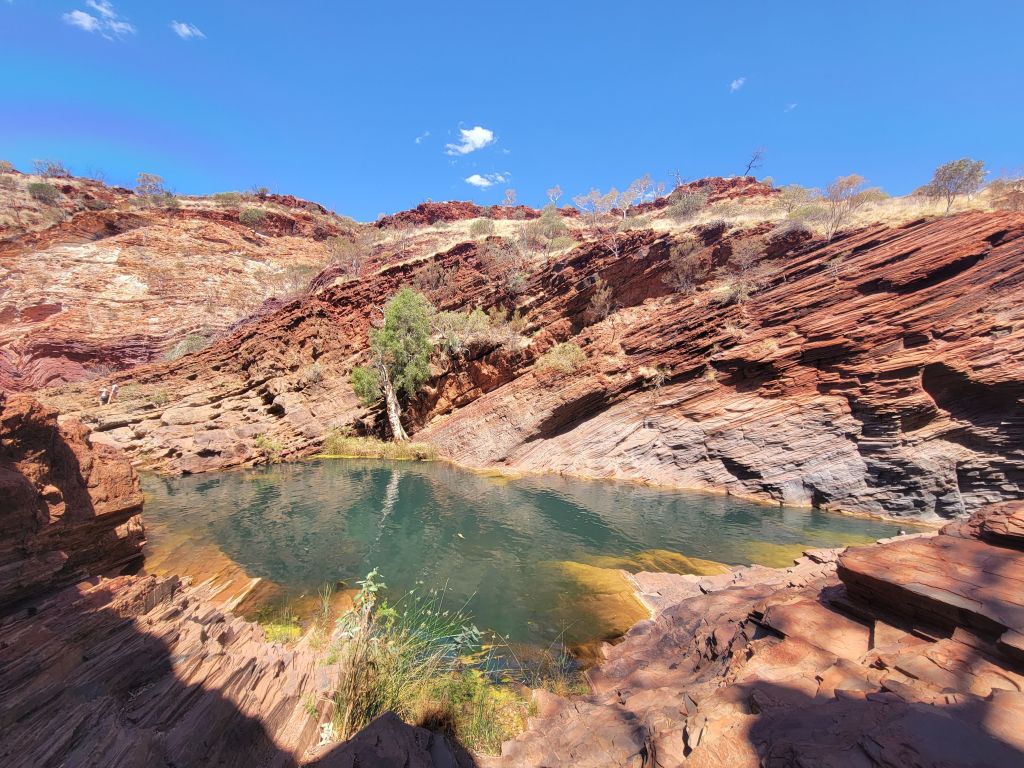
I hemmed and hawed for a long time, chatted with some other travelers, and after hearing from a guy who worked in the area that the road was well maintained and in decent shape, decided to go for it. Good news, he was right! The road was fine and the drive went by pretty quickly. I got to my first stop, Hamersley Gorge, right around lunchtime.

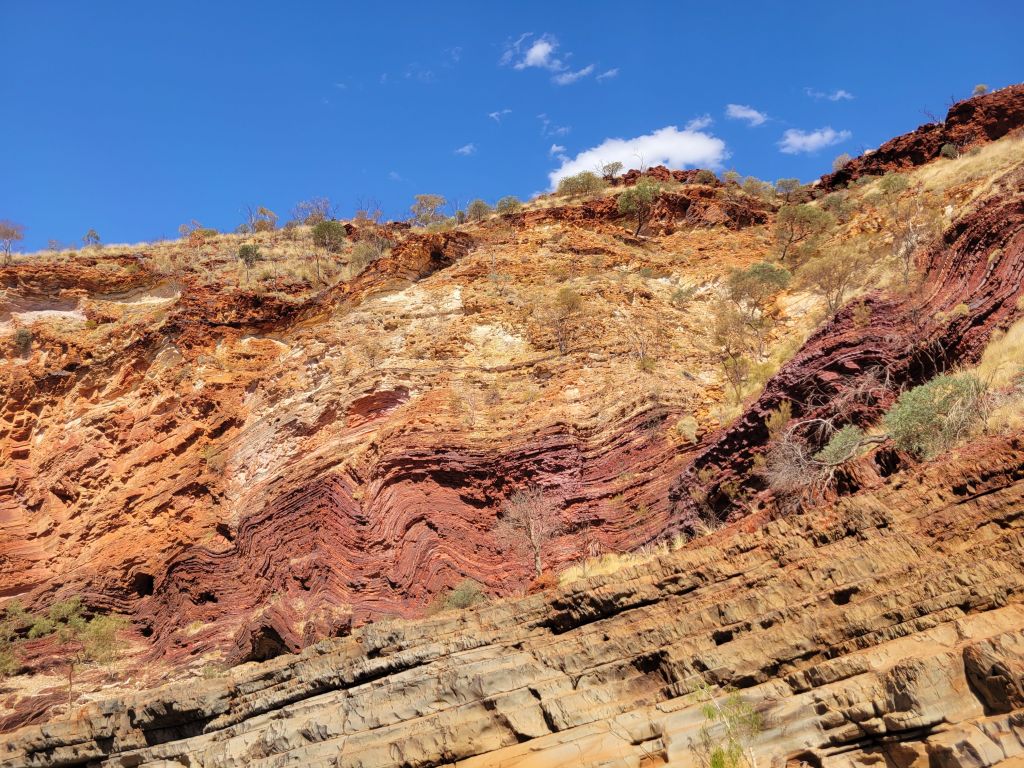
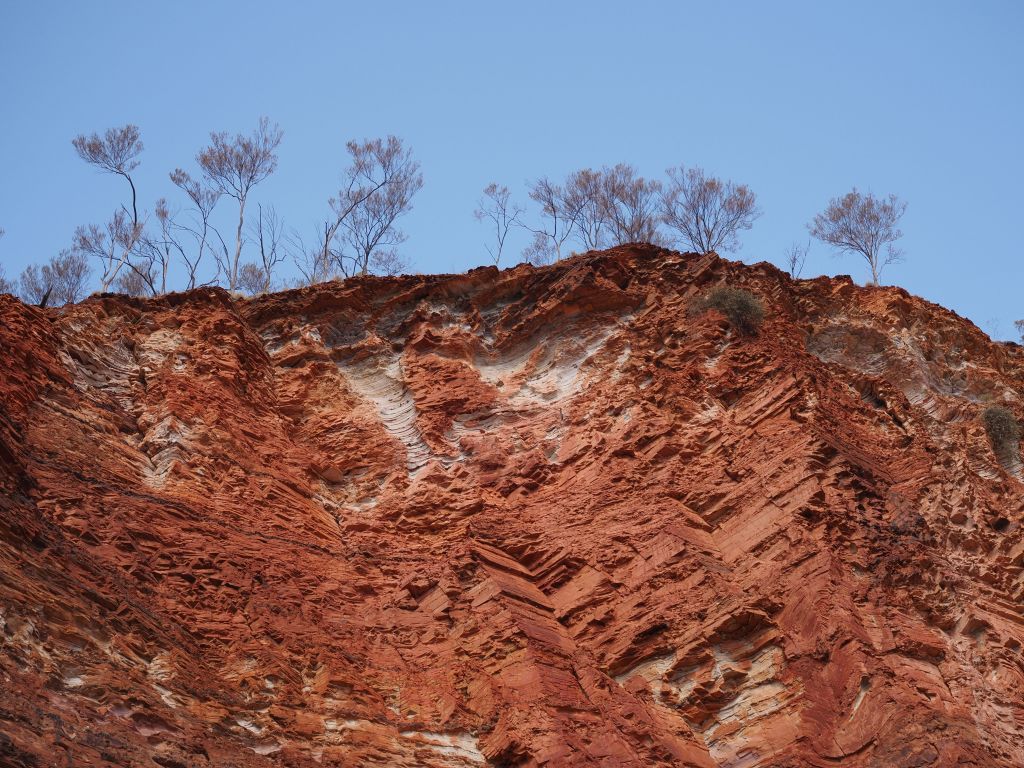
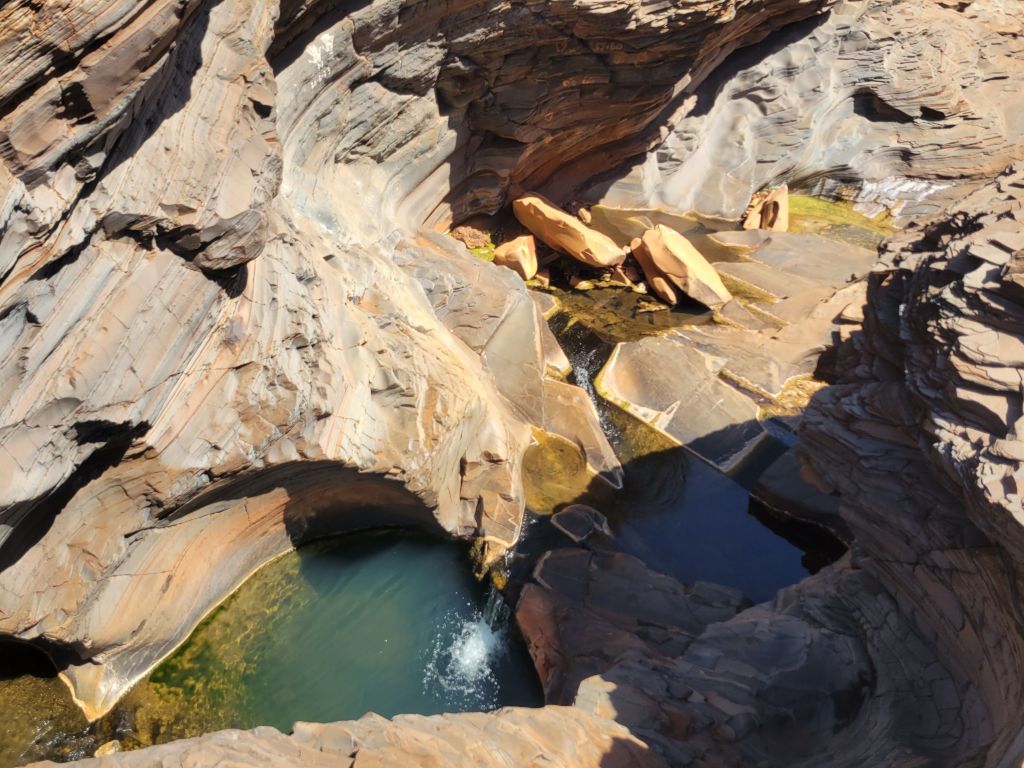
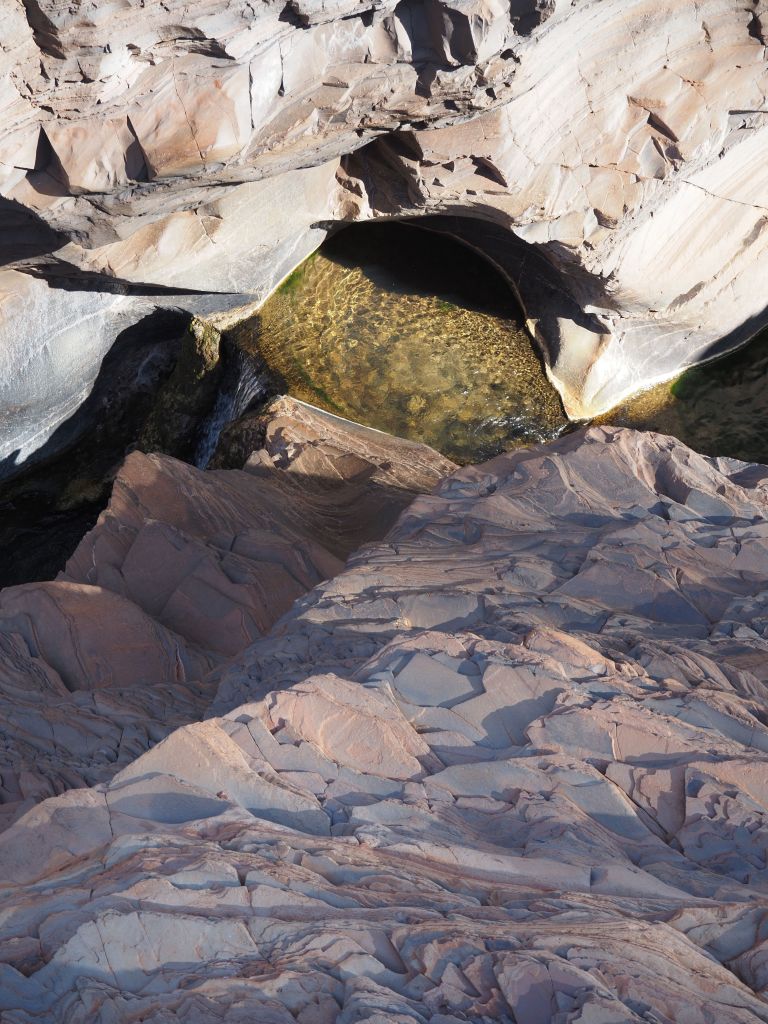
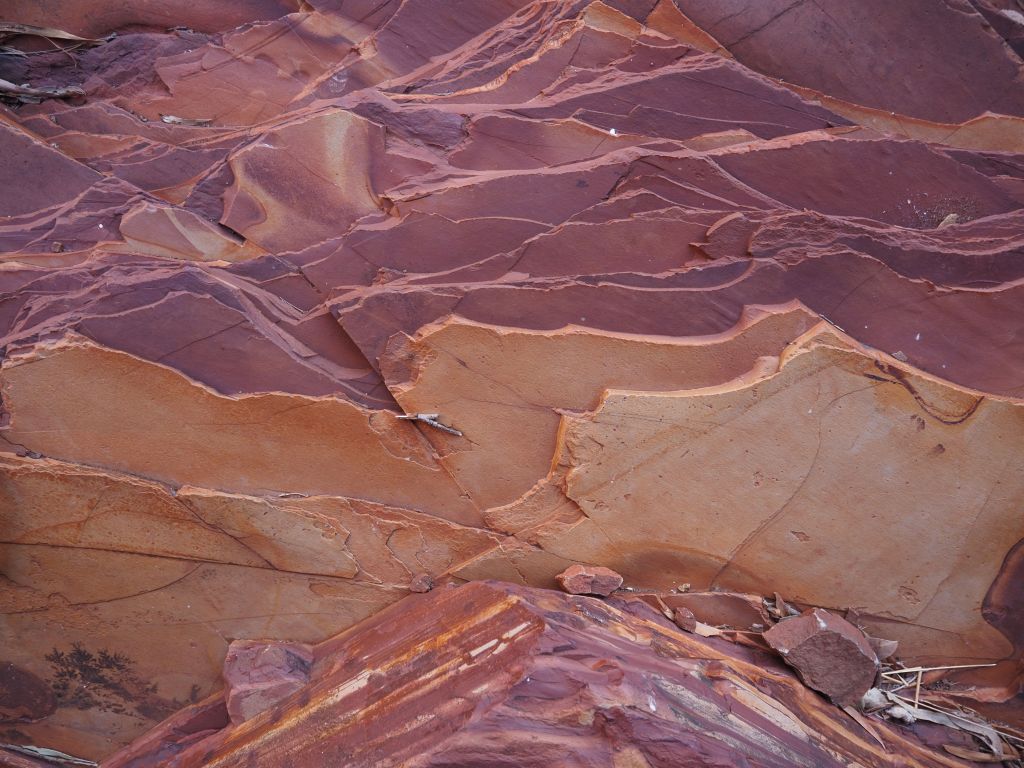
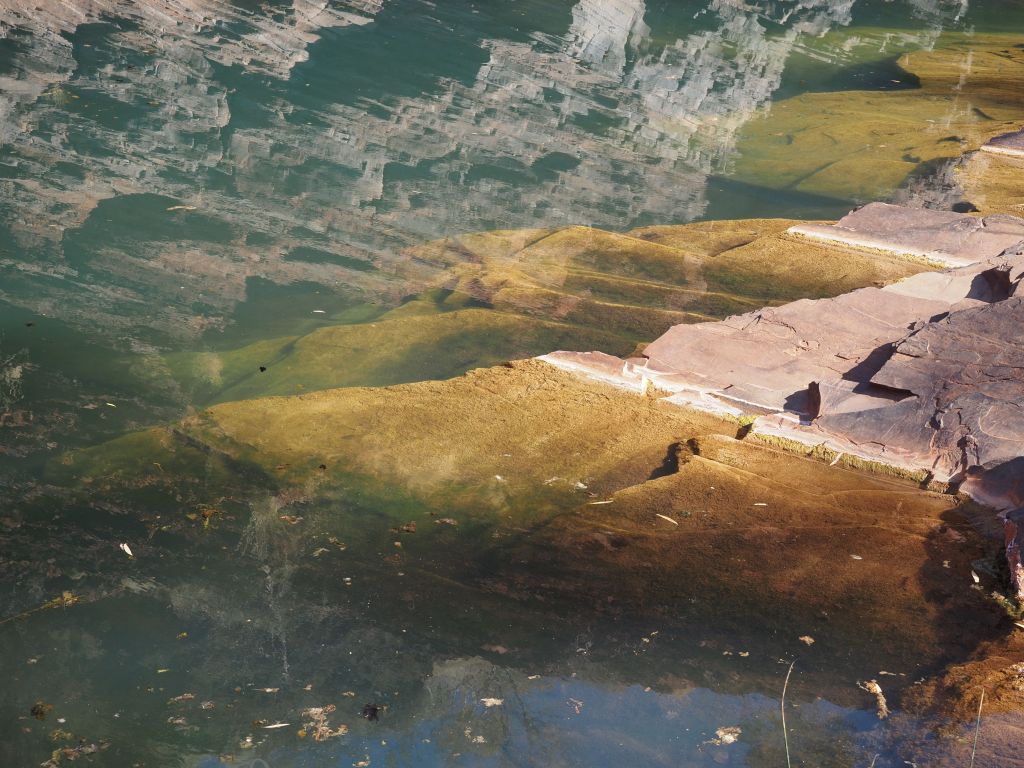
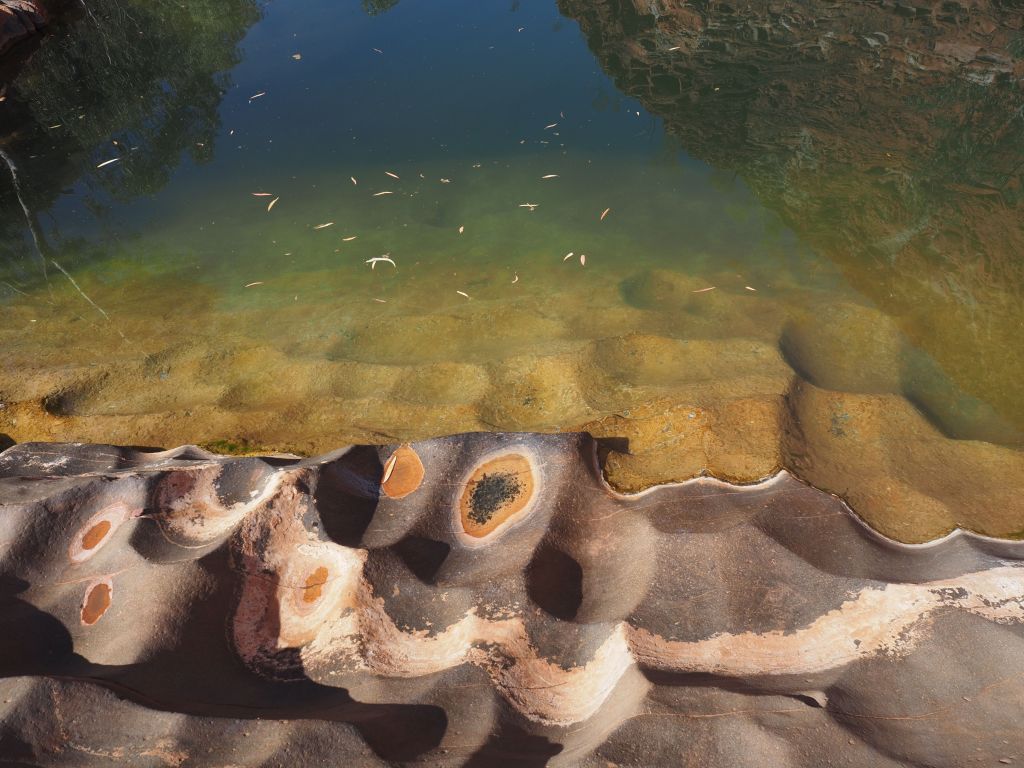
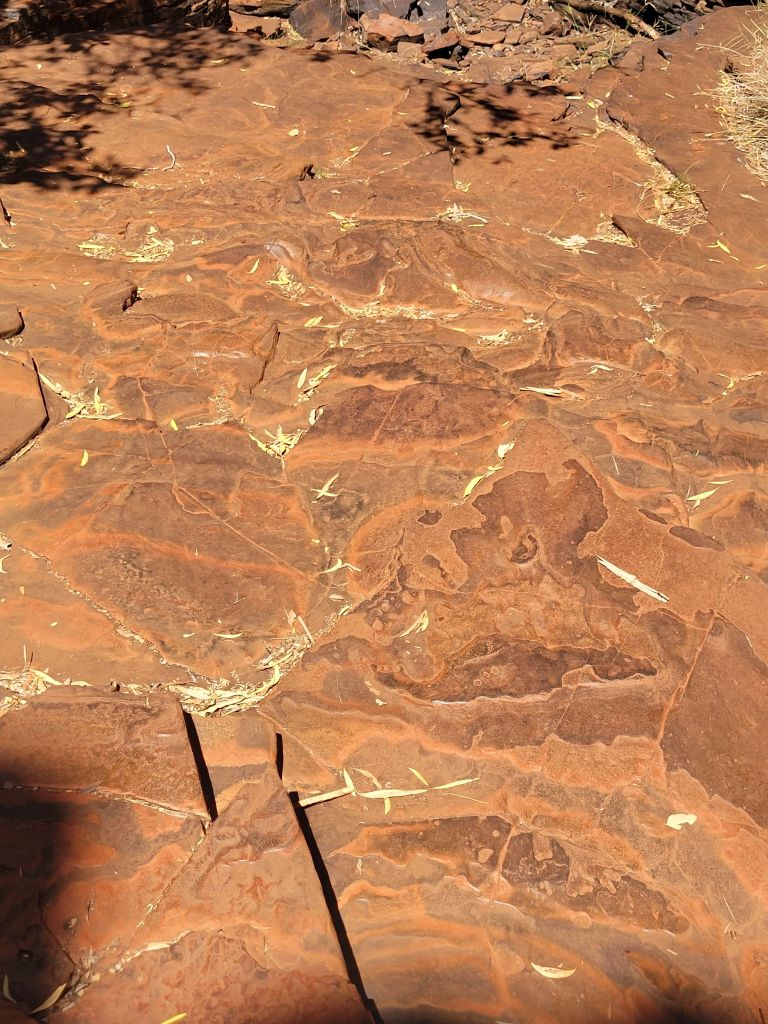
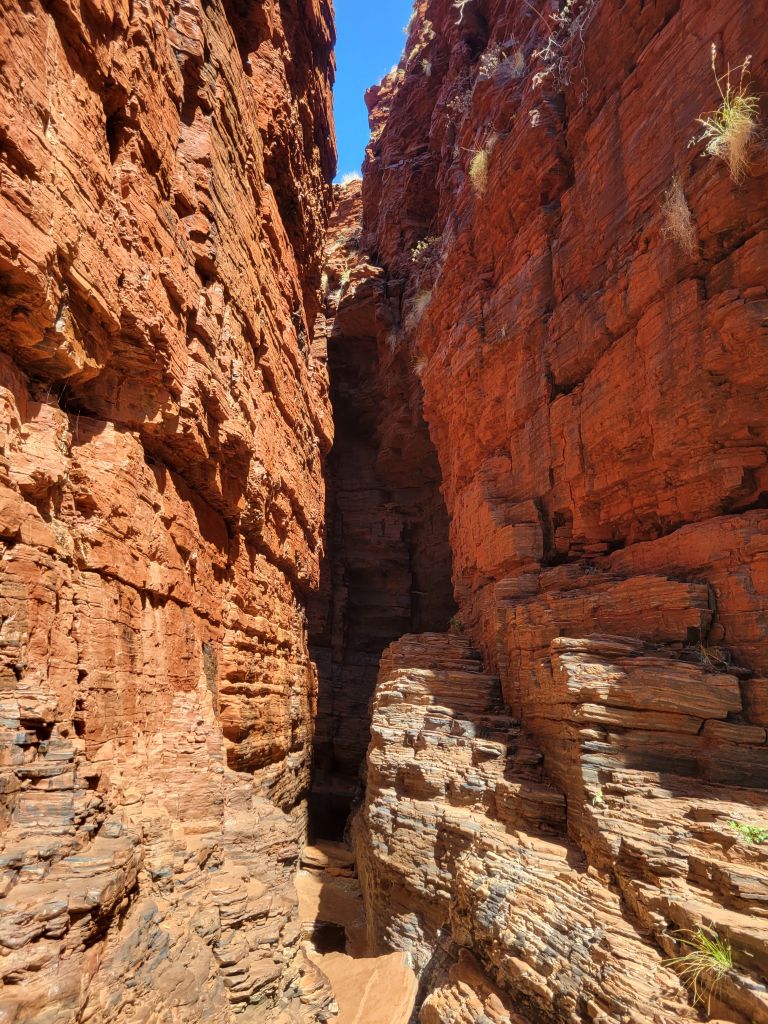
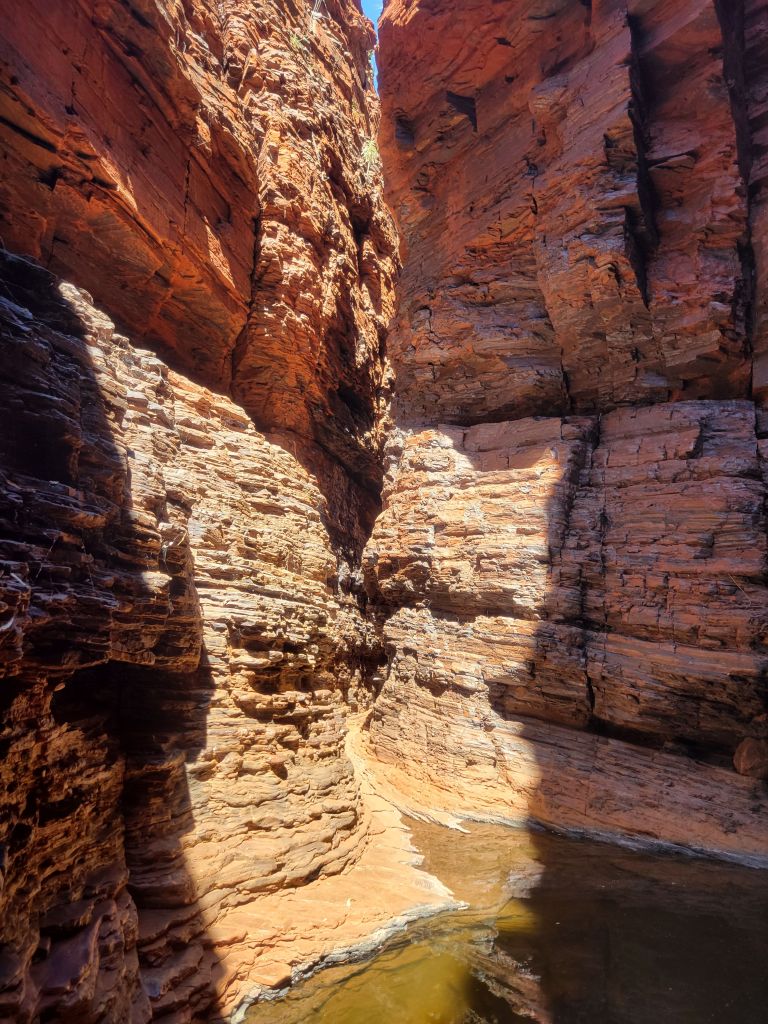
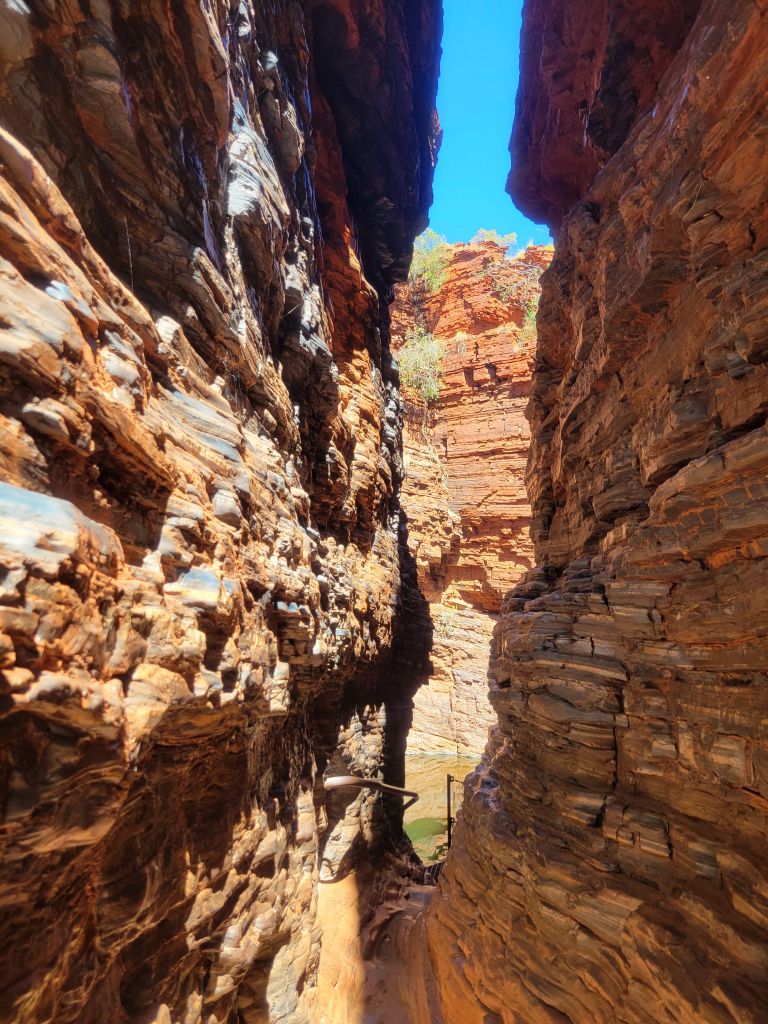
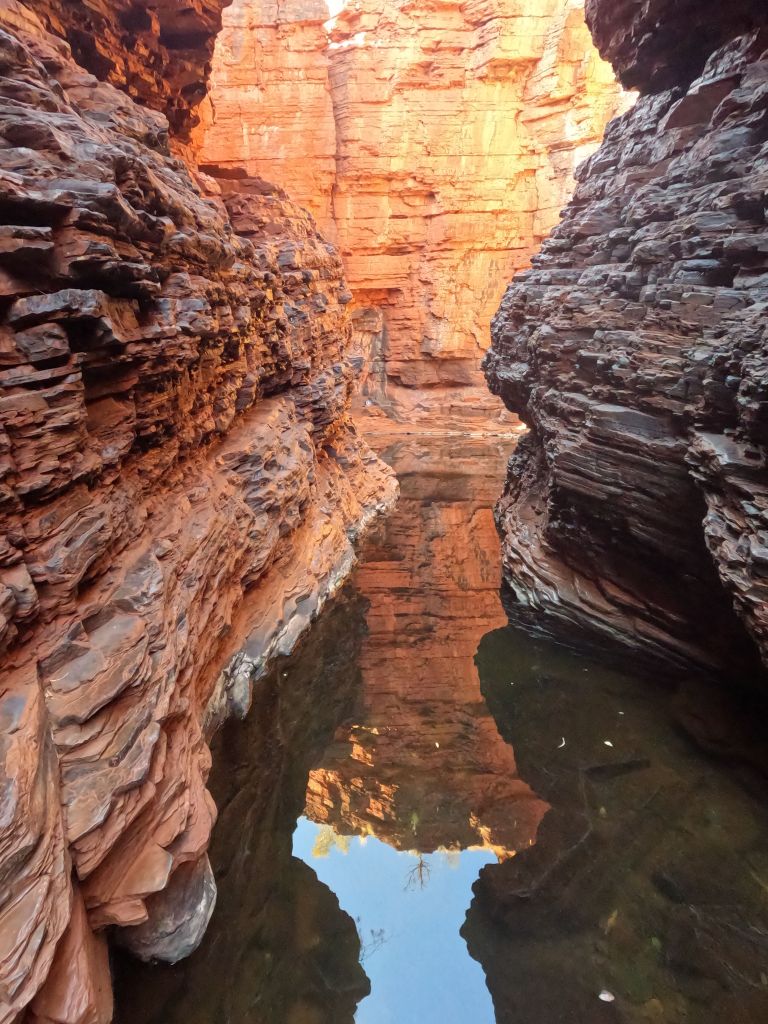
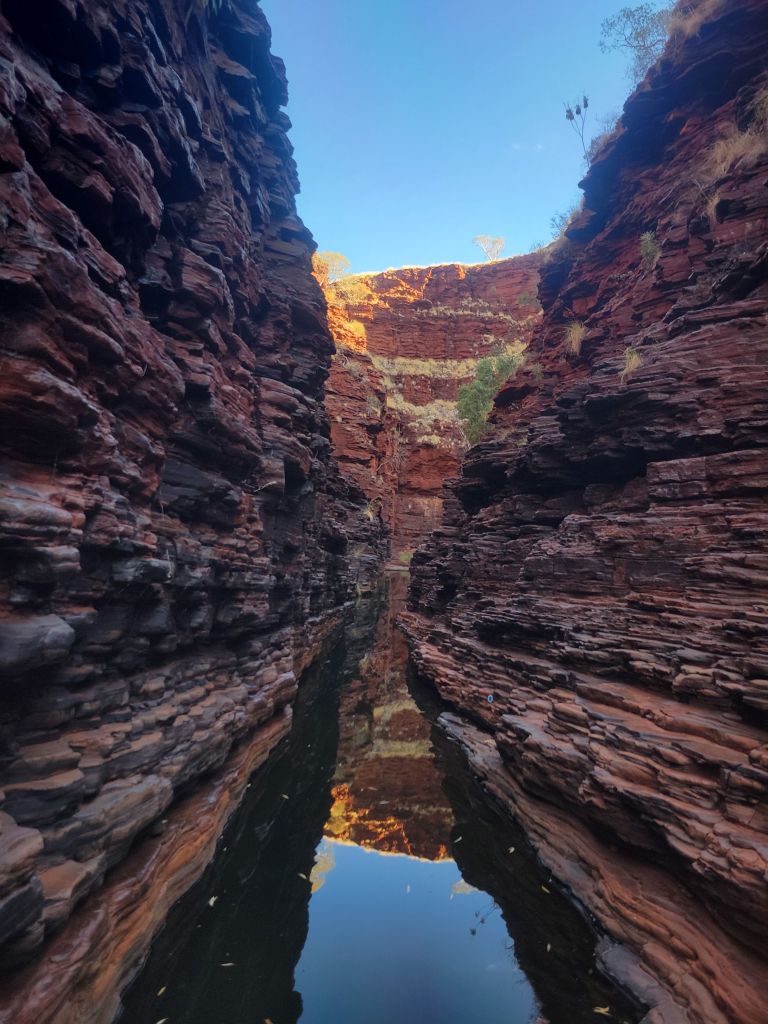
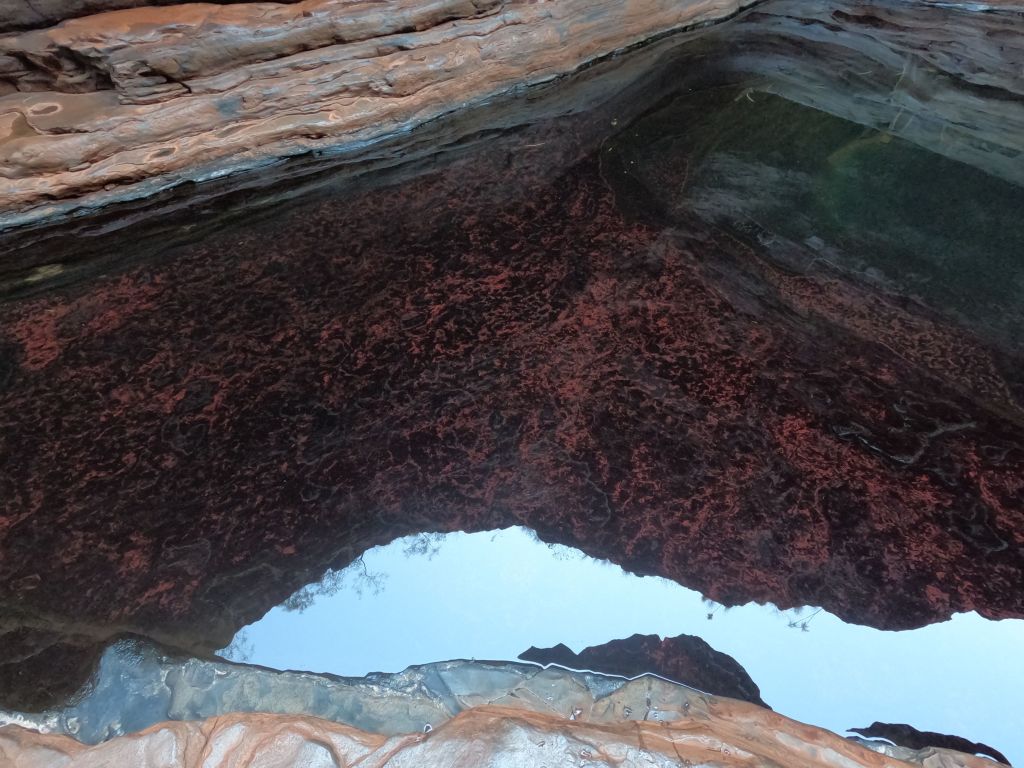
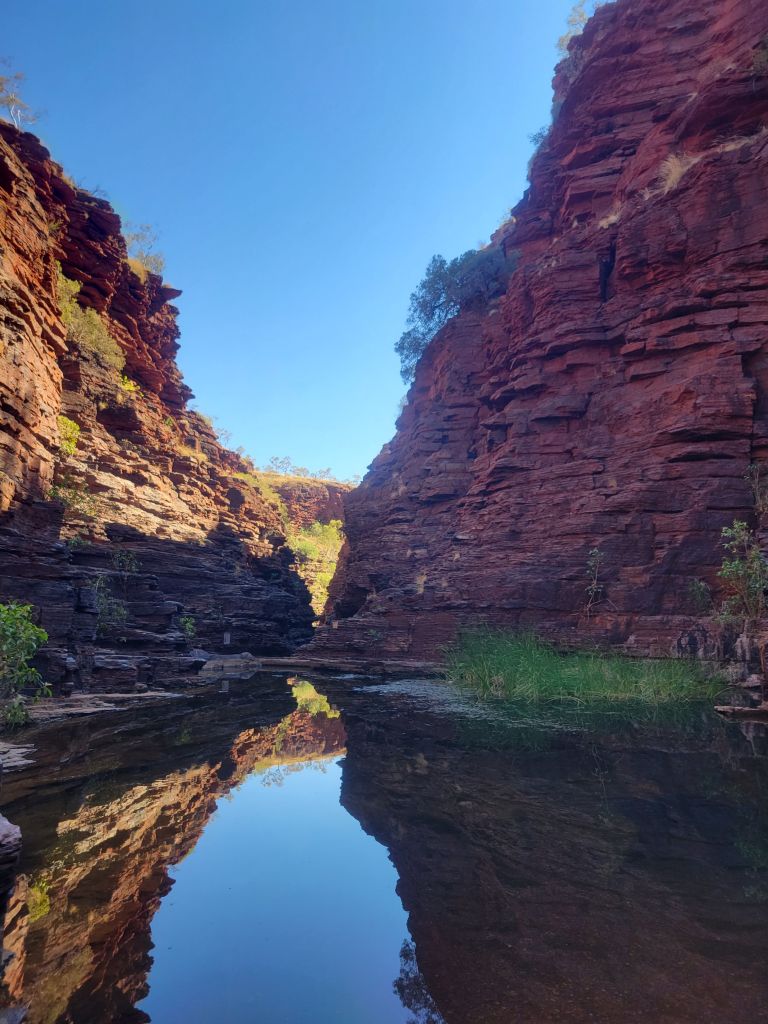
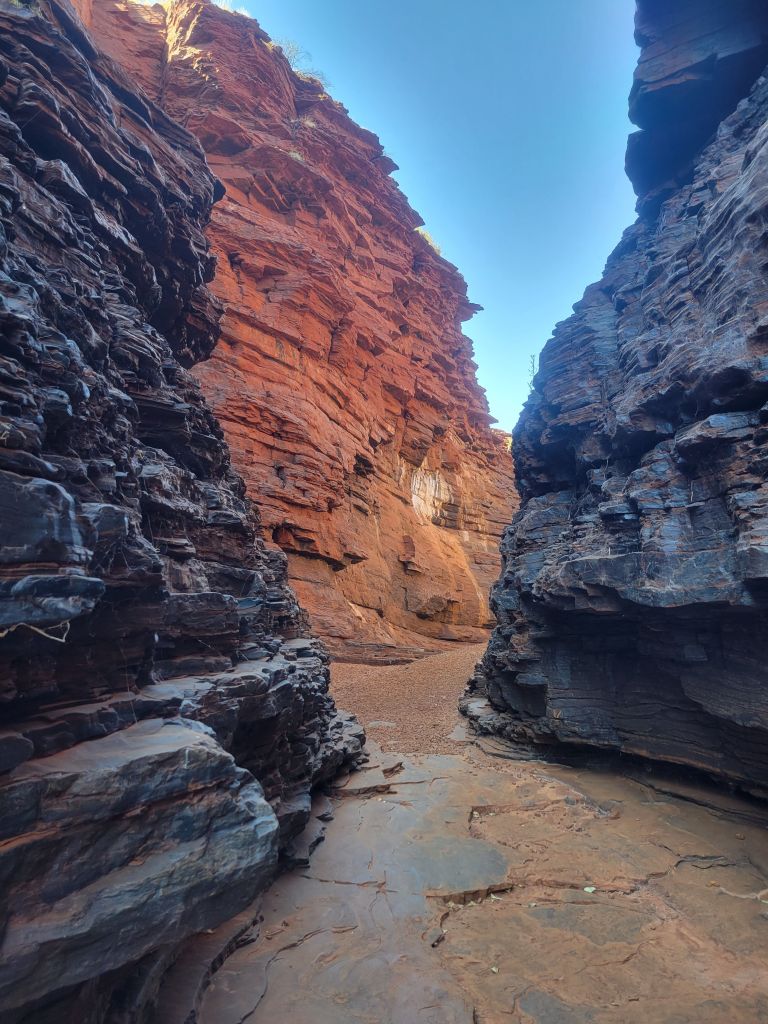
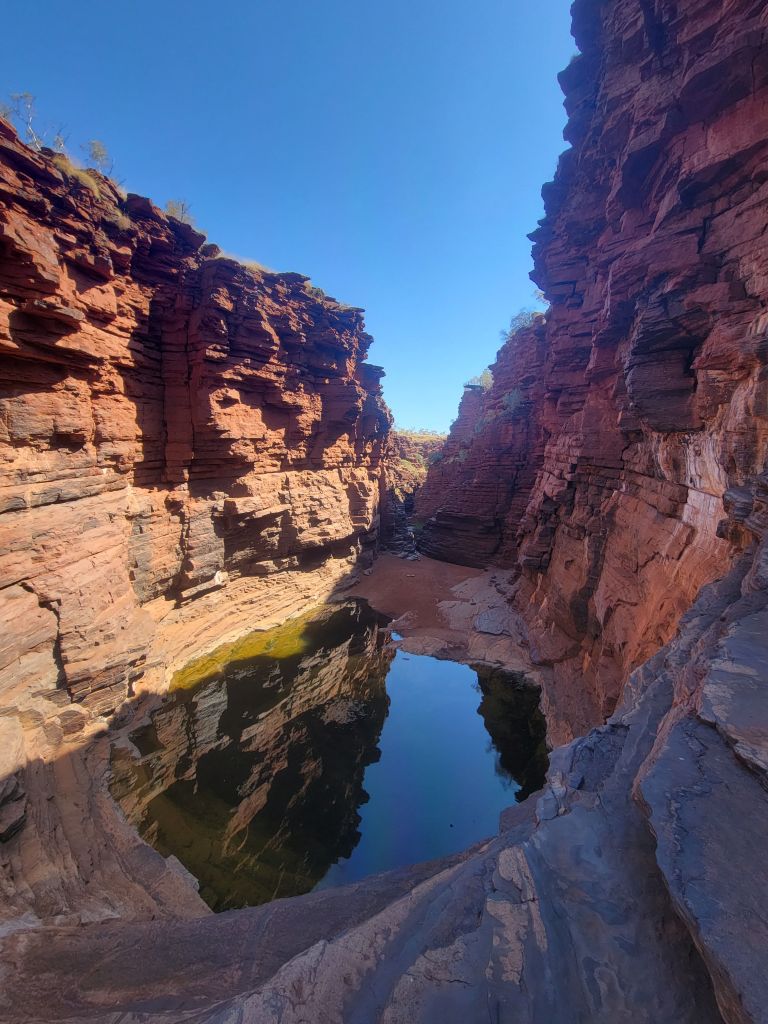
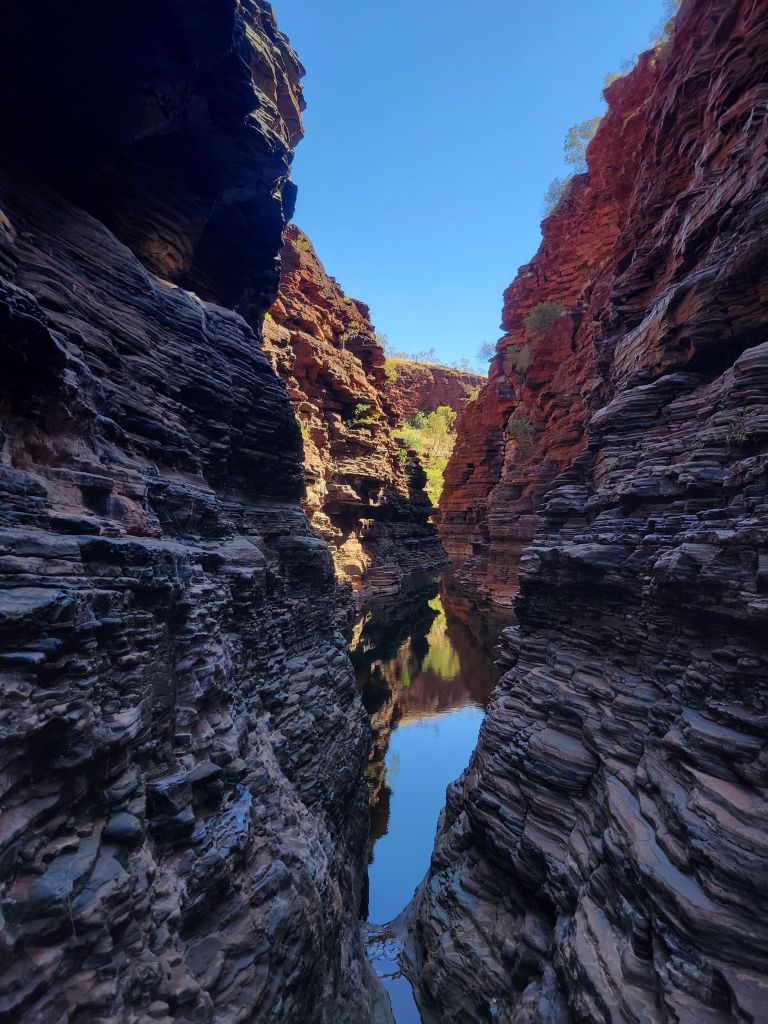
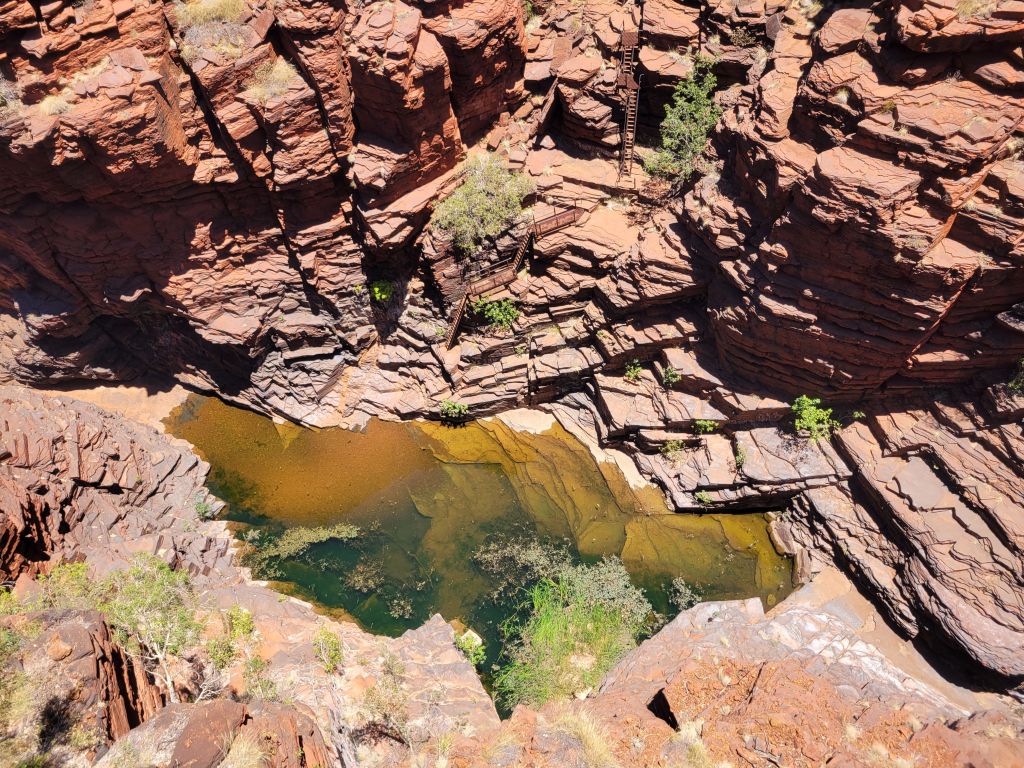
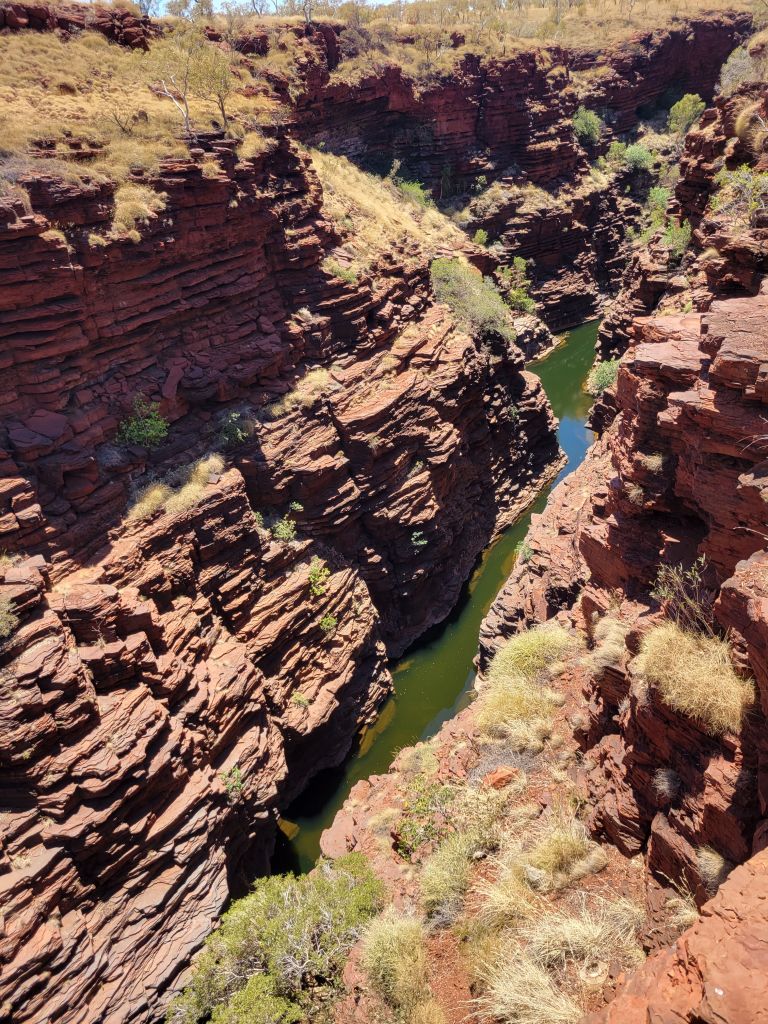
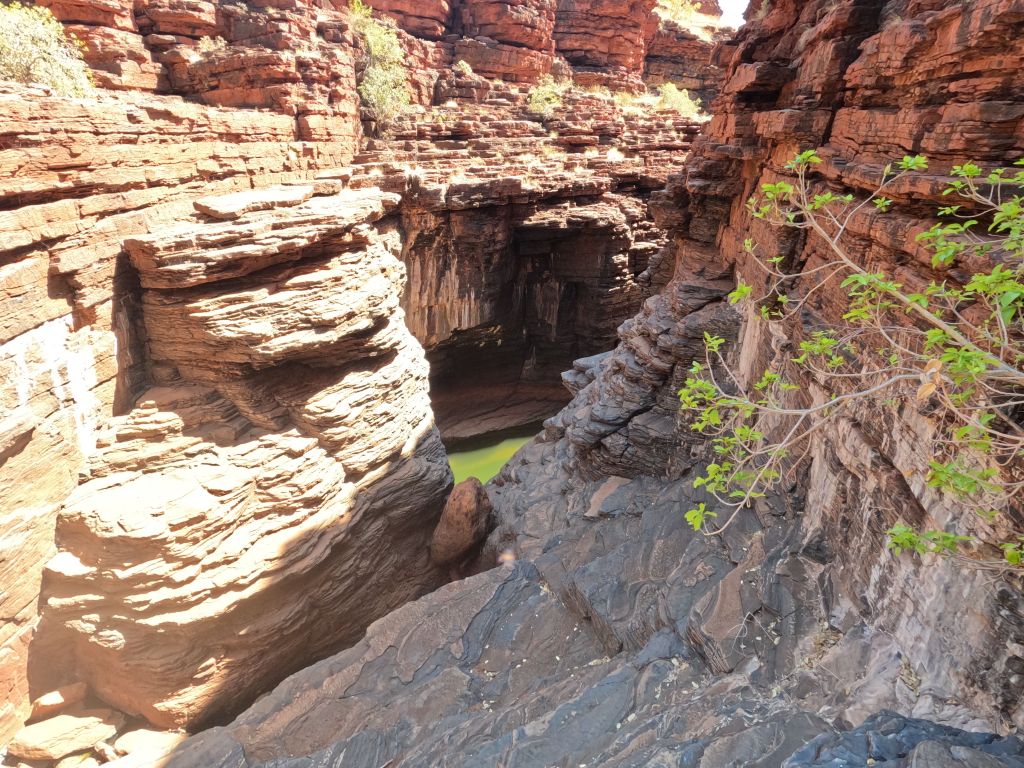
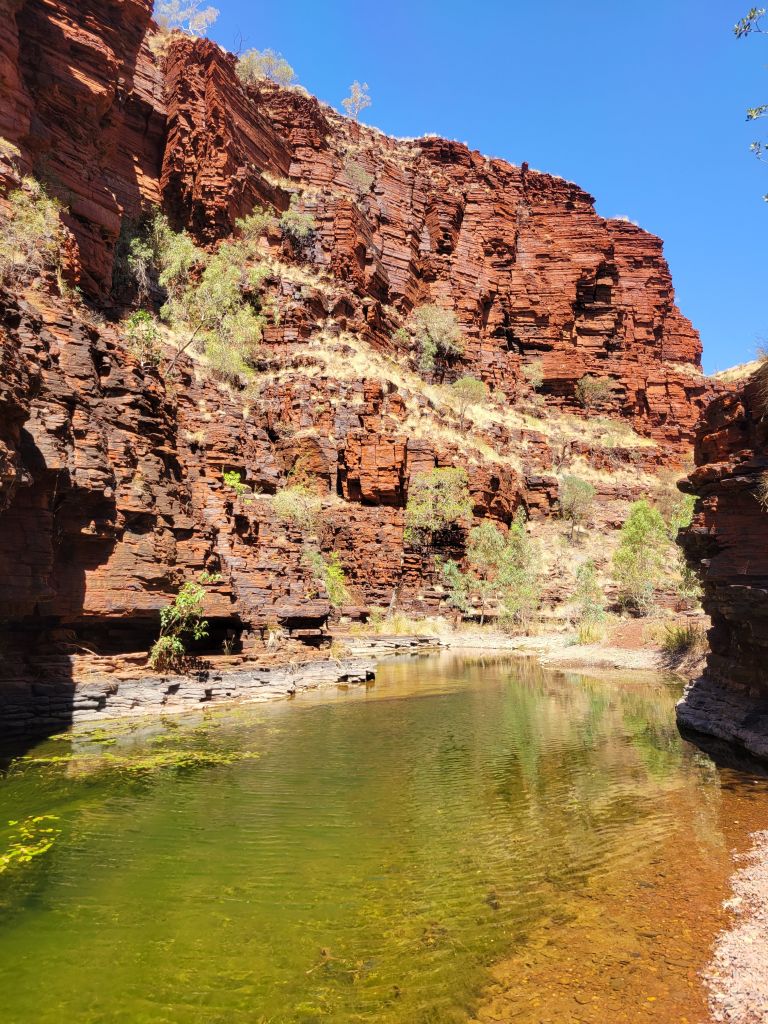
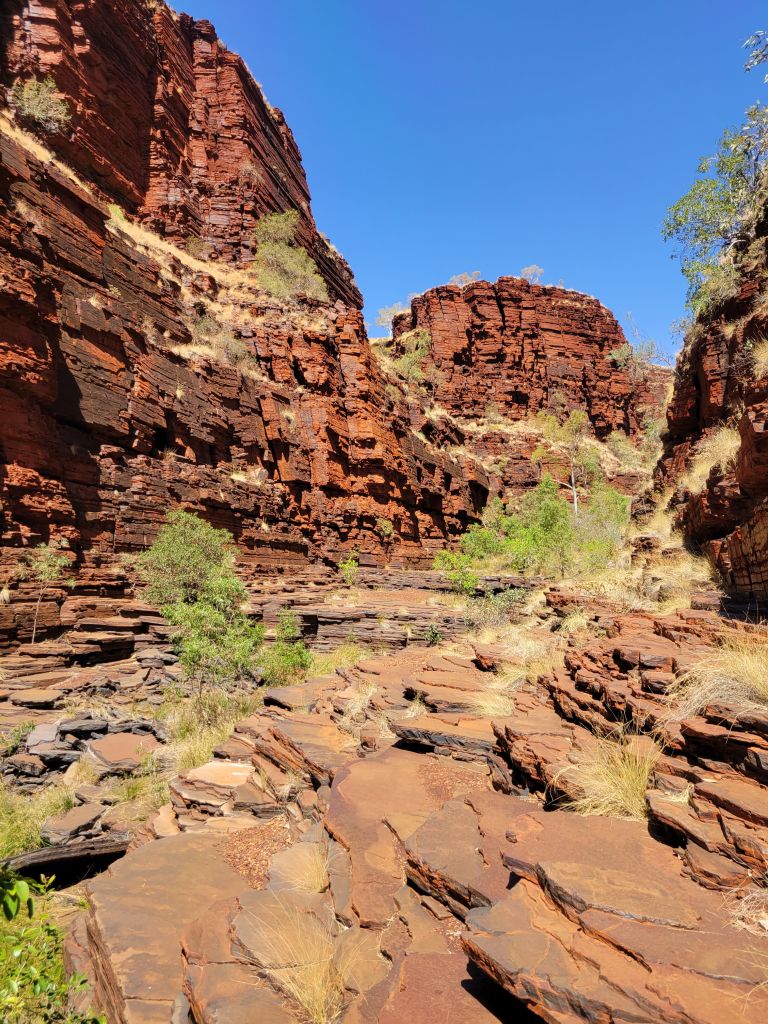
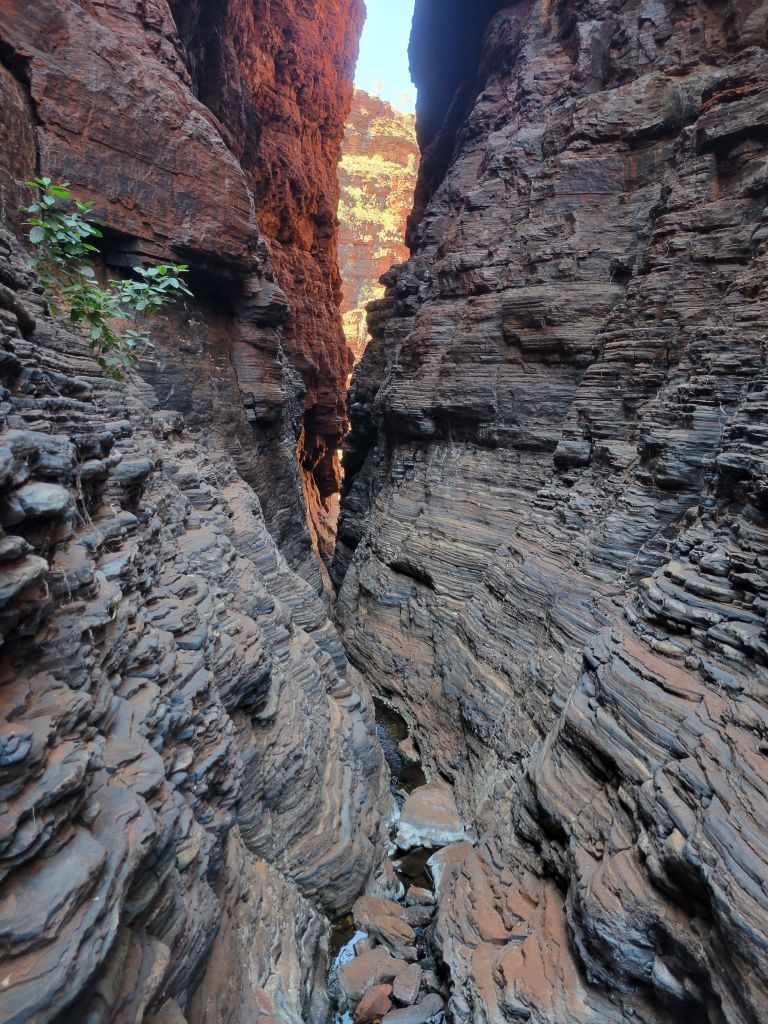
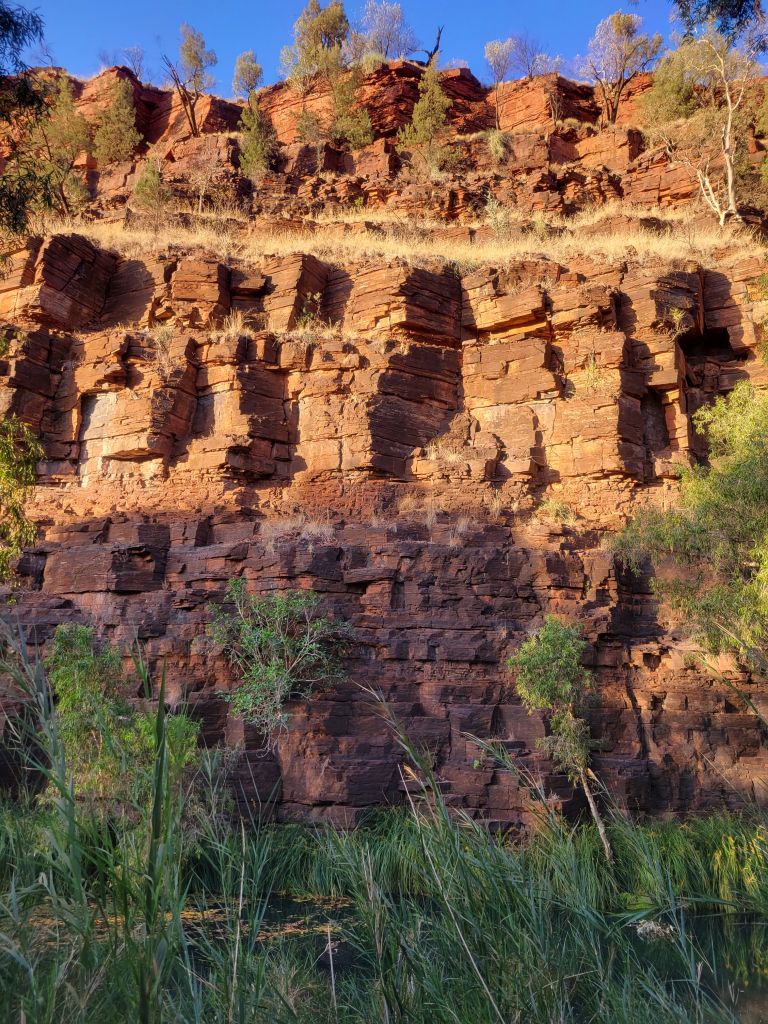
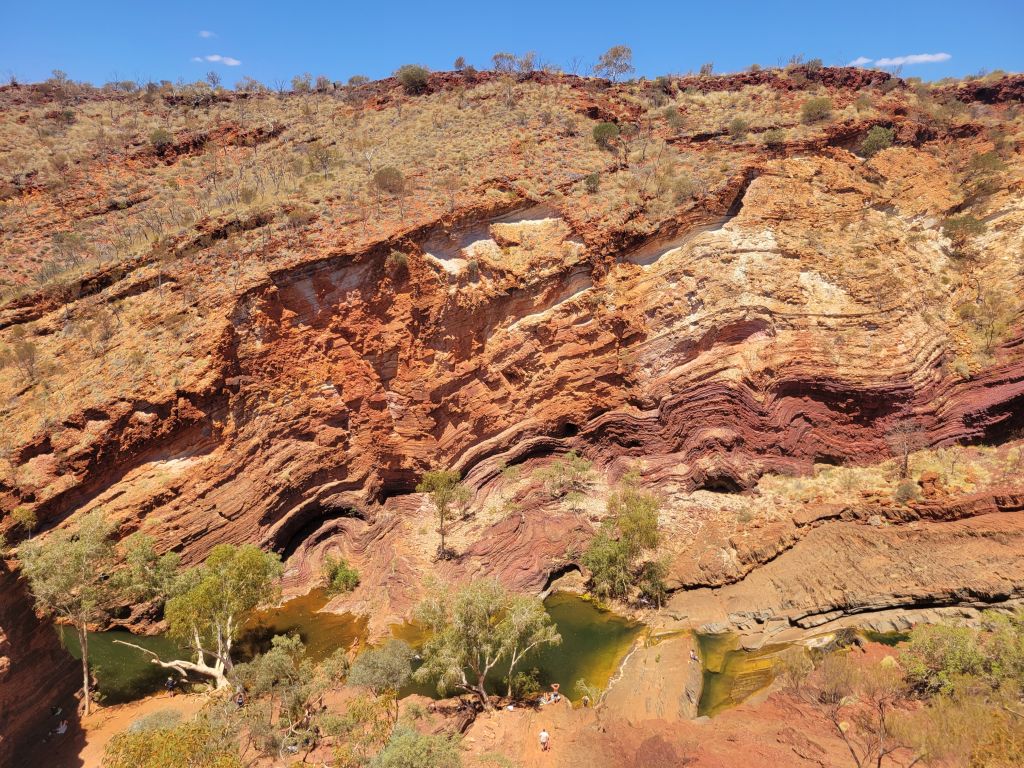
The deal with Karijini, as it turns out, is that it’s a huge area in the middle of an iron-rich desert where there are a collection of deep gorges that the rainwater flows down through. There is also a long geological history along the lines of: ancient seabed, silica and other things filter down and get compacted forming distinct layers, tectonic activity causes the seabed to buckle and lift up, erosion smooths everything back down. The result are these massive gorges where the rock is all stripey, where it’s not just bright red because of the iron, and it is absolutely stunning.

So, first stop Hamersley gorge. Similar to most of the gorges, there was an easily accessible pool, amazing rock walls on either side of the gorge, beautifully carved smaller pools and rock structures, little waterfalls, and lots of fun scrambling to do.

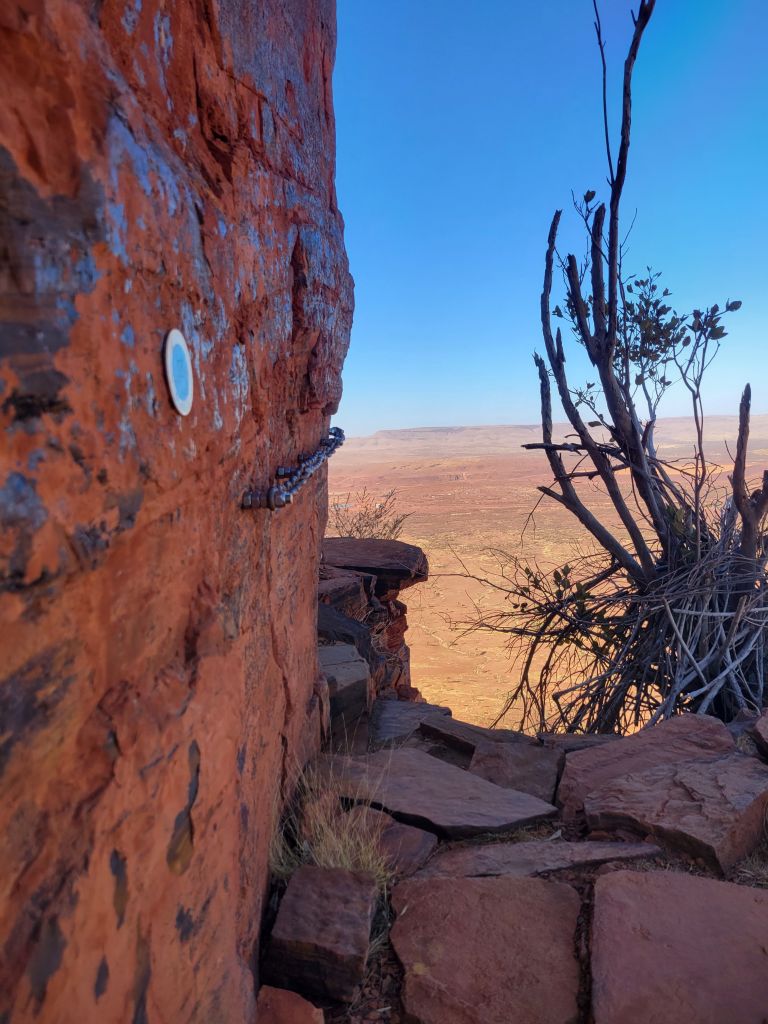
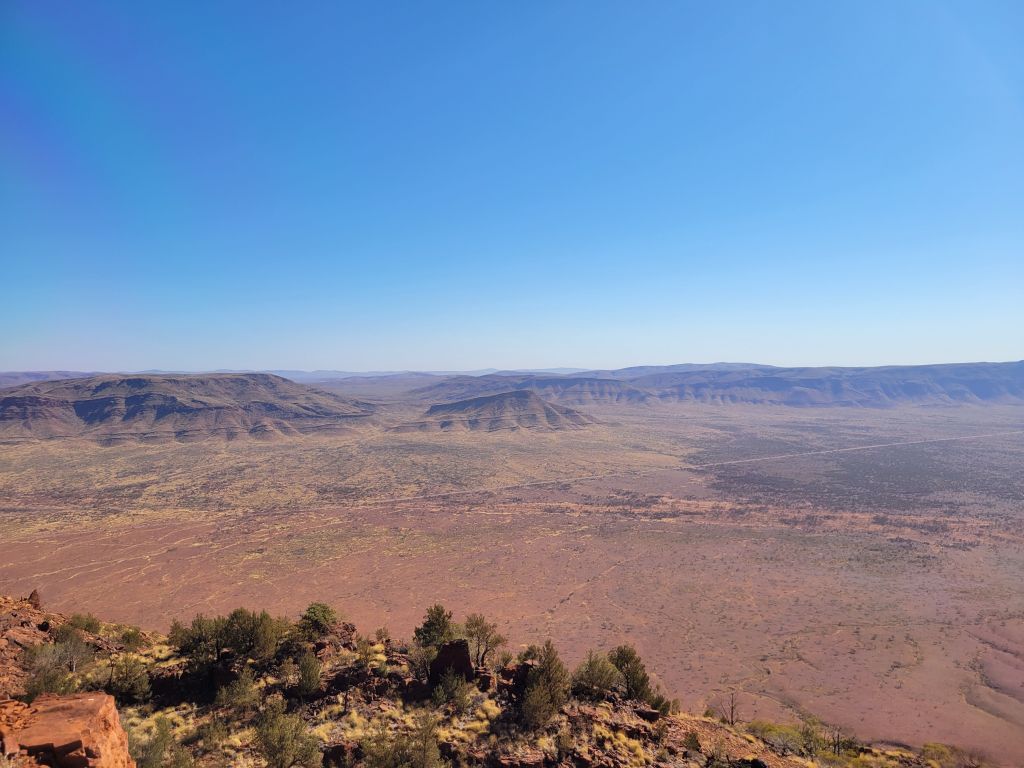
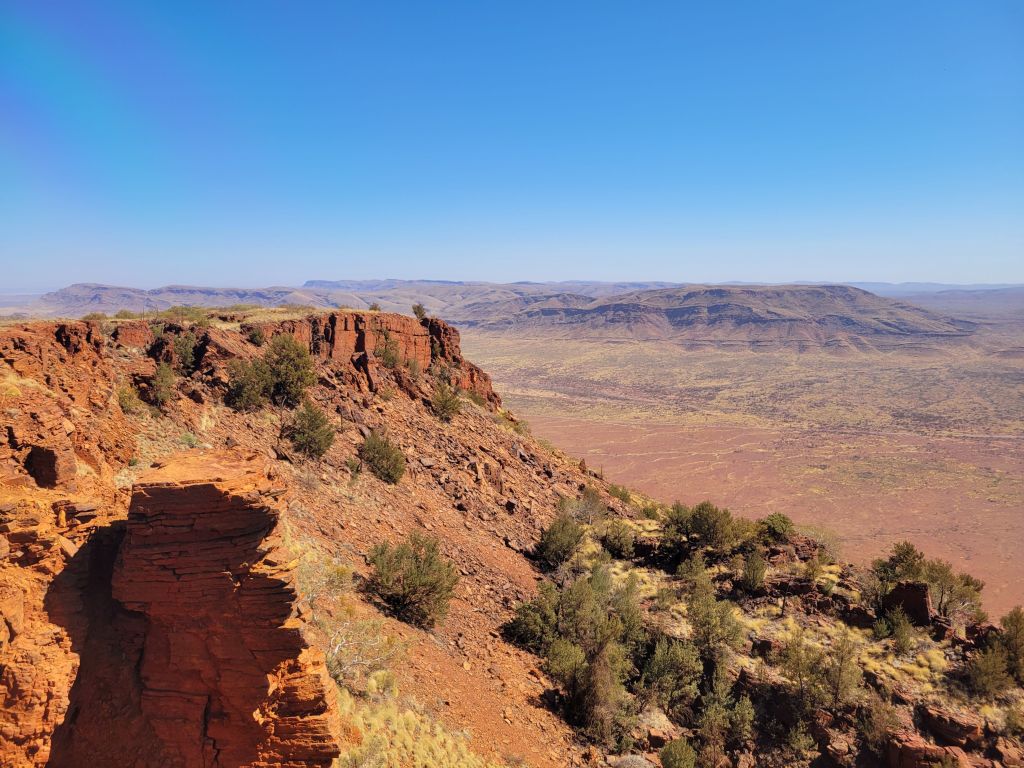
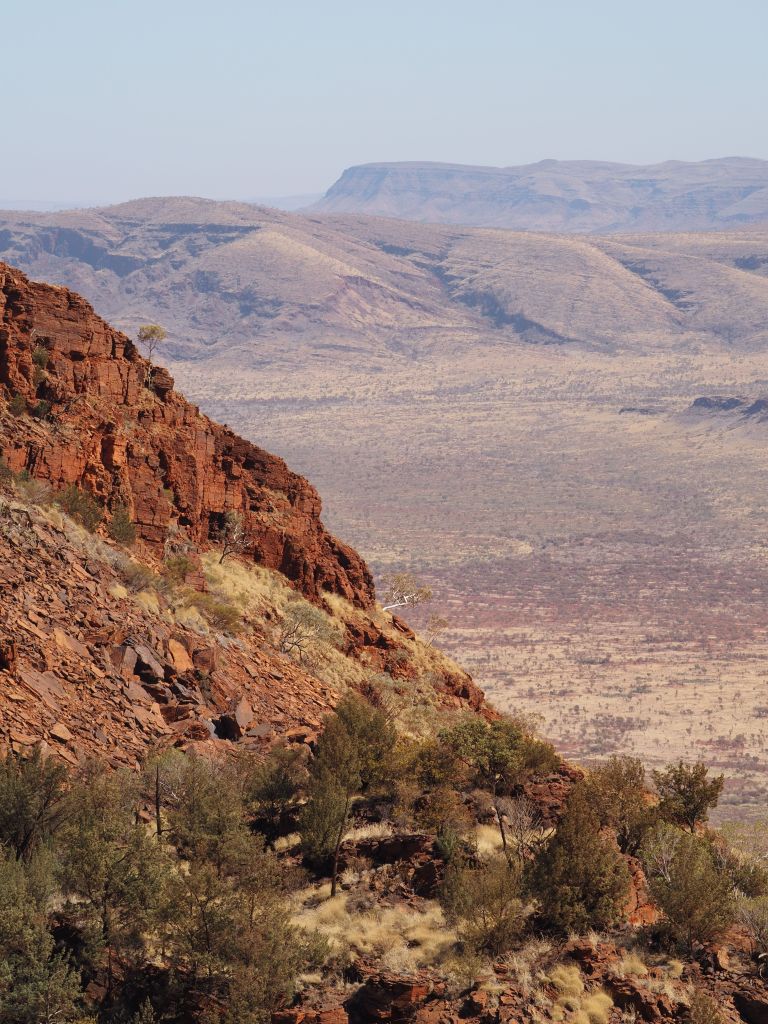
After a couple hours of exploring and taking pictures I drove down to a campsite right next to Mt Bruce, the big hike in Karijini. It’s apparently the second highest mountain in WA, standing a towering “not really very tall for a mountain” meters tall. The hike is not especially long and not especially steep, but it’s entirely exposed, very windy, and very hot. The views are expansive: open desert in one direction, a string of mountains to oen side, and a huge iron mine to the other.

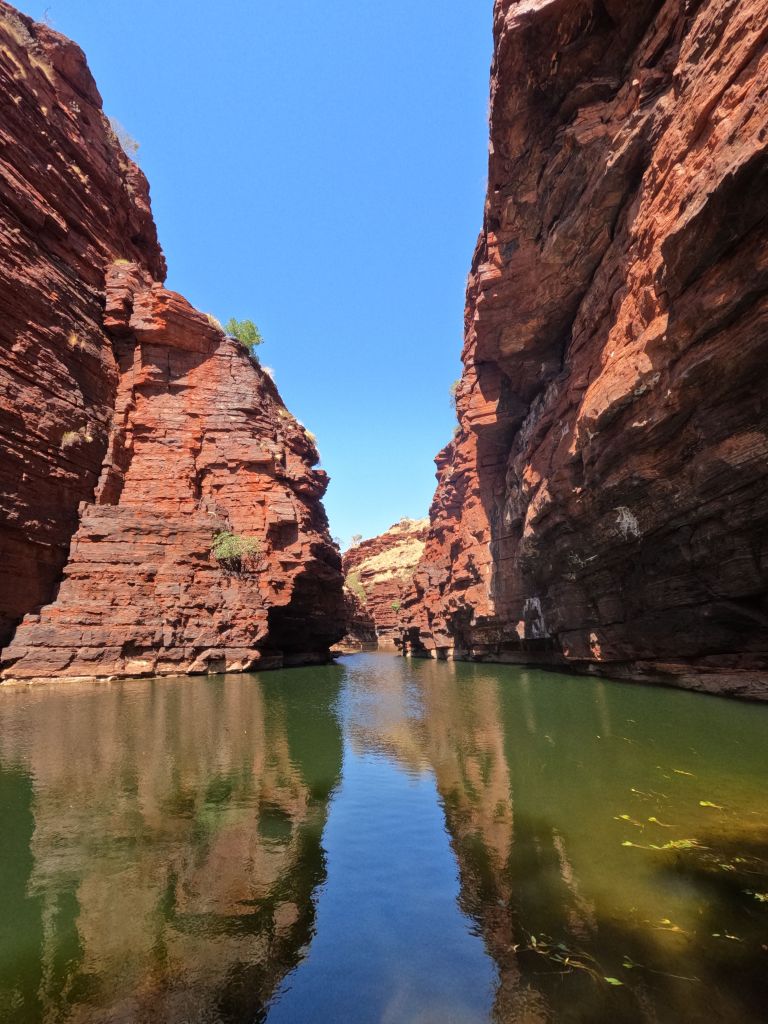
Since you have to get up early to beat the heat, after my 3 hours on Mt Bruce and a very lazy lunch it was still only around noon. The next destination was the Weano area, where there’s a lookout along with Weano and Hancock gorges. My first move was the Weano gorge loop, which lets you stroll through the scrub for a bit before descending into the gorge. The scrub is beautiful and the gorge is absolutely spectacular, with narrow passages opening up onto crystal clear green pools. The main attraction is handrail pool, imaginatively named for the handrail that helps you negotiate the steep and slippery rocks down. Thanks to reviews I’d read ahead of time I knew that you could actually swim across the pool and keep walking along the gorge for a bit, getting to another narrow pool that you also swim through, and ending up at a view of a narrow chute leading to a big drop down to a pool at the bottom of a 3 way intersection of gorges. I first got there around 2pm, with the sun still high enough that it cast a line of light across the various pools. It was, frankly, magical.
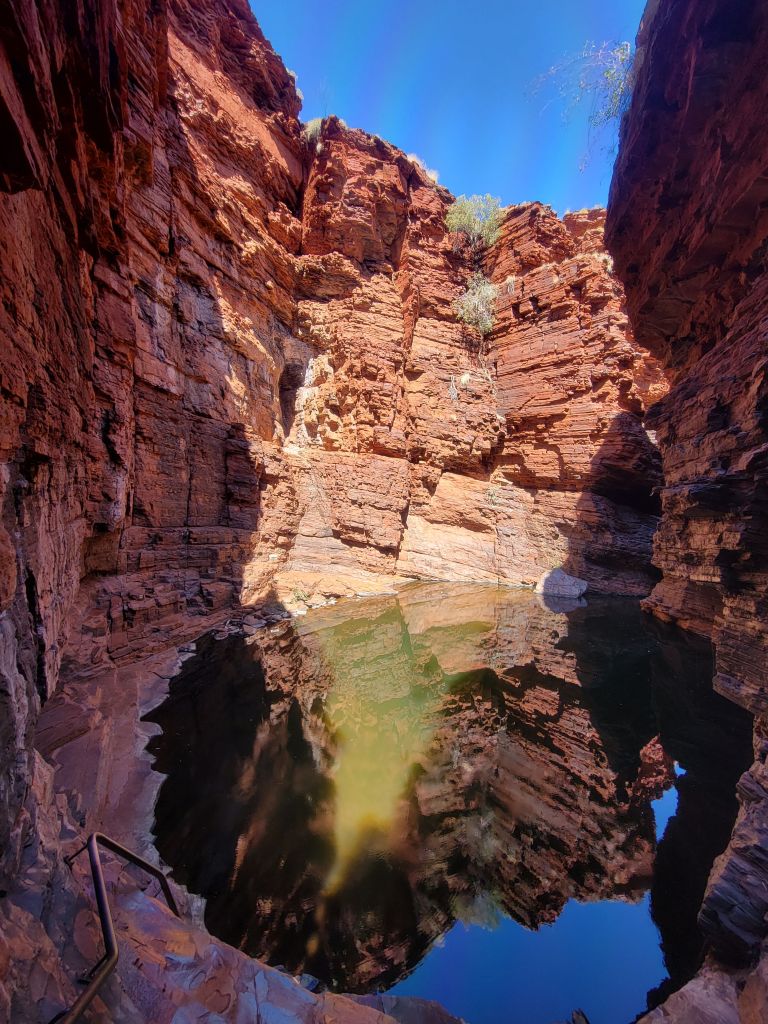
After two trips through handrail pool (I ran back to the van to get my gopro so I could take pictures of the other side) I moved on to the lookout. After being down in the gorge it was amazing to get a view from above of this red plateau covered in scrub with a few deep gashes cut into it. Finally, I crossed the road and checked out Hancock gorge. I’m going to be honest with you here—I’m pretty sure it was beautiful, and the pictures look quite nice, but at this point it had been a very long day and I just don’t really remember it that well!

I spent the night at the Karijini Eco Retreat, which in spite of the fancy name was only $22 per night given offseason pricing. This was well worth it for the water alone—with temperatures right around 100 every day (and it feeling much hotter than that in the sun), I was probably drinking somewhere around 8 liters, or 2 gallons, of water per day. The only other water source in the park is at the visitor center, it’s untreated, and I don’t have any purification equipment besides boiling, which would be a real last resort. At the eco retreat the water is all potable and they’re fine with you filling up water bottles as long as you don’t fill your van tanks, which I’d say is fair. I must have gotten more than 5 liters from them, which was the perfect amount to tide me over for my time in the park.

The next morning I started with Joffre gorge, which you can walk to right from the campsite. It was a nice quick stroll through the scrub before lots and lots of stairs to get down to the bottom of the gorge. With the weather heating up it’s the offseason now, and man am I grateful for that. I never saw more than a handful of people anywhere I went, and on this morning I had Joffre gorge entirely to myself. It wouldn’t be any kind of exaggeration to say that sitting in this beautiful space all by myself was a spiritual experience.

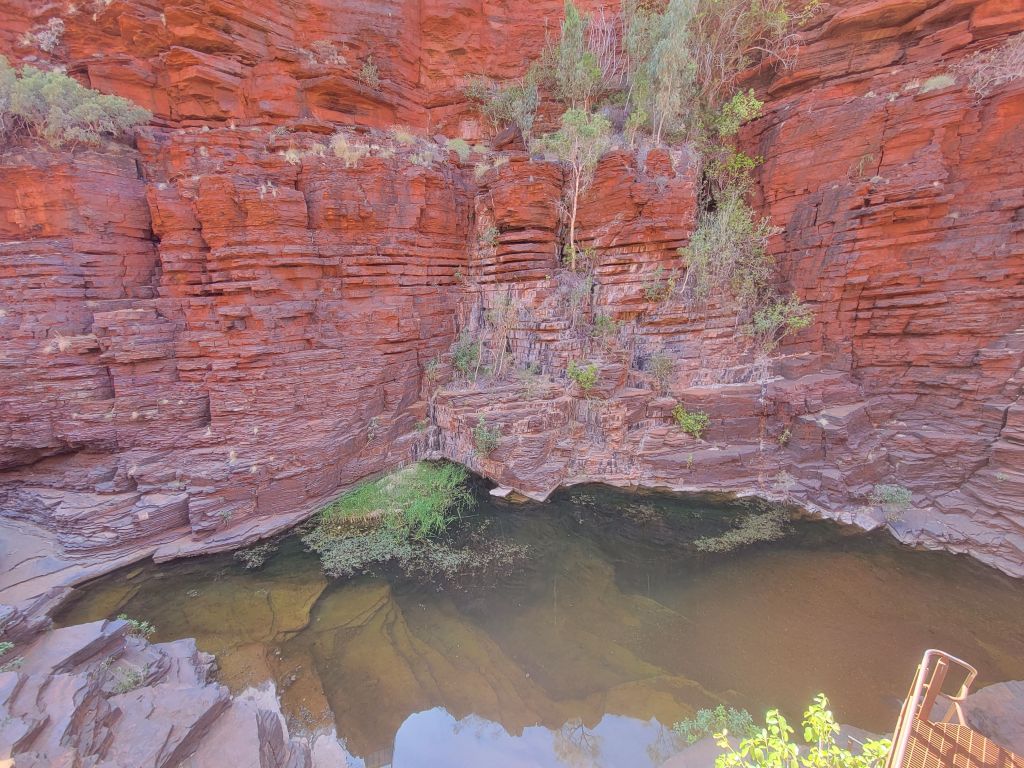
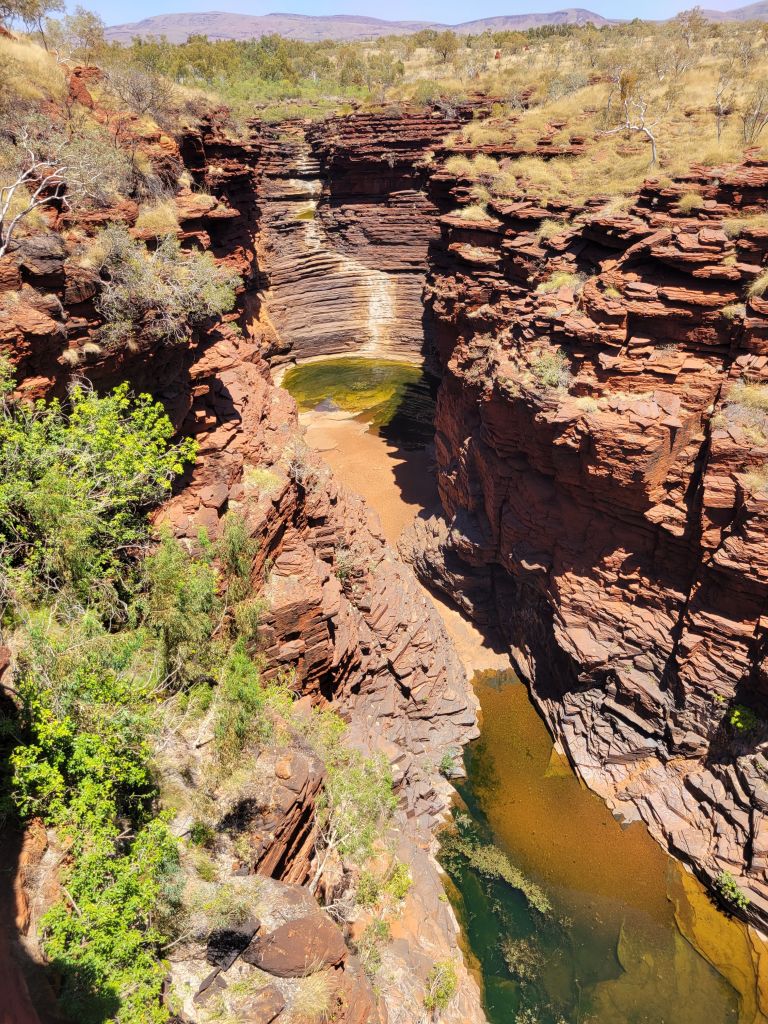
The stairs let you down to a first spot with a large pool. To the right is the main attraction, the amphitheater. When there’s been rain there’s a waterfall, but currently it’s just an enormous bowl of beautiful stripey rock with a pool at the bottom. After clambering around and checking out different views for a while I headed back the other way. Skirting the first pool and going the opposite way, a short rock scramble leads to a very narrow passage where the only option is to swim. The water filled the gorge past the next bend so I couldn’t tell how far the swim was, but luckily this time I’d at least come prepared with my gopro. The previous day’s experience told me my personal preference was to swim with my shoes on—everything dries insanely fast when it’s 100 degrees and bone dry, and shoes are more comfortable on pointy rocks and less slippery on smooth rocks than bare feet. So I dropped my pack, stripped down to my shorts, put my gopro in my pocket, and got in the water.

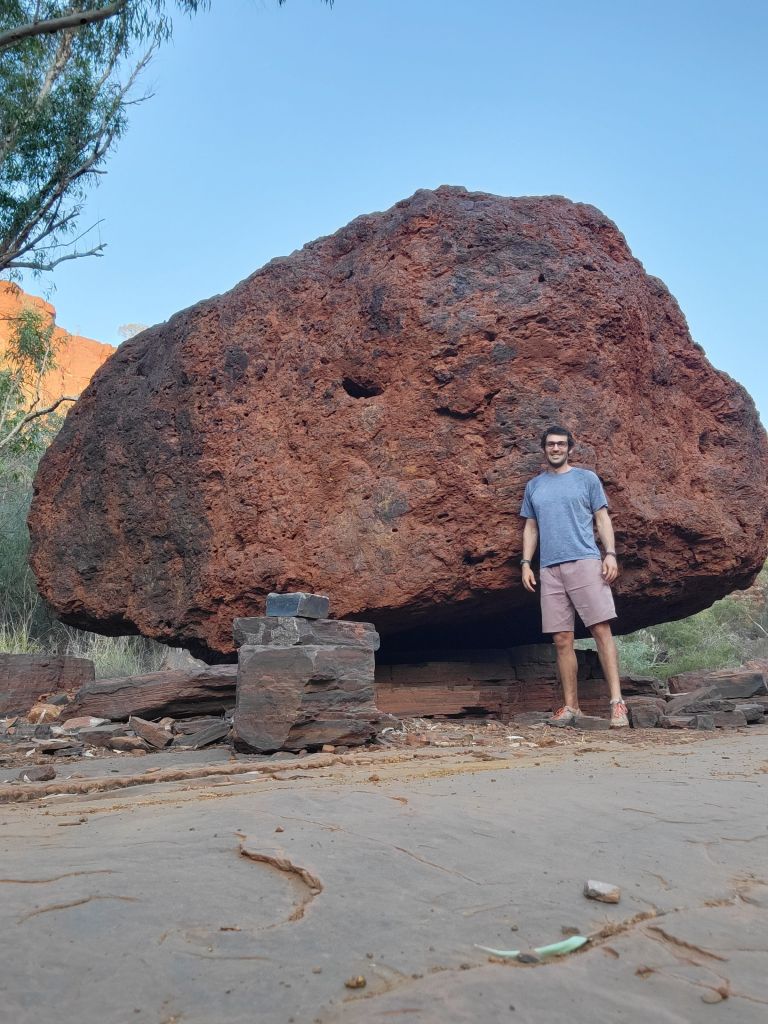
The swim turned out to be pretty long, 10 minutes of casual breast stroke in each direction. It was a pretty incredible feeling (and you don’t need to worry now knowing that I made it out alive) to just keep swimming through this incredible landscape, completely alone, not knowing where it was leading. The walls of the gorge widened, narrowed, and widened again, and eventually I got to a large pool that gave onto a wide expanse of dry land. After a bit of gravel I got to a section which was just huge pieces of the stripey rock that makes up the gorge, all broken along the layers that they’re made up of, each sort of reminiscent of a boxy stack of pancakes. After scrambling over and around them I got to another massive amphitheater which funneled down to a thin waterfall with a huge boulder wedged into it, and then a long drop to another pool farther down. It was stunning.

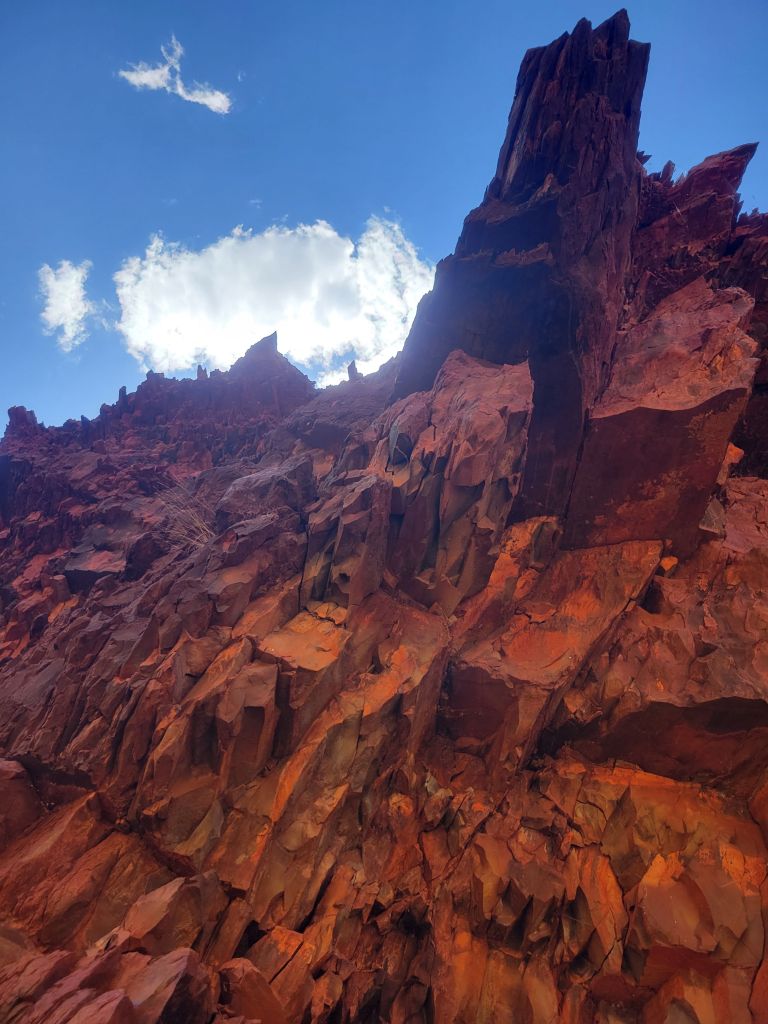
After all that exploration I had some lunch and then looped around to check out the viewpoint on the other side of Joffre gorge. Once again, the shift in perspective to see the place I’d just been exploring from above was extremely cool, giving a whole different sense of scale. Then I continued down the road to Knox gorge. The descent into Knox is, rather than a staircase, an actual, honest to god, rock and dirt trail, so of course the many Aussie safety signs warn of the incredible difficulty. After the trip down I again explored as much of the gorge as I could. I was able to stay dry this time but got to walk a fair way down the gorge, eventually getting to the Aussie safety stop sign and cordon, which was fair enough since at that point continuing would have meant going down a steep, narrow chute which led to a sheer drop and a pool a long ways below. The towering walls of the gorge are all bright red, right angled-rocks, and the effect is spectacular.

This wrapped up all the gorges I could get to on the west side of the park so I hopped in the van and headed for the east. The east side of the park has the visitor center (closed when I was there unfortunately), and the Dales’, both gorge and campground. I was pretty tired by this point but it was only around 4:30pm, and the thing about Karijini is that sitting around in the heat in your van at the campsite is way less comfortable than going down to the cool gorge. I initially planned to just go down and have a dip, but ultimately I caught a second wind and went for the loop walk of Dale’s gorge.

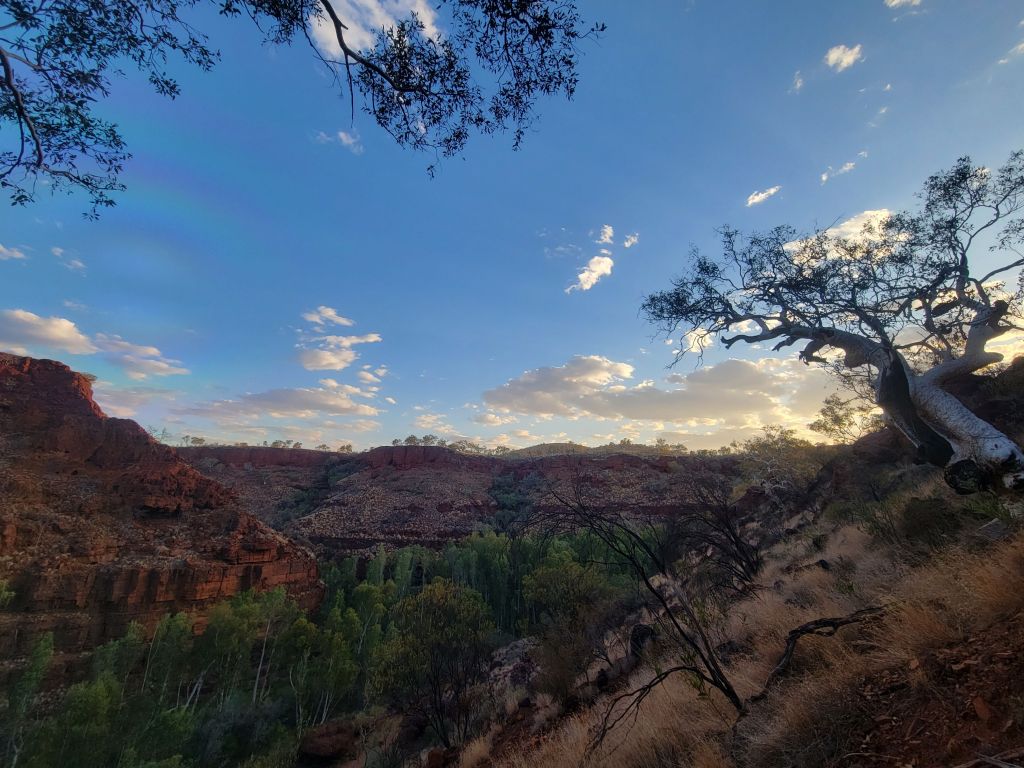
Dale’s seems to be the more popular one, unsurprising given its accessibility and proximity to the huge campground. The way down is just a series of stairs and boardwalks, and gets you to beautiful Fortescue falls. A short stroll to the right leads to shady Fern pool, where everyone was hanging out hiding from the heat. After Fern pool I turned back and headed down the gorge. Dale’s is one of the bigger gorges, quite wide at the bottom, and seems to have more water, so that the whole thing is full of trees and grass. The walk criss crosses the water a few times before getting to a staircase back up to the rim. From there I checked out the circular pool lookout, which was absolutely spectacular. Finally, with the sun setting, I strolled back to my van along the rim of the gorge, enjoying the changing colors of the red rocks and the mercifully lowering temperature.

The next morning I went for a quick dip at Fern pool and then said my goodbyes to Karijini. It’s a short drive to the next town, a mining outpost called Tom Price, apparently after an American geologist who helped them realize how rich the area was in minerals (hurray…). Mines aside, the area is absolutely stunning, and just looking around from town gives great views of the surrounding hills. I was feeling pretty tired and puttered around for a while, getting coffee and lunch, grocery shopping, and filling up on water. By mid-afternoon there was nothing left to do but head on down the road.

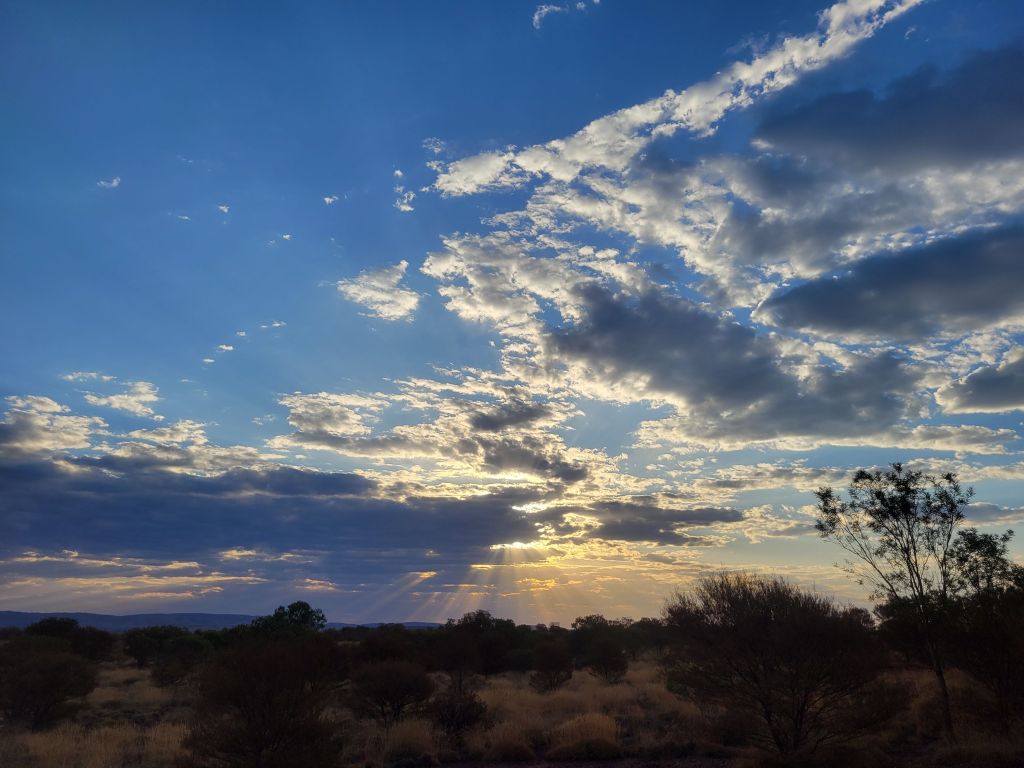
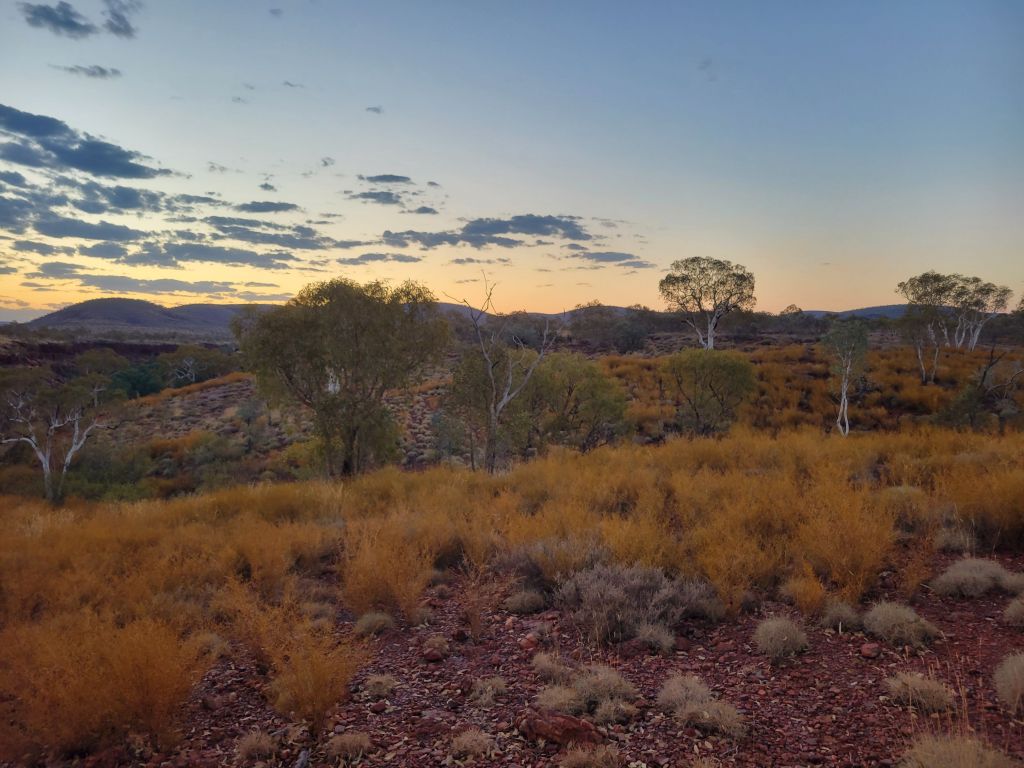
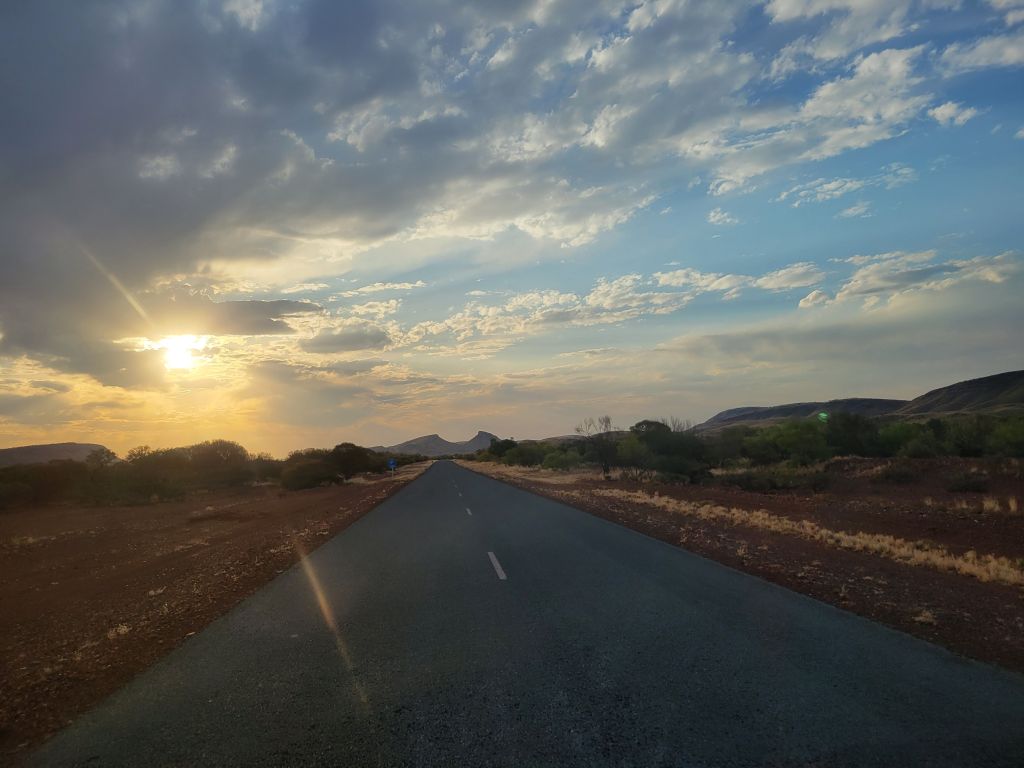
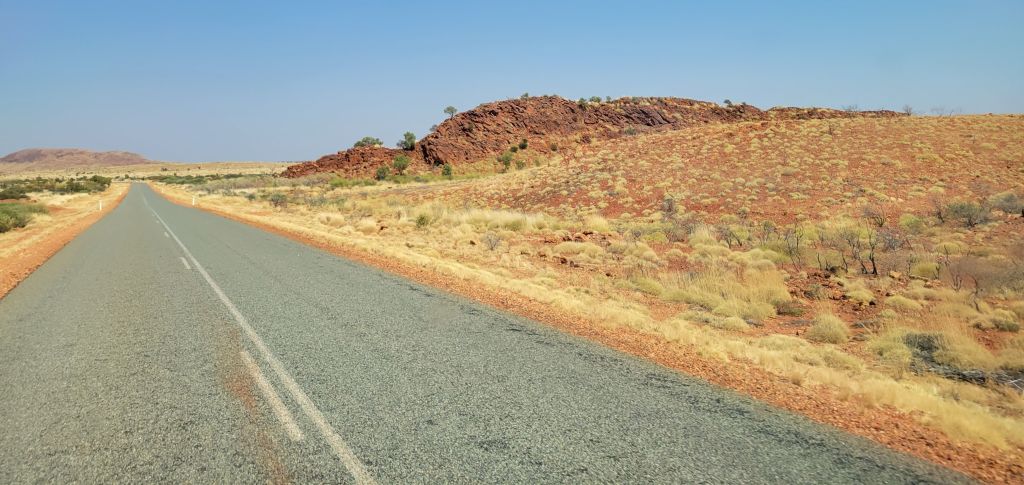
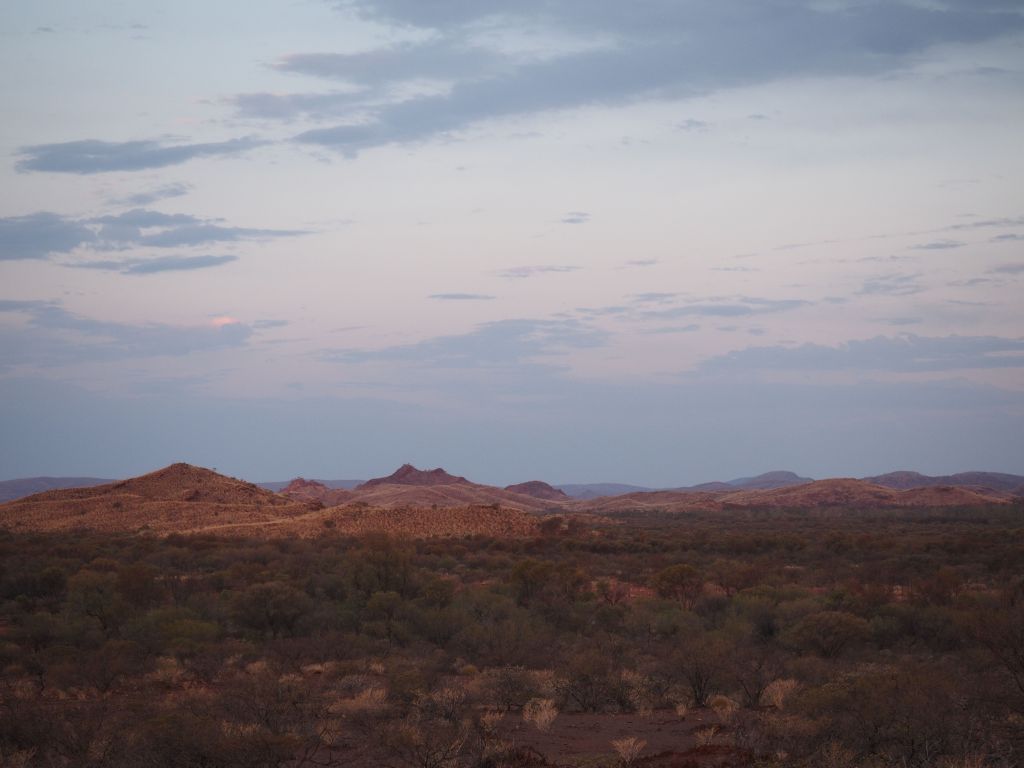
This region is called the Pilbara, and I have to say, it is absolutely spectacular. Several people had told me about the Kimberley, which is the very northern region of WA, and it certainly is beautiful up there. After today’s drive from Karijini, through Tom Price and Paraburdoo, I have to say I think the Pilbara gives it a run for its money. It didn’t hurt that today was the rare cloudy day, making the light play on the various rolling hills and mountains, but man I spent the whole drive to my campsite tonight just yelling “It is SO beautiful out here!”. I’m not sure when I’ll come back to Australia, but if I do you can bet that it’ll be to tour around WA in a 4 wheel drive. This is my kind of place.

A life of luxury

Greetings from the industrial paradise of Port Hedland. Every single person I talked to told me it wasn’t worth stopping here, and, well, I get it. As it turns out I’m here for a regular service on my van (nothing actually wrong, hopefully) because with industry come qualified mechanics, at least. So today’s a relaxing day of hanging around cafes and libraries, and I’ll be off to another free camp outside of town tonight.

I actually just left Broome yesterday, so those couple of days I thought I would stay turned out to be a couple of weeks. Diving over the long weekend was great—I got out 3 days in a row, and it felt great as always to give tips, do safety dives, and watch people hit PBs and generally have a really good time. Sometime the following week I then had to move, because Graham and Linda rent one of their rooms as an Airbnb, and for some reason the listing doesn’t mention a vagrant living in a giant van in the driveway. As it turned out this became a chance to mooch even harder when Anna and Sam, an incredibly nice couple from the freediving group, said I could stay at theirs.

I thought I would just be parking in the driveway but when I got there Anna said “We’ve got a whole granny flat empty in the back, just move in there”. People, let me tell you, what a life of luxury. Two rooms! An actual kitchen! AIR CONDITIONING! A shower! Seriously, air conditioning! The temperature in Broome has been hitting right around 40 degrees Celsius, which is 104 Fahrenheit, every day. Air conditioning!

Even better than the, I cannot stress this enough, AIR CONDITIONING, was the company. Anna and Sam are the kinds of people who really fill their schedules, so I didn’t see them the first couple of days and worried that I’d just be a weird stranger haunting their back yard for a week or two before disappearing. Luckily it didn’t turn out that way, and I was able to join them for a couple of dinners, a couple of breakfasts, and a couple of hangouts with their group of friends, most of whom are also freedivers. Every single person I had the chance to hang out with was really genuinely nice and friendly, and it did me a world of good to slide into their social group for a week or two. I distinctly remember, during the first dinner that I joined in on, thinking “Man you know this is really a totally standard social situation, just a group of friends having a low key dinner, but wow it feels great!”.

I think it’s been pretty clear throughout, well, several of my past posts that I was having a bit of trouble finding my footing, in the broadest possible sense. So I’m glad to be able to switch it up in this post and say my footing feels firmly found. I’d started to feel like I was turning a corner in western Queensland, but then took a bit of a step back with getting robbed. After that, through Kakadu and Katherine and the beginnings of WA, I got over the robbery and felt like I got back the momentum I’d had, until I really started feeling like myself again right before Broome. I think this really contributed to my having such a good time in Broome. Mostly it’s just that everyone was really nice, but also my feeling better and more comfortable with myself helped me jump in, make friends, and just enjoy the time. So I’m grateful for that, and excited to keep the momentum going.

Next up is Karijini, a huge national park smack in the middle of the desert. I’ll spend a few days there [Spoiler alert: I’m finishing this post from Karijini, and hoo boy, strap in for the next one because it is gorgeous here. Dylan, there are great rock pictures incoming.] and then head to Exmouth to dive my little heart out. Exmouth is apparently tiny and I’ve heard accommodation can be a real struggle, so we’ll see how that goes. Worst case I’ll just have to pony up for a caravan park, and I’m pretty confident that’ll be worth it.